In the world of knife enthusiasts, conversations quickly devolve into metallurgical spec sheets: Rockwell hardness (HRC), tungsten carbide distribution, and exotic powder steels. Yet for high-volume prep on a budget, the daily workhorse isn't a custom Japanese Gyuto—it is a $30 commercial-grade Western chef's knife.
At this price point, two titans dominate culinary school line drawers and prep kitchens alike: the Victorinox Fibrox (and its sibling, the Swiss Classic) and the Messermeister Four Seasons 8-Inch Chef’s Knife. Both feature NSF-certified synthetic handles and soft European stainless steel designed to take a beating.
To determine which blade earns a permanent spot on the workbench, both knives were subjected to a strict 30-day isolation testing protocol—stripping all other chef knives from the kitchen to evaluate real-world geometry, factory apex quality, handle ergonomics, and edge retention under actual board load.
trust retailers BurrfectionStore | Gyuto | WasabiKitchen | Amazon
Disclosure: As an Amazon Associate, I earn from qualifying purchases.
Evaluating a budget knife requires moving past superficial out-of-the-box paper slicing. To accurately assess cutting dynamics and hand fatigue, testing was split into two distinct methodologies:
The 30-Day Kitchen Quarantine: The tested blade becomes the sole primary knife in the kitchen for a full month, paired only with a basic paring knife. Every vegetable, protein, and hard root crop passes under a single edge to expose long-term ergonomic flaws and geometry limitations.
Mechanical Edge Retention Testing: Standardized rope-cutting cycles (measuring edge degradation every 10 to 20 passes up to 100 cuts) paired with daily qualitative feedback on ingredient wedging and micro-rolling.
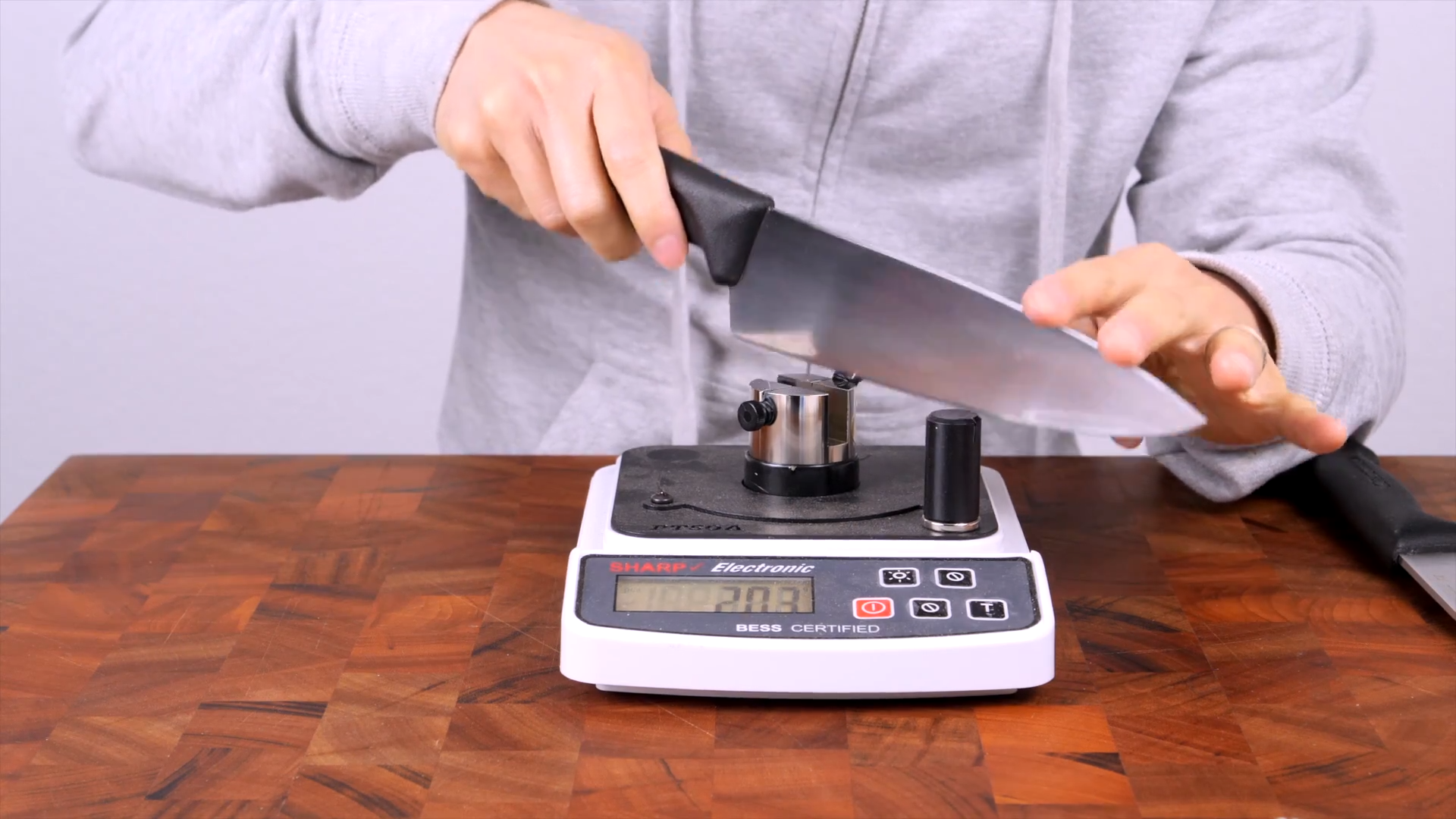
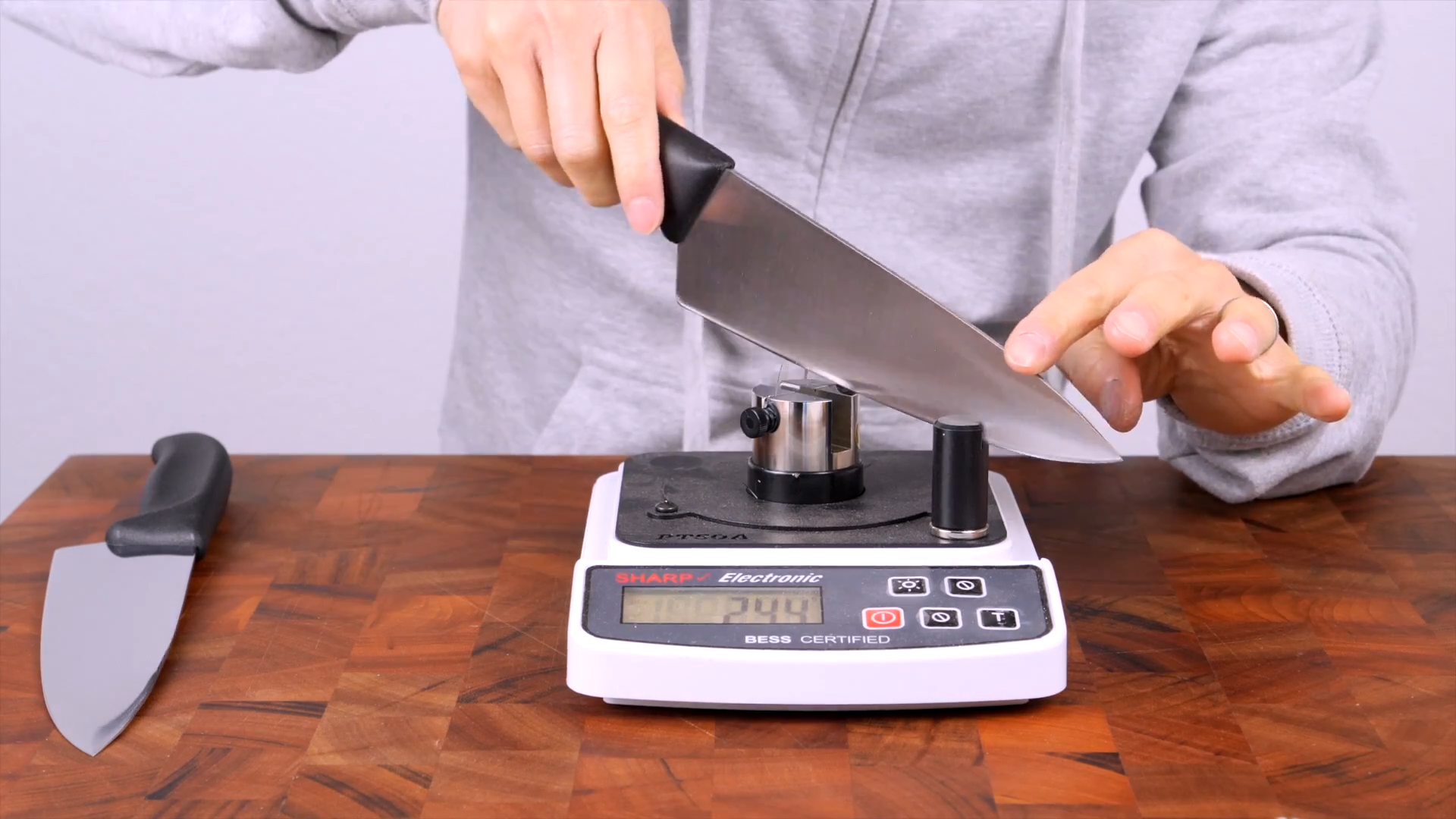
Out-of-the-Box Apex Sharpness
Out of the factory box, the Victorinox delivered a 10% to 20% keen apex advantage over the Messermeister across all sections of the blade.
[Factory Edge Keenness]
Victorinox Fibrox: [====================] ~15% Keener Factory Apex
Messermeister Four Sec: [================== ] Standard Automated Factory Bevel
This performance gap stems from industrial manufacturing scale. High-volume producers like Victorinox utilize automated, laser-guided abrasive wheels that establish exceptionally uniform factory micro-bevels. Messermeister’s out-of-the-box edge, while fully functional, exhibits a slightly toothier, less refined apex.
Sharpening Reality Check: For freehand stone sharpeners, out-of-the-box sharpness is a short-term variable. Once a knife hits a 1000-grit Japanese waterstone, factory bevels are erased. Initial keenness matters for commercial kitchens without in-house sharpening setups, but geometry dictates long-term performance.
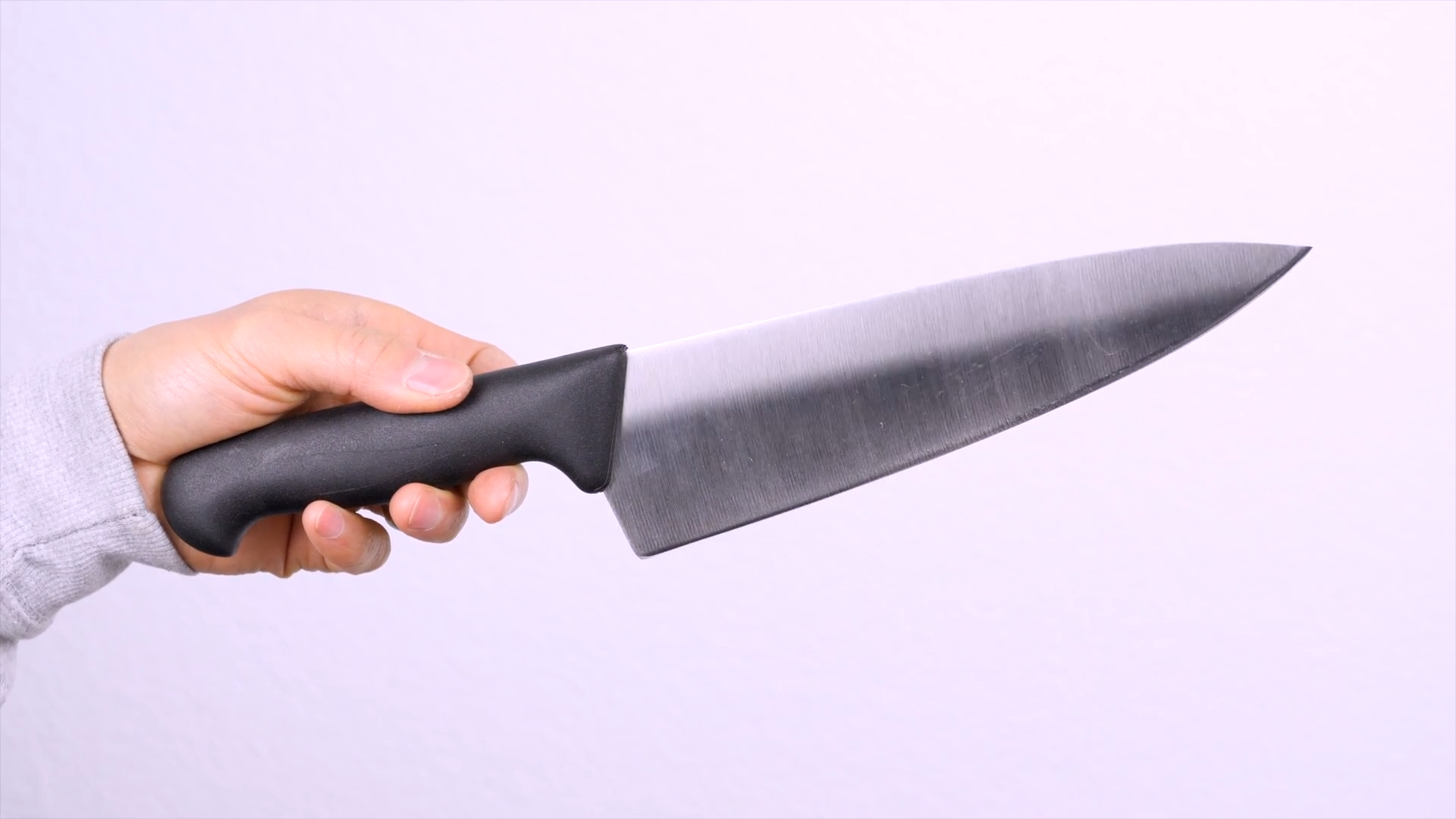
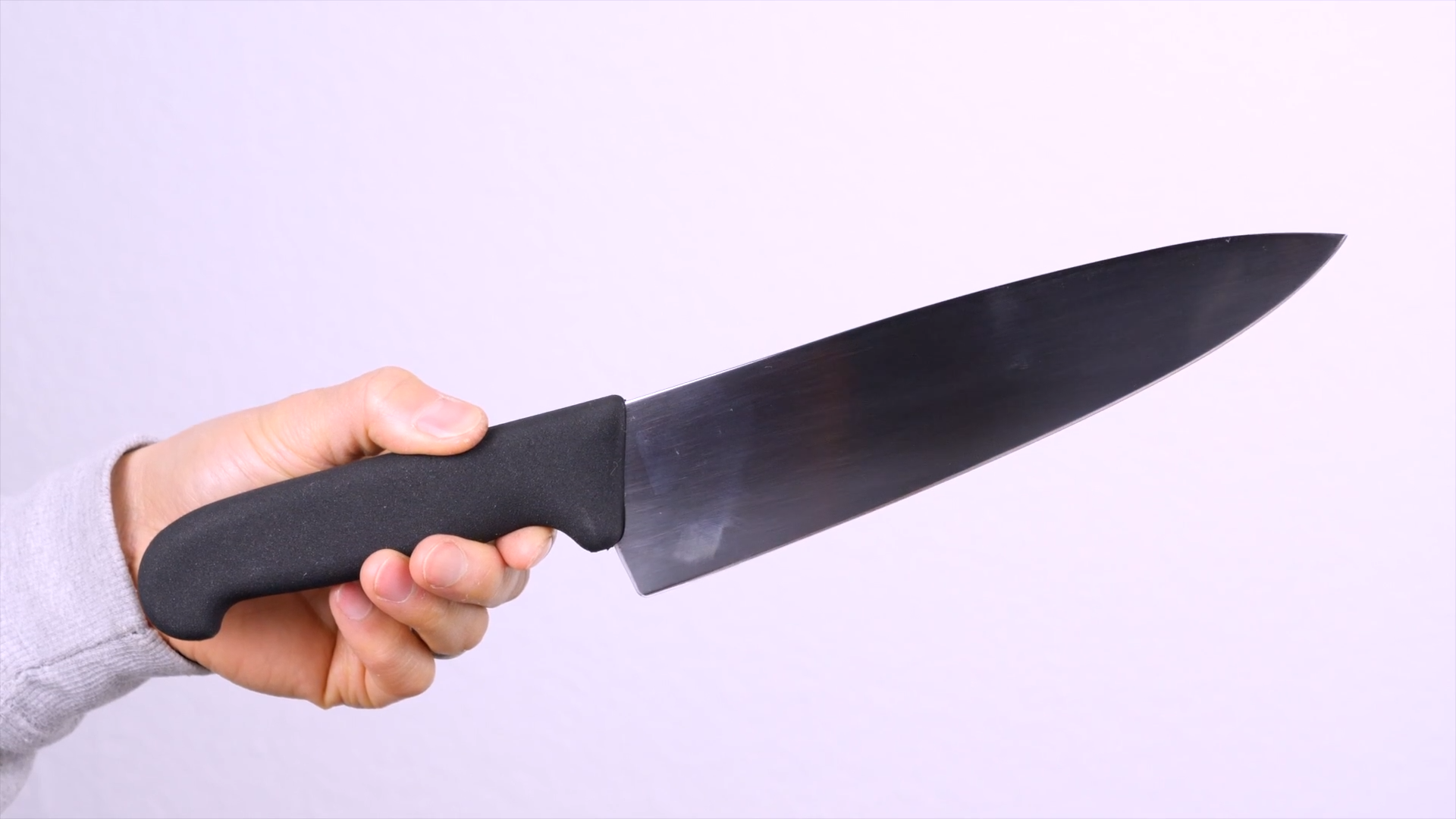
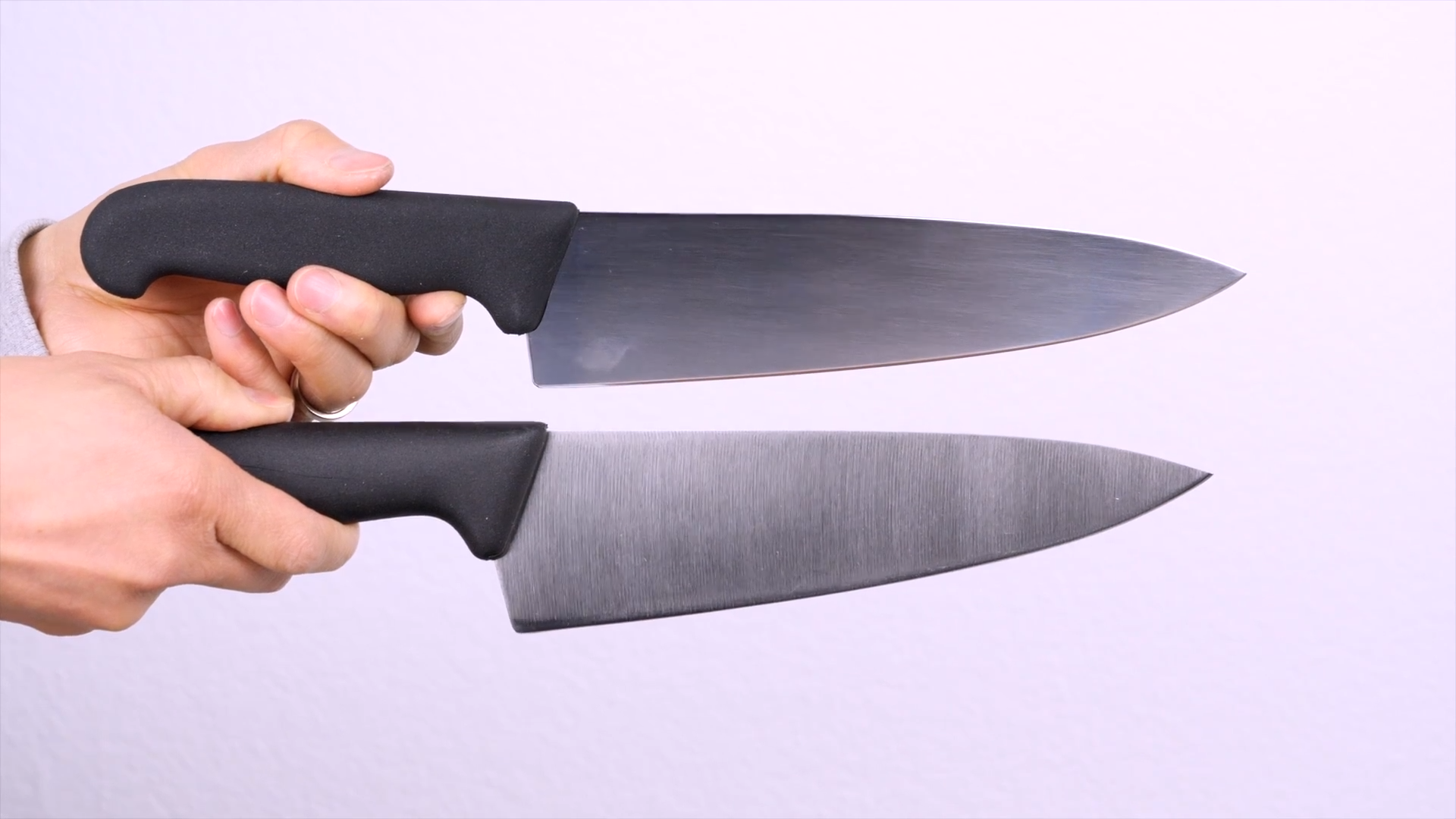
Spine Geometry, Blade Height, and Board Dynamics
While both knives feature an 8-inch length, their cross-sectional profiles and blade heights create distinctly different experiences on the cutting board.
Messermeister Four Seasons: 2.89mm Spine | 58mm Blade Height (Rigid, Rock-Friendly)
Victorinox Fibrox: 2.30mm Spine | 52mm Blade Height (Flexible, Slice-Friendly)
Spine Thickness and Structural Rigidity
Messermeister Four Seasons (2.89 mm at heel): The thicker spine provides structural rigidity. When bisecting dense ingredients like butternut squash, watermelon, or large brassicas, the blade drives straight through without flexing or steering off-axis.
Victorinox Fibrox (2.30 mm at heel): A noticeably thinner spine reduces mass and cutting resistance during horizontal slicing, but offers slightly less lateral stability during heavy-impact prep.
Heel Height & Profile Curvature
Messermeister (58 mm Height): Features a tall profile with a surprisingly flat flat-spot along the rear third of the blade before rising into a smooth rocker. Unlike ultra-curved profiles that encourage aggressive rocking, the Messermeister balances push-cutting capability with plenty of hand clearance.
Victorinox (52 mm Height): A lower profile that favors rapid push-dicing and tap-chopping.
The Knuckle Clearance Myth: Many cooks demand 55mm+ heel heights out of fear of striking their knuckles against the cutting board. In practice, profiles as low as 44mm provide adequate knuckle clearance under proper pinch-grip mechanics. Heel height is primarily a matter of blade stiffness and hand-to-board leverage, not safety.
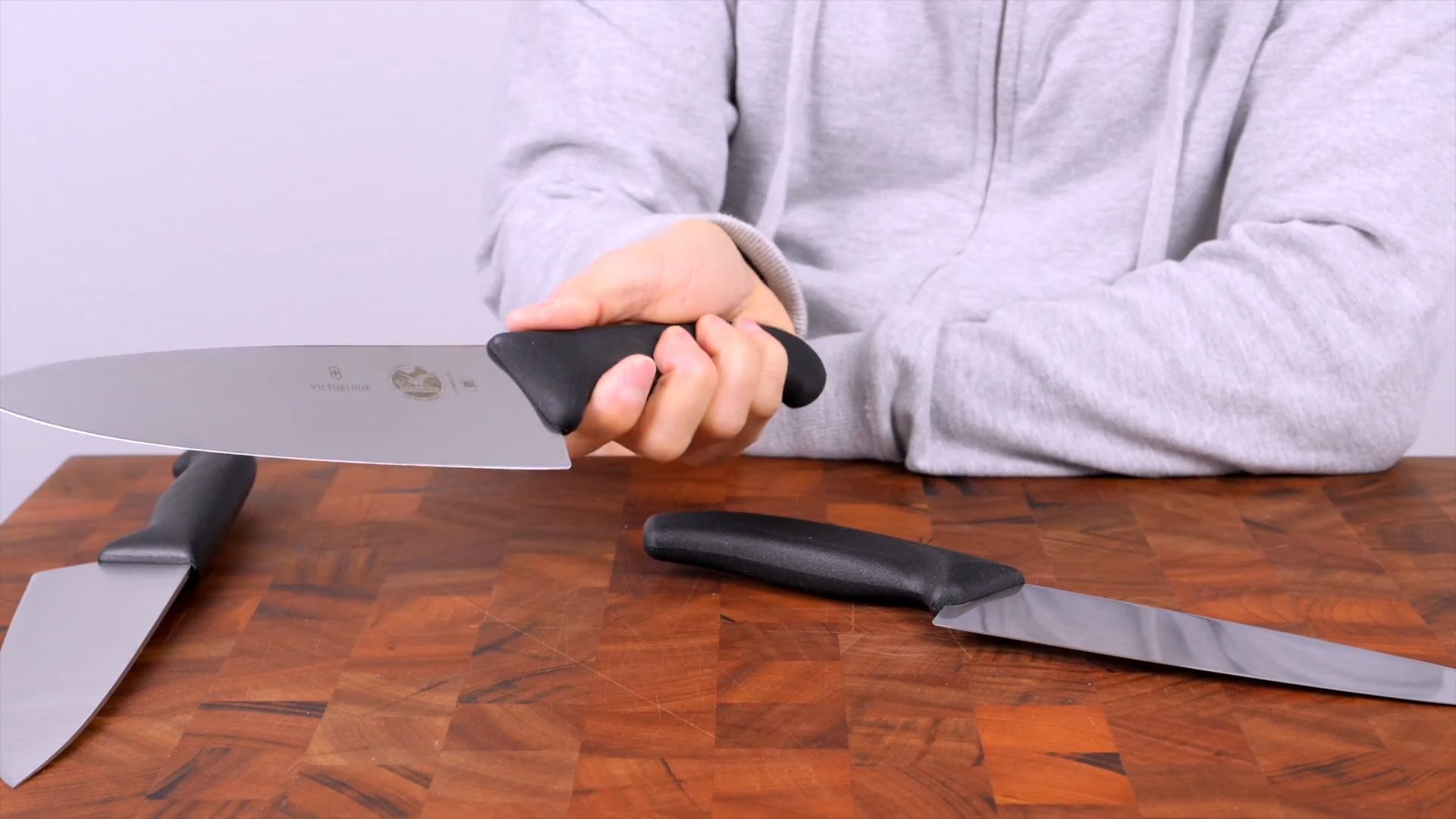
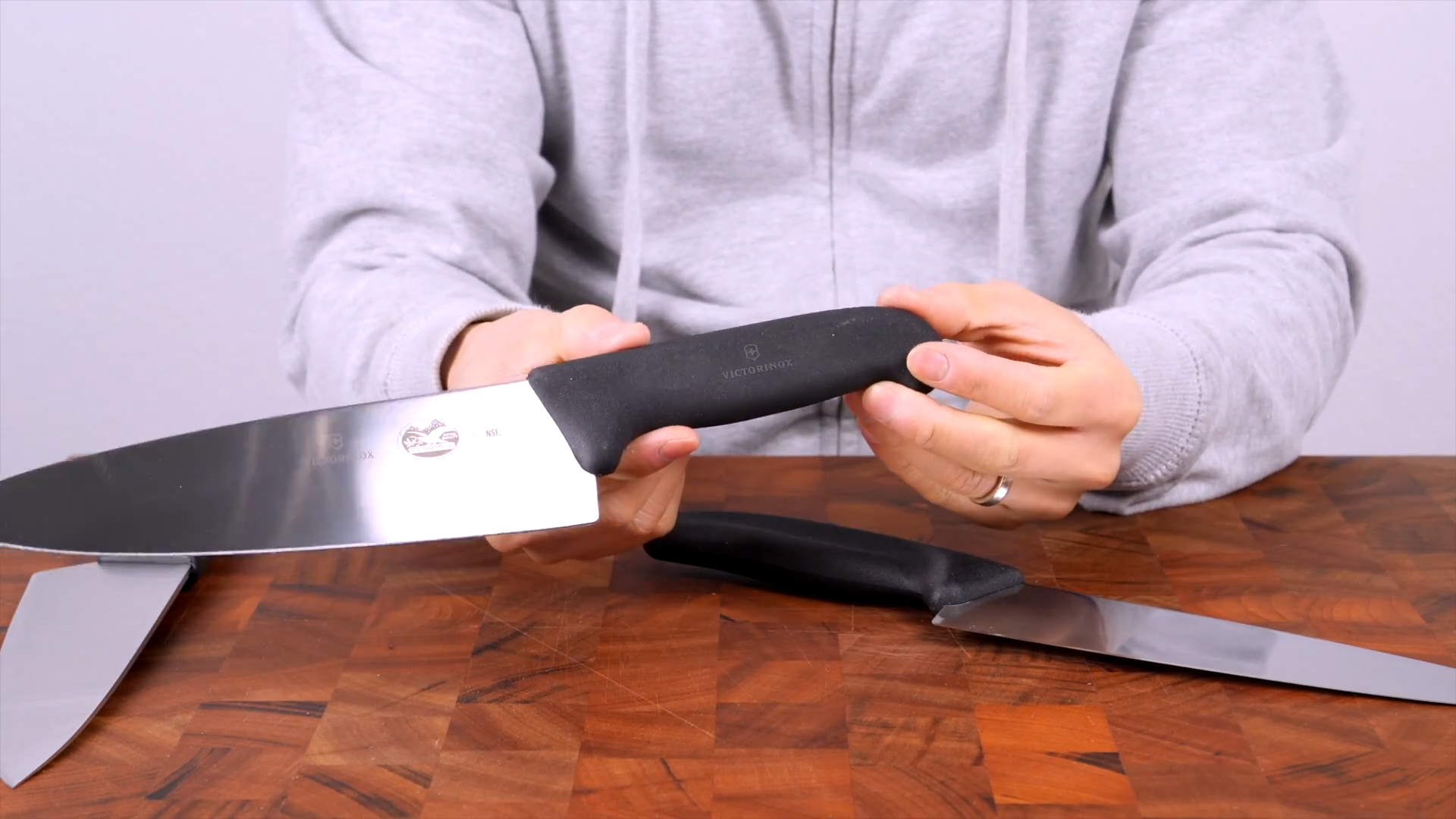
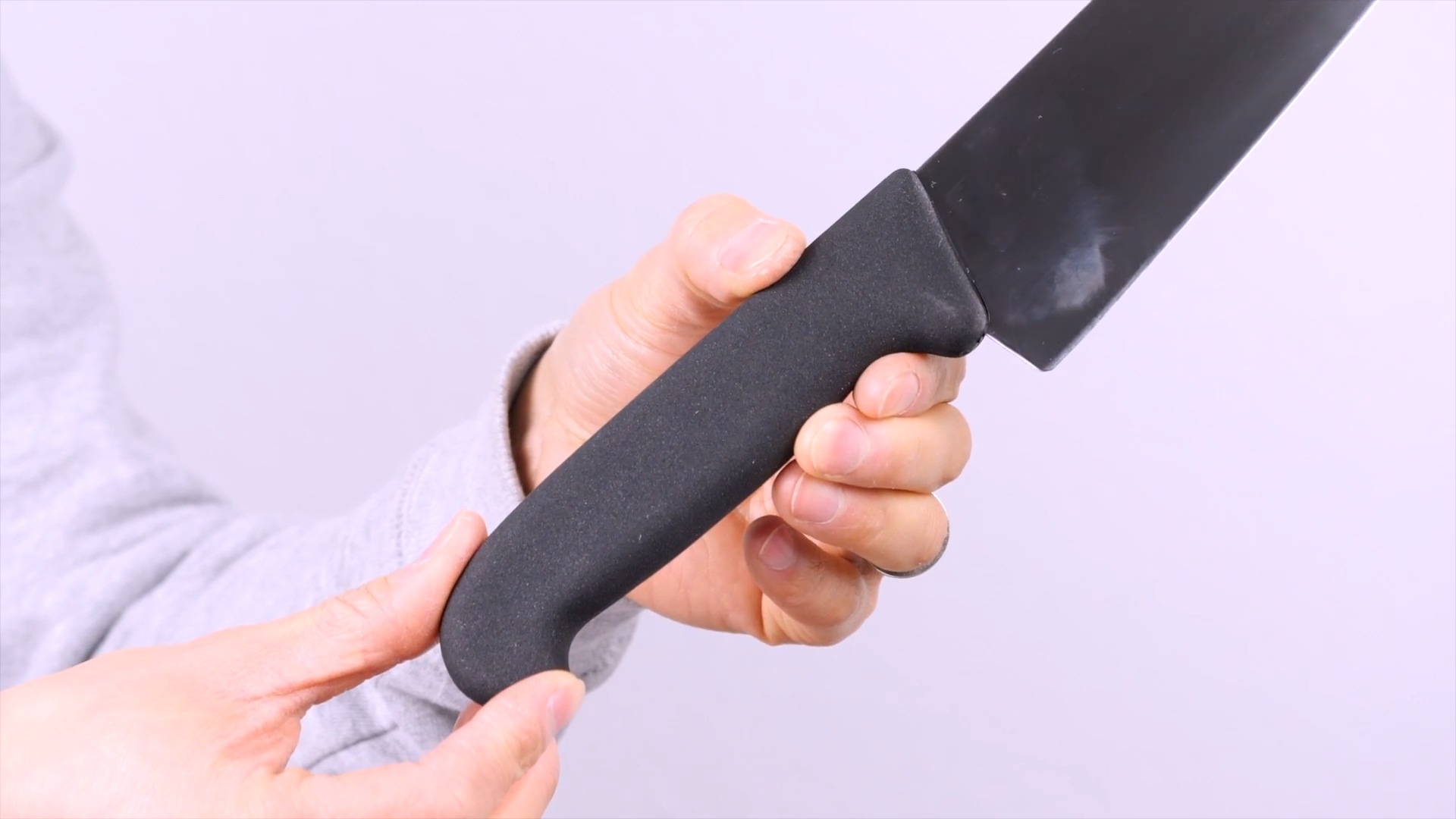
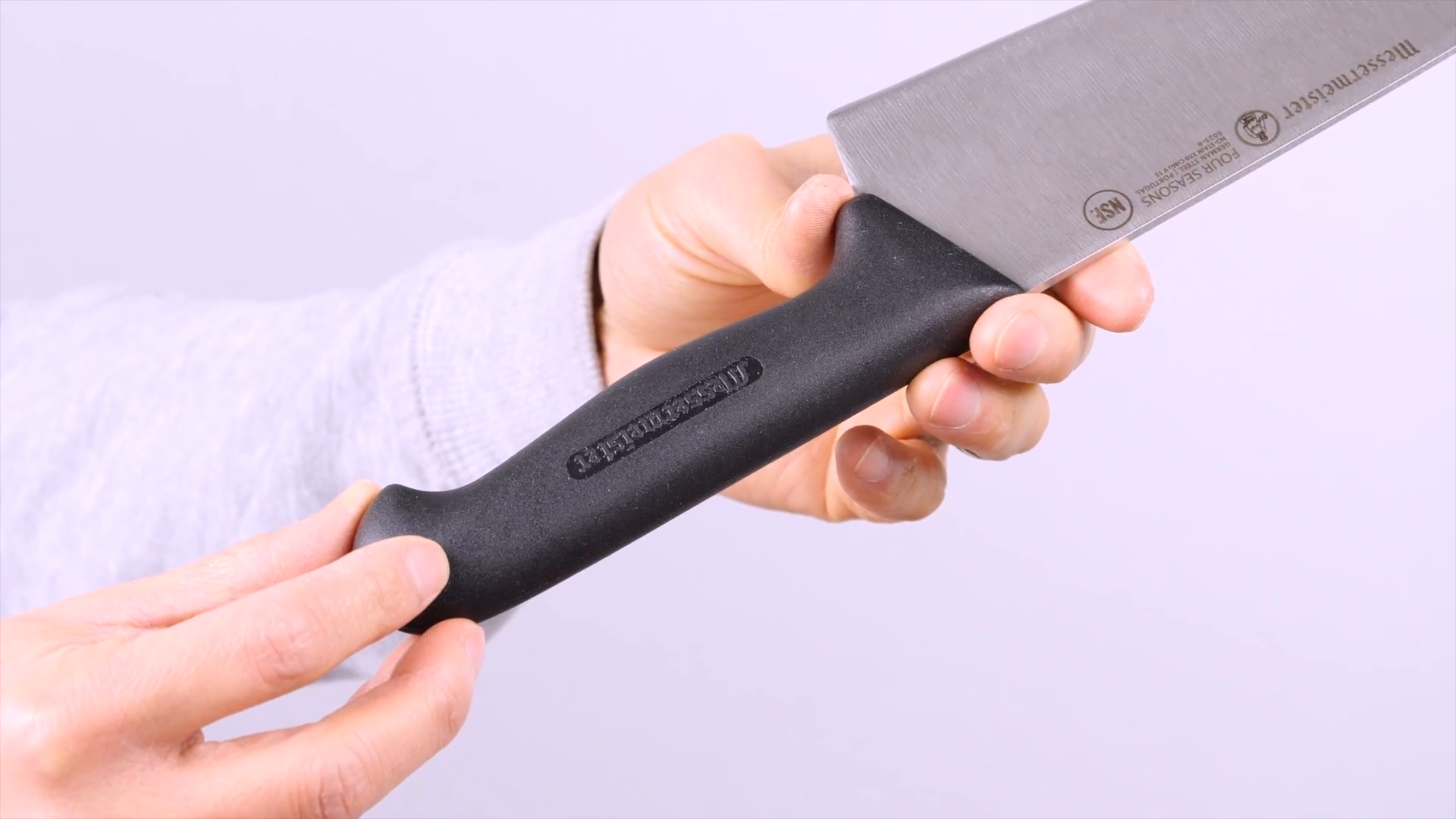
Handle Ergonomics and Grip Dynamics
Both manufacturers employ NSF-compliant, sanitary synthetic polymers designed to satisfy commercial health codes, but their surface texturing and volumetric contours differ significantly.
1. Victorinox Fibrox
Texture: Features a coarse, sandpaper-like finish. It offers high slip resistance when wet or greasy, but can feel abrasive during prolonged prep sessions.
Shape: Tall and laterally thin. While functional for a traditional pinch grip (thumb and index finger choked up on the blade), it offers less palm support in a pistol grip (all fingers wrapped around the handle).
2. Messermeister Four Seasons
Texture: A smooth, matte-textured resin that cleans easily while maintaining adequate wet traction.
Shape: A shorter, well-rounded oval contour. The rounded volume fills the palm comfortably, making it superior for cooks with slighter hand morphology or those who alternate between grip styles.
3. The Sleeper Contender: Victorinox Swiss Classic
The Victorinox Swiss Classic shares the exact same stamped steel blank and 52mm profile as the Fibrox, but replaces the blocky handle with an ergonomically molded, contoured grip. For cooks operating in clean environments who use a full-hand grip, the Swiss Classic handle provides superior control and indexing over the standard Fibrox.
Metallurgy and Edge Retention: The HRC Reality
Enthusiasts often treat Rockwell hardness (HRC) like camera sensor megapixels—assuming a higher number automatically guarantees a better experience. However, overall performance is governed by blade geometry, steel ductility, and maintenance habits.
Steel Specifications
Steel Alloys: X50CrMoV15 / 1.4116 German Stainless Steel
Hardness Rating: 55–56 HRC
Edge Lifespan: 1 to 2 weeks of active home kitchen use before requiring maintenance.
At 55–56 HRC, neither blade will match the edge retention of a 61+ HRC Japanese powder steel (SG2/R2) or high-carbon paper steel. On standardized rope tests, both edges began losing their razor apex after 50 to 70 cuts. In daily kitchen use, both knives require light maintenance—either via a smooth ceramic honing rod or a quick pass on a 1000-grit whetstone—every 7 to 10 days.
The advantage of 55 HRC steel lies in its ductility and repairability. These edges will not chip when striking bone or hard seeds; they simply roll slightly, making them effortless to re-align or re-sharpen on basic waterstones in minutes.
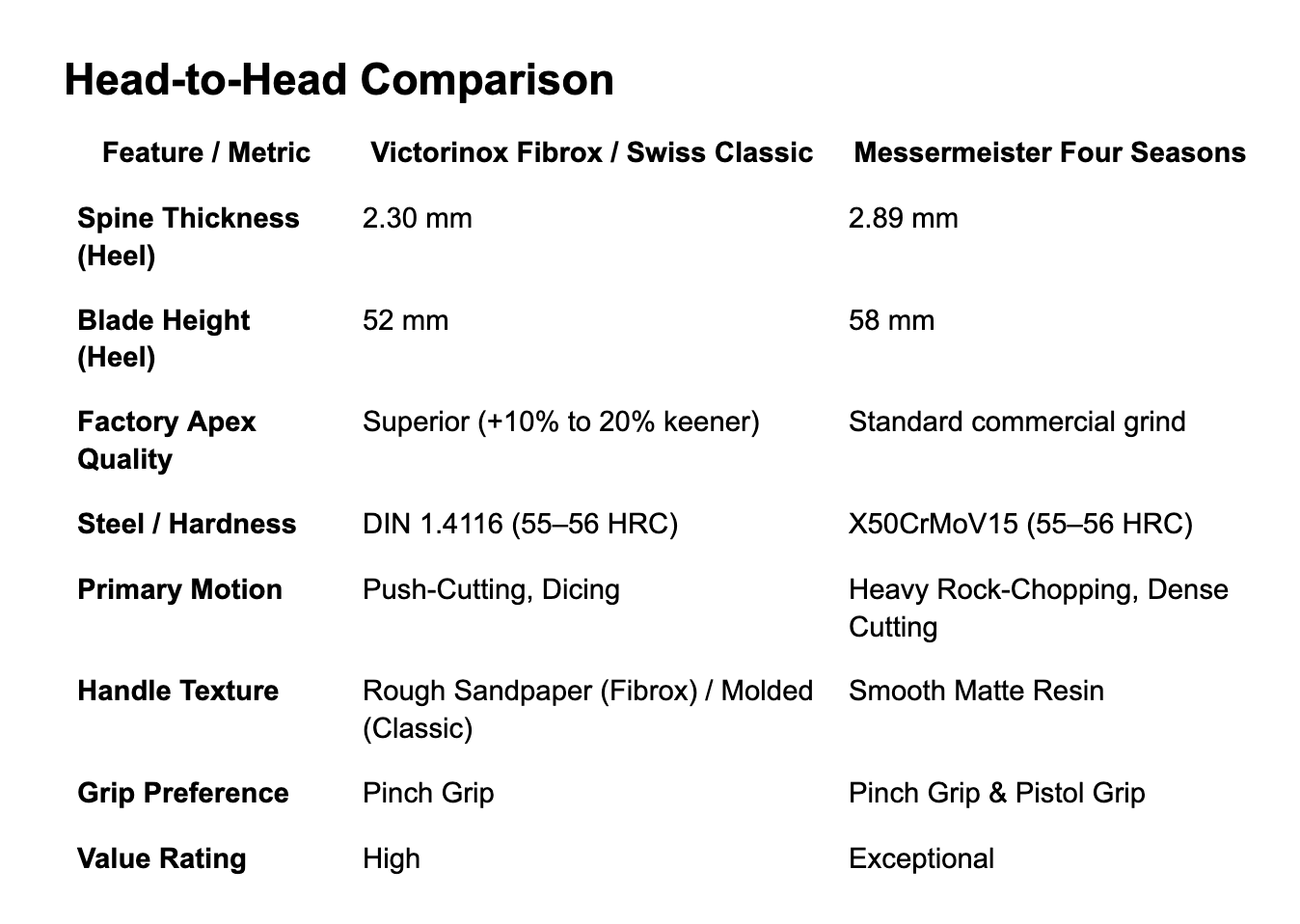
Victorinox vs Messermeister comparison chart
The Verdict: Which $30 Workhorse Wins?
Both knives represent incredible utility for their price tag, far outperforming generic department store cutlery. However, when evaluating balance, blade geometry, and long-term comfort:
Messermeister Four Seasons. Thanks to its rigid 2.89mm spine, tall 58mm profile, versatile flat-to-rocker belly curve, and palm-filling rounded handle, the Messermeister offers a more robust, stable, and comfortable cutting experience for daily prep.
Victorinox Swiss Classic. If you prefer a lighter, nimble blade with a thinner spine for rapid push-cutting, skip the standard Fibrox and choose the Swiss Classic. It delivers Victorinox's superior factory edge and thin geometry paired with a significantly better ergonomic handle.