

The Specialized Powerhouse: Finding the Ultimate Honesuki Knife
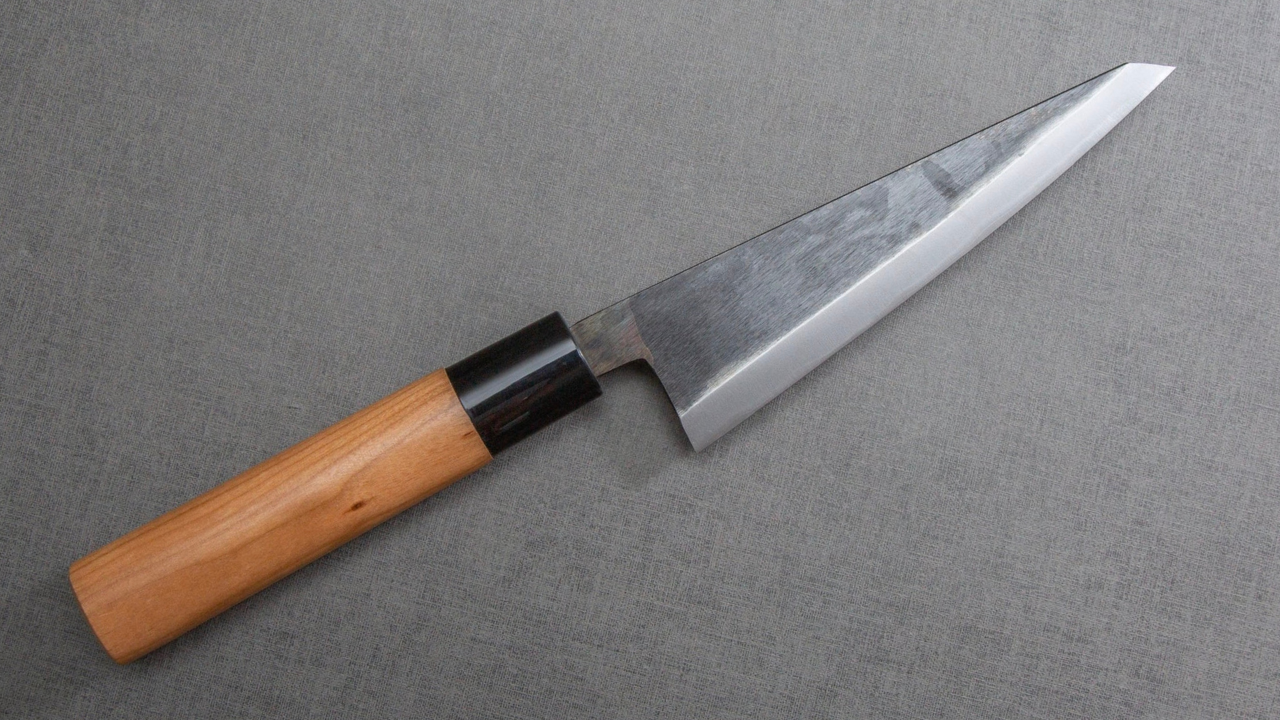
Moritaka Honeski
In the world of Japanese cutlery, the Honesuki is frequently overlooked in favor of multi-purpose flagships like the Gyuto or Santoku. Designed specifically as a poultry boning knife, its stiff spine, wedge-shaped profile, and triangular, razor-sharp tip make it an absolute precision instrument for breaking down whole birds and working around tough bone joints.
Even if it isn't a daily-use knife for your kitchen, any task involving raw poultry or smoking racks of ribs instantly highlights why this specialized geometry matters.
When grease, oil, and moisture enter the picture, ergonomics and profile efficiency become paramount. Here is a breakdown of four leading Honesuki knives across stainless and high-carbon categories to help you find the right tool for your prep board.
The Ergonomic Debate: Western vs. Traditional (Wa) Handles
While traditional Wa (octagonal or oval wood) handles dominate the high-end Japanese knife space, the Honesuki is one of the few profiles where a Western-style full-tang handle often takes top priority.
The Grip Factor: Breaking down raw chickens or slicing smoked ribs leaves hands slick with rendered fat, marinade, and moisture.
Tackiness and Security: A well-contoured, polished Western handle with a sculpted bolster generally provides superior, non-slip purchase under heavy moisture compared to smooth, unsealed traditional woods.
Top Stainless Steel Contenders
For most cooks working with raw meat, stainless steel offers maximum peace of mind—eliminating immediate worries about corrosion or reactive staining during prep.
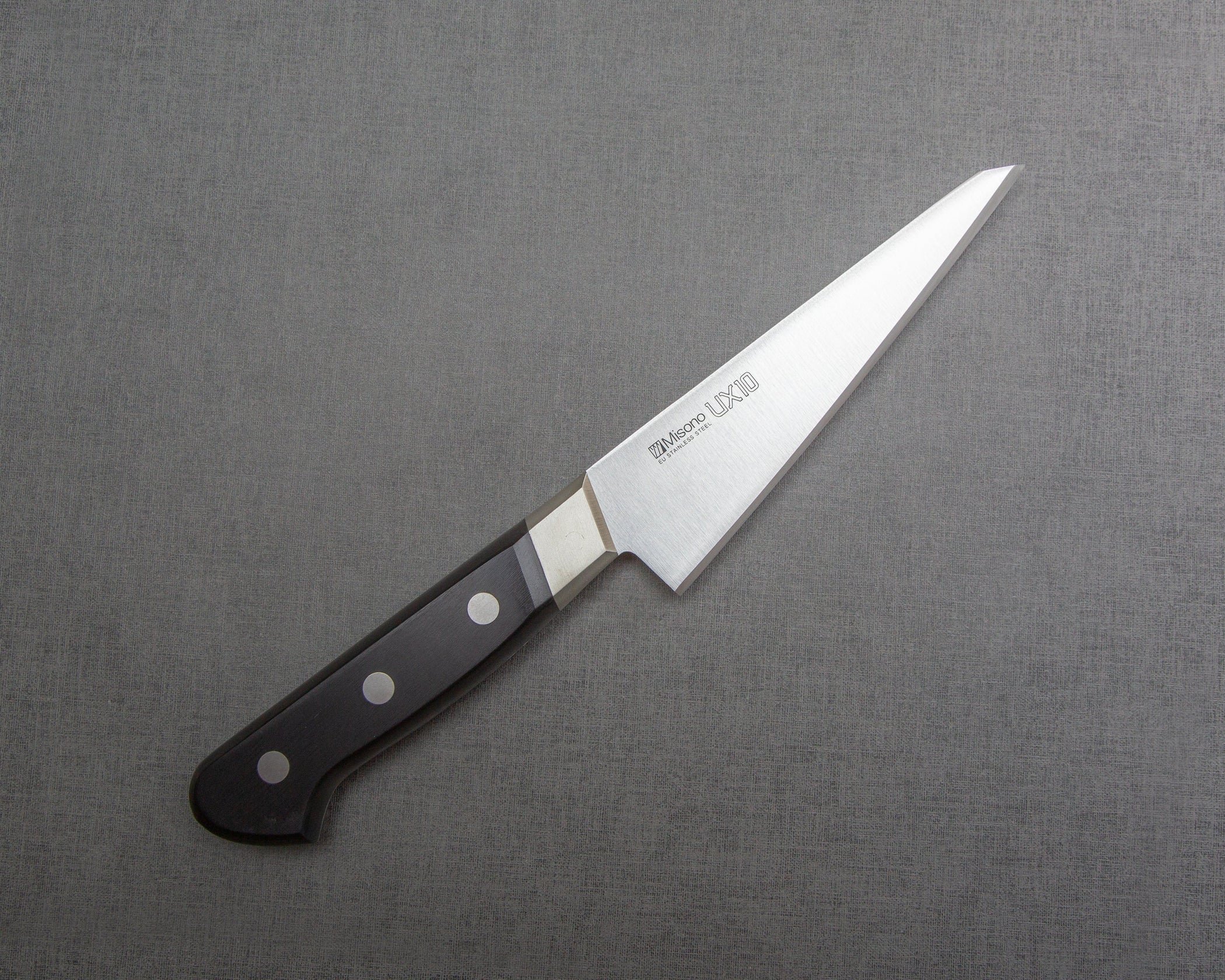
1. Misono UX10 Honesuki (Editor's Top Pick)
It’s credible…
If a Honesuki can be called near-perfect, the Misono UX10 takes the crown. It delivers an aggressive, completely straight cutting edge that tapers sharply to an acute, needle-like tip, allowing you to glide cleanly in and around cartilage and bone joints with surgical precision.
Build & Handle (10/10): Features a slightly larger handle circumference than other Misono lines, significantly reducing hand fatigue during long prep sessions. The transition between the Pakkawood handle and the nickel silver bolster is completely seamless.
Edge Retention: Rated at 58–59 HRC, but performs like a far harder steel in real-world testing. Because a Honesuki edge rarely impacts a cutting board directly, its functional edge life stretches months beyond standard chef's knives.
Out-of-the-Box Edge: Exceptionally sharp straight out of the box with zero touch-ups needed.
2. Masamoto VG Honesuki
The Masamoto VG offers a slightly more relaxed cutting profile with a subtle curve along the belly. It sits comfortably between a dedicated boning knife and a tall utility knife, making it appealing to cooks who want a less aggressive entry point.
Versatility: The mild belly curve makes it slightly better suited for general utility work, though less specialized for pure joint navigation.
Fit & Finish: Outstanding fit and finish. The Pakkawood handle features a seamlessly welded stainless bolster that blends perfectly into the blade.
Performance: Excellent out-of-the-box keenness. While its 58–59 HRC steel performs reliably, the Misono UX10 still holds a noticeable edge in long-term sharpness retention.
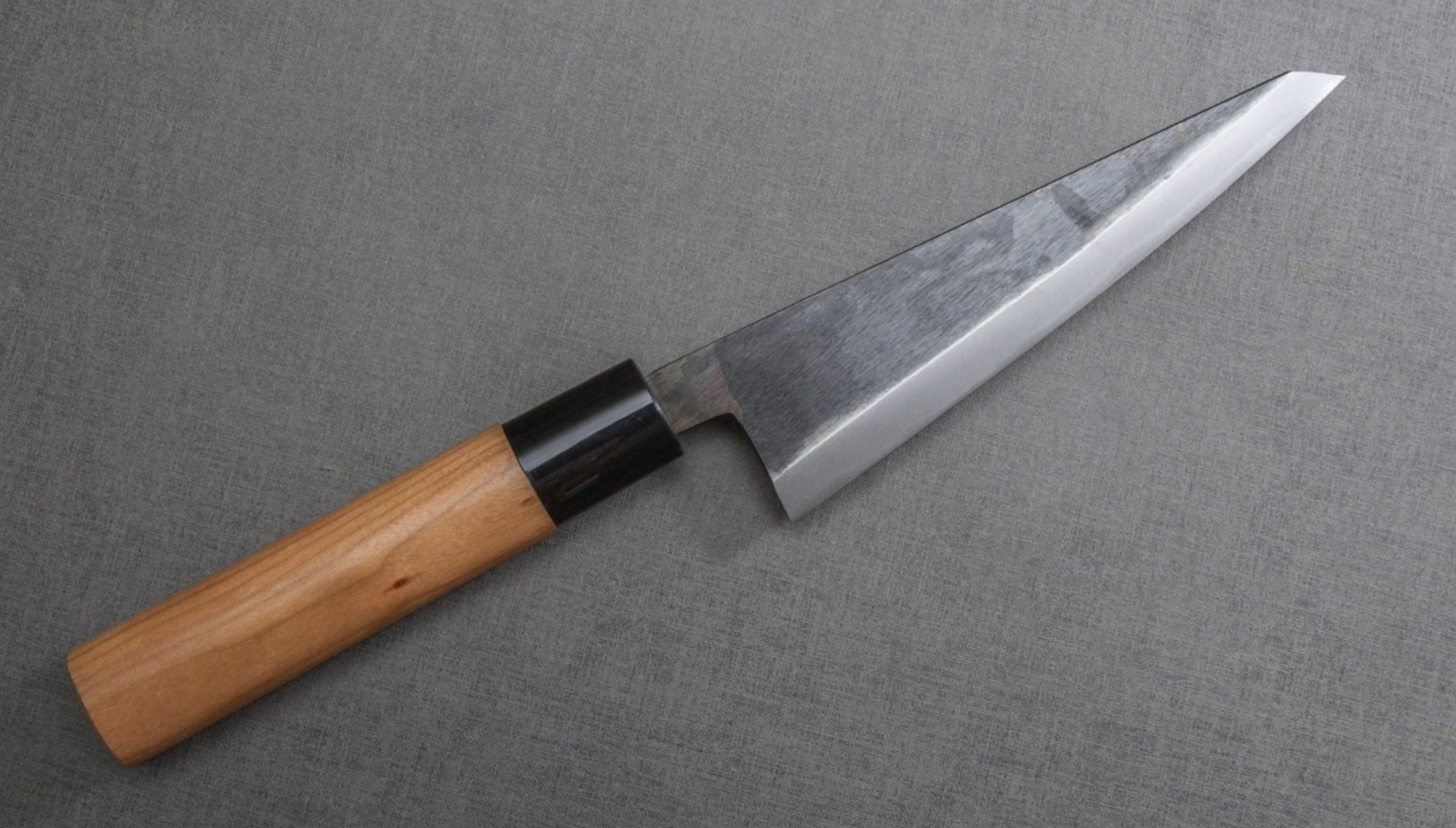
Moritaka Honesuki
High-Carbon Options: For the Steel Purists
If you prefer the legendary keenness and ease of sharpening that comes with high-carbon steel, these options deliver raw performance—provided you are willing to handle the maintenance.
3. Moritaka Aogami Super Honesuki
Forged with an Aogami Super (Blue Super) core hardened to a massive 64 HRC, this knife is a pure performance workhorse wrapped in a rustic, brushed Kurouchi (blacksmith) finish.
Extreme Edge Retention: Aogami Super is slow to rust compared to simpler carbon steels and holds an edge exponentially longer. Used strictly for poultry jointing where the edge avoids board contact, this blade can maintain its cutting performance for years without needing a stone.
Handle & Cladding: Uses an oval cherry wood handle with a plastic ferrule. The soft iron cladding is less reactive than mono-steel carbon, though the spine and choil arrive somewhat rough and benefit from 5 minutes of light hand-sanding.
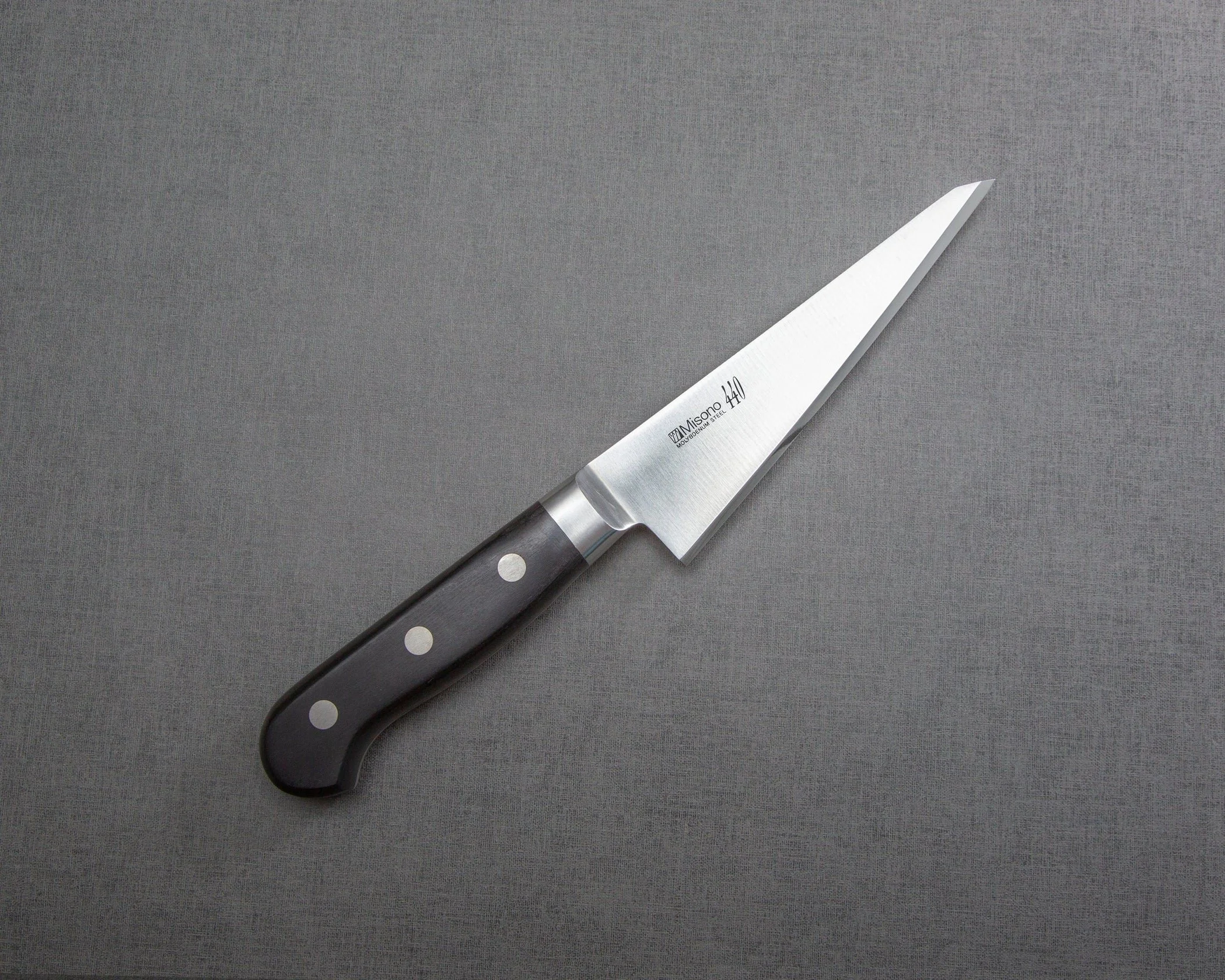
Misono does not miss here…
A mono-steel carbon option featuring a classic 70/30 asymmetric bevel designed primarily for right-handed users. It offers a linear, aggressive geometry similar to the UX10.
Aggressive Patina: This steel is exceptionally reactive. It takes on an intense, dark patina almost immediately upon contact with meat proteins.
User Advisory: Not recommended for carbon beginners. If left wet for even a short period, it will stain rapidly. However, for experienced users who enjoy maintaining high-carbon blades, it offers a remarkably keen edge.
Side-by-Side Comparison
ModelSteel TypeHardness (HRC)Handle StyleKey AdvantageMisono UX10High-Grade Stainless58–59Premium Western (Pakkawood)Best Overall: Exceptional grip, perfect geometry, superior ergonomics.Masamoto VGStainless (VG Series)58–59Classic Western (Pakkawood)Versatile: Milder profile doubles effectively as a tall utility knife.Moritaka ASAogami Super Carbon64Traditional Wa (Cherry Wood)Unbeatable Retention: 64 HRC core holds an edge almost indefinitely.Misono SwedishMono-Steel Carbon60Standard Western (Pakkawood)Traditional Bite: Highly reactive steel with an aggressive 70/30 bevel.
The Verdict
While carbon steel purists will appreciate the extreme edge longevity of the Moritaka Aogami Super, the Misono UX10 Honesuki stands out as the definitive recommendation.
Its ergonomic Western handle, flawless fit and finish, and razor-sharp linear profile make it an absolute masterclass in specialized knife design—delivering safety, control, and effortless cutting power precisely where you need it mos