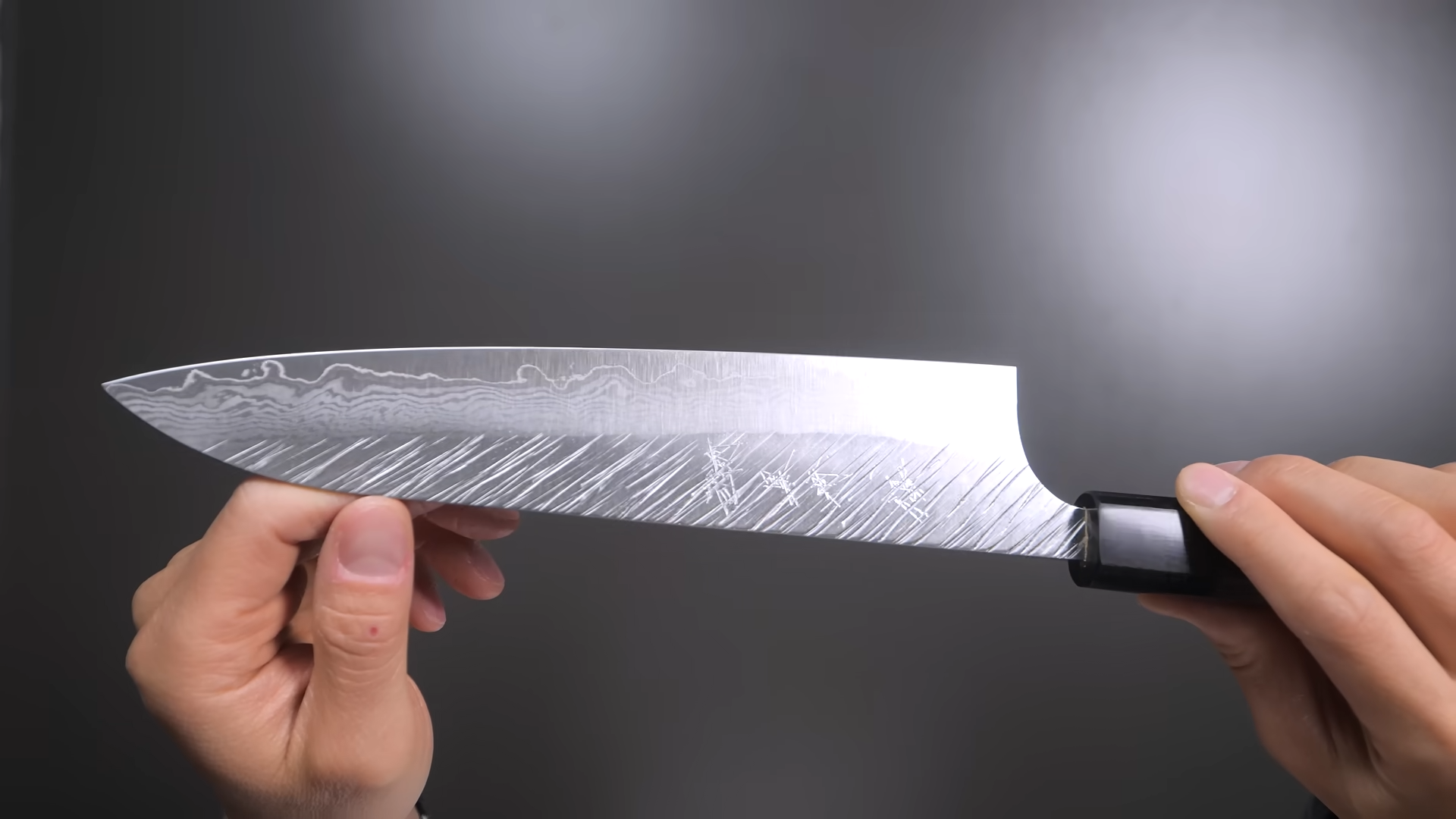
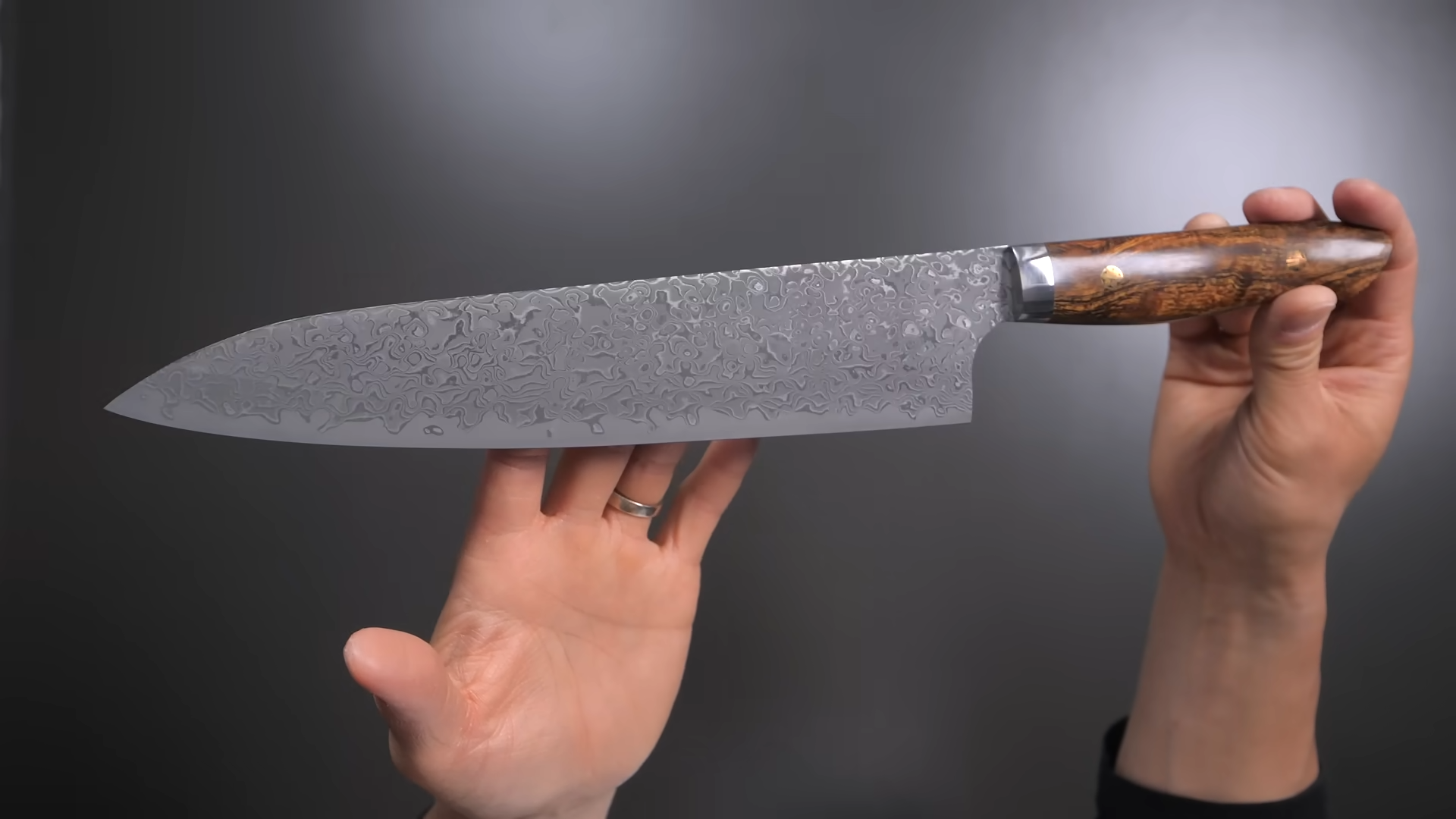
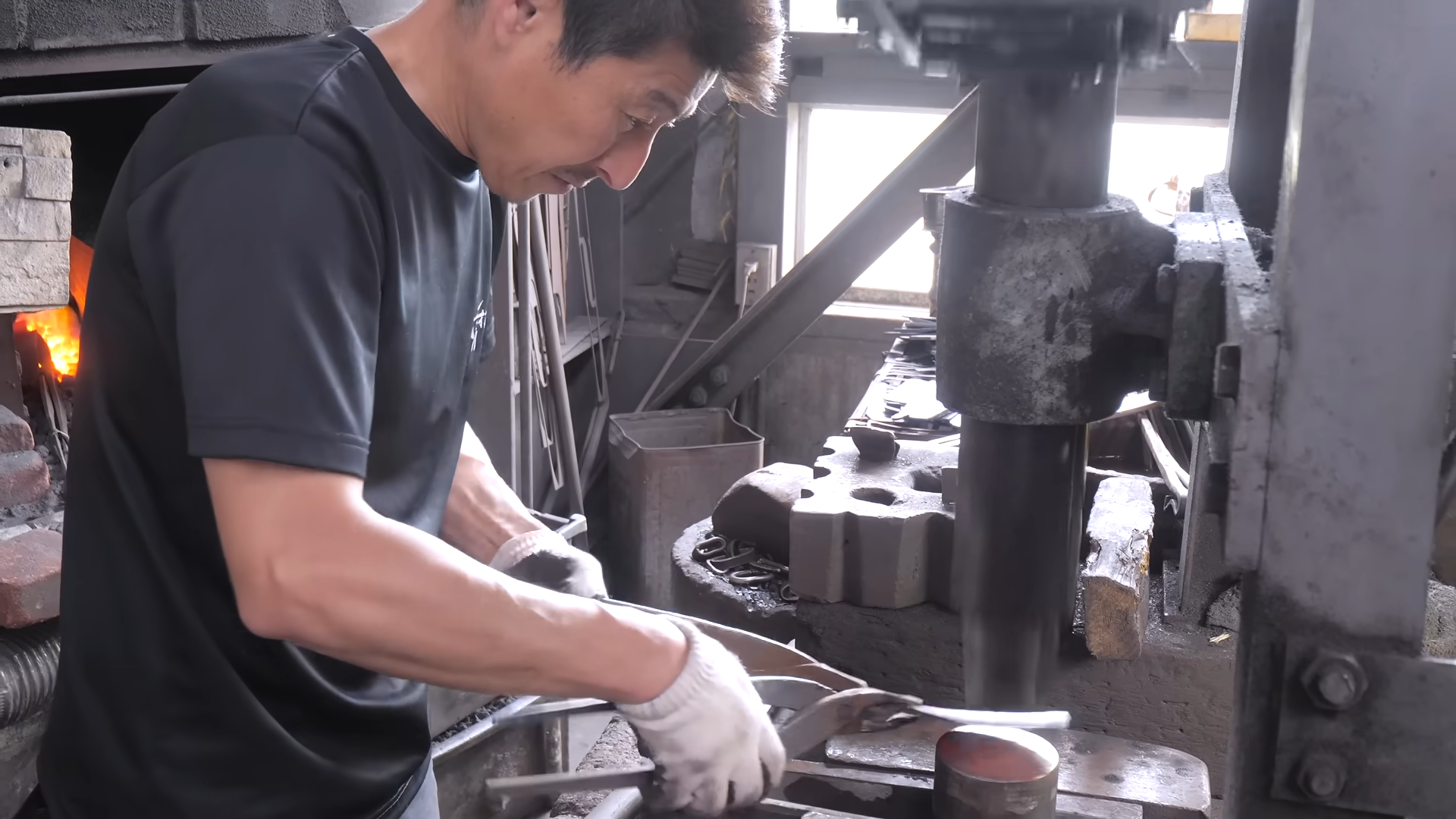
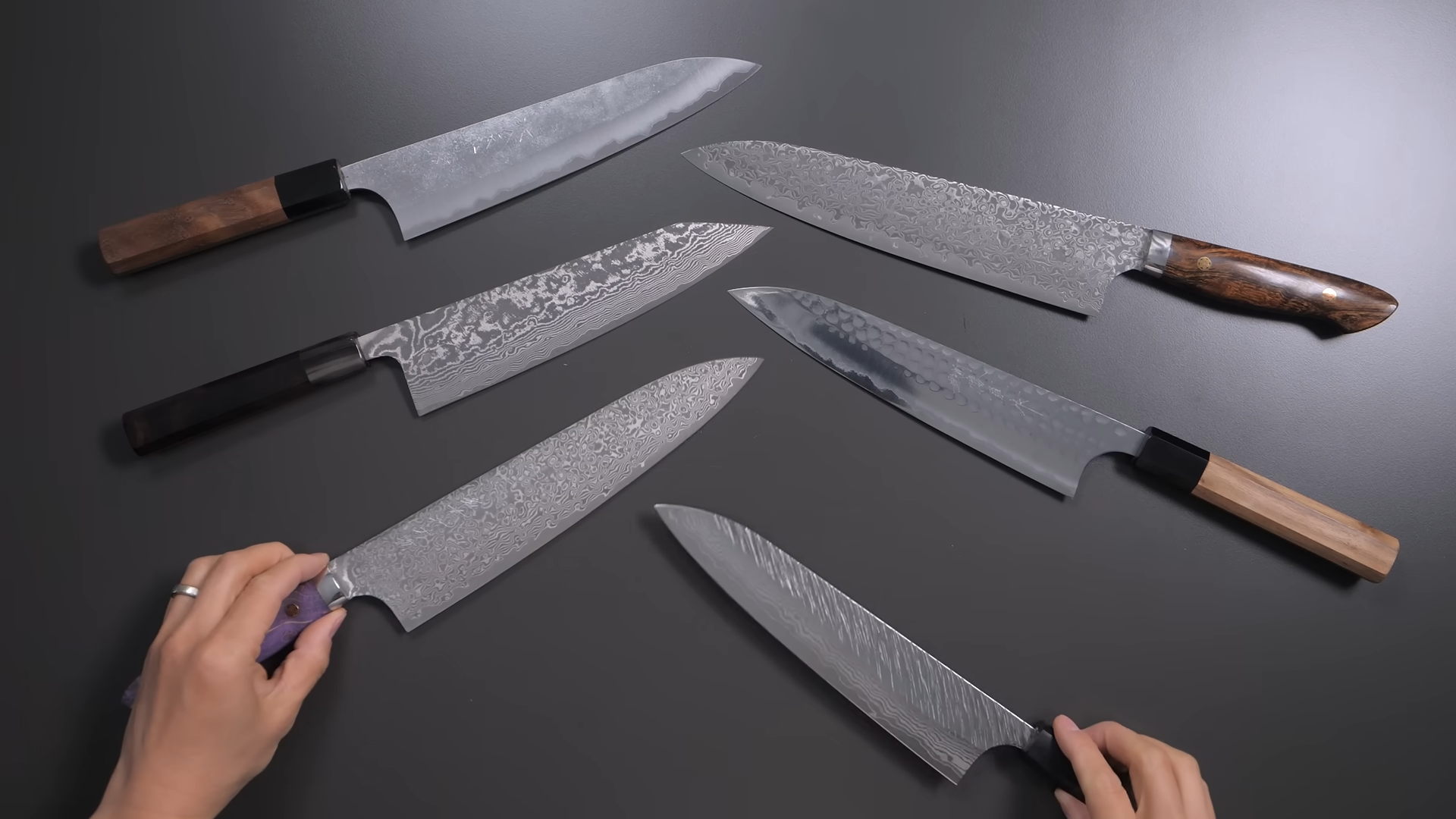
When modern cooks graduate from mass-market European cutlery to handcrafted Japanese kitchen knives, they often experience severe culture shock.
Accustomed to the sterile, laser-etched uniformity of factory-stamped blades, first-time buyers frequently inspect hand-forged artisan knives through the lens of automated consumer goods. This disconnect results in predictable, often comical customer returns: complaints about dimensional variance down to a tenth of a millimeter, microscopic oxide buffing residue, or a stray fiber of red velvet flocking transferred from a traditional wooden presentation box during transit.
Investing in an artisan kitchen knife requires discarding the expectations of computerized factory production. Hand-forged steel from regions like Echizen, Sakai, and Sanjo is not meant to mimic an iPhone. Understanding the realities of small-workshop knife making—from metallurgy and geometry to finishing philosophies and generational scarcity—is essential before stepping into the world of bespoke cutlery.
trust retailers BurrfectionStore | Gyuto | WasabiKitchen | Amazon
Disclosure: As an Amazon Associate, I earn from qualifying purchases.
1. The Economics of Scale: Artisan Handcraft vs. Factory Output
A common misconception is that artisan Japanese knives are overpriced simply because of branding. In reality, their pricing reflects basic production economics.
[ DAILY PRODUCTION VOLUME COMPARISON ]

Large Industrial Knife Factory (Seki / Solingen):
  ├── Workforce: 100–300 machine operators and line workers
  ├── Machinery: Automated laser cutters, robotic drop-forges, CNC belt grinders
  └── Daily Output: 500 to 1,500+ knives per day

Artisan Blacksmith Workshop (Takefu Knife Village / Sakai):
  ├── Workforce: 1 Master Smith + 1 Apprentice (or cooperative pool)
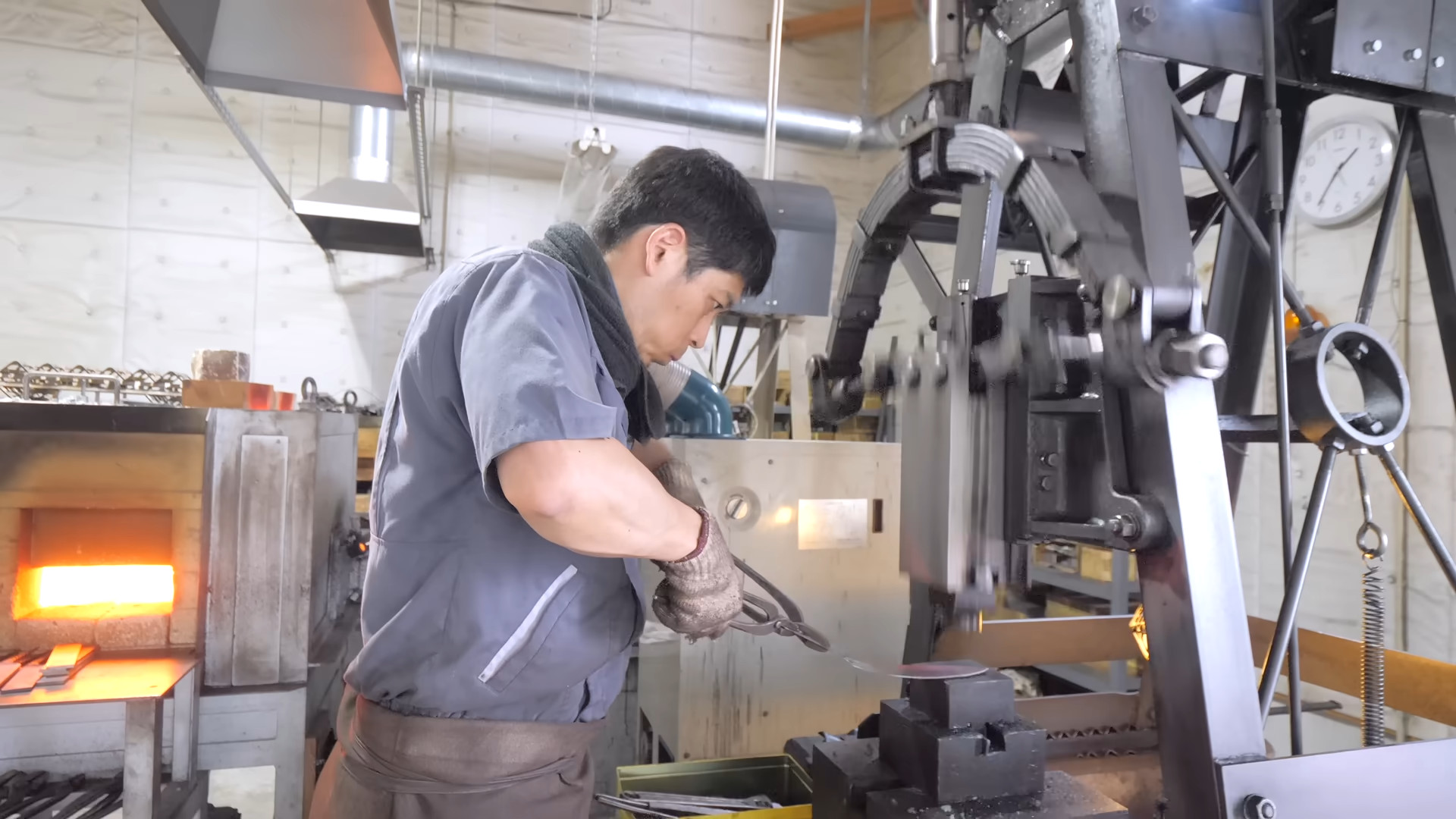
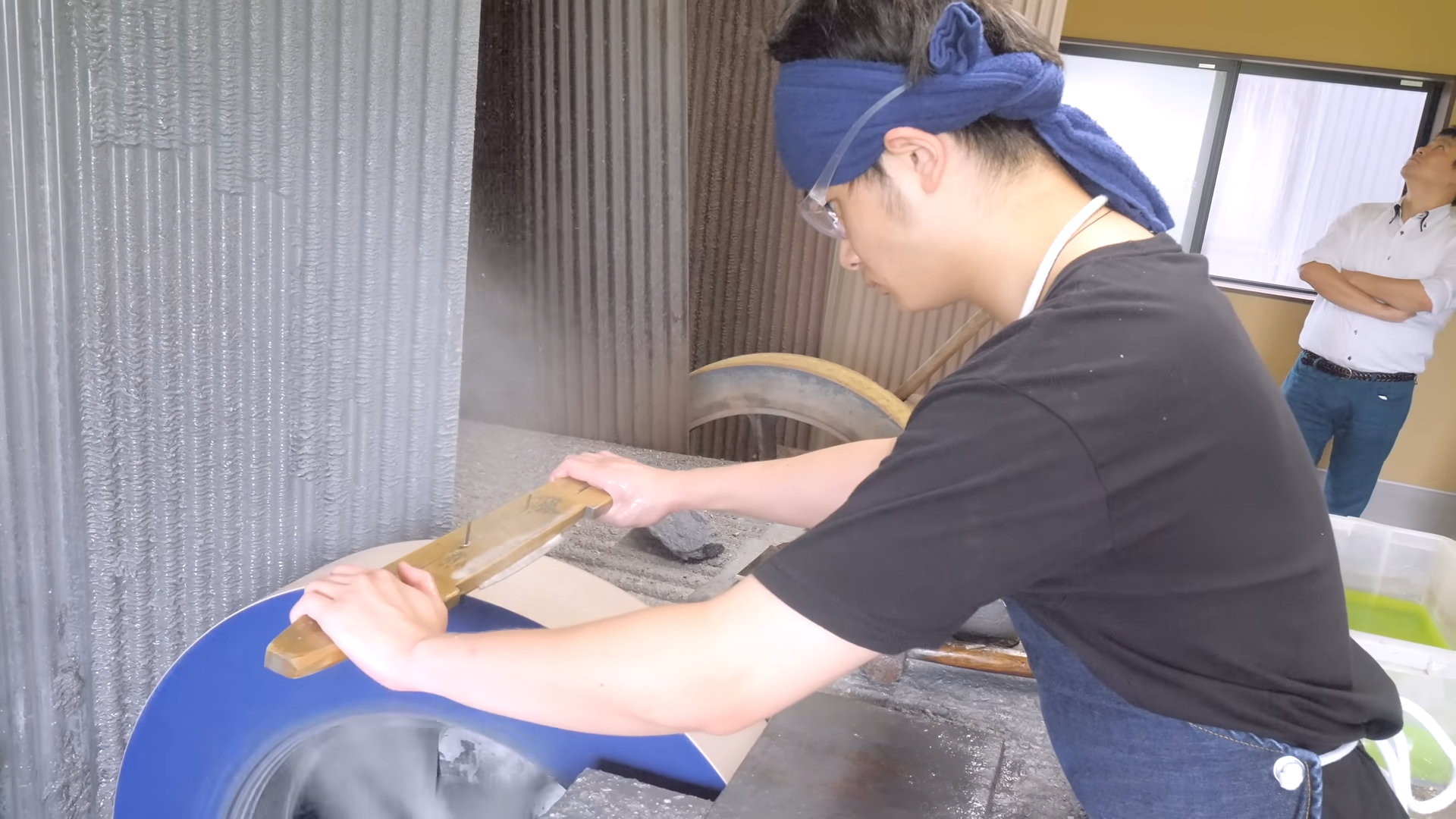
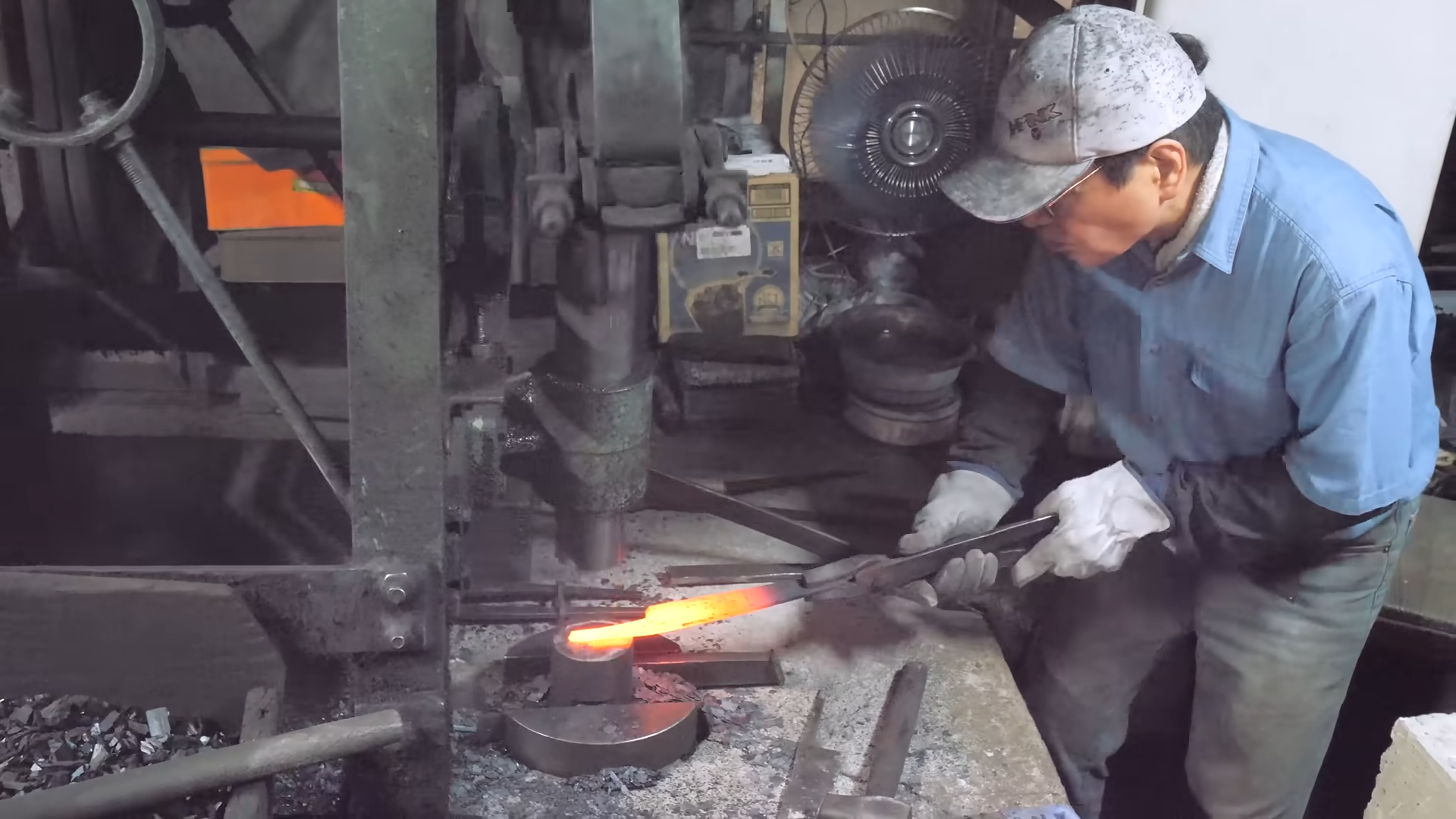
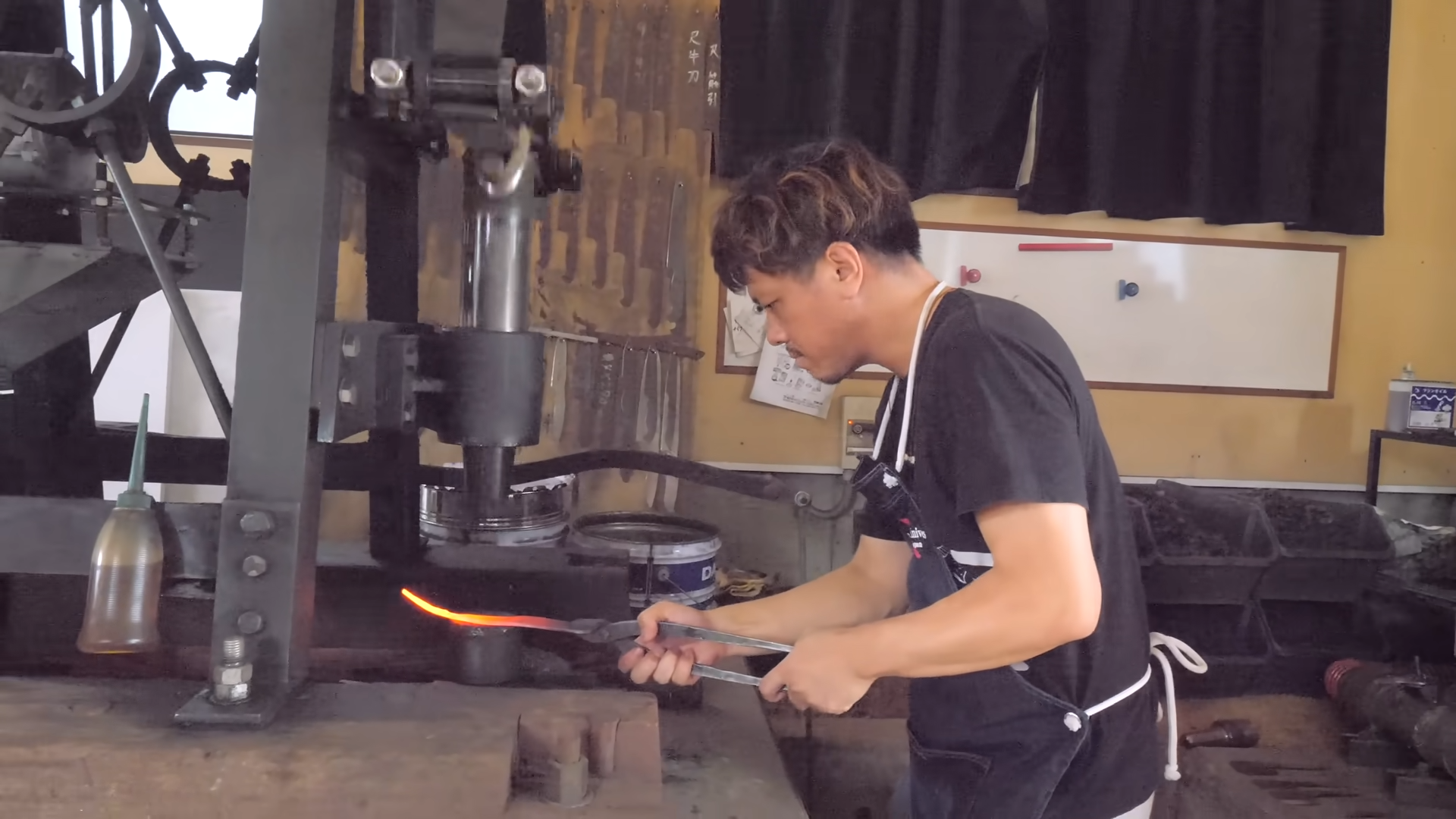
  ├── Machinery: Spring hammers, hand tongs, water-cooled grinding wheels
  └── Daily Output: 3 to 15 knives per day (Prodigious smiths: 20–30 max)
In large industrial hubs like Seki City or Solingen, automated assembly lines stamp or drop-forge thousands of blades daily, with automated cooling lines and computerized CNC grinders maintaining strict mechanical tolerances.
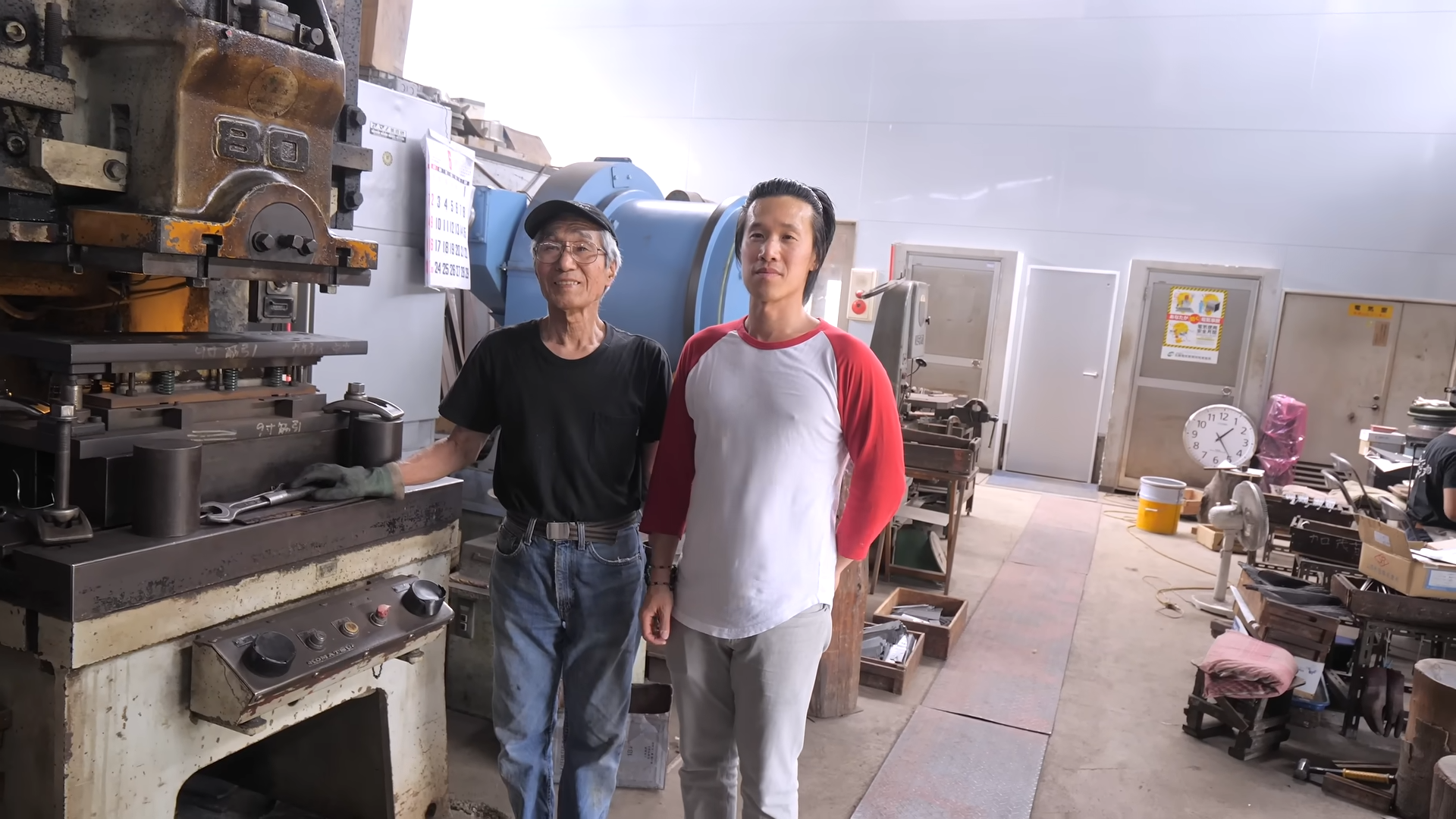
In contrast, artisan cutlery from workshops like the Takefu Knife Village in Echizen operates on small-batch craftsmanship. While smiths may work in a cooperative setting—sharing specialized sharpeners (togi) or handle makers—the blades are drawn, hammered, quenched, and ground by individual human hands.
The Price Inversion
Despite the intensive labor required, artisan cutlery frequently undercuts high-end industrial knives in direct price-to-performance comparisons:
A mass-production flagship like the Miyabi Birchwood 8" Gyuto (SG2 powder steel) retails around $280–$300.
A hand-forged Katsushige Anryu Blue #2 Gyuto or Yu Kurosaki Senko can often be acquired in the $230–$270 range.
Choosing the artisan blade yields superior grind thinness, authentic small-batch heat treatment, and direct economic support for an independent blacksmith, often at a lower entry price than corporate luxury lines.
2. The "Defect" Paradox: Oxide Residues and Presentation Flocking
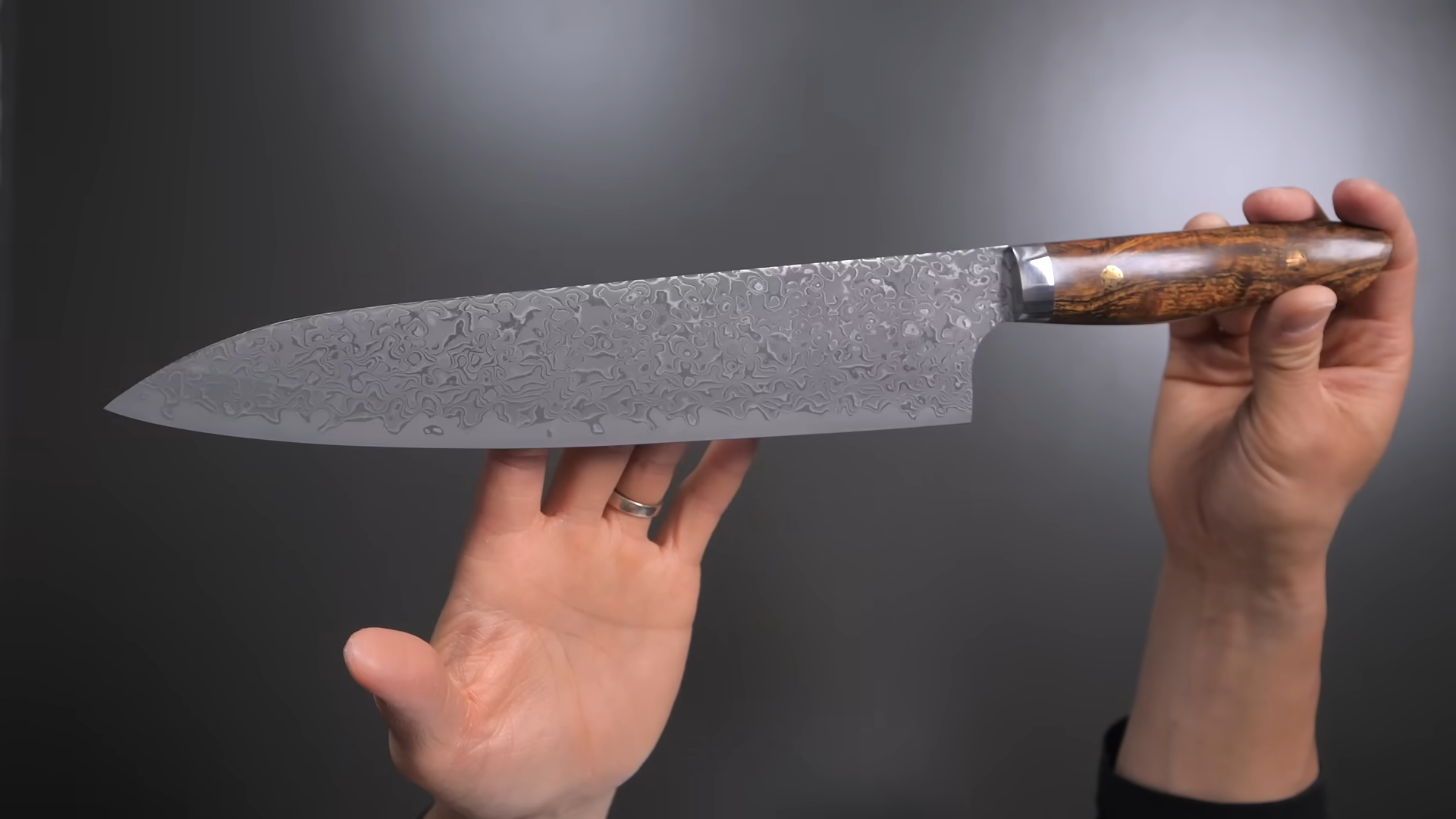
One of the most revealing customer returns involved a $700 custom gyuto by legendary master Takeshi Saji. The buyer demanded a full refund, claiming the knife was "dirty and defective" because of microscopic black residue along the blade face and a small fleck of red felt resting on the handle ferrule.
FACTORY FINISH VS. ARTISAN BENCH REALITY

Factory Production Line:
  Grinding ──► Stamping ──► Ultrasonic Solvent Wash ──► Blister Packing / Foam

Artisan Blacksmith Workshop:
  Forge/Quench ──► Black Oxide Buffing ──► Camellia Oil (Tsubaki) ──► Velvet Box
                                                                        │
                   *Minor transit friction transfers packaging dust ────┘
                   *Microscopic polishing compound wiped, not solvent-stripped
This scenario highlights the gap between factory assembly and artisan bench work:
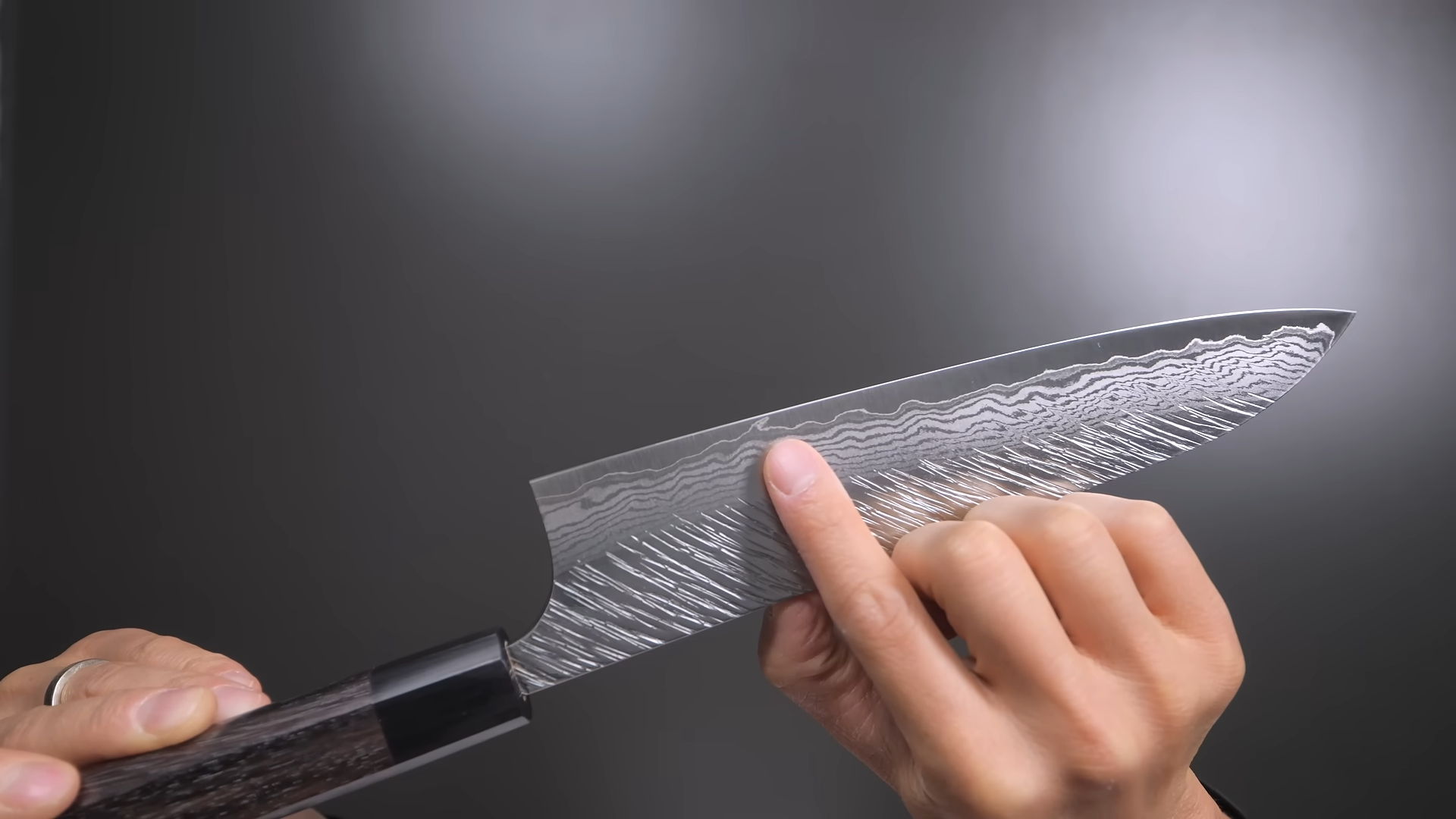
Black Oxide Buffing Residue: Master smiths like Saji frequently apply traditional black oxide or etched damascus treatments to highlight core cladding. While blades are wiped clean prior to packaging, smiths do not run their handmade knives through industrial ultrasonic degreasers. Trace polishing compounds and protective camellia oil (tsubaki) are normal baselines of hand-finished carbon cutlery.
Packaging Transfer: High-end Japanese cutlery is traditionally packaged in Paulownia wood (kiri) boxes lined with red flocking or velvet. During international transit, vibration will naturally dislodge microscopic fibers onto the blade or ferrule.
The Golden Rule: Every kitchen knife—whether a $15 utility beater or a $1,000 Honyaki—must be thoroughly washed with warm water, mild soap, and a soft sponge before it ever touches a cutting board. Packaging residue is a byproduct of handling, not a structural flaw.
3. Dimensional Variance: Embracing the Hand-Hammered Finish
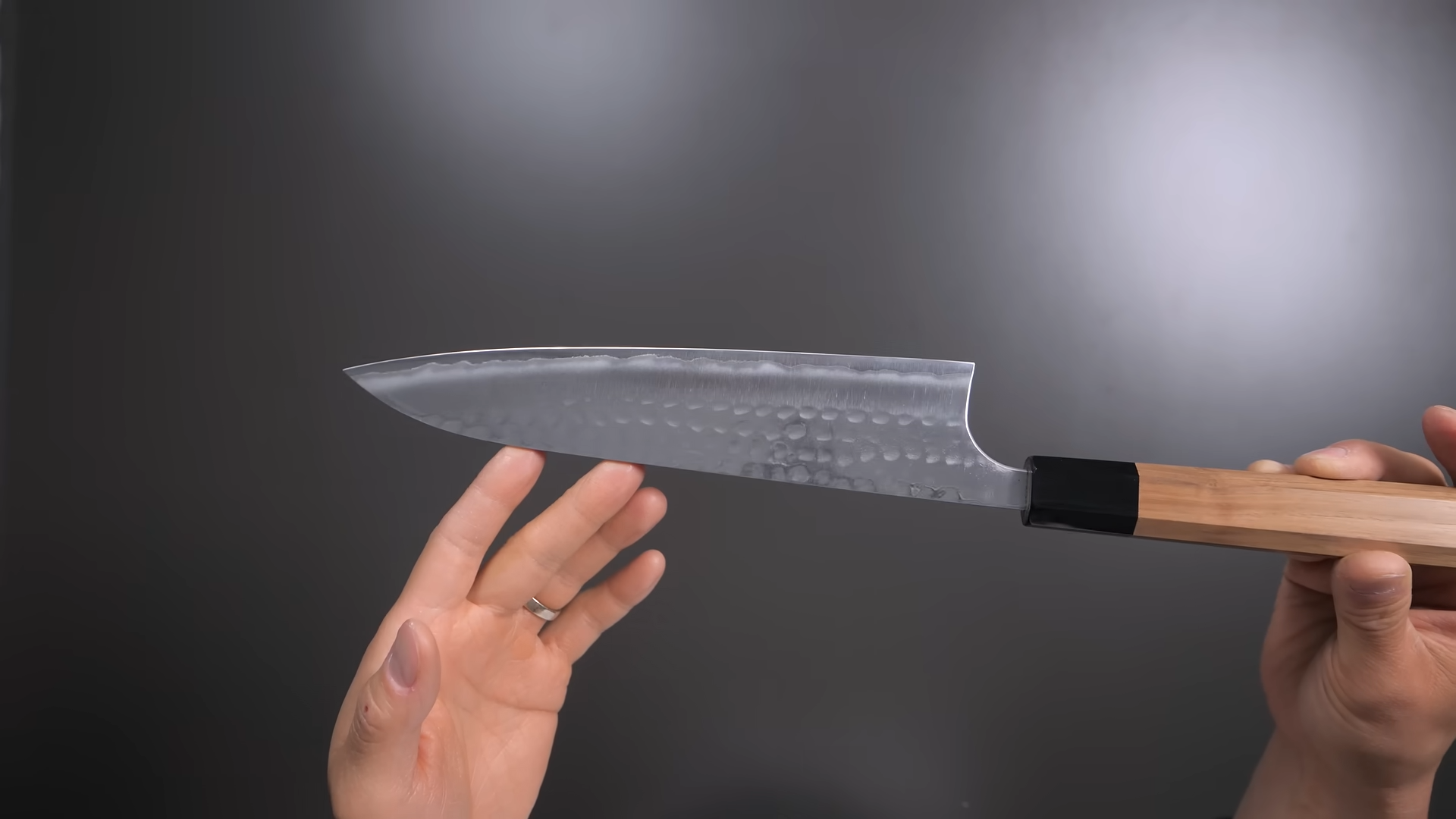
In an automated plant, every single knife stamped from a sheet of DIN 1.4116 or AUS-8 matches its predecessor down to fractions of a millimeter. On an artisan bench, slight variations are the natural signature of the forging process.
STRUCTURAL VARIANCES IN HAND-FORGED CUTLERY

1. Spine Thickness:
   └── Blade A: 2.3mm at the heel │ Blade B: 2.2mm at the heel
   └── Reason: Hand-drawn distal tapers under a mechanical spring hammer.

2. Cladding Height:
   └── San-Mai lamination lines (Jigane to Hagane) vary in height along the bevel.
   └── Reason: Freehand convex grinding on large rotating water wheels.

3. Surface Textures:
   └── Tsuchime (hammered) and Nashiji (pear skin) finishes have unique strike depth.
   └── Reason: Manual hammer strikes, not hydraulic uniform press dies.
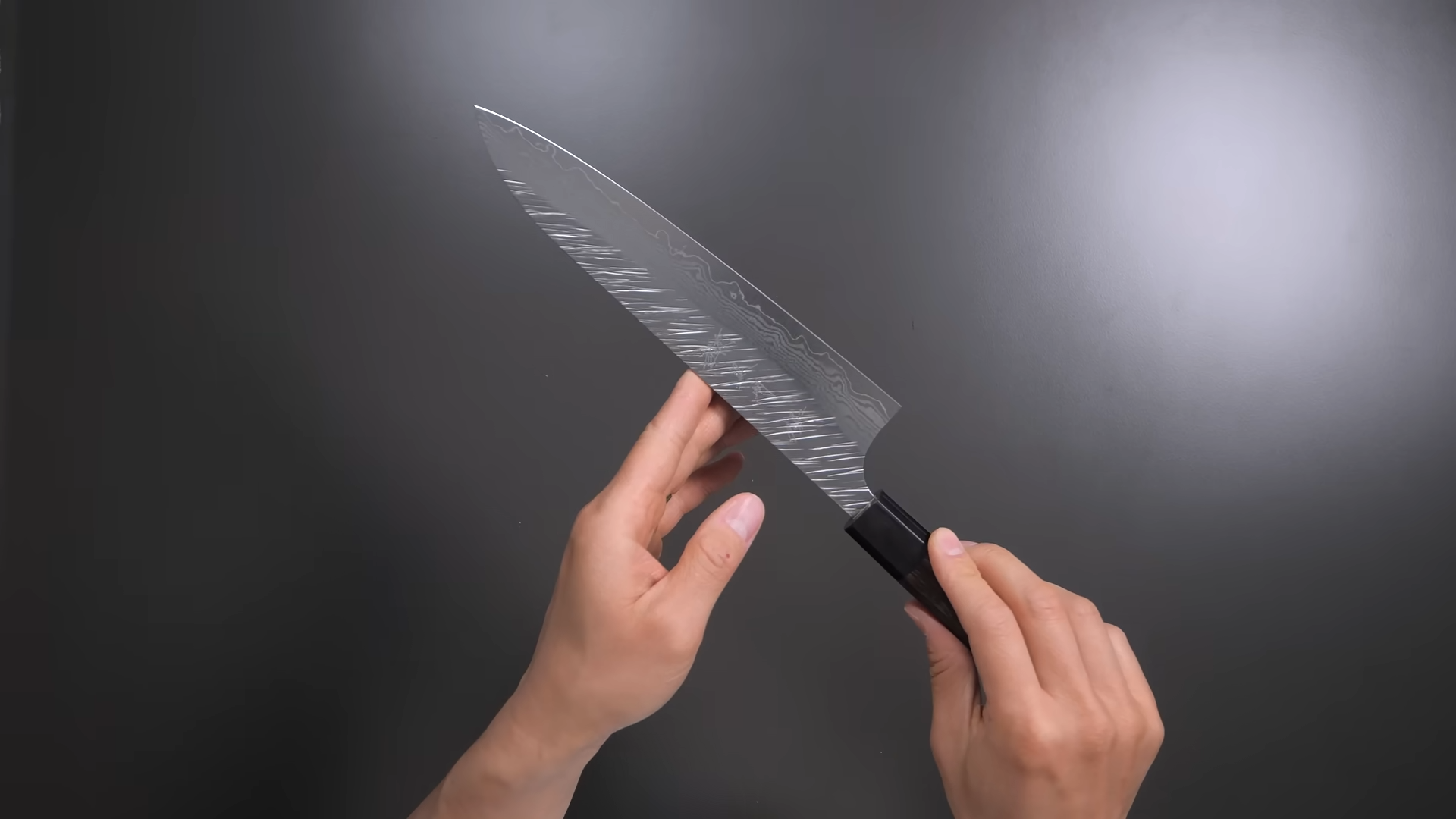
When evaluating a hand-forged blade—such as a Hiroshi Kato Aogami Super Nashiji or a Yu Kurosaki Fujin—minute differences in spine thickness, core steel exposure lines, or hammer mark density are expected.
Artisans hammer out billets in small batches, rough-grind the profiles freehand, and heat-treat without digital conveyor jigs. If one knife measures 2.3 mm at the spine while another measures 2.2 mm, this is not poor quality control; it is the physical proof of human craftsmanship.
4. The Out-of-the-Box Sharpness Myth: Geometry vs. Apex
A frequent complaint among novice buyers is that an expensive artisan knife did not arrive "hair-splittingly sharp" out of the box.
While most artisan blades from workshops like Echizen arrive with exceptional edges, there is a fundamental philosophical difference in how traditional masters view the initial apex:
OUT-OF-THE-BOX SHARPNESS SPECTRUM (BESS TESTER)

0g ─────── 100g ────────────── 200g ────────────── 300g ─────── 400g+
│          │                   │                   │            │
Double-Edge Hand-Finished      Standard High-End   Artisan      Standard Factory
Razor      Artisan (Sub-150g)  Japanese Production "Blank" Bevel Utility Beater
The Unsharpened Masterpiece
Certain traditional knife guilds, particularly in Sakai, historically ship high-carbon knives (such as Kenichi Shiraki-forged Shirogami blades) with what westerners consider a conservative edge—often reading ~300g on a BESS sharpness tester.
This is entirely deliberate:
The Custom Micro-Bevel: Traditional master smiths understand that professional sushi chefs and culinary purists have hyper-specific sharpening preferences. A knife's edge angle must match its intended task (e.g., 70/30 asymmetrical bevels for proteins vs. 50/50 convex grinds for produce).
Shipping Edge vs. Working Apex: Some workshops leave the final micro-bevel unrefined to protect the delicate, ultra-hard (63–65 HRC) steel from micro-chipping against packaging during rough overseas transit.
Why Cross-Sectional Geometry Always Trumps Apex Keenness
A cheap, thick stamped knife can be ground on a motorized paper wheel to register an impressive 100g on a BESS tester. But the moment that knife enters a dense carrot or sweet potato, it wedges, binds, and splits the vegetable because the cross-sectional geometry behind the edge is shaped like an axe.
Conversely, a master-crafted artisan knife features an exquisite, distal-tapered grind that drops to fractions of a millimeter directly behind the cutting shoulder. Even if the immediate apex is conservatively finished at 300g BESS, its superior geometry allows it to glide through food with zero wedging.
Refining a 300g apex down to a sub-100g surgical edge takes three minutes on a 1,000-grit and 5,000-grit waterstone. Re-grinding the primary bevels of an overly thick knife requires hours of bench thinning.
Always buy the knife for its geometry and heat treatment, not its factory edge.
5. Generational Scarcity: The Vanishing Master Smiths
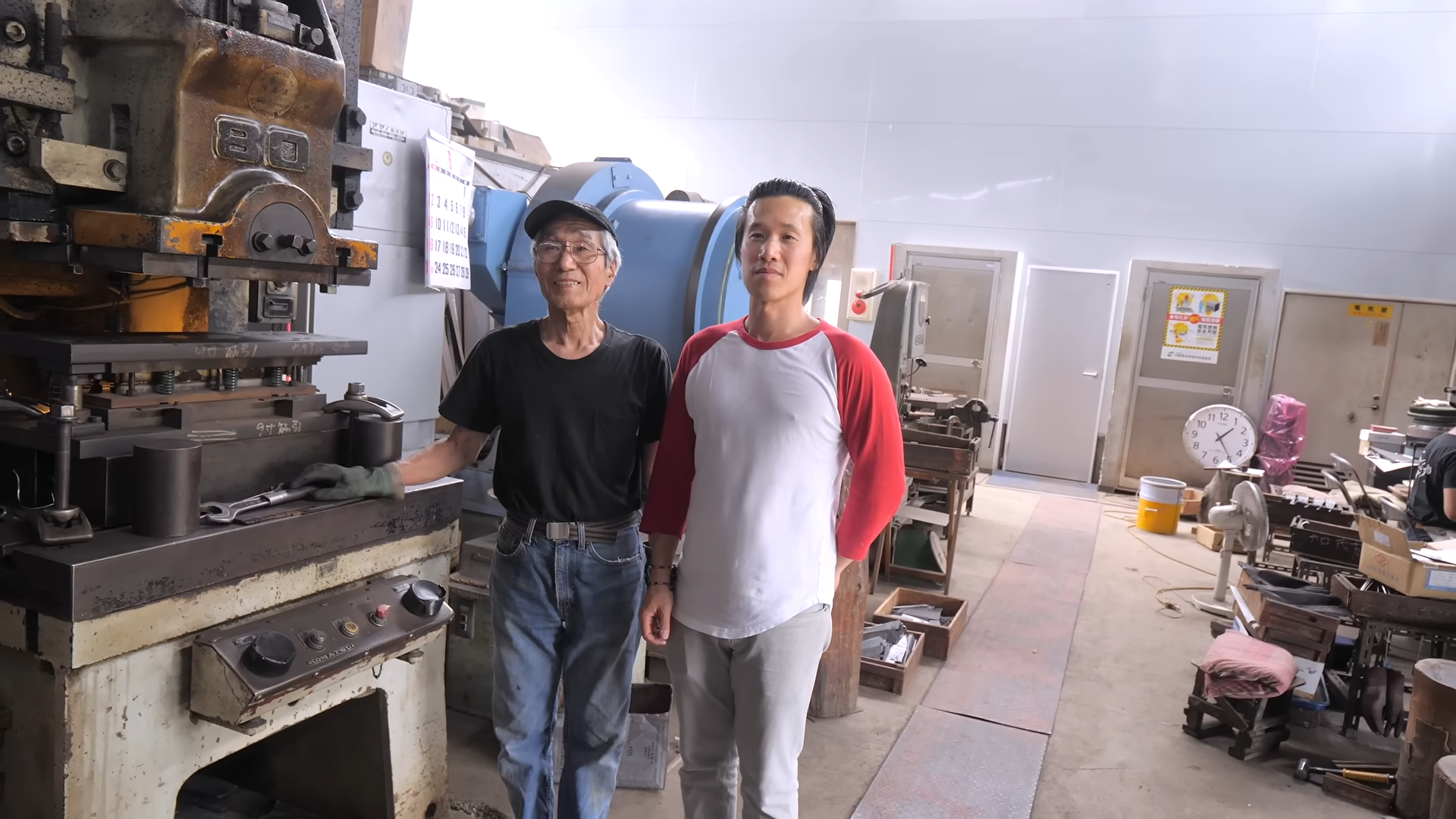
The most critical factor separating artisan cutlery from mass-produced commercial lines is simple, unavoidable human mortality.
When you purchase a factory knife from a global conglomerate, that SKU will likely exist in catalogs for the next twenty years. When you buy an artisan knife, you are purchasing a finite slice of an individual smith's remaining life's work.
THE REALITY OF THE ECHIZEN & SAKAI MASTER GUILDS

Active Senior Craftsmen:
├── Katsushige Anryu: Entering his 80s (transitioning workshop to nephew Takumi Ikeda)
├── Takeshi Saji: Well into his 70s / 80s (inventor of custom rustic stag & ironwood handles)
└── Hiroshi Kato: Retired (forge handed down to son-in-law Yoshimi Kato)

Irreplaceable Collaborations:
└── Sadao Nishihara (Master Handle Maker): Retired in 2019
    └── Result: The iconic "coca-cola contoured" ironwood and stabilized burl handles
        paired with Kato blades are permanently out of production.
In recent years, the cutlery world has watched iconic workshops permanently close or transition due to aging masters retiring without successors:
Legendary handle artisan Sadao Nishihara officially stepped away in 2019. The small, final batch of Kato blades fitted with his custom contoured ironwood, cherry, and dyed birch handles became historical relics overnight.
Foundries are increasingly consolidating, making pure, small-batch traditional white and blue paper steels harder to source for solo smiths.
When purchasing from young, generational blacksmiths like Yu Kurosaki or Takumi Ikeda, you can look forward to following their evolution for decades. But when acquiring pieces from masters like Anryu-san or Saji-san, you are acquiring tools from a golden era of Japanese hand-forging that is rapidly drawing to a close.

The Verdict: Developing Artisan Grace
A hand-forged Japanese kitchen knife is not a soulless industrial product designed to be discarded. It is a functional piece of cultural heritage, shaped over coal fires, refined on spinning waterstones, and hand-fitted into natural woods.
If you prioritize surgical cosmetic symmetry, zero-maintenance stainless alloys, and automated consistency, purchase a high-end factory knife from Miyabi, Yaxell, or Wüsthof.
If you appreciate the tactile soul of high-carbon steel, surgical cutting grinds, and the distinct touch of a master craftsman who dedicated sixty years to his trade, buy the artisan knife.
Accept the small variances, rinse off the packing dust, set your preferred apex on your waterstones, and enjoy owning a cutting tool that carries genuine human soul.