

Atoma 140 Diamond Plate Review: The Ultimate Tool for Heavy Repair and Reprofiling
"As an Amazon Associate, I earn from qualifying purchases"
When a blade arrives at the bench with deep edge chips, a broken tip, or severe shoulder wedging, standard medium-grit water stones are completely useless. Re-establishing geometry on a 1,000-grit stone requires hours of friction, wasting both time and abrasive material.
Coarse synthetic water stones exist for this purpose, but they suffer from a major engineering limitation: they dish out rapidly under heavy pressure, requiring constant flattening.

Burrfection repairing chipped knife on atoma 140
Enter the Atoma 140 Extra Coarse Diamond Plate.
Utilizing advanced electroplated diamond technology, the Atoma 140 is built for heavy-metal removal. Whether you are reprofiling a damaged apex, repairing major edge trauma, or restoring vintage Japanese cutlery, this tool delivers unmatched speed and surgical flattening precision that synthetic abrasives simply cannot match.
Technical Performance Benchmarks
Abrasive Type: Electroplated Diamond Clusters
Grit Rating: Extra Coarse (~140 JIS equivalent)
Break-In Period: 4–5 heavy repair sessions
Estimated Lifespan: 5–10 Years (under proper technique)
Primary Role: Chip repair, profile rebuilding, bevel thinning, and whetstone flattening
Overall Rating: Essential Pro-Tier Investment
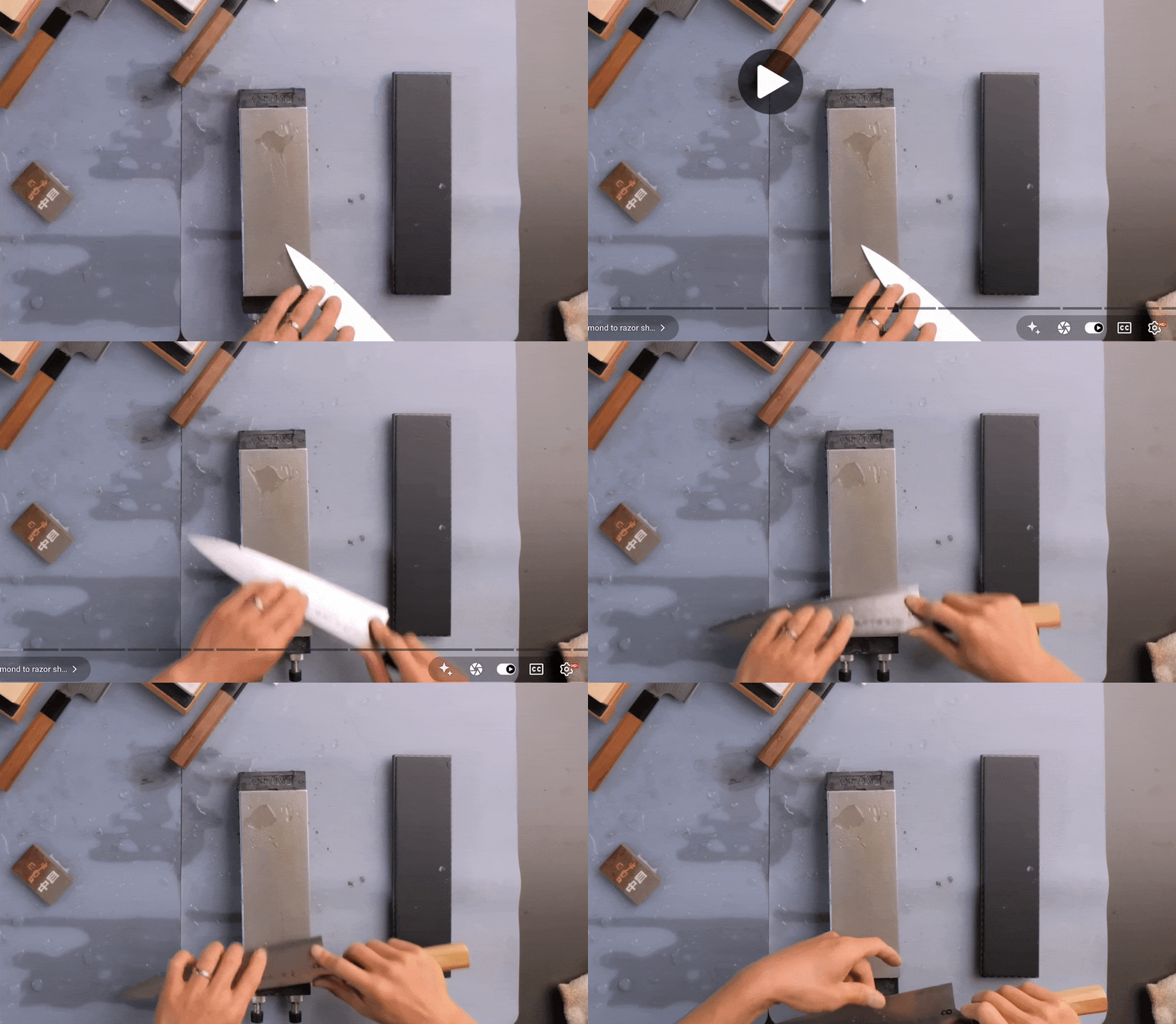
sharpening on atoma 140
1. Grit Mechanics & The Break-In Period
The Atoma 140 features clusters of industrial diamonds electroplated onto a precision-ground stainless steel sheet, which is mounted to a rigid aluminum base plate. At 140 grit, it represents the absolute extra-coarse limit of manual sharpening tools.
The Break-In Phenomenon
Out of the box, a new Atoma 140 feels harsh and aggressively coarse. This is due to microscopic high points in the nickel electroplating layer.
During the first 4 to 5 sharpening sessions, the highest friable diamond particles shed away. The surface stabilizes into a uniform matrix that cuts with incredible speed without catching or grabbing the microscopic apex of the blade edge. Understanding this break-in period is critical—what feels almost dangerously abrasive on day one matures into a predictable, smooth-cutting workhorse by week two.
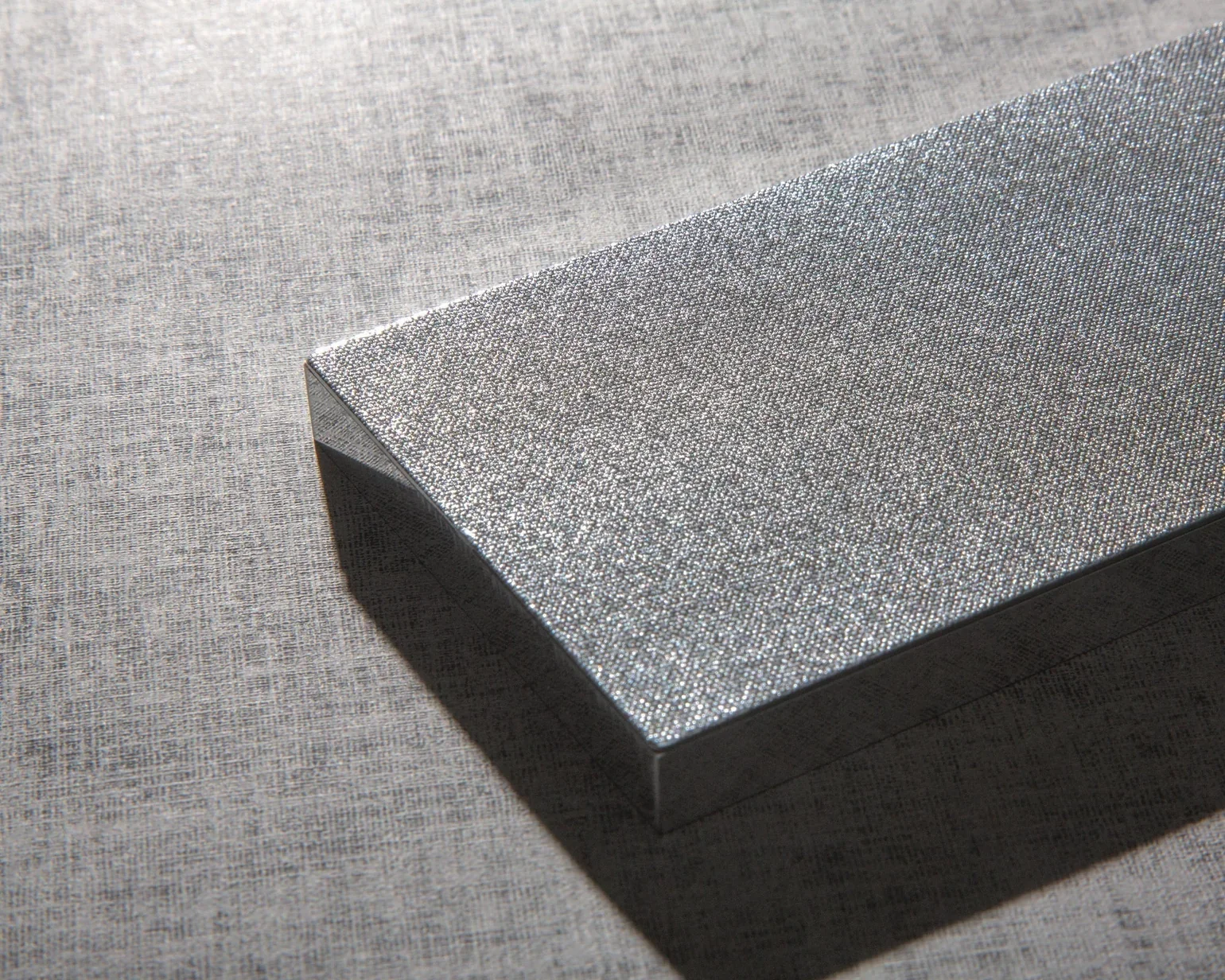
2. Speed and Longevity:
Debunking the Diamond Plate Myth
A persistent myth in the sharpening community claims that electroplated diamond plates wear out and require replacement every one to two years. In practice, premature plate failure is almost always caused by user error—specifically applying excessive downward force.
Speed Benchmark: Even after five years of continuous bench work, an Atoma 140 cuts faster than the fastest coarse synthetic water stones on the market, including the Shapton Pro 120.
Lifespan Reality: Because diamonds are vastly harder than any cutlery steel (including high-alloy steels at 65+ HRC), light pressure is all that is required. Letting the abrasive do the work yields a real-world lifespan between 5 and 10 years of heavy restoration work.
Zero Maintenance: Unlike coarse synthetic stones that lose their flat profile after a single chip-repair session, the Atoma's steel base remains perfectly flat forever.
3. Hand Control vs. Powered Belt Grinders
When faced with major blade trauma, many sharpeners are tempted to step away from the bench and use powered belt sanders or electric grinders. While power tools offer speed, they introduce extreme risk.
Thermal Risk: A high-speed belt grinder can ruin the heat treatment (temper) of a thin Japanese edge in a fraction of a second, softening the steel permanently.
Margin for Error: One small slip on a belt grinder removes metal instantly, destroying a blade's cutting profile beyond recovery.
Surgical Precision: The Atoma 140 allows you to remove steel at maximum velocity while retaining total physical control. Minor scratches made by hand are easily polished out on subsequent medium stones; mistakes made on power tools are often permanent.
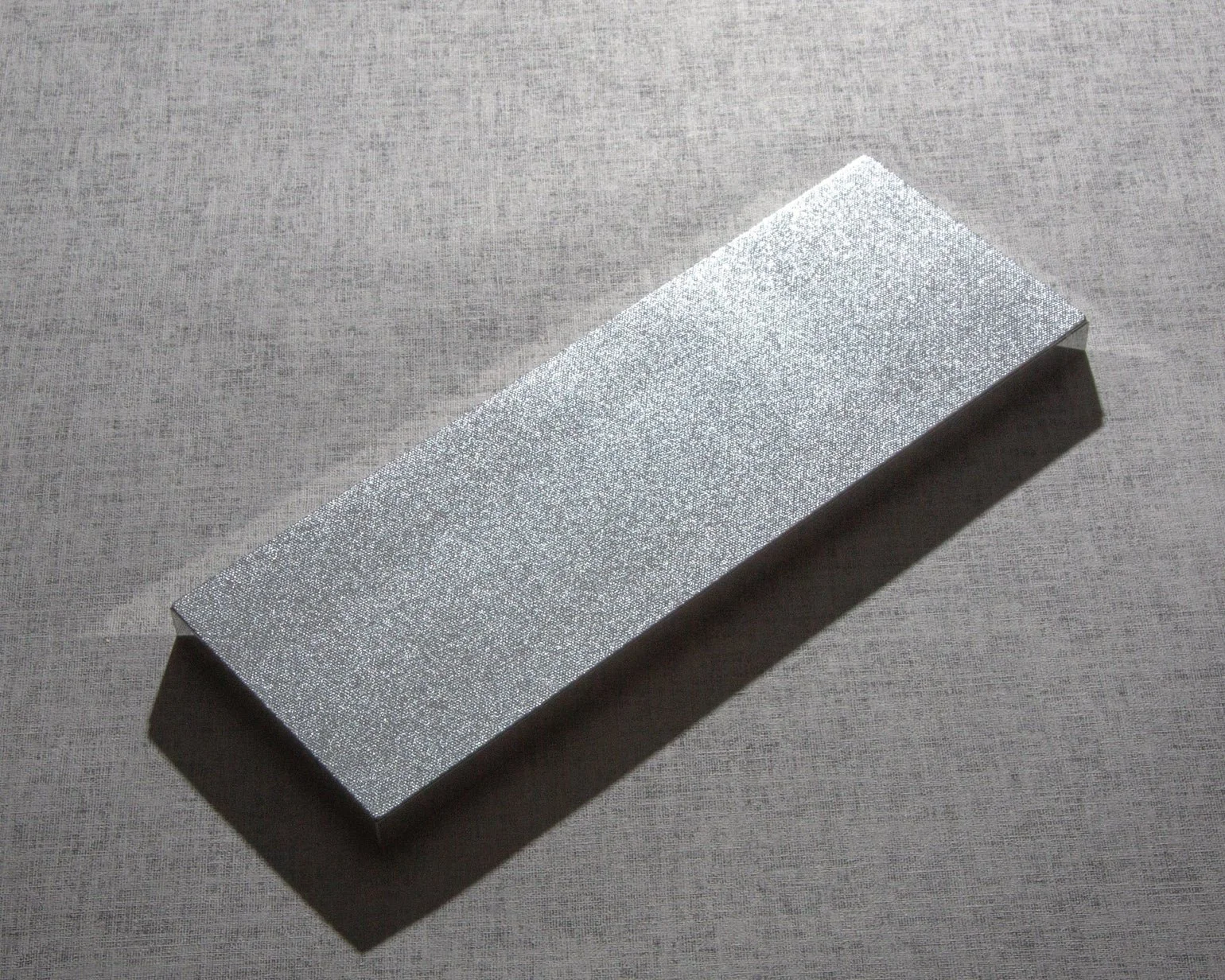
atoma 140 diamond plate
4. The Verdict: Who Should Invest in the Atoma 140?
The Atoma 140 costs roughly the same as a premium Japanese synthetic stone. However, because it doubles as both an aggressive metal-remover and an elite whetstone flattening plate, its long-term cost-per-use value is exceptional.
Who It Is For:
Restorers & Customizers: Essential for thinning blade shoulders and reshaping vintage carbon steel.
Professional Sharpeners: A necessity for rapid chip repairs and flattening soaked water stones between client jobs.
Experienced Enthusiasts: Anyone maintaining a large collection of high-hardness Japanese cutlery.
Who Should Pass:
Absolute Beginners: The 140-grit scratch pattern is extremely deep. Beginners without established angle consistency risk gouging bevels or removing too much steel too quickly.
For serious freehand sharpeners, the Atoma 140 is not an option—it is a foundational bench requirement.