Whether you are reshaping a chipped edge, maintaining an everyday working knife, or applying a mirror-polished Kasumi finish to high-end cutlery, choosing the right whetstone is critical.
Across dozens of sharpenings on varying steel hardiness—from standard kitchen stainless up to ultra-hard 66 HRC Japanese powder metallurgy—we evaluated over twenty waterstones, ceramics, and diamond plates.
Here is an authoritative breakdown of performance, tactile feedback, wear resistance, and value across every primary grit category.
trust retailers BurrfectionStore | Gyuto | WasabiKitchen | Amazon
Disclosure: As an Amazon Associate, I earn from qualifying purchases.
check out Burrfection Store for the whetstones mentioned
Category 1: Ultra-Coarse & Corrective (120–200 Grit)
Primary Function: Repairing deep chips, thinning geometry, reprofiling bevels, and flattening softer stones. Never use these stones for routine sharpening.
Atoma 140 Diamond Plate: A fast, highly aggressive diamond plate. While not a traditional waterstone, its absolute flatness and rapid cutting action make it the premier choice for flattening softer whetstones and heavy profiling work.
Shapton Pro 120: The top performer in this category. It generates a functional burr on hard steel within 1 to 2 passes. It exhibits moderate loading, but its cutting speed remains unhindered. Drawback: Fast wear rate.
Shapton Glass 120: Offers a smooth, dense tactile feel that resembles a 240–300 grit surface. It wears at less than half the speed of the Shapton Pro 120, though its cutting speed is noticeably less aggressive.
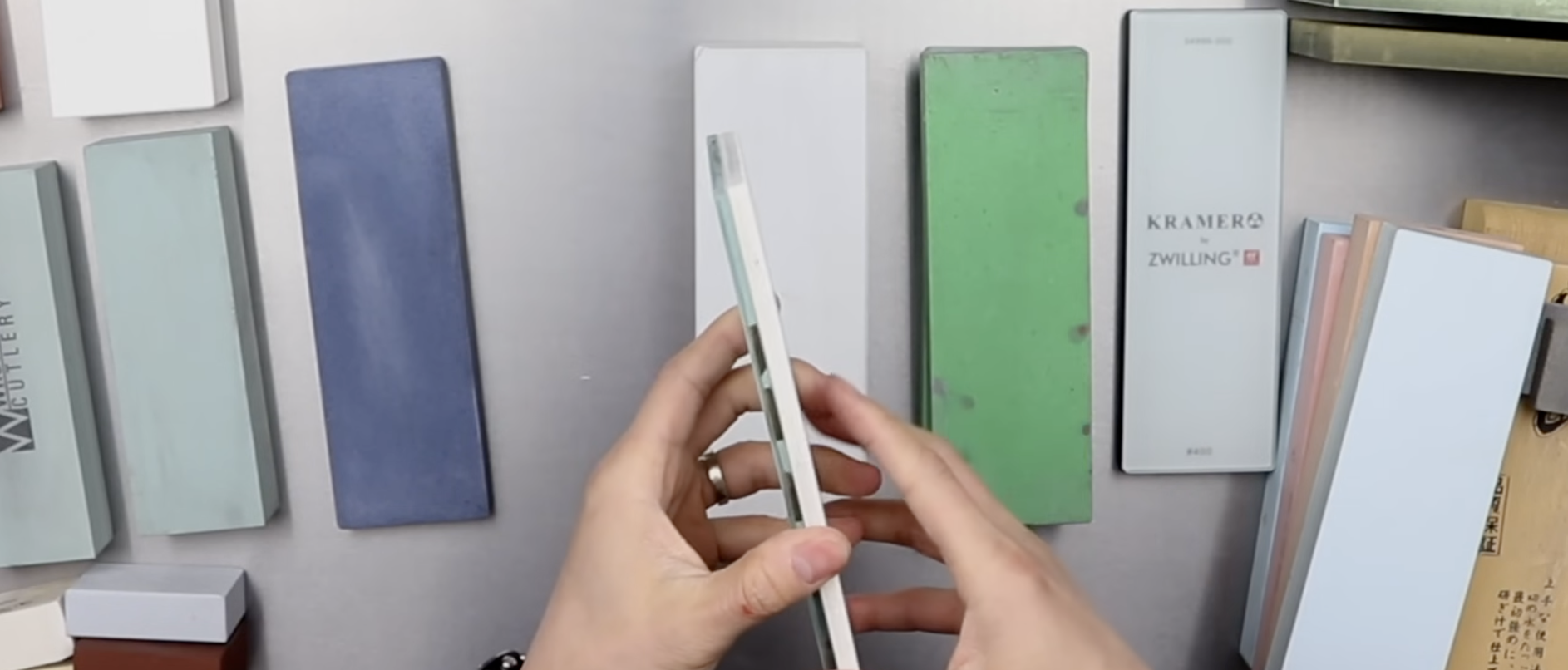
Category 2:
Coarse Sharpening (320–400 Grit)
Primary Function: Resetting a dull apex before transitioning to a medium finishing stone.
Splash-and-Go Options / all available here
Suehiro Cerax 320: (Best-in-Class Soaking Stone) A thick, brick-style soaking stone delivering superior tactile feedback, high responsiveness, and exceptional value.
Shapton Glass 320: (Best-in-Class Splash-and-Go) Highly responsive with excellent hand feel. Highly effective on steels under 62 HRC, though the thin 5mm abrasive layer requires conservative flattening.
Naniwa Chosera 400: Fast-cutting with decent feedback, though tactile "hand feel" is somewhat dry. Performs well, but the Cerax 320 provides better overall value.
Naniwa Super Stone 400: Unusually slow cutting for a coarse stone, requiring nearly double the passes of its competitors to raise a burr. It loads quickly and tends to drag.
Sharp Pebble 400: A budget-friendly ($20 range) soaking stone suitable for practicing basic technique. It wears down rapidly on steels above 58 HRC.
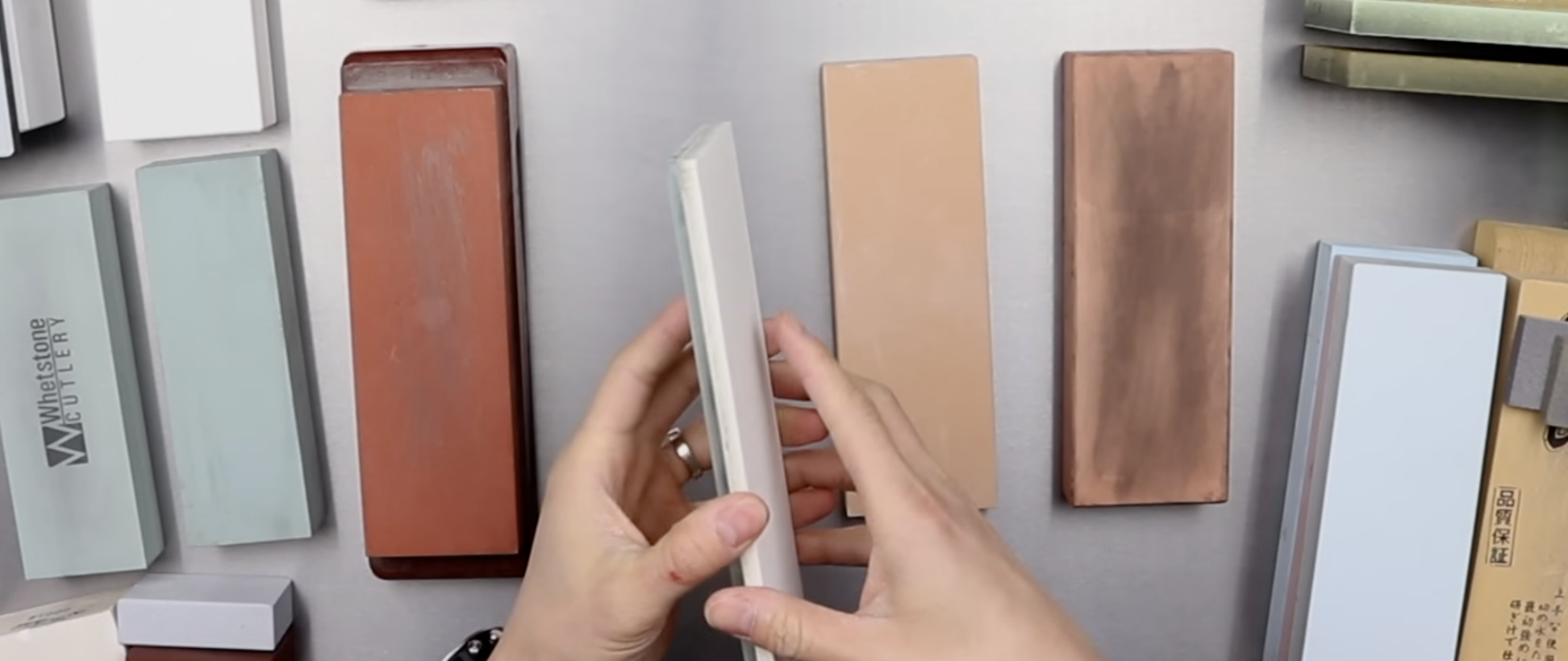
Category 3:
Medium / Primary Sharpening (500–800 Grit)
Primary Function: The core workhorse stage for routine maintenance on working kitchen knives.
[Speed & Hardness] ---> Naniwa Chosera 800 (Fastest Apex Creation)
[Tactile Balance] ---> Shapton Glass 500 (Refined, Finer Feel)
Naniwa Chosera 800: (Category Winner) An exceptional stone offering ultra-fast cutting speeds, high dish resistance, and continuous tactile feedback. It raises burrs on hard steel (up to 66 HRC) in as few as 2 to 3 passes.Shapton Glass 500: Punches well above its weight class, performing closer to a 700–800 grit stone. Extremely smooth with excellent tactile response.
Suehiro Cerax 700: Requires a 15–20 minute soak time and suffers from heavy loading and muted feedback compared to the line's stellar 1000-grit counterpart.
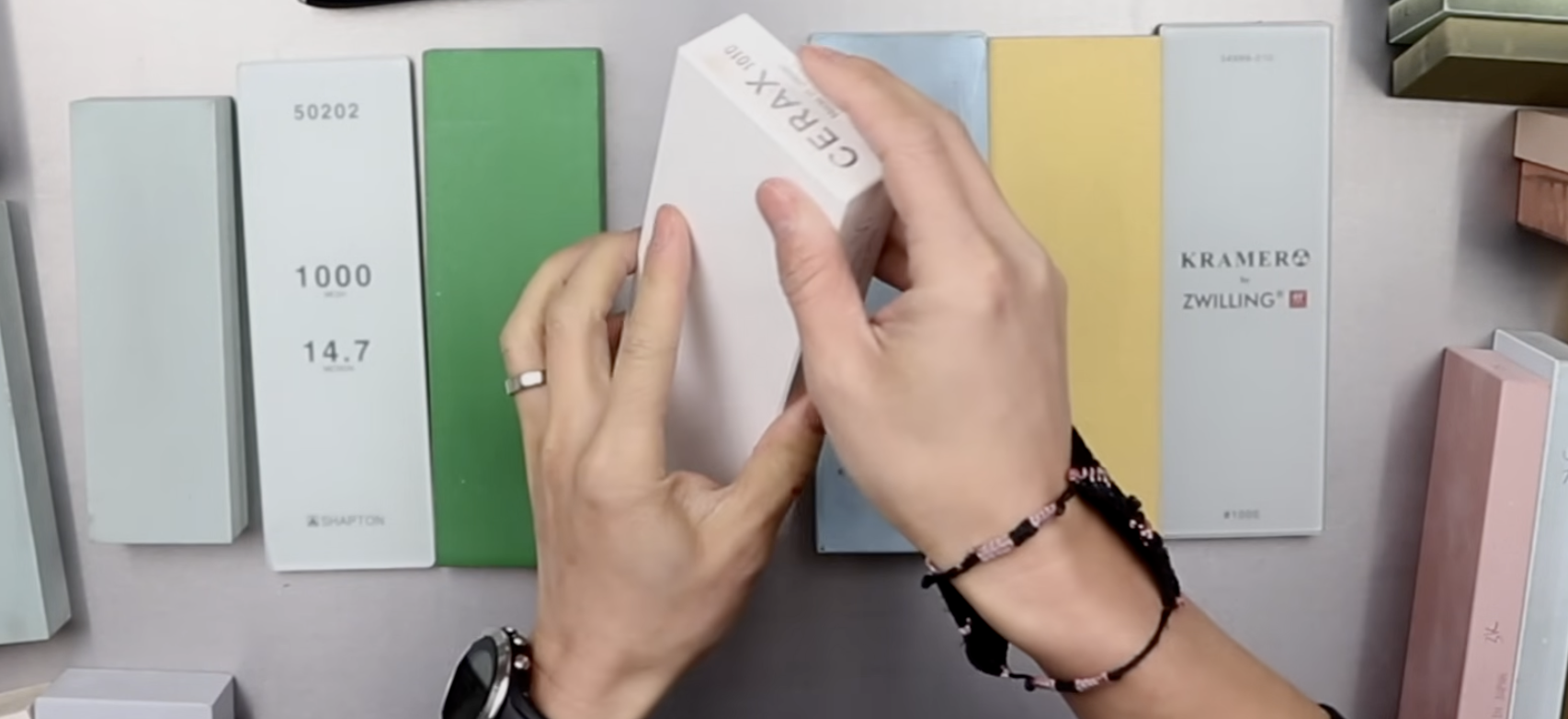
Category 4:
Finishing & Refinement (1000 Grit)
Primary Function: Establishing a sharp, toothy kitchen edge suitable for general prep work.
Suehiro Cerax 1000: (Best Overall 1000-Grit) Outstanding speed, feedback, and value. Its extra-thick footprint allows for frequent flattening without compromising tool life.
Naniwa Chosera 1000: Highly capable, though slightly softer in feel than the Chosera 800.
Shapton Glass 1000: Extremely clean operation with low loading and sharp feedback. Roughly 10% slower in metal removal than the Chosera 800, but exceptionally precise.
Shapton Pro 1000: Dense and slow to dish—making it a favorite among woodworkers—though it feels coarser than its stated 1000-grit rating (closer to 700–800 grit).
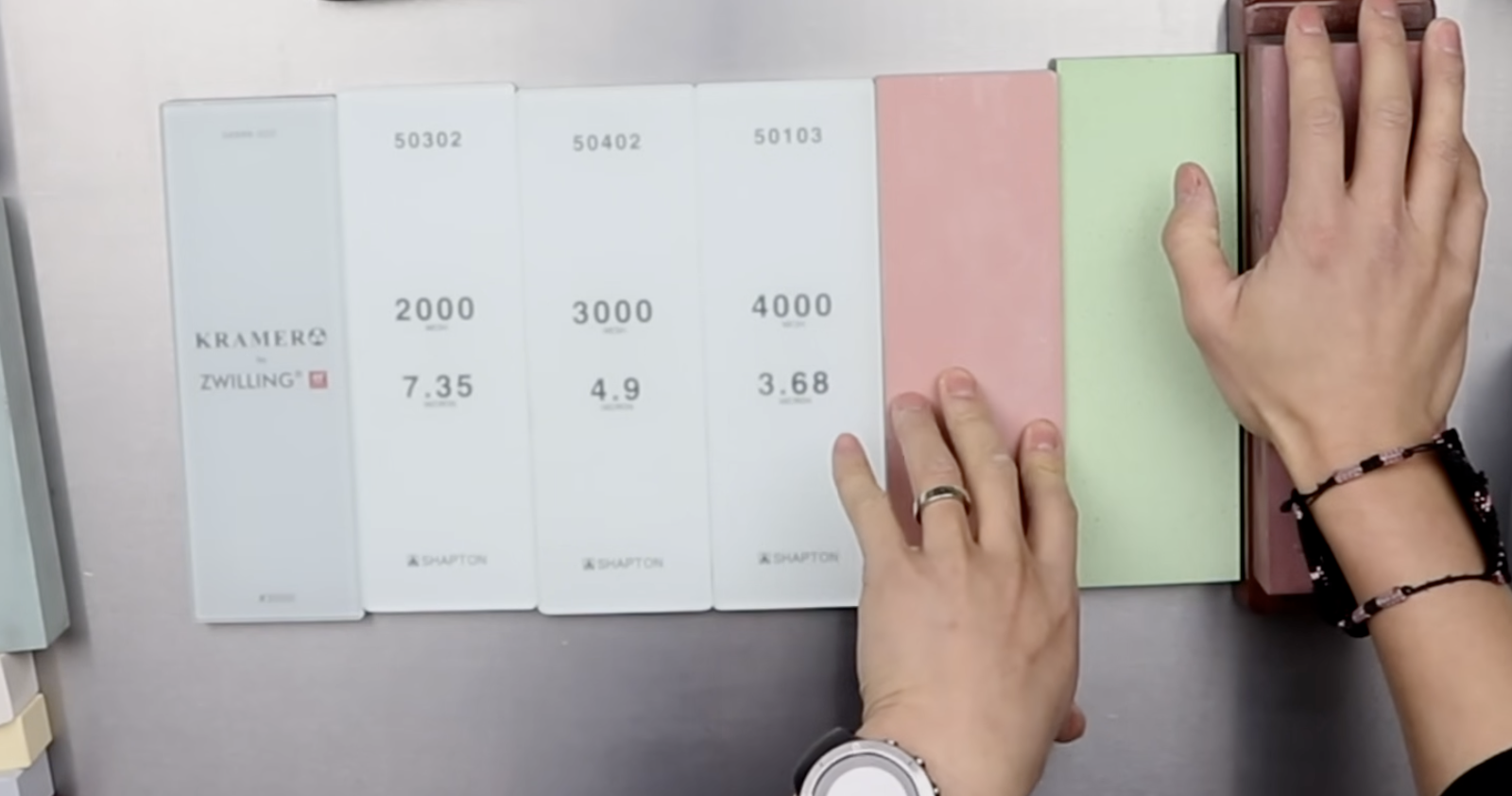
Category 5:
Intermediate Polishing (2000–4000 Grit)
Primary Function: Refining edge geometry to produce a single-stone solution that combines biting sharpness with a semi-polished finish.
Shapton Pro 2000: (Best Budget Pick) Combines high cutting speed, flat wear resistance, and crisp feedback at an accessible price point ($40–$50 range).
Naniwa Chosera 3000: (All-Time Benchmark) Performs effortlessly as both a sharpening and polishing stone. It maintains high dishing resistance while delivering outstanding feedback and cutting speed.
Shapton Glass 2000 / 3000 / 4000: The 3000-grit variant closely rivals the Chosera 3000 in polish, operating roughly 10–20% slower on ultra-hard powder steels.
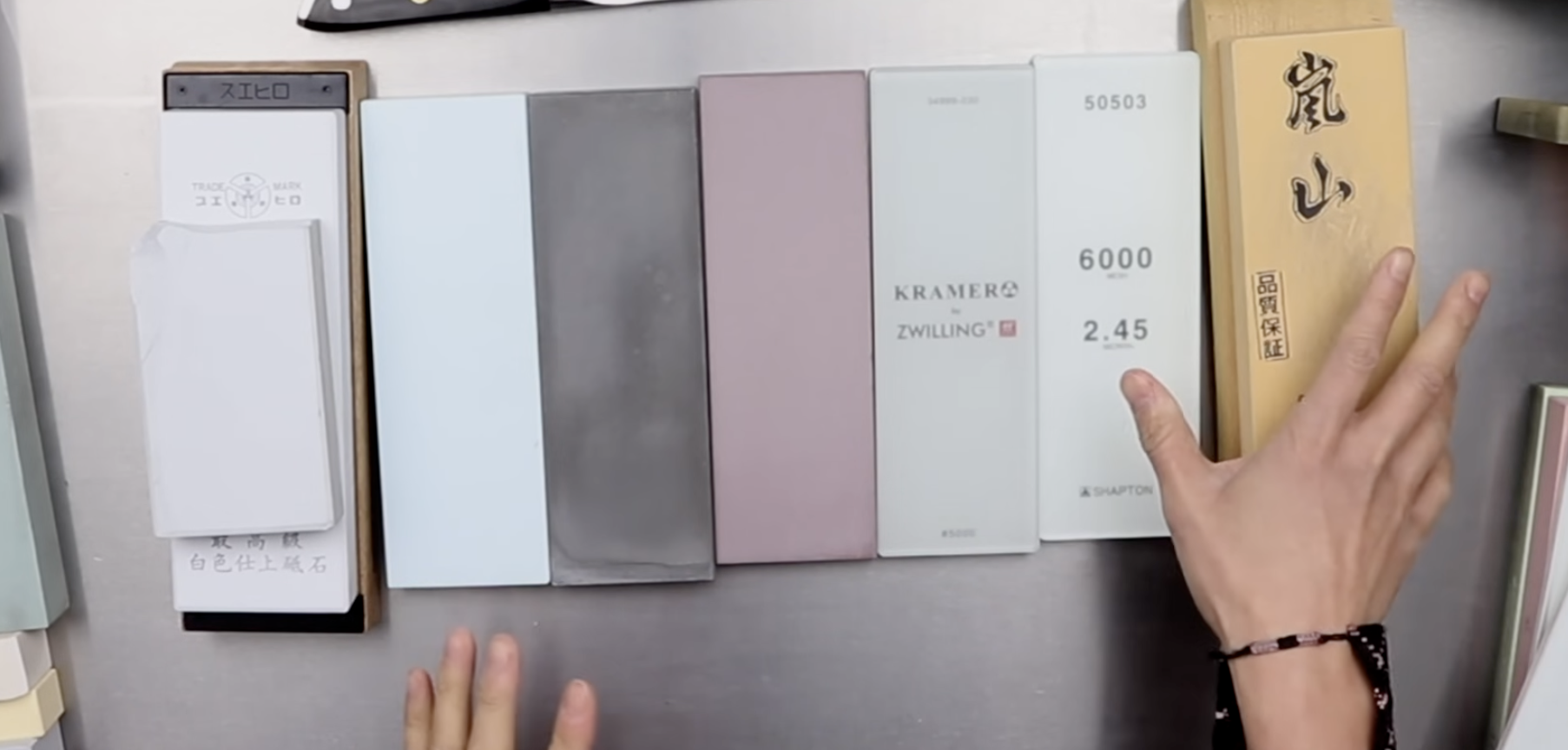
Category 6: Medium-to-Fine Polishing (5000–6000 Grit)
Primary Function: Clearing micro-scratches to yield a smooth, near-mirror Kasumi edge.
Suehiro Rika 5000: (Best Soaking Polisher) Fast-cutting with rich feedback; avoids the soft, "mushy" feel common to high-grit soaking stones.
Zwilling Kramer 5000: (Best Splash-and-Go) A standout performer featuring dense construction, exceptional tactile communication, and consistent cutting action across various steel types.
Shapton Pro 5000: Stays flat and resists loading, though the blade can feel as though it is floating, offering minimal feedback on edge position.
Arashiyama 6000: A classic, cost-effective soaking stone that produces a refined aesthetic edge, particularly on traditional single-bevel blades.
Category 7:
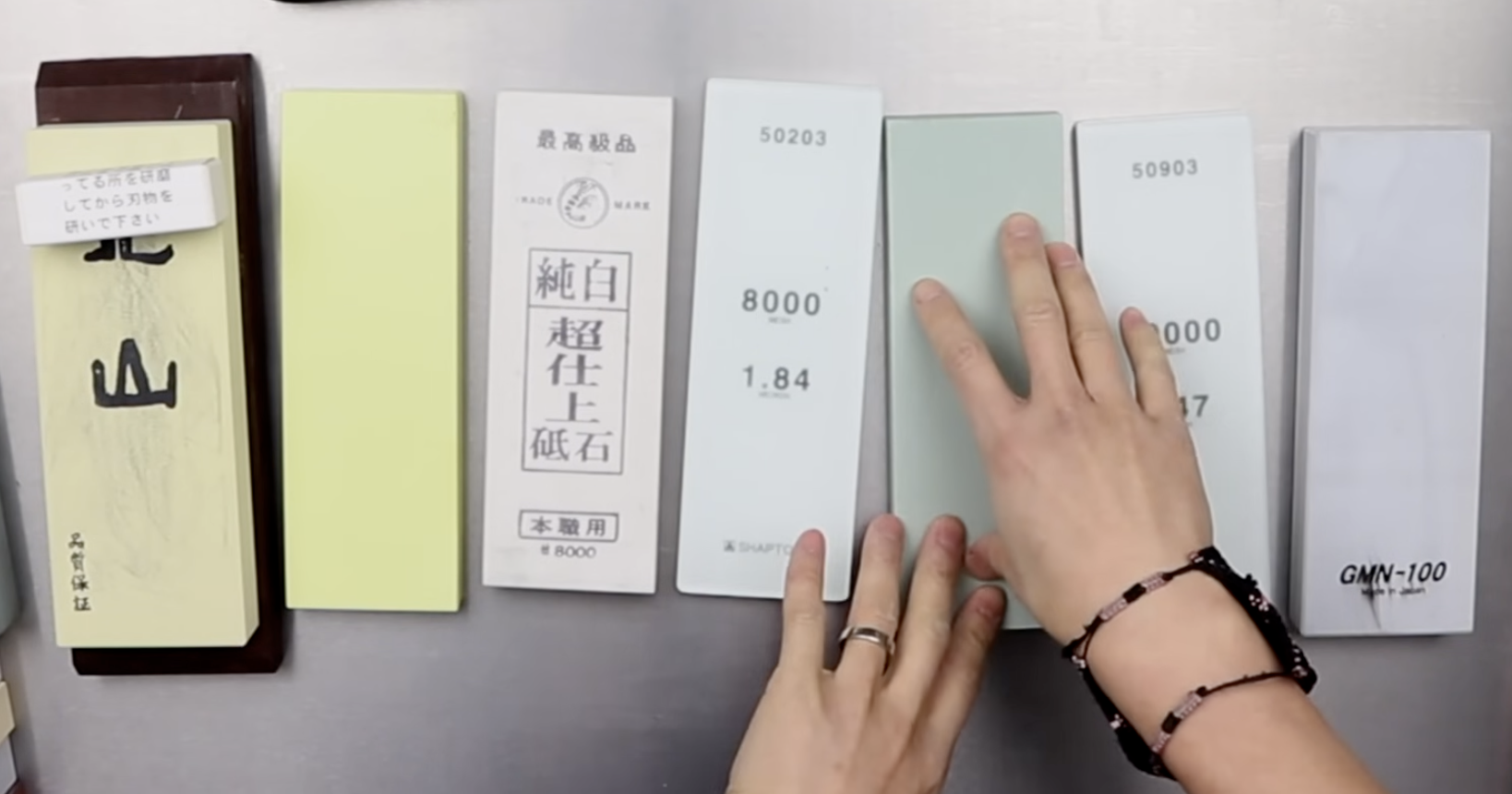
Fine & Ultra-Fine Mirror Polishing (8000–10,000 Grit)
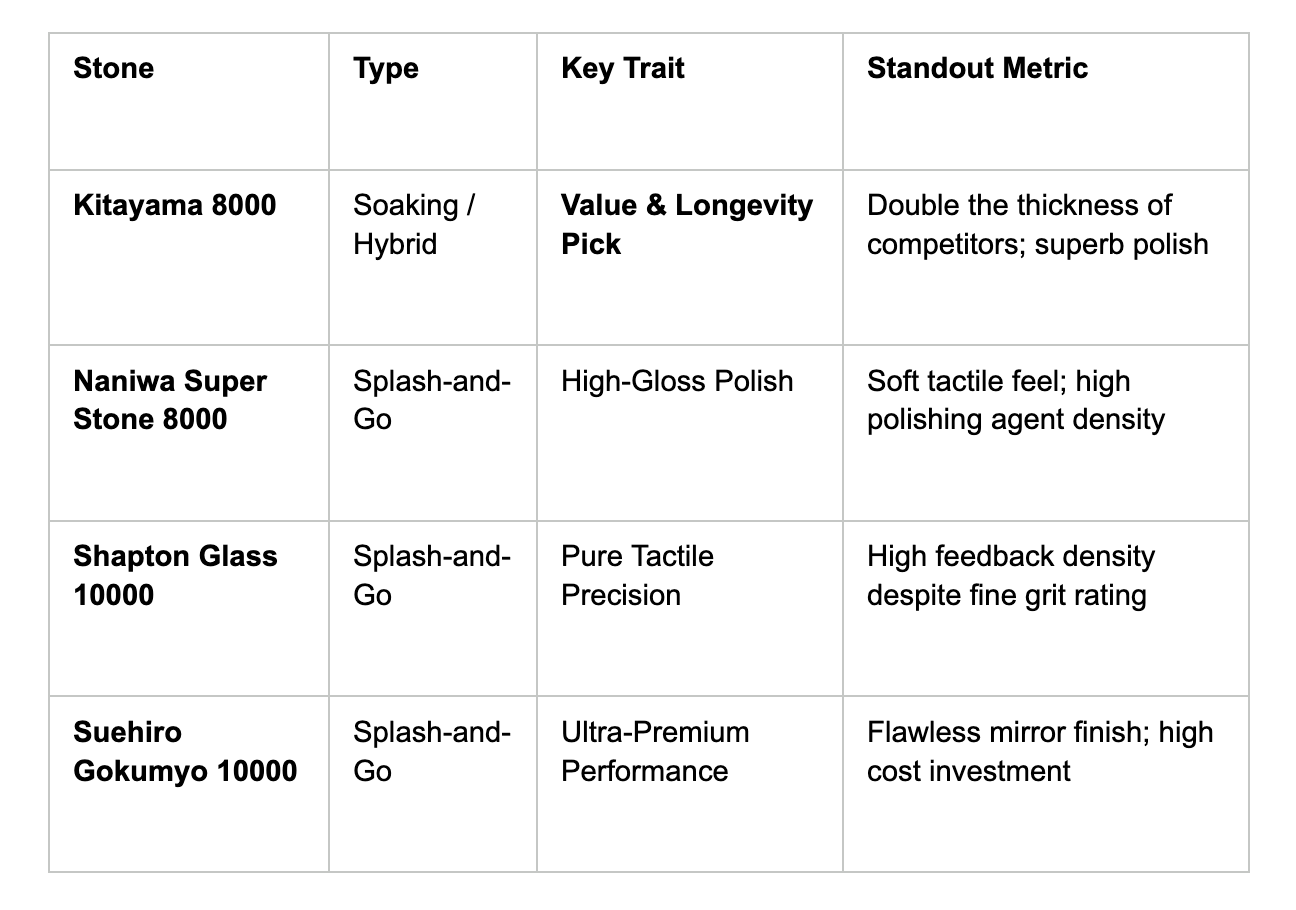
Kitayama 8000 vs Naniwa Super Stone 8000, vs Shapton Glass 10,00k vs Suehiro Gokumyo 10,000

Essential Maintenance: Cleaning & Dressing Tools
Maintaining clean stone surfaces is vital to preserving cutting speed and preventing metal particulate build-up.
The Rust Eraser Solution: A medium-grit rubber rust eraser (e.g., Sabitoru) outperforms standard 1000-grit Nagura stones for general cleaning. It effectively lifts swarf from 120 up to 10,000 grit surfaces without gouging the matrix or wearing away prematurely.
Naniwa Dressing Stone: An excellent choice for dressing and clearing slurry on medium-to-low grit abrasives.
5000-Grit Nagura: Best reserved for adding a lubricating slurry to fine polishing stones to enhance hand feel during final passes.
Final Selection Strategy
If assembling a streamlined, high-performance kit from scratch, a balanced three-stone setup—such as a 320 Coarse Cerax or 400 Naniwa Pro, a 800 Naniwa Pro , and a 3000 Naniwa Pro—will comfortably handle everything from edge reconstruction to high-end culinary polishing. The Burrfecion Edition kit was custom made for Ryky, and is what he uses for his knives.