DIY Polishing Plates With 3M Film vs. Shapton Glass: $70 vs. $400
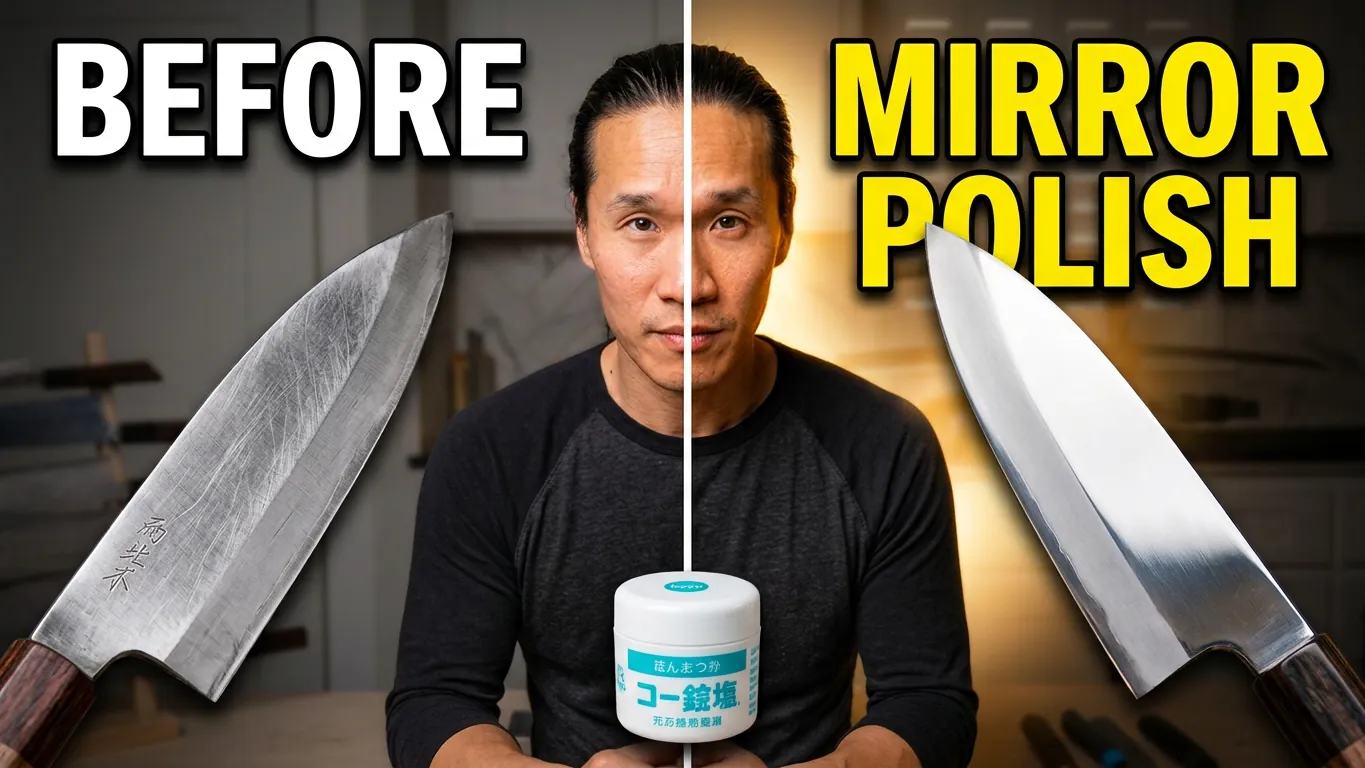
I had metal plates cut to Atoma size, stuck 3M microfinishing film on them, and raced them against a $400 Shapton Glass set. The DIY plates left the finer mirror.
By Burrfection EditorialApril 8, 2017Updated November 24, 20264 min read
This article contains affiliate links: I may earn a commission if you buy through them, at no extra cost to you. How this works

The short version
- About $70 bought three metal plates and five grits of 3M microfinishing film, versus roughly $400 for four Shapton Glass stones.
- The finest film left a better mirror than the Shapton Glass 10,000, and both knives came out sharp enough to "make it rain" paper shavings.
- The trade-offs: film is thin and less forgiving, picks up every speck of dust, and won't last as long as a glass stone, though each sheet cuts into three spares.
Making the plates
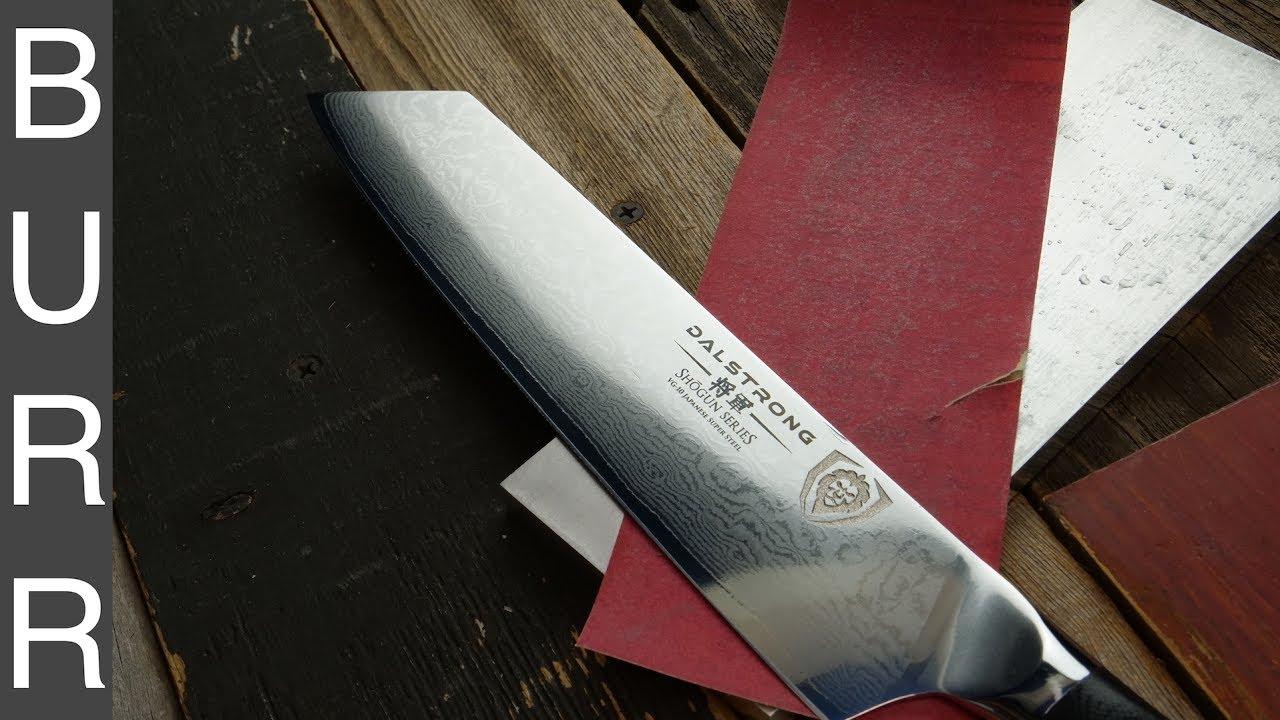
Lots of you asked about stropping, so I wanted to try something besides leather: 3M microfinishing film (0:00). It's a sticky-backed film you peel and lay on a flat surface, like a tile. I had a local metal supplier cut me plates the same size as my Atoma plate. A bonus: with a blank plate that size, you could buy Atoma replacement sheets in two grits and make your own double-sided diamond plate (6:32).
Fresh from the shop, the plates had sharp, jagged edges, so I sanded the corners and edges with 80-grit sandpaper, then the faces with 220, and cleaned them with my rust eraser, which grabs the debris (1:23). Then I traced and cut the film: each sheet gives me three pieces, so I have two spares of every grit (7:19). The sample pack had sheets marked 40 and 15 microns, which already feel like ultra-fine sandpaper or shark skin, and two finer unmarked sheets; the white one feels like silk. Peel off the backing, lay the sheet down, press out the bubbles and trim the edges (11:41). The adhesive is remarkable: you can lift and reposition a sheet as many times as you like.
The test: two identical knives
The question was whether a roughly $70 DIY set could match a Shapton Glass set of 500, 1000, 4000 and 10,000, which runs about $400 depending on where you buy (1:08). Honestly, I think everyone who can should make their own set. I dulled two identical 20cm Dalstrong chef's knives 20 times each on my brick (2:54).
The Shapton Glass knife
I skipped the 500 and sharpened on the Shapton Glass 1000, using single sweeping strokes, which suit this knife best (4:01). I don't lift the knife off the stone between strokes; lifting can leave unevenness along the edge. The 4000 and 10,000 were only for stropping, so they wouldn't wear down too fast. I love sharpening on glass stones, and even if the DIY plates match them, I'm keeping mine; they're worth the money if you like high-quality stones (7:49).
After a countdown to single strokes on the 1000, the 4000 felt silky smooth and showed no strong lines, which meant the excess burr was already gone (11:06). Then 15 to 20 strokes per side on the 10,000. For kitchen knives, 10,000 is really the limit; past that you don't see benefits at home, unless maybe it's a sushi knife. Personally, I think 8000 is the most a home knife needs, but if you love extra sharp and extra glossy, the sky's the limit (13:19).
The DIY plate knife
On the coarser film, you have to concentrate: this is paper, so don't tilt the knife or let the heel dig in (15:26). It was a big surprise: it didn't feel like paper, and I never felt the knife would catch it, even with push-and-pull. It left no debris on the plate, and it raised a burr faster than the glass stone (18:09). It is less forgiving, though: the film is a few microns thick, versus 7mm of stone on a Shapton Glass, so I was a little more careful.
On the finer films the polish started showing, a semi-glass finish, then a real mirror on the finest (24:15). Edge-leading strokes on film carry a high risk of digging in, so I wouldn't recommend them unless you're experienced. Because the film is so fine, I could feel every hair and speck of dust on it, something I'd never felt before; keep the surface completely clean for the best polish (27:43).
The finish and the cut test
Glass stones are so hard and dense that they tend to look dirtier, because the same metal particles stay on the surface for many strokes instead of being torn off with each one (29:43). A rust eraser cleans both the stones and the plates in a couple of strokes. Under a macro lens, the knife from the finest film had the finer, better mirror; the Shapton Glass finish was also excellent, exactly what you'd expect from very expensive whetstones (33:40). In the cut test, the Shapton Glass knife was very sharp, sharp enough to make it rain. The DIY knife was unreal, cutting cleanly even through thick paper (35:38).
Bottom line
For about $70, DIY film plates gave me five grit levels and a finish that beat a $400 set of Shapton Glass stones, and I don't think only people with money should get to sharpen and polish knives (37:41). The catches: you need someone to cut flat metal plates (a glass tile works too), the film won't last as long as a stone, and it's less forgiving. If each sheet lasts around 20 sharpenings, three pieces per sheet should last a home cook a long time. If you'd rather not build your own, see the sharpening kits at the Burrfection Store, or how sandpaper did in how to sharpen a knife on sandpaper.
First access
Private drops, new knives and sales
Get them from Burrfection and our retail partners before anyone else. No spam; unsubscribe anytime.
Emails from Burrfection Inc. See privacy.