Gyuto vs. Western Chef's Knife: Key Differences Explained
Disclosure: Burrfection is reader-supported. When you buy through links on our site, we may earn an affiliate commission at no extra cost to you.
For decades, the standard 8-inch Western chef’s knife—defined by heavy German stainless steel, thick spines, and sweeping belly profiles—dominated professional and home kitchens across North America and Europe. However, as culinary culture shifted toward high-precision knife work and finer prep, the Japanese Gyuto (literally translating to "beef sword") emerged as the premier alternative.
While both blades serve as the primary all-purpose workhorse on the cutting board, their underlying metallurgical philosophies, blade geometry, and maintenance requirements sit on opposite ends of the cutlery spectrum. Transitioning from a Western knife to a Gyuto isn't just a swap in brand—it requires adjusting your cutting technique and sharpening routine.
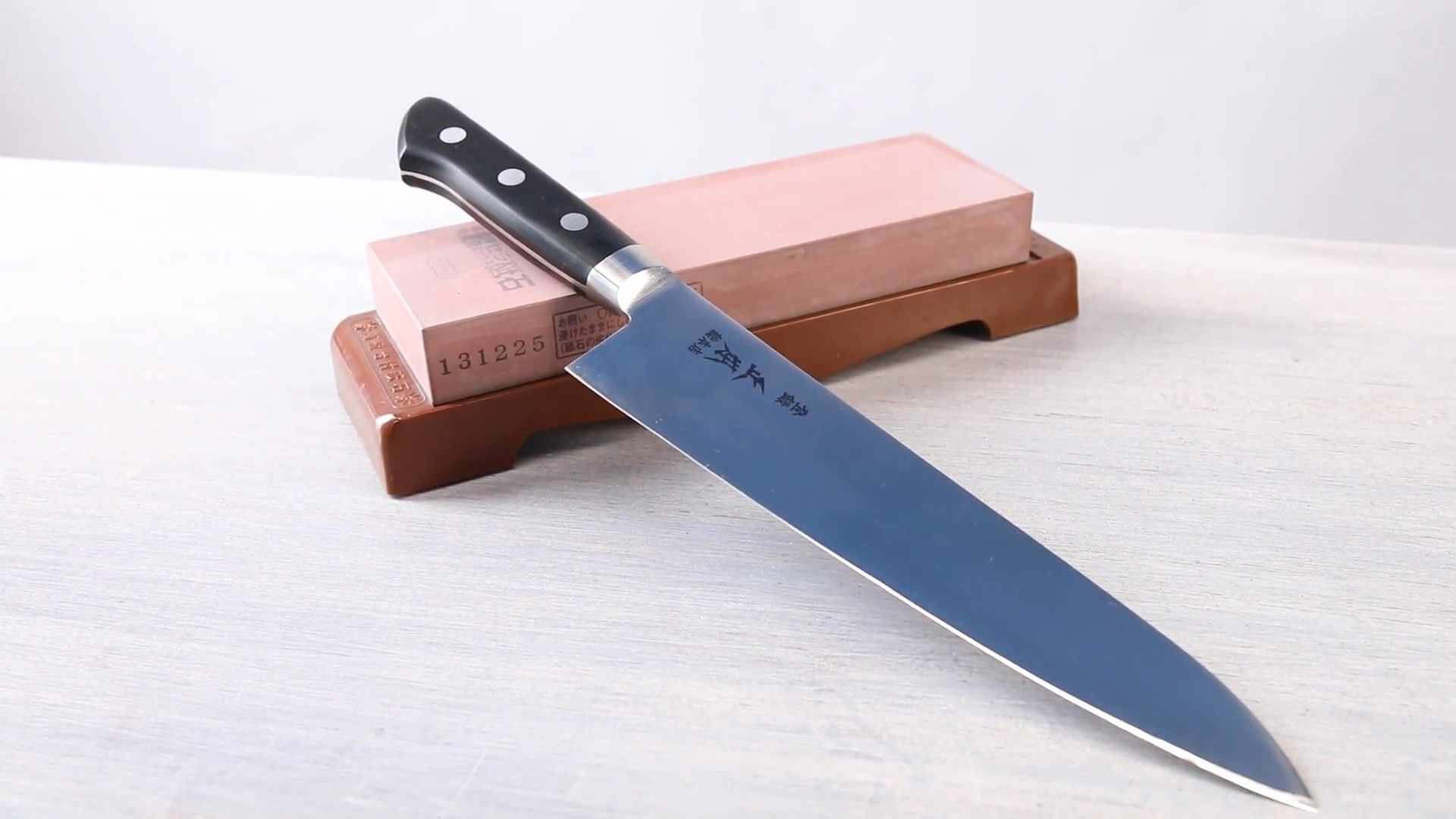
Japanese Gyuto
1. Steel Metallurgy & Rockwell Hardness (HRC)
The most consequential divide between a Gyuto and a Western chef’s knife lies in the steel formulation and heat-treatment methodology.
[ Ductile / Tough ] <--- German Steel (56-58 HRC) --------- Japanese Steel (60-64 HRC) ---> [ Hard / Brittle ]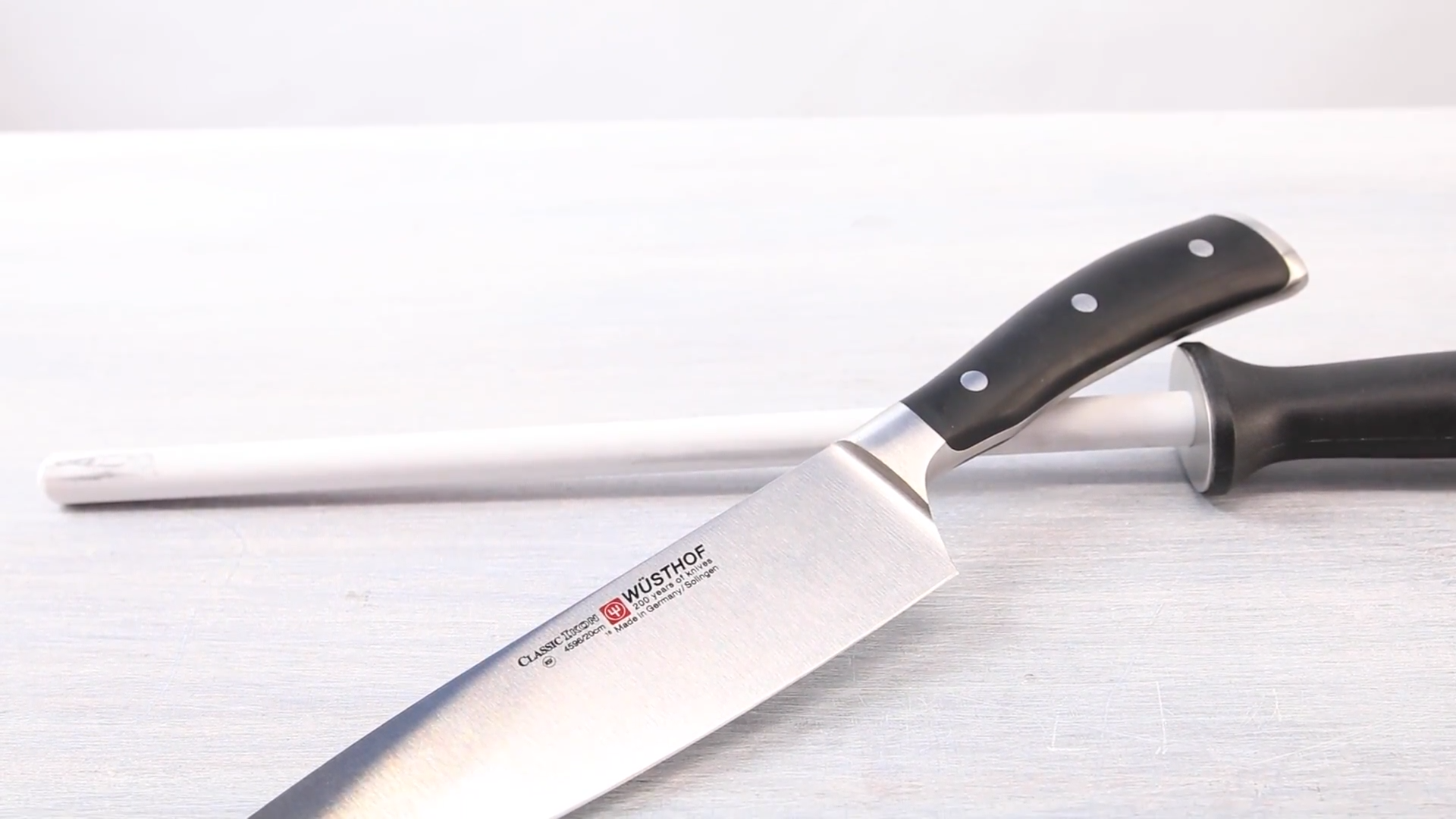
The Western Paradigm:
Soft, Ductile Steel (56–58 HRC)
Traditional German and French cutlery (built with alloys like X50CrMoV15) relies on softer steel heat-treated between 56 and 58 Rockwell C (HRC).
The Advantage: Extreme toughness and impact resistance. You can crush garlic, chop through chicken joint cartilage, or handle frozen foods without risking edge chips.
The Trade-off: The softer steel rolls under heavy lateral force and loses its shaving-sharp apex rapidly during high-volume production work.
The Gyuto Paradigm: Hard, High-Carbon & Powder Steels (60–64+ HRC)
Japanese blades utilize specialized cutlery steels like VG10, SG2/R2 powder steel, or traditional high-carbon papers (Aogami/Shirogami) heat-treated between 60 and 64+ HRC.
The Advantage: Harder steel takes a significantly keener edge and holds that sharp apex two to three times longer than Western cutlery under standard board friction.
The Trade-off: High hardness reduces ductility. The steel is brittle relative to Western blades; abusing a Gyuto on bone or twisting the edge during a cut will cause micro-chipping or tip snapping.
"Western knives bend and roll where Japanese Gyutos micro-chip. Knowing whether your steel favors ductile toughness or hard edge retention dictates how you handle the blade on the board."
2. Profile Geometry, Weight, and Board Mechanics
Holding a Gyuto side-by-side with a German chef’s knife highlights fundamental differences in weight distribution and blade shape.
Western Chef's Knife:  (Continuous Rocker, Heavy Bolster)
Japanese Gyuto:   (Flatter Heel, Distal Taper, Center-Weighted)
Profile & Weight Distribution
Western Chef's Knife: Characterized by a pronounced belly curve along the entire cutting edge, a thick spine, and a heavy integrated full-bolster extending into a full-tang handle. The weight sits heavily toward the heel and palm, encouraging a continuous rock-chopping motion where the tip rarely leaves the cutting board.
Japanese Gyuto: Features a flatter profile along the rear third of the blade, a thinner spine with an aggressive distal taper toward the tip, and often an un-bolstered half-tang set inside a lightweight octagonal or oval wood handle (Wa-handle). The knife feels center- or blade-forward in balance, making it exceptionally nimble.
Cutting Motion Realities
Western: Built for rapid rock-chopping, rough dicing, and heavy-impact prep.
Gyuto: Engineered for push-cutting, pull-slicing, and precise horizontal tip work. The long, flatter edge segment provides complete board contact without needing to rock the knife to high angles.
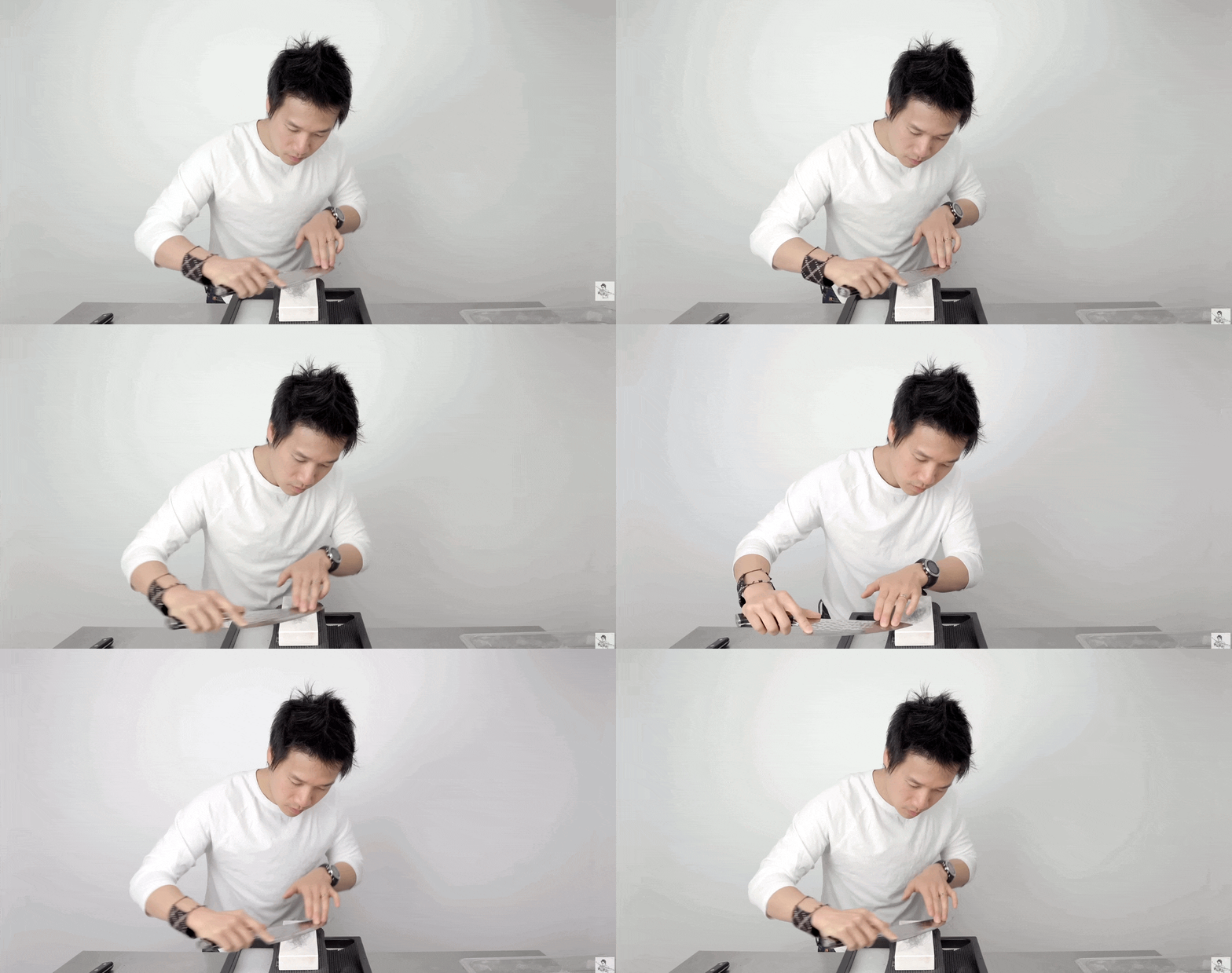
3. Edge Angles and Sharpening Nuances
Because the steels and geometries differ so dramatically, you cannot maintain a Gyuto using the same tools or techniques used for a German workhorse.
Edge Bevel Angles
Western Chef's Knife: Factory bevels are ground to roughly 18° to 20° per side (inclusive 36°–40°). This wider wedge angle reinforces the apex against heavy impacts.
Japanese Gyuto: Factory edges are ground significantly steeper, typically between 12° and 15° per side (inclusive 24°–30°). This acute angle reduces cutting resistance through dense vegetables, allowing the blade to glide rather than wedge.
Maintenance Protocols: Honing Rod vs. Freehand Whetstones
Maintaining a Western Knife: Because 56–58 HRC steel rolls rather than chips, daily maintenance relies on a ceramic or steel honing rod. A few passes realign the rolled metal apex in seconds.
Maintaining a Gyuto: Never use a traditional steel honing rod on a 60+ HRC Gyuto. The hard, brittle steel cannot be realigned by a rod; striking it against steel hones will cause micro-chipping along the acute apex. A Gyuto must be maintained on synthetic or natural waterstones (e.g., a quality 800 to 1000 grit medium whetstone followed by a 3000+ grit polishing stone).
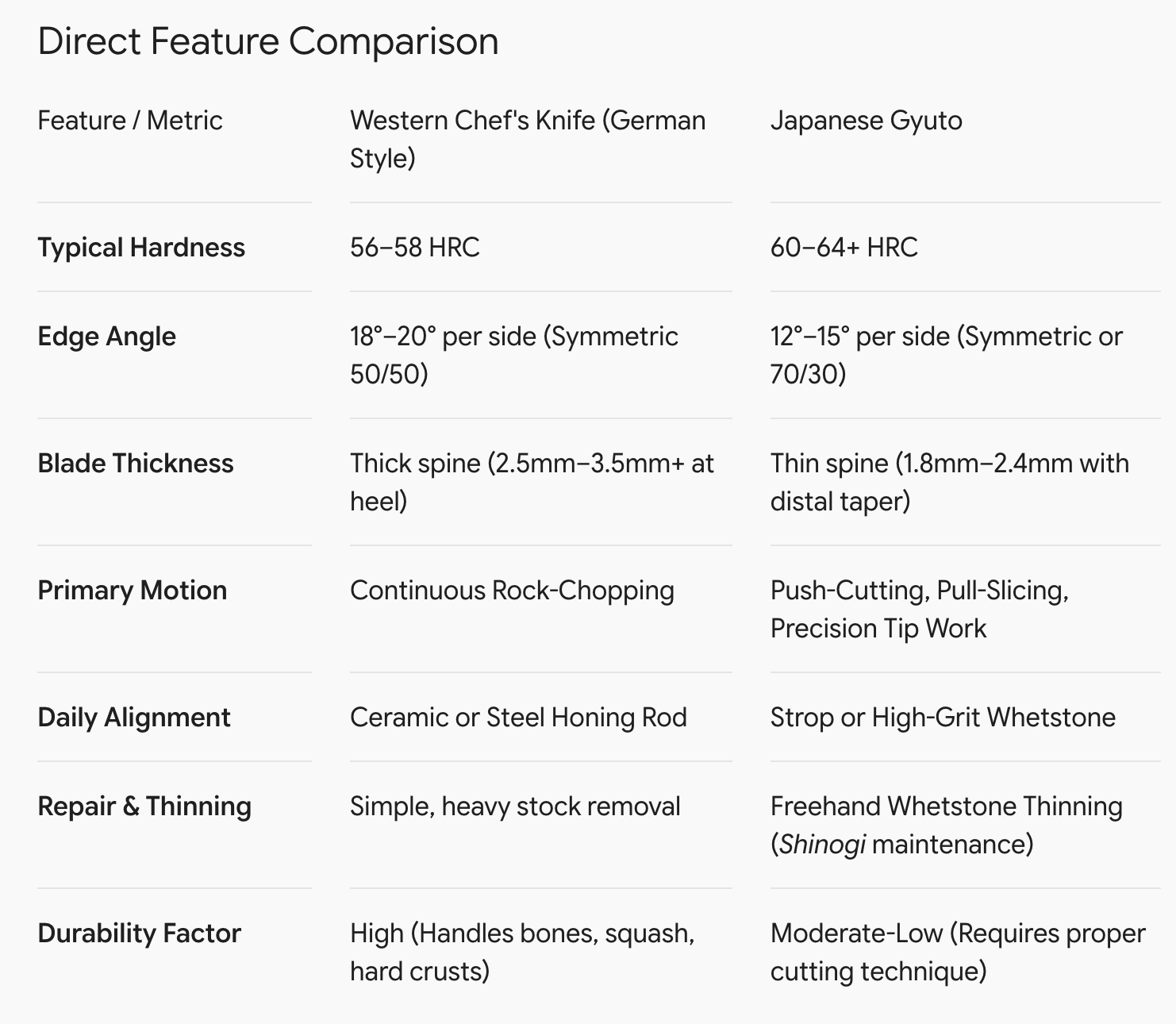
Japanese gyuto vs Western chef knife
The Editorial Verdict: Which Blade Wins Your Bench?
Selecting between a Gyuto and a Western chef's knife comes down to your prep style and your willingness to maintain high-performance tools:
Choose a Western Chef's Knife if you want an indestructible, zero-fuss daily driver that can split winter squash, handle joint bones, re-align on a steel rod in seconds, and survive indifferent kitchen handling.
Choose a Japanese Gyuto if you value effortless slicing performance, reduced wrist fatigue, clean cuts that preserve food texture, and you are prepared to practice freehand whetstone sharpening to maintain a fine apex.
“quote from body”