The Kramer x Zwilling Trilogy: Stainless Steel, Pure Carbon, and SG2 Damascus Comparison
When American master bladesmith Bob Kramer partnered with German cutlery giant Zwilling J.A. Henckels, the collaboration set a new benchmark for mass-production cutlery. By licensing Kramer’s iconic, tall-profile custom geometry, Zwilling made high-end custom ergonomics accessible to home cooks and professional chefs alike.
Disclosure: As an Amazon Associate, I earn from qualifying purchases.
The line centers on three primary iterations: the entry-level Essential Stainless Steel, the traditional 52100 Carbon Steel, and the flagship SG2 Damascus.
Each model shares Kramer's signature design principles—a tall heel for total knuckle clearance, a subtle continuous spine curvature for leverage, and a sculpted profile. However, their core steels, handle materials, and visual aesthetics target vastly different culinary needs.
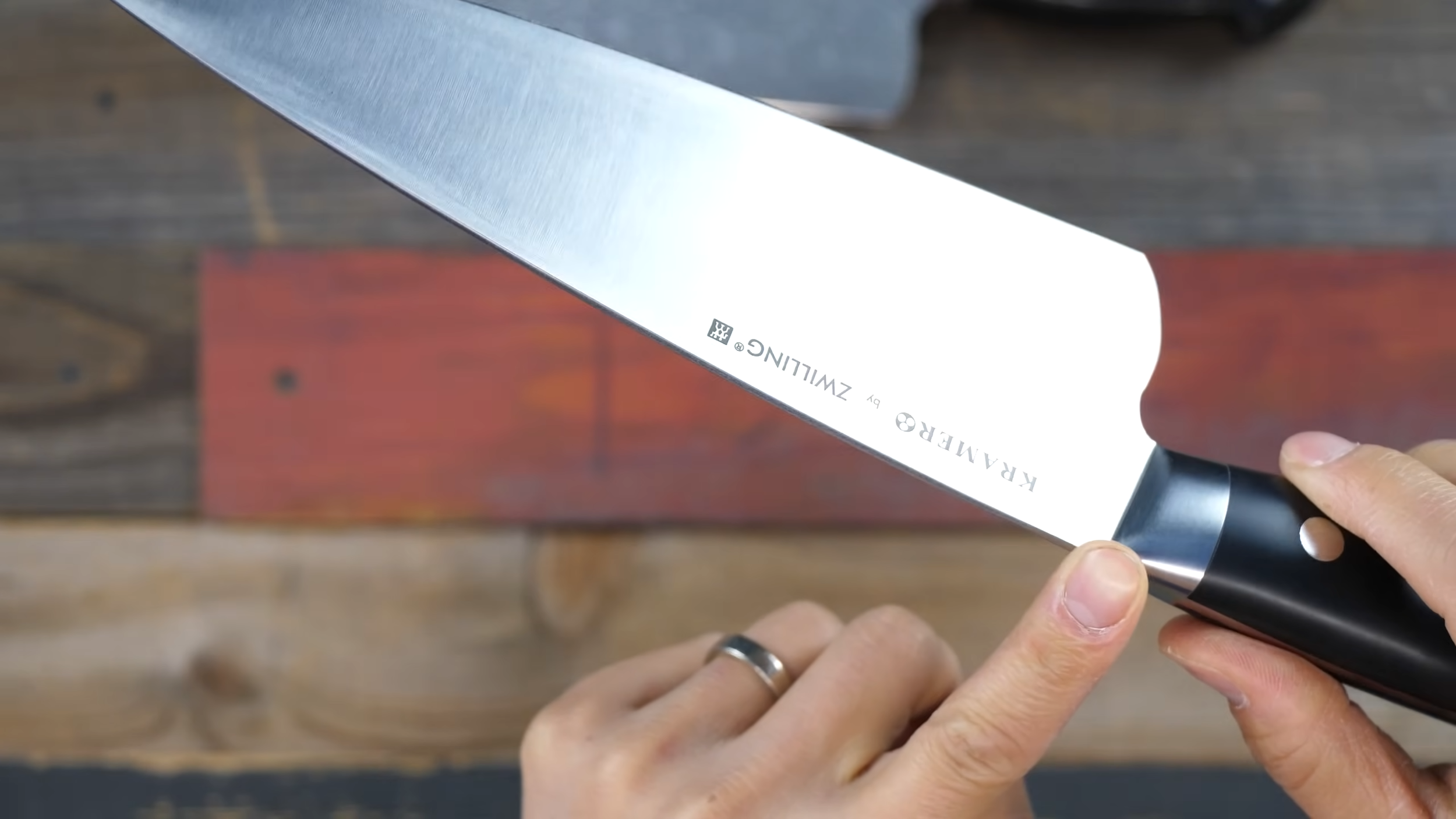
Kramer chef knife FC61 close up
1. Zwilling Kramer Essential (FC61 Stainless Steel)
Priced around $200, the Essential series represents the entry point into the Kramer design eco-system. It offers the signature Kramer profile while utilizing low-maintenance stainless steel.
Key Specifications & Features
Core Steel: FC61 Stainless Steel heat-treated to an impressive 61 HRC.
Finish: Satin/matte blade finish with a smoothly rounded, semi-polished spine.
Handle Assembly: Black polymer handle (similar to POM) with brass rivets and a signature mosaic center pin.
Ergonomics: Full-tang construction where the steel spine extends flush through the top and bottom of the polymer handle scales.
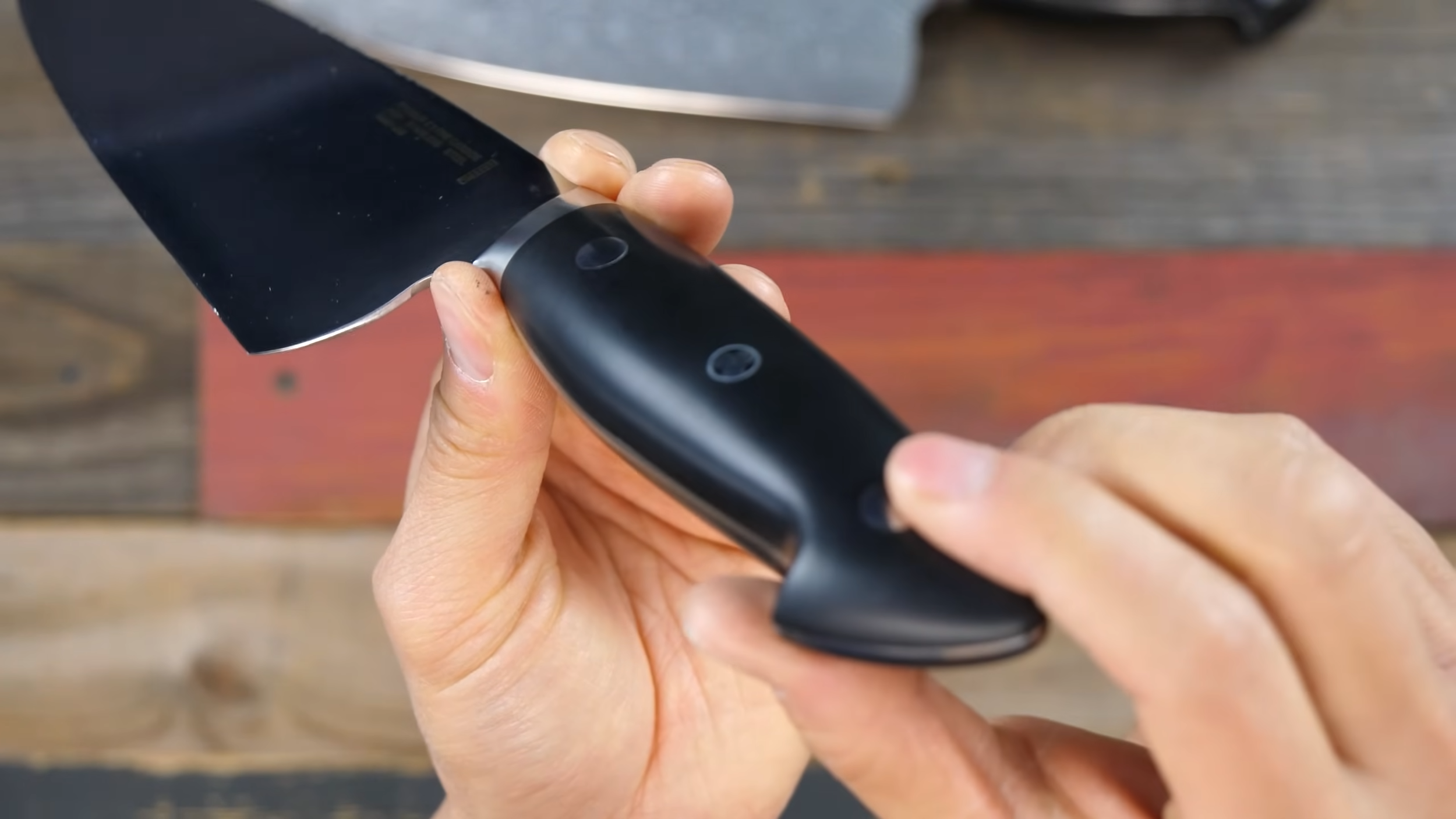
Performance & Verdict
A uniqely designed knife
The Highlight: Reaching 61 HRC on a Western-style, low-maintenance stainless blade is rare. It offers superior edge retention compared to standard European cutlery without requiring immediate wiping during prep.
The Trade-off: The spine and choil feature a satin finish rather than the liquid mirror polish seen on the carbon model. Additionally, shipping a $200 knife in a basic plastic clam-shell packaging detracts slightly from the unboxing presentation.
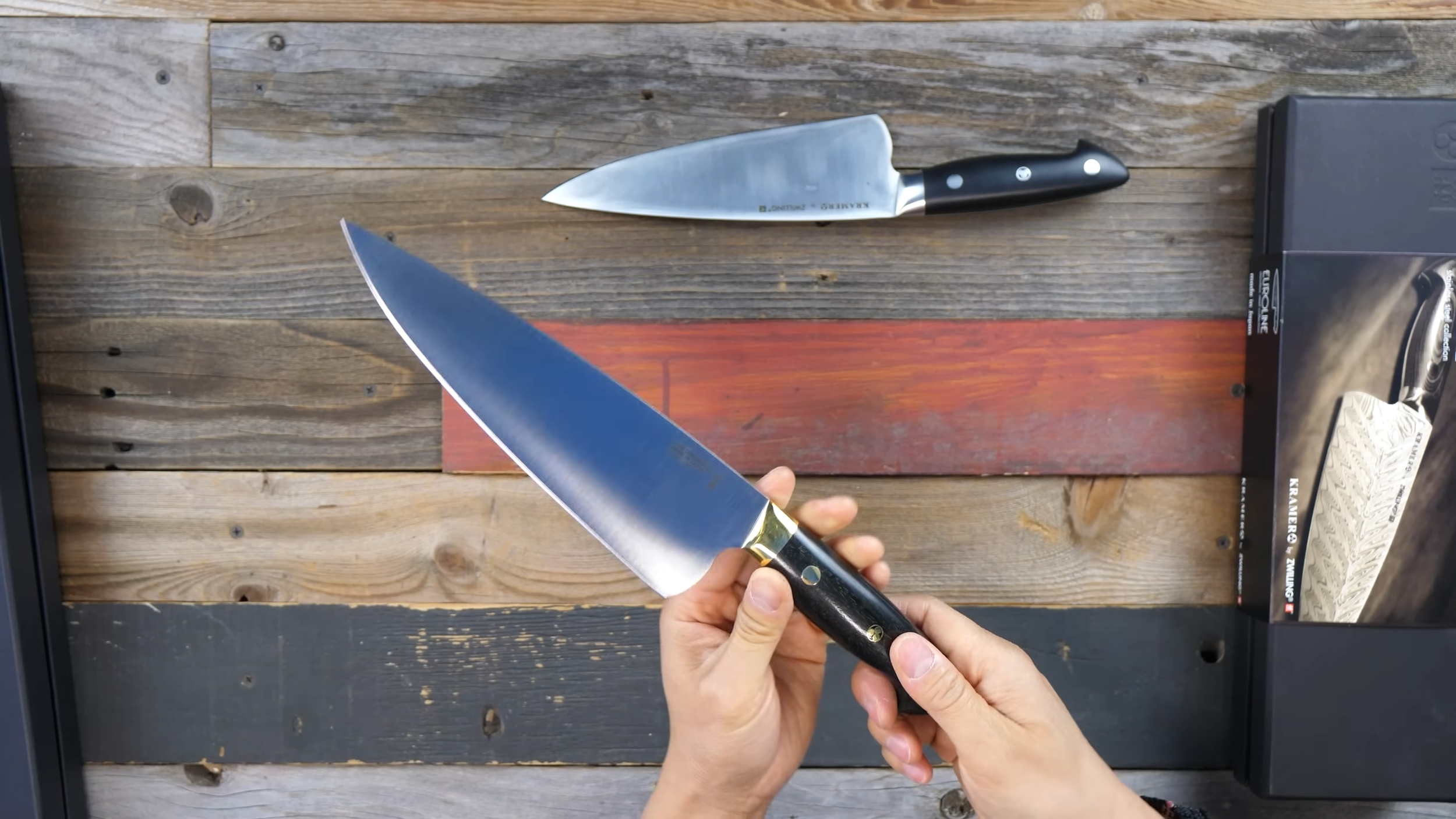
Bob Kramer 52100 profile view
2. Zwilling Kramer Carbon (52100 Alloy)
Retailing around $300, the 52100 Carbon steel version is arguably the most famous of the trio—previously named "Knife of the Year" by America's Test Kitchen. It bridges classic American knifemaking with raw cutting performance.
Key Specifications & Features
Core Steel: 52100 High-Carbon Ball-Bearing Steel (approx. 61–62 HRC).
Finish: Full mirror-polished blade, choil, and spine.
Handle Assembly: Dense Grenadille wood handle secured with full-penetration brass rivets and an intricate center mosaic pin.
Blade Geometry: Noticeably stiffer and thicker at the spine (roughly 1 to 1.5mm thicker near the bolster) than the stainless model.
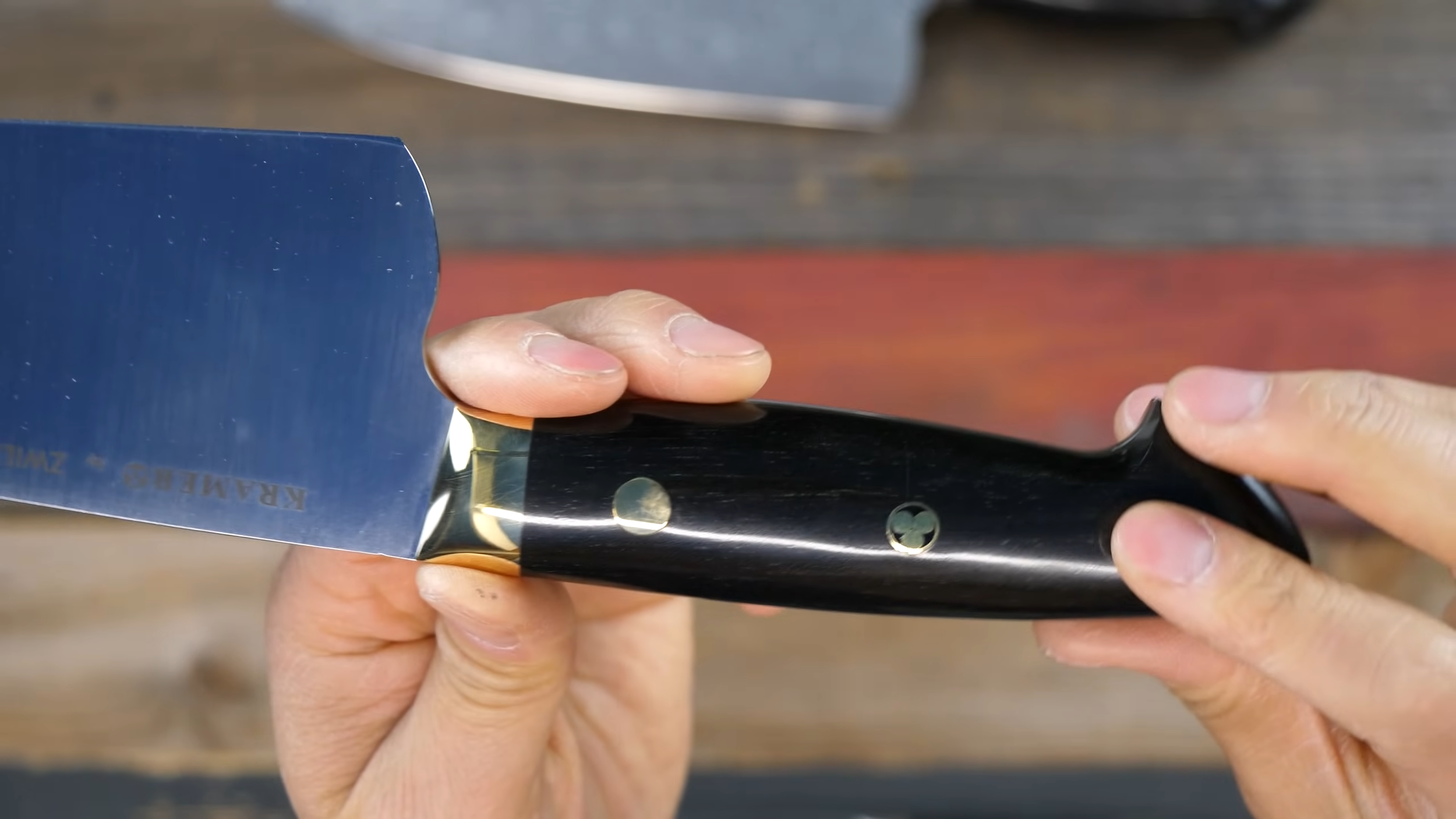
Performance & Verdict
The knife I would choose between all of the Kramers
The Highlight: The 52100 steel takes a screamingly sharp edge with minimal effort on whetstones and develops a rich, protective patina over time. The fully polished choil and rounded spine eliminate hot spots during prolonged pinch-grip prep.
The Value Proposition: At $300, this knife outperforms many vintage standards. Given that iconic Japanese options like the Masamoto KS have seen price inflation up to $360—often accompanied by QC fluctuations—the Kramer Carbon stands out as one of the best $300 production knives on the market.
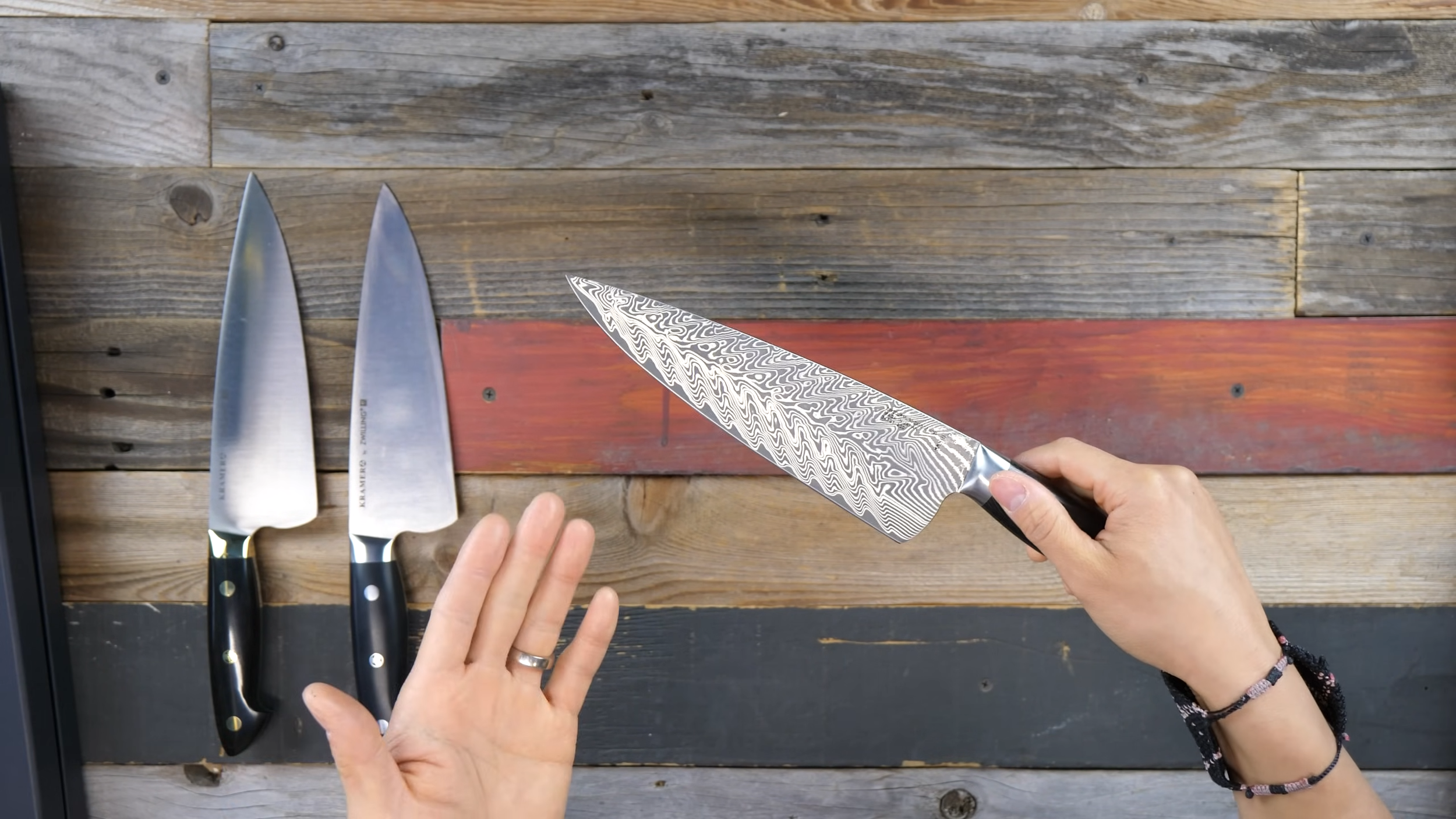
Bob Kramer Damascus cladding
3. Zwilling Kramer Euroline Damascus (SG2 Powder Steel)
Positioned as the flagship model at approximately $400, the Euroline Damascus combines ultra-hard powder metallurgy with high-contrast aesthetic layering.
Key Specifications & Features
Core Steel: Micro-carbide SG2 (R2) Powder Steel hardened to an extreme 63 HRC.
Blade Cladding: Deeply etched 101-layer nickel and stainless steel chevron Damascus pattern.
Handle Assembly: Two-tone Linen Micarta handle fused with resin, finished with a subtle integrated bolster stop.
The 52100 steel takes a screamingly sharp edge with minimal effort on whetstones and develops a rich, protective patina over time. The fully polished choil and rounded spine eliminate hot spots during prolonged pinch-grip prep.
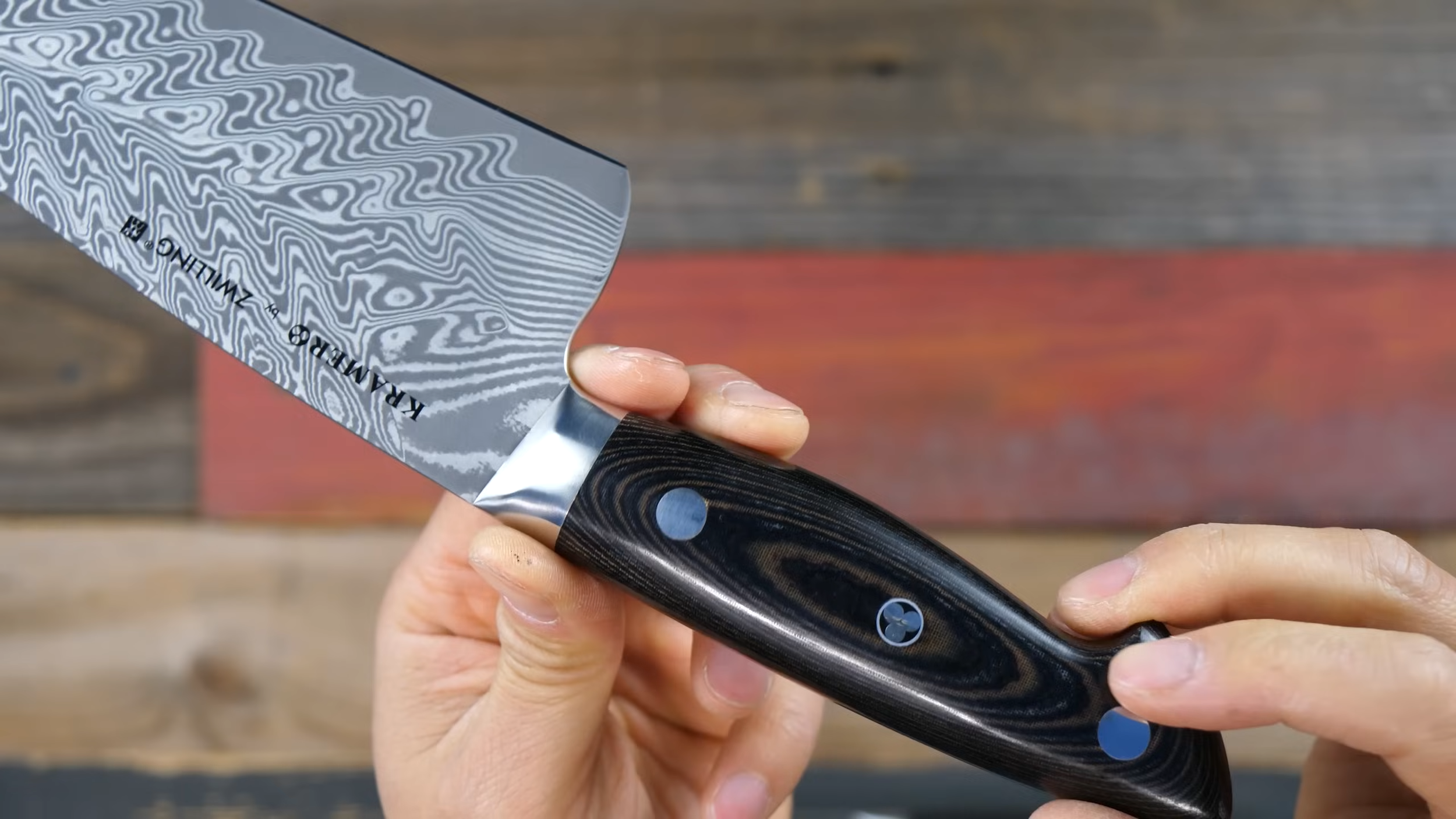
Performance & Verdict
Unique looking but lacks raw performance of the 52100
The Highlight: SG2 steel at 63 HRC holds a keen, micro-toothed edge far longer than standard high-carbon steels. The two-tone Linen Micarta handle is virtually impervious to moisture, shrinking, or cracking, offering superior balance despite the blade's height.
The Trade-off: At 63 HRC, the blade is ultra-hard and prone to micro-chipping if misused on bone, frozen foods, or hard synthetic cutting boards. It demands respect, proper technique, and quality end-grain wood boards.
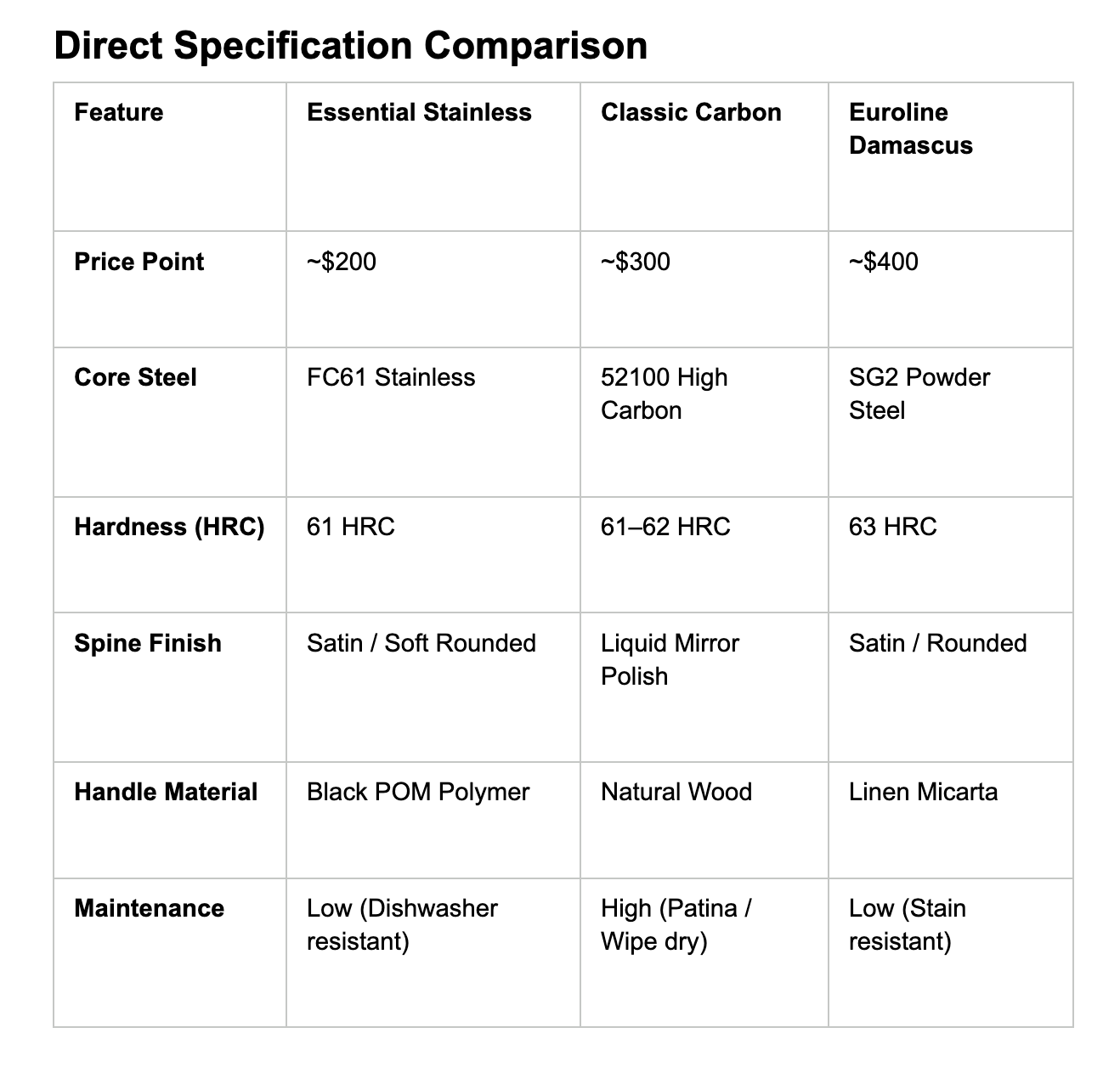
Bob Kramer knives compared
Final Curation: Which Kramer Fits Your Bench?
Choose the Essential Stainless ($200) if you want Kramer’s tall, levered geometry and low-maintenance stainless convenience without worrying about rust, patina, or delicate edge-chipping.
Choose the Carbon 52100 ($300) if you want raw cutting feel, effortless whetstone responsiveness, and the classic, hand-polished aesthetic of a true knifemaker's blade.
Choose the SG2 Damascus ($400) if you desire maximum edge retention, a moisture-proof Micarta handle, and a visual showpiece that stands out on any magnetic knife bar.