An on-the-ground technical exploration of Japan’s premier knife gathering: the Seki Cutlery Festival (Seki Hamono Matsuri). From bins of raw VG-10 billet stock and communal water-trough sharpening stations to rare Kyoto natural stones (JNATs) and battle-tested katanas at Gifu Castle, we analyze the metallurgical culture that powers the world's most prolific knife-making capital.
Knives available @ BurrfectionStore | Gyuto
Disclosure: As an Amazon Associate, I earn from qualifying purchases.
For more than eight centuries, the convergence of the Nagara and Itadori rivers in Gifu Prefecture has served as the metallurgical epicenter of Japanese bladecraft. Seki City owes its history to high-purity iron sand, dense pine charcoal, and temperate water systems—the essential building blocks that drew master swordsmith Motoshige to the valley in the 13th century.
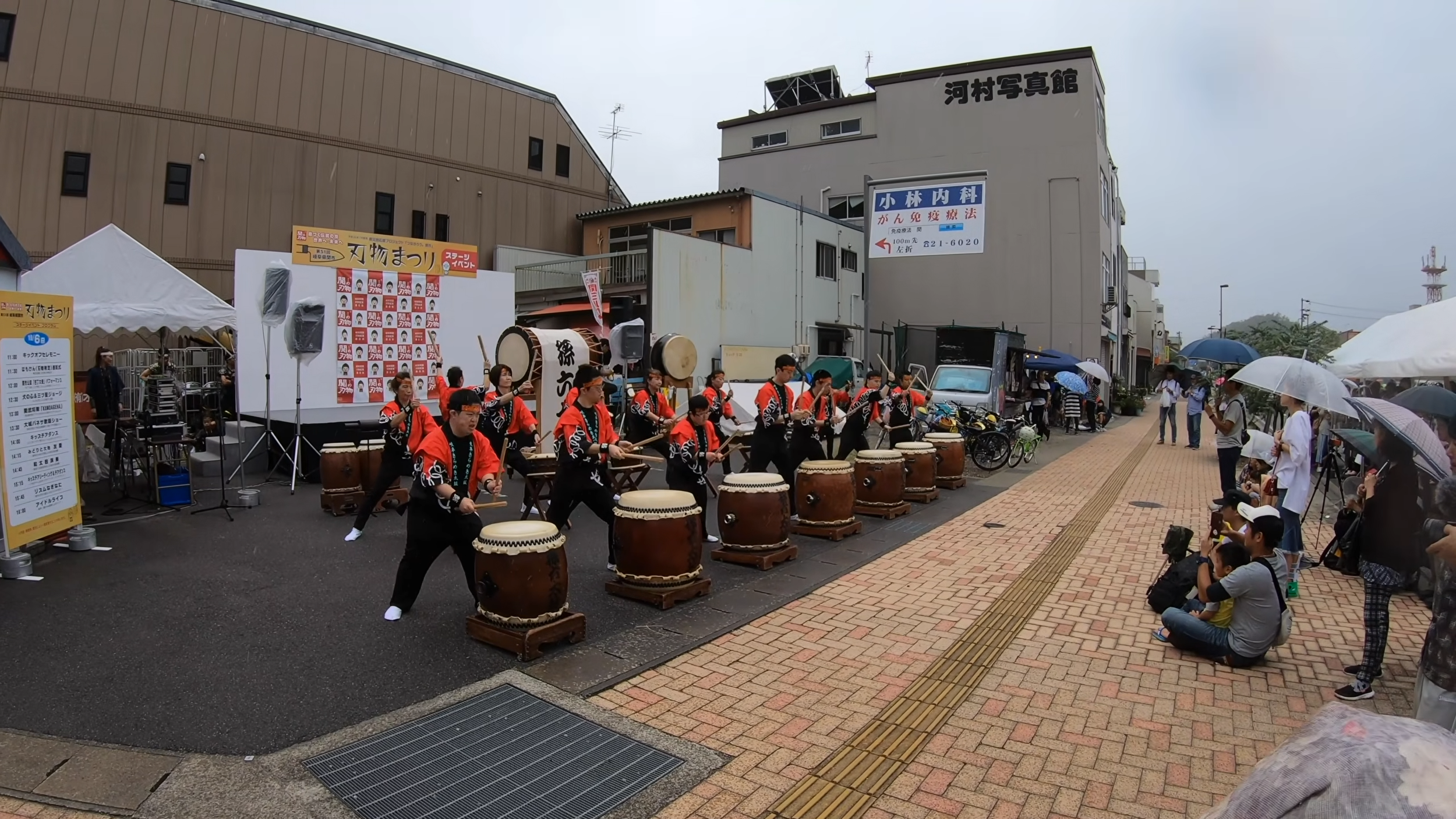
Today, while modern industrial CNC mills and laser cutters handle high-volume production for global exporters, the city’s historical soul awakens every October during the Seki Cutlery Festival (Seki Hamono Matsuri).
The festival is far more than an outdoor trade show. Spanning more than a kilometer of open-air stalls down Honmachi Dori and expanding into industrial exhibition centers, the event transforms the entire city into a massive open-air exchange.
Over 100,000 visitors descend upon Seki to purchase blades directly from more than 50 industrial brands and hundreds of independent bladesmiths. Here, raw steel billets, exotic handle materials, master sharpeners, and centuries-old samurai heritage converge on the same pavement.
[ THE SEKI CUTLERY ECOSYSTEM ]

Raw Material Suppliers ──► VG-10 Billets, Abrasives, Stabilized Woods
         │
Artisan & Industrial Guilds ──► Hattori, Misono, Yaxell, Custom Makers
         │
Open-Air Marketplace   ──► Blemished Factory Overruns & $40 Workhorses
         │
Sharpening Bench Fleet ──► Multi-Man Communal Water Troughs
         │
Historical Roots       ──► Gifu Castle, Kamakura Lineage, Sengoku Antiquities

1. The Raw Material Bazaars: Virgin Steel at the Source
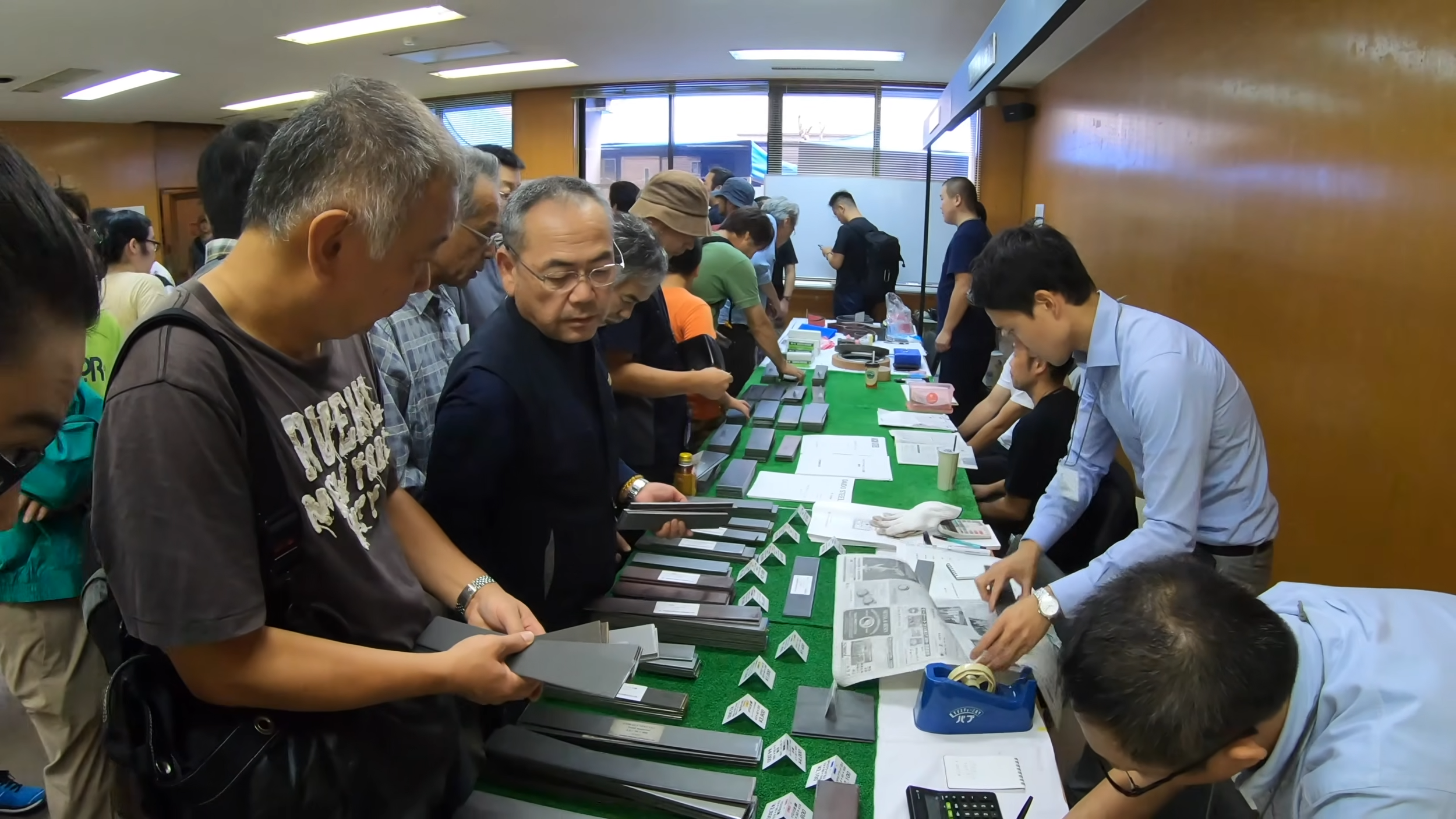
Before finished knives ever hit retail velvet, cutlery begins as raw metallurgical stock. The primary trade hall at the Seki Cutlery Festival caters directly to the bladesmithing community:
[ RAW BILLET STOCK ON THE EXCHANGE FLOOR ]

Virgin Takefu VG-10 Plate Blank (~150mm x 300mm):
  ├── Retail Price at Festival: ¥1,500 (~$15 USD)
  ├── Finished Production Value: 1 to 2 Finished Chef Knives ($100–$200+ Value)
  └── Metallurgy: High-carbon stainless matrix (1.0% C, 15% Cr, 1.0% Mo, 0.2% V, 1.5% Co)
Tables stretch across the pavilion floor stacked with ground bar stock, annealed plates, and precision-cut blanks. A sheet of Takefu VG-10—the benchmark cobalt-alloyed stainless steel that anchors Seki's culinary exports—sells directly from distributor bins for roughly $15.
Surrounding these steel vendors are suppliers providing commercial-grade ceramic sanding belts, polishing compounds, and exotic handle materials ranging from desert ironwood to dyed, vacuum-stabilized maple burls.
Watching knifemakers trade cash for raw stock reinforces an overlooked truth: high-performance cutlery is an engineering discipline grounded in fundamental raw materials, not cosmetic marketing hype.
2. Master Smiths and the High-End Exhibition
Moving into the central exhibition hall shifts the focus from raw materials to custom handcraft. Among rows of tactical folders, hunting knives, and collector blades stands living cutlery royalty: Ichiro Hattori.
ICHIRO HATTORI: BENCHMARKS OF A MASTER CRAFTSMAN

1. Production Pedigree:
   └── Decades crafting flagship lines for world-renowned brands (Fallkniven, Hattori KD).

2. Structural Fit & Finish:
   └── Hand-radiused spines, perfectly flush bolsters, and seamless tang transitions.

3. Core Metallurgy Mastery:
   └── Pioneer of Cowry-X powder metallurgy and high-density nickel-damascus laminations.
Hattori-san’s presence exemplifies Seki’s dual identity. While the city ships millions of mass-market kitchen knives globally, its reputation was earned by individual craftsmen executing hand-ground convex bevels (hamaguriba) and mirror-polished tangs that rival bespoke precision machinery.
Examining an authentic $2,000 Hattori culinary piece in person demonstrates that true high-end fit and finish cannot be rushed: the blade balance sits exactly at the pinch grip, the distal taper thins uniformly to a laser apex, and every transition along the choil is softened to prevent friction points.
3. Communal Grinding Troughs: The Mechanics of Festival Sharpening
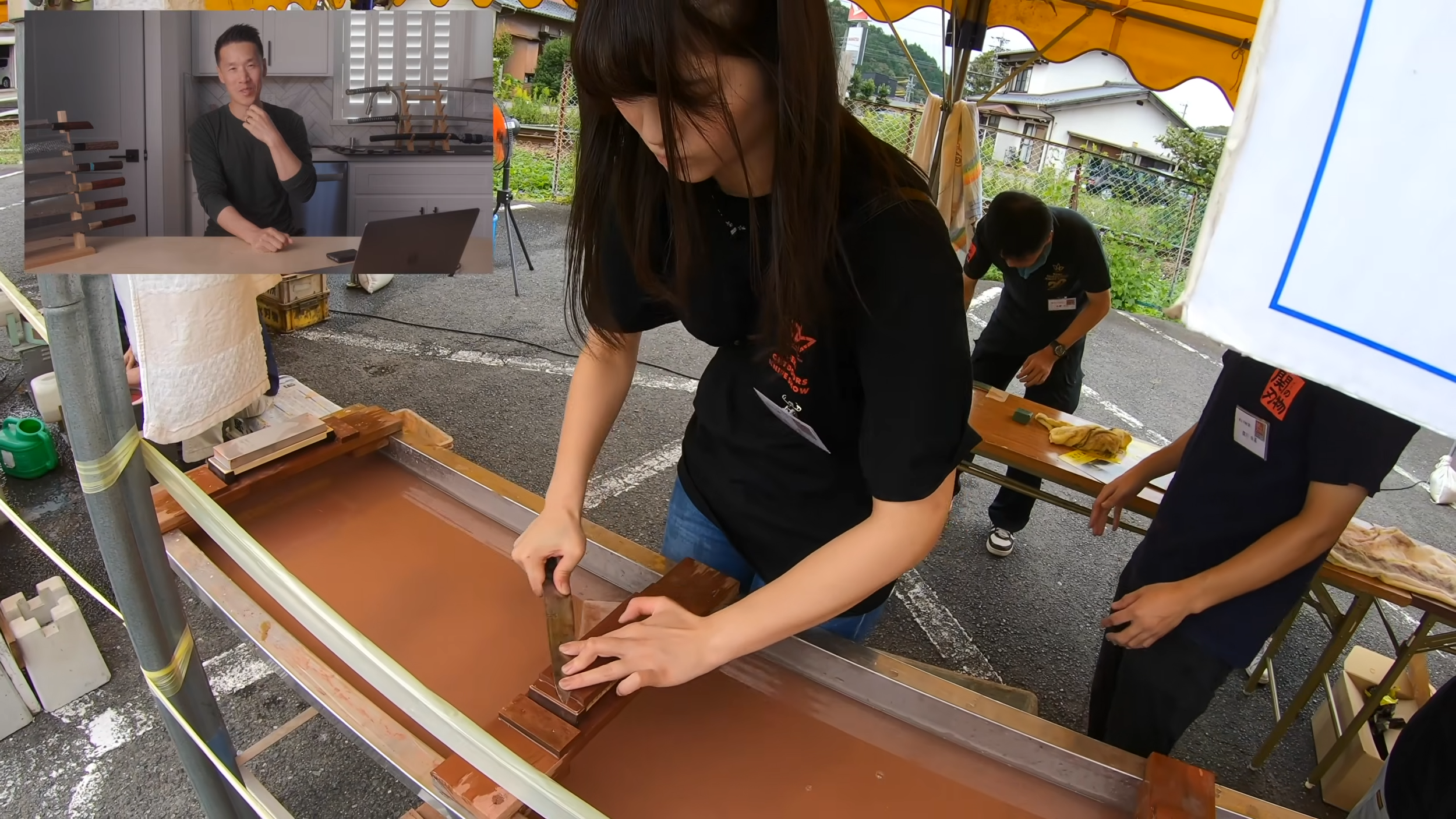
One of the most impressive technical spectacles takes place outdoors at the festival's dedicated knife maintenance and restoration pavilions.
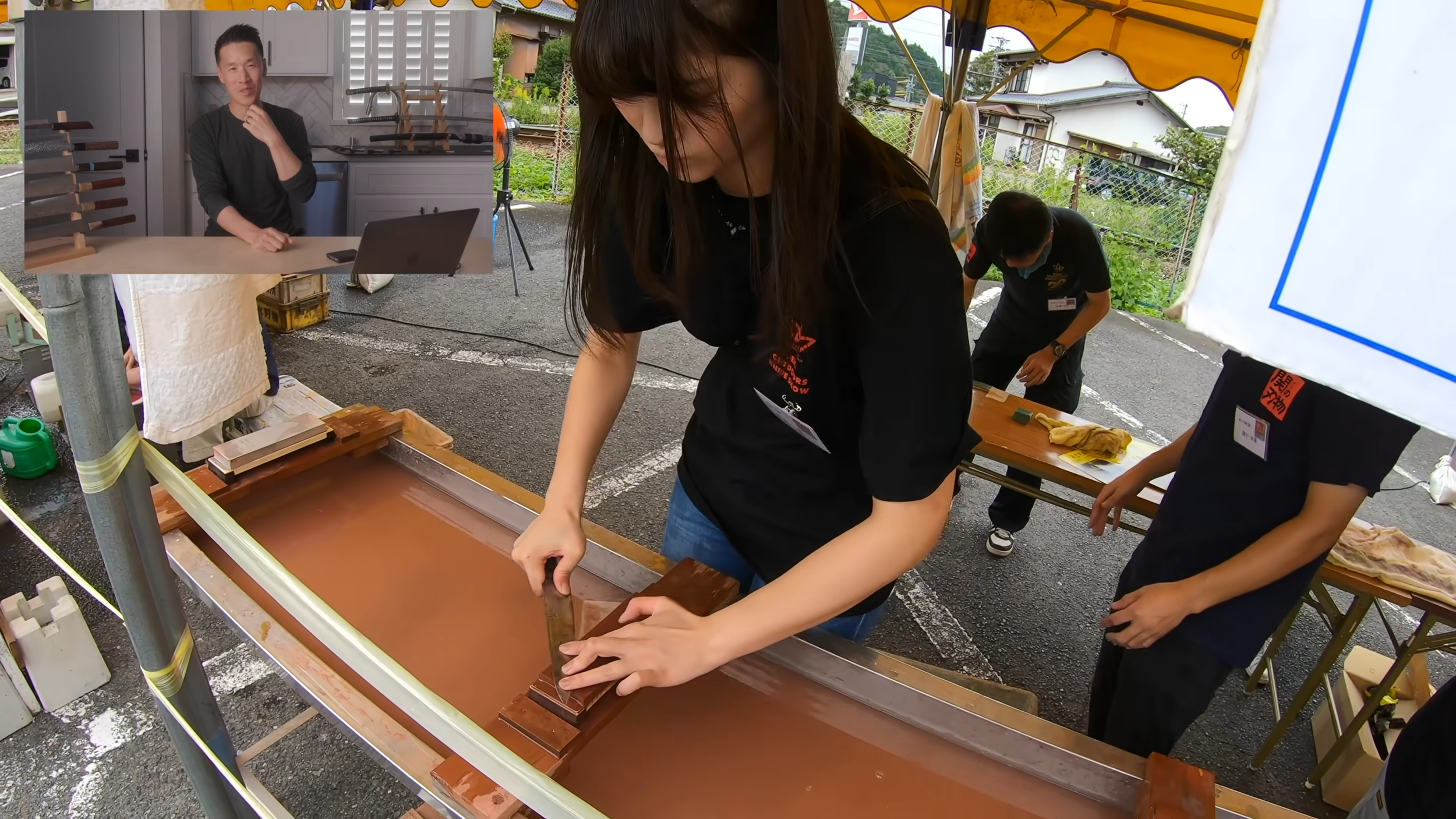
Rather than working on individual kitchen sink bridges, Japanese factory and guild sharpeners operate over massive communal water troughs.
These deep, multi-station setups accommodate four to seven sharpeners working shoulder-to-shoulder:
The Ergonomics: Craftsmen sit or lean over dedicated bridging beams, with running water continually washing away abrasive mud, fractured binders, and suspended metal swarf.
The Dual Method: The maintenance area is split between high-speed motorized rotary grinding stones and traditional manual waterstones.
Thermal Management on Wheels: Watch an artisan reprofile a badly chipped blade on a powered wheel, and you will notice how carefully water is applied. A wheel running with inadequate surface moisture throws bright orange sparks—a sign that localized surface temperatures are spiking, which can compromise the blade's temper at the apex. A master grinder feeds water directly into the contact zone, keeping the steel cold to preserve its heat treatment.
Locals line up carrying bins of dull kitchen beaters, garden shears, and woodworking tools. Watching the sharpeners run through these blades at industrial speeds—jointing flat spots, thinning shoulders, and restoring hair-shaving edges in three minutes flat—is a masterclass in clean pressure vectoring and burr removal.
4. Tameshigiri, Differential Heat Treatment, and Cold Straightening
During an outdoor traditional ceremony held amid sudden typhoon rain, martial arts practitioners demonstrated tameshigiri—the practice of test-cutting rolled, soaked tatami mats and bamboo poles with Japanese swords.
One strike drove home an essential metallurgical lesson: a cutting cut went off-axis, failing to clear the dense bamboo node and causing the sword to torque heavily before dropping.
THE METALLURGY OF THE BENT KATANA

Differential Hardening Matrix (Clay Temper / Yaki-ire):
  ├── Yakiba (Cutting Edge): Martensite (~60–62 HRC) ──► Hard, brittle, acute keenness.
  └── Hira / Mune (Spine):   Pearlite/Ferrite (~40–45 HRC) ──► Tough, ductile, shock-absorbing.

Failure Mode Under Severe Lateral Strain:
  The ductile, low-carbon spine YIELDS (bends plastically)
  rather than allowing the entire blade to SHATTER catastrophically.
If a modern, uniformly through-hardened stainless kitchen knife at 62 HRC encounters severe lateral twisting, the blade micro-chips or snaps clean in half.
A traditional katana behaves differently because of differential hardening. The edge is quenched into hard martensite, but the spine remains softer, ductile pearlite. When the sword caught in the bamboo, it absorbed the twisting force by bending laterally out of true alignment.
Off to the side of the stage, the practitioner corrected the deflection manually: placing the sword against a wooden crate, he applied steady, counter-flexing pressure along the spine until the blade returned to true center. This was a direct, practical demonstration of the balance between edge retention and structural toughness.
5. The Street Markets: Factory Overruns and the JNAT Extinction Crisis
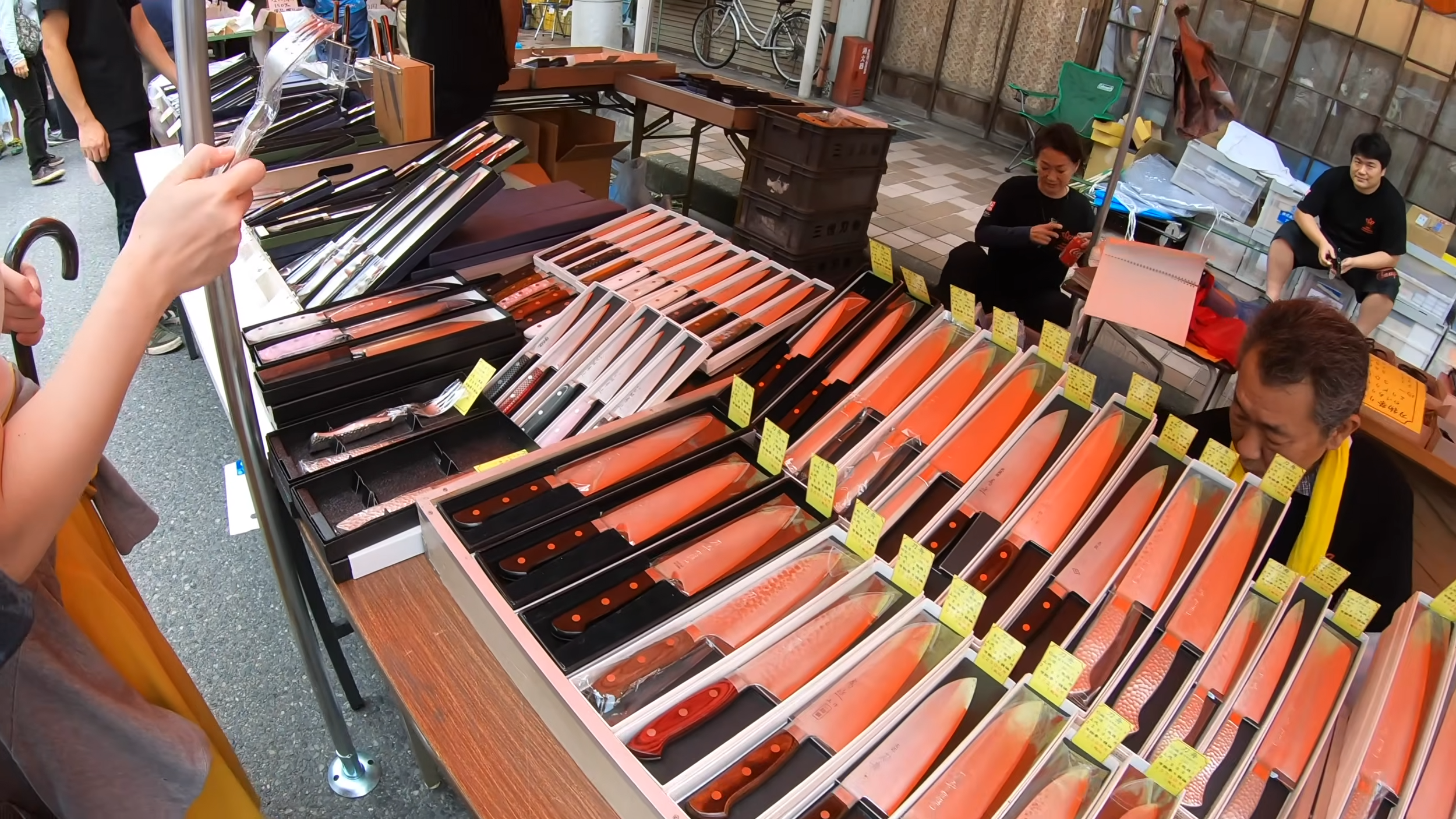
Down the long, rain-soaked stretches of Honmachi Dori, stalls run by local factories sell culinary cutlery at steep discounts.
Boxes marked at ¥4,000 (roughly $40 USD) are stacked high with high-grade utility blades, santokus, and petties. These are typically factory overruns or cosmetic seconds: knives featuring minor surface blemishes or discontinued stampings that fail strict export quality control, but retain flawless steel and heat treatment.
[ THE TRADITIONAL JAPANESE NATURAL STONE (JNAT) LANDSCAPE ]

Hon-Kuroyama / Kyoto Mines (Nakayama, Ozuku, Shobudani, Maruo):
  ├── Status: Over 90% of historic natural whetstone mines are permanently closed.
  ├── Abrasive Particle: Fossilized radiolarian silica platelets embedded in clay.
  └── Finishing Quality: Delivers unmatched, self-refining kasumi bevels and zero-foil apexes.
The $80 JNAT Encounter
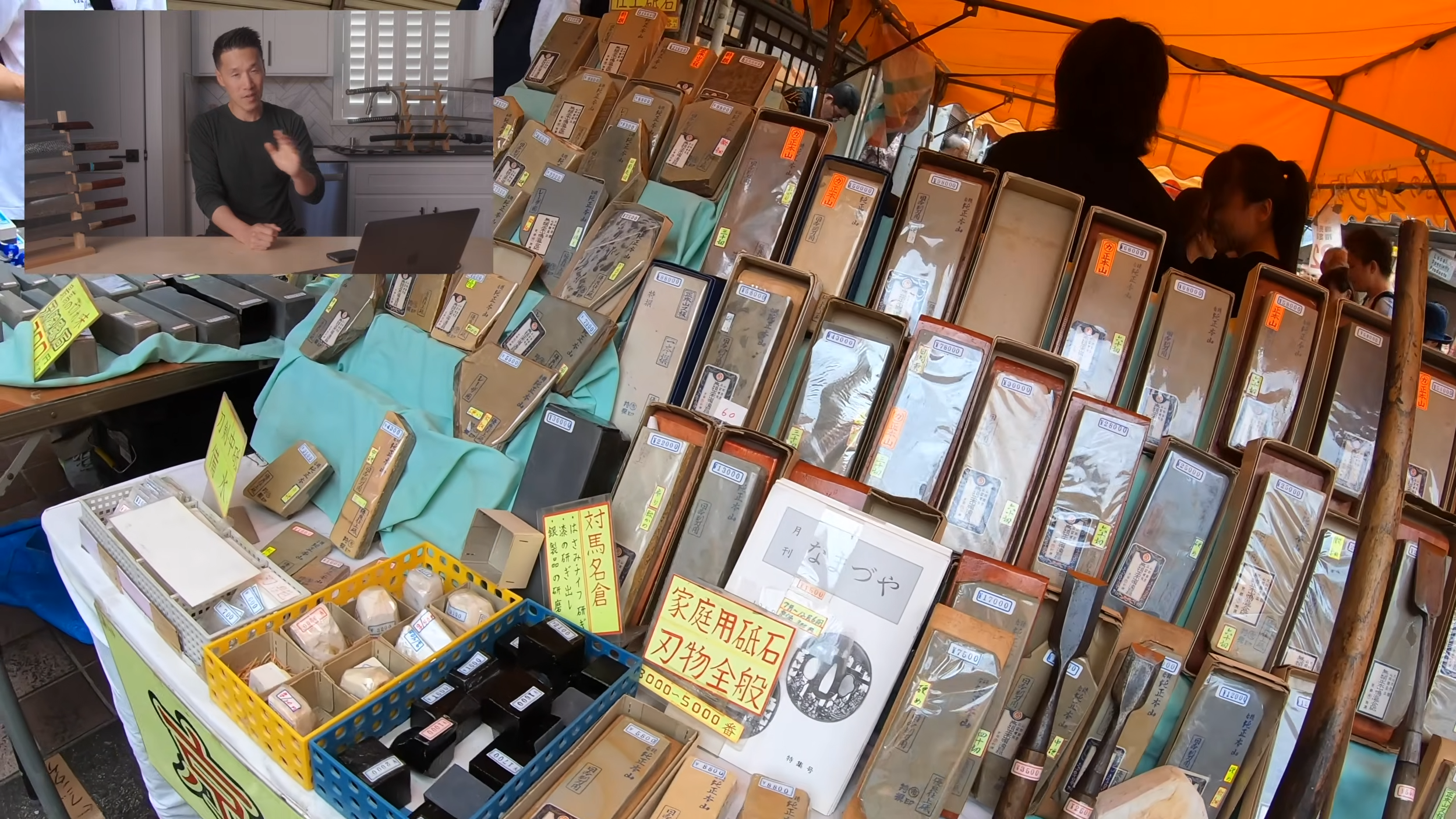
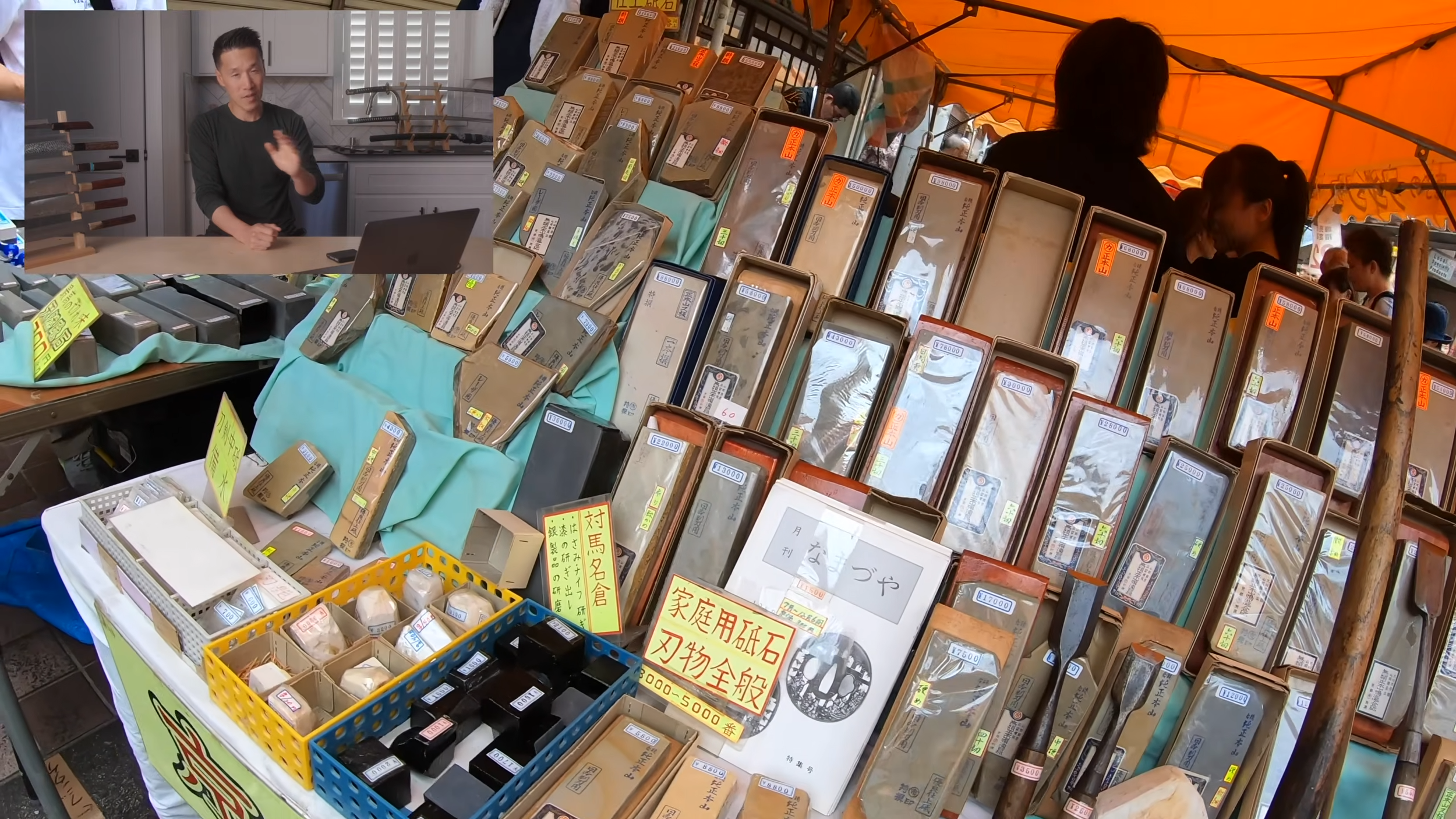
The most remarkable discovery among the market stalls was a local dealer specializing in Japanese Natural Whetstones (JNATs).
Bins of stamped Kyoto finishing stones (Awasedo) were laid out openly, selling for roughly ¥8,000 to ¥8,800 ($80–$88 USD) each. In Western specialty stores, verified authentic natural stones of equivalent size, purity, and fineness routinely command $250 to $500+.
The world of natural whetstones is facing a quiet extinction:
Almost all the famous historic mines around Kyoto (such as Nakayama, Ozuku, and Shobudani) closed in the late 20th century due to structural cave-ins, the invention of cheap synthetic stones, and the high cost of manual excavation.
Natural stones do not feature static grit ratings. They are sedimentary formations of fossilized silica platelets (radiolaria) suspended in a clay matrix. As you sharpen, the platelets break down into progressively finer particles, polishing wide bevels into a soft, hazy kasumi finish while refining the apex without leaving deep scratch patterns.
Finding genuine natural stones at domestic festival prices is an increasingly rare opportunity. For any dedicated sharpener, acquiring authentic domestic natural stone stock before it vanishes completely is the ultimate bench investment.
6. Gifu Castle and the Scars of War
Ascending Mount Kinka to visit Gifu Castle (historically known as Inabayama Castle)—the fortress stronghold seized by the warlord Oda Nobunaga during his campaign to unify Japan in the Sengoku period—provides historical context to Seki’s modern knife industry.
HISTORIC BLADE DAMAGE OBSERVATION (GIFU CASTLE COLLECTION)

Impact Point: Mid-Bevel to Forward Belly
├── Failure Mode: Severe micro-fracturing and 3–5mm edge scallops.
└── Historical Context: Edge-on-edge contact with rival steel armor and polearms.
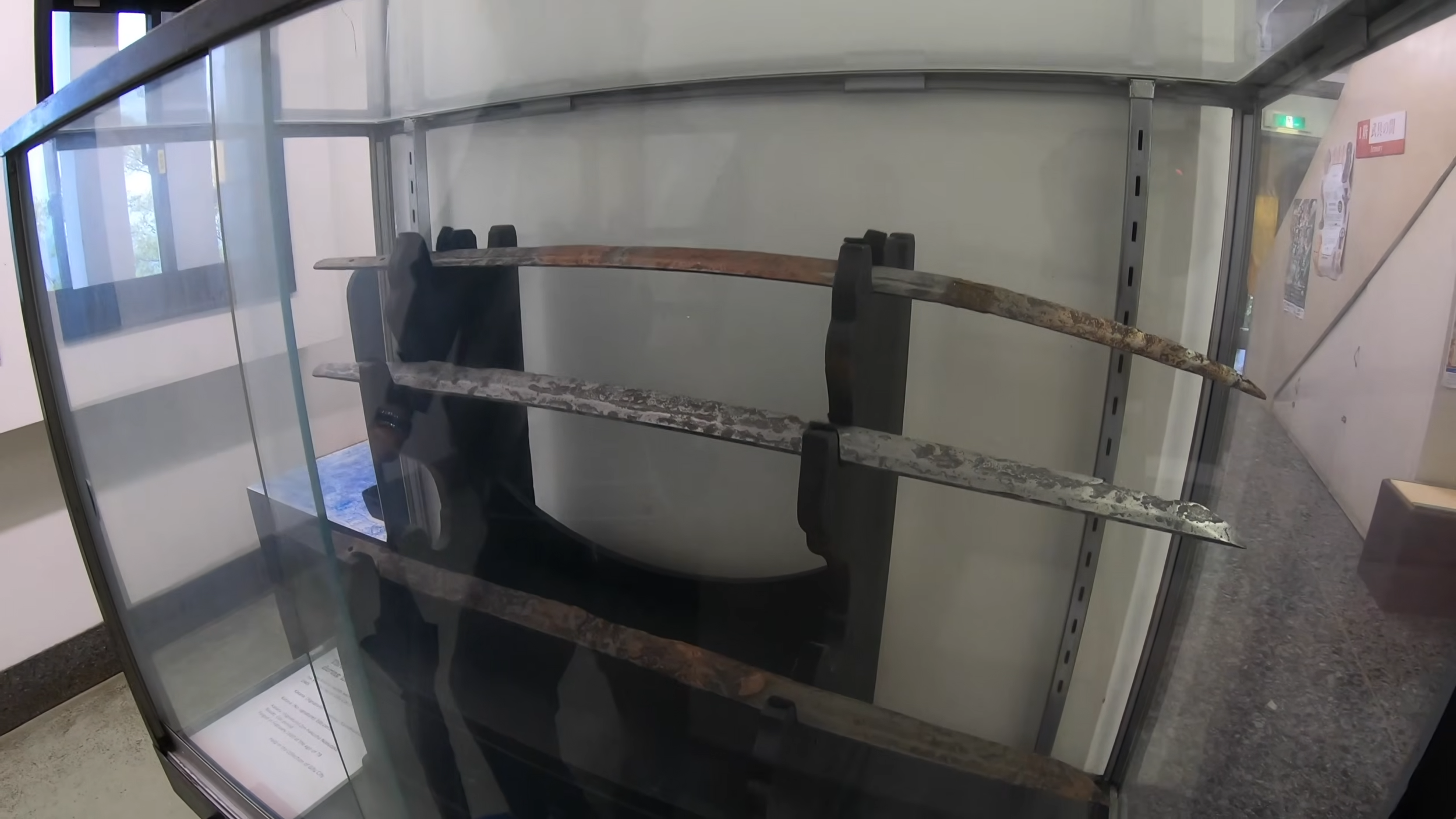
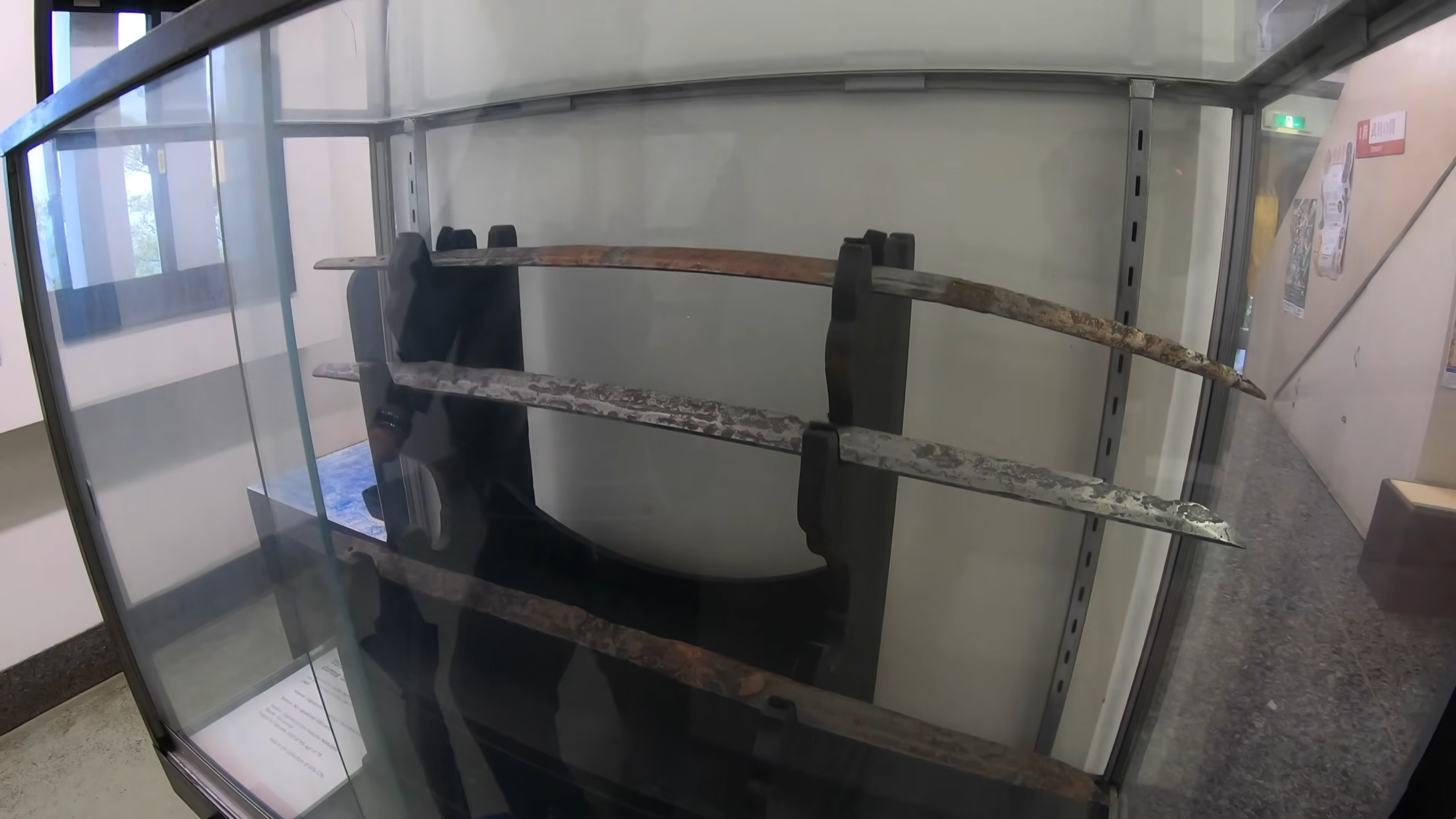
Inside the castle museum, amidst suites of lacquered samurai armor, sits a display of three authentic katanas documented as having sustained damage during active battle.
Inspecting these blades up close reveals massive, jagged chips and edge gouges measuring several millimeters deep along their primary cutting roads.
These historical scars show modern sharpeners the limits of steel:
Even master-crafted Tamahagane steel will fracture when forced against opposing steel helmets, armor plates, and iron-banded polearms.
Edge retention and apex keenness are always balanced against toughness. Understanding these historical failure points reinforces why modern culinary steels must be matched to their intended tasks—chopping poultry bones with a thin 63 HRC gyuto replicates the same structural failure seen on Sengoku-era battlefields.
Technical Observations: The Seki Knife Festival
FeatureObserved Festival StandardTakeaway for SharpenersRaw Steel AccessVirgin VG-10 plates for ~$15 USDDemonstrates true production material costs vs. retail markupsCommunal TroughsContinuous-flow water troughs for 6+ peoplePrioritizes swift swarf clearance and proper seated ergonomicsPowered GrindingHigh-speed wheels with direct water coolingThermal management is non-negotiable; friction heat compromises temperSword MechanicsDifferential clay tempering allows bendingHighlights the necessity of tough, ductile core backings behind hard apexesNatural StonesAuthentic Kyoto Awasedo available for ~$80Highlighting the dwindling supply of mined abrasive silica mediaFactory Seconds$40 for genuine Japanese stainless productionBlemished aesthetics never compromise cutting geometry
The Living Heritage of Seki
The Seki Cutlery Festival demonstrates that Japanese cutlery is not a sterile luxury industry preserved in museum glass. It is a living, working trade built on market stalls, running water, flying sparks, and generational muscle memory.
From the raw VG-10 plates traded on folding tables to the master-ground edges finished in communal water troughs, Seki continues to thrive because it honors its functional roots.
Whether you are working a high-end powder-steel gyuto or restoring a factory overrun on a natural waterstone, you are tapping into centuries of metallurgical problem-solving that began in this quiet valley in Gifu.
Knives available @ BurrfectionStore | Gyuto