Soaking vs. Splash-and-Go Whetstones: How to Tell, Which to Buy, and What Water to Use
You can't tell a soaking stone by looking at it, but a few drops of water will. Here's the test, which type suits your life, and why tap water is all you need.
By Burrfection EditorialApril 30, 2018Updated November 24, 20263 min read
This article contains affiliate links: I may earn a commission if you buy through them, at no extra cost to you. How this works

The short version
- The test: put water on the surface. If it soaks in completely, it's a soaking stone; if it beads up, it's splash-and-go. Let it sit a few minutes to be sure.
- Neither type is better. Soaking stones can feel a bit more organic; splash-and-go stones suit a busy life. A stone isn't great just because you soak it.
- Use plain tap water on water stones, and basic mineral oil or sharpening oil on oil stones. Temperature doesn't matter.
Soaking or splash-and-go: how to tell
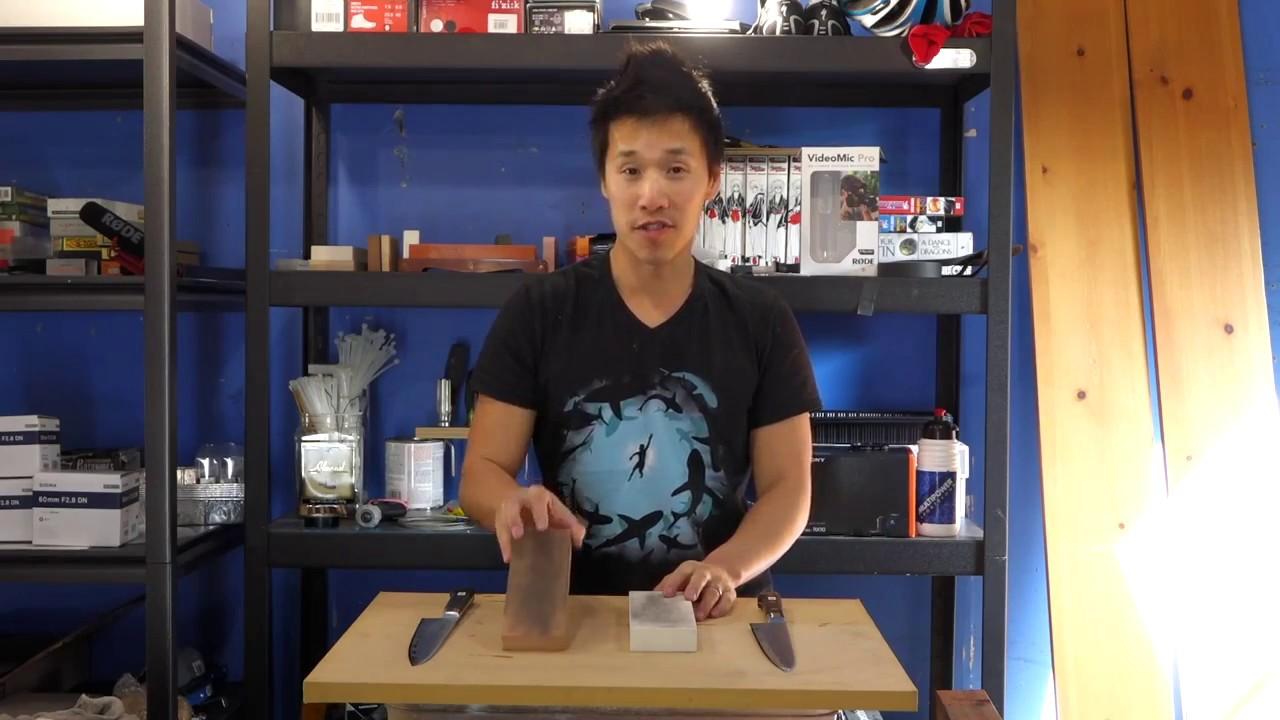
There are soaking stones, non-soaking (splash-and-go) stones and oil stones (4:33). A Chosera is splash-and-go: throw some water on the surface and you can use it within a few seconds (4:56). A Suehiro Rika 5000 is a soaking stone.
The water test
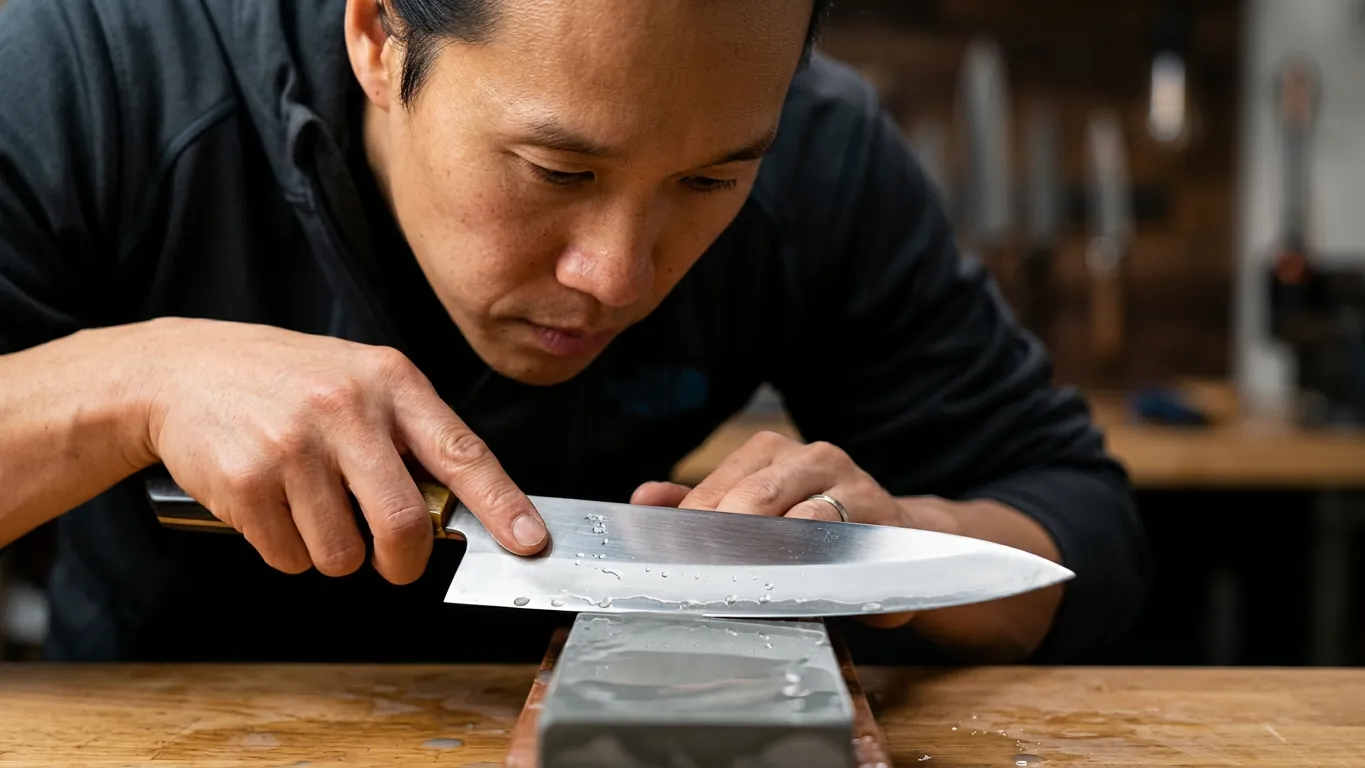
You can't tell just by looking. Put some water on the surface and see what happens: if it absorbs completely, you have a soaking stone; if it sits on top, it's splash-and-go (5:18). Let the water sit a few minutes and watch how it behaves, because some splash-and-go stones absorb a little; the Chosera takes in a very small amount (5:40). That's not a defect. Stones are porous, and some absorb more than others (6:00). My Kramer stone kit review has another example.
Which should you buy?
The bigger differences between stones are polish and feedback. A Naniwa Super Stone gives a very high polish and very poor feedback, a Chosera a decent polish and very good feedback, and a King 1000 no polish to speak of but very good feedback (0:41). Whether soaking is worth the wait depends on your life (1:03). I can't plan a 35 to 45-minute soak before I sharpen (1:24), so splash-and-go makes a lot more sense for me (1:46). If you like soaking stones, a simple trick: drop the stone in water before you make breakfast or dinner, and sharpen afterward (2:06).
If you want a more organic feel, soaking stones are great; if you don't have a lot of time, splash-and-go is the way to go (2:49). And just because a stone soaks doesn't make it a great stone; some King stones turn to mud if you soak them too long (3:11). My favorite soaking stone at 1000 grit is the Suehiro Cerax 1000, and my favorite splash-and-go is the Chosera 800.
Oil stones vs. water stones
Oil stones don't absorb anything, while water stones absorb water and give off material as you sharpen (6:24). On an oil stone, the metal you remove stays on top of the stone and never gets embedded, so loading up is never a major issue (6:47); on a water stone, some of it gets pushed into the surface, and that's what we call load-up (7:07). The oil binds that material and holds onto it (7:28). The main benefit of an oil stone is that it always cuts at a constant rate, new or used (9:12). The catch is the mess: the rag you use on it is good for nothing else afterward (9:34).
For oil, there are a few food-grade grades of mineral oil: butcher block oil, the thick laxative kind, and very thin sharpening oil (7:49). The thick one doesn't gunk up the stone, but it comes up onto your hand; the thinner oils move better (8:32). Use basic mineral oil or sharpening oil and leave it at that (11:18).
What water to use
On water stones, I wouldn't use anything but water (9:34). Some people with very hard water find a white film forming on their stones; if that bothers you, use filtered water (9:55), though I don't think it hurts the stone (10:17). Cold water or hot water makes no difference that I've found (10:37); the stones always feel the same (10:58).
| Soaking stone | Splash-and-go stone | |
|---|---|---|
| Water test | Absorbs completely | Beads up (may absorb a little) |
| Prep | Soak before use | Splash and start |
| Suits | Planners who like an organic feel | Busy schedules |
| My favorite | Suehiro Cerax 1000 | Chosera 800 |
| Where to buy | Burrfection Store | Burrfection Store |
Bottom line
Test a new stone with a little water to know which kind you have, and pick soaking or splash-and-go by how you live, not by which is "better." Use plain tap water, hot or cold; on oil stones, basic mineral or sharpening oil. Just don't over-soak a King: see my King KDS comparison for what an overnight soak did. For stone picks, see my best 1000-grit whetstone guide.
First access
Private drops, new knives and sales
Get them from Burrfection and our retail partners before anyone else. No spam; unsubscribe anytime.
Emails from Burrfection Inc. See privacy.