The Art of Togishi: Why I’m Investing $1,000+ in Traditional Japanese Sword Polishing
There is a profound, almost sacred reverence surrounding Japanese blade restoration. In traditional Japanese culture, a sword polisher—or togishi—does not simply "sharpen" a blade. They undertake a rigorous discipline, often training for five to ten years under a master before ever touching a historic Katana. The goal is not merely to create a keen edge, but to bring forth the hada (grain pattern) and hamon (temper line) hidden deep within the high-carbon steel.
To the uninitiated, attempting to learn this craft independently might seem overly ambitious. However, taking on the challenge directly—backed by authentic materials and traditional tools—opens a fascinating portal into the true heritage of Japanese metallurgy.
trust retailers BurrfectionStore | Gyuto | WasabiKitchen | Amazon
Disclosure: As an Amazon Associate, I earn from qualifying purchases.
Unboxing a Masterpiece: Authentication and Anatomy
Acquiring an authentic Katana directly from Japan involves navigating strict legal protocols. Every legitimate Japanese sword is registered with the Agency for Cultural Affairs (or Ministry of Education).
When a sword is legally exported, specific documentation accompanies the shipment:
Export License Copy: Shows photos, exact measurements, and the maker's signature (mei) cut into the tang (nakago).
Authentication Certificate: The original official registration stays registered in Japan, while verified copies travel with the blade for international customs compliance.
[Tang Signature / Mei] ---> Verified by Cultural Agency ---> Export Certificate Issued
Opening the presentation case reveals a blade of breathtaking proportions. The geometry is precise, showing clean shinogi-ji (ridge line surfaces) and a flawless, liquid-like mirror polish along the flats. A piece of this caliber—valued well beyond $3,000—is a finished work of art, serving as an absolute reference standard for what hand restoration should achieve.
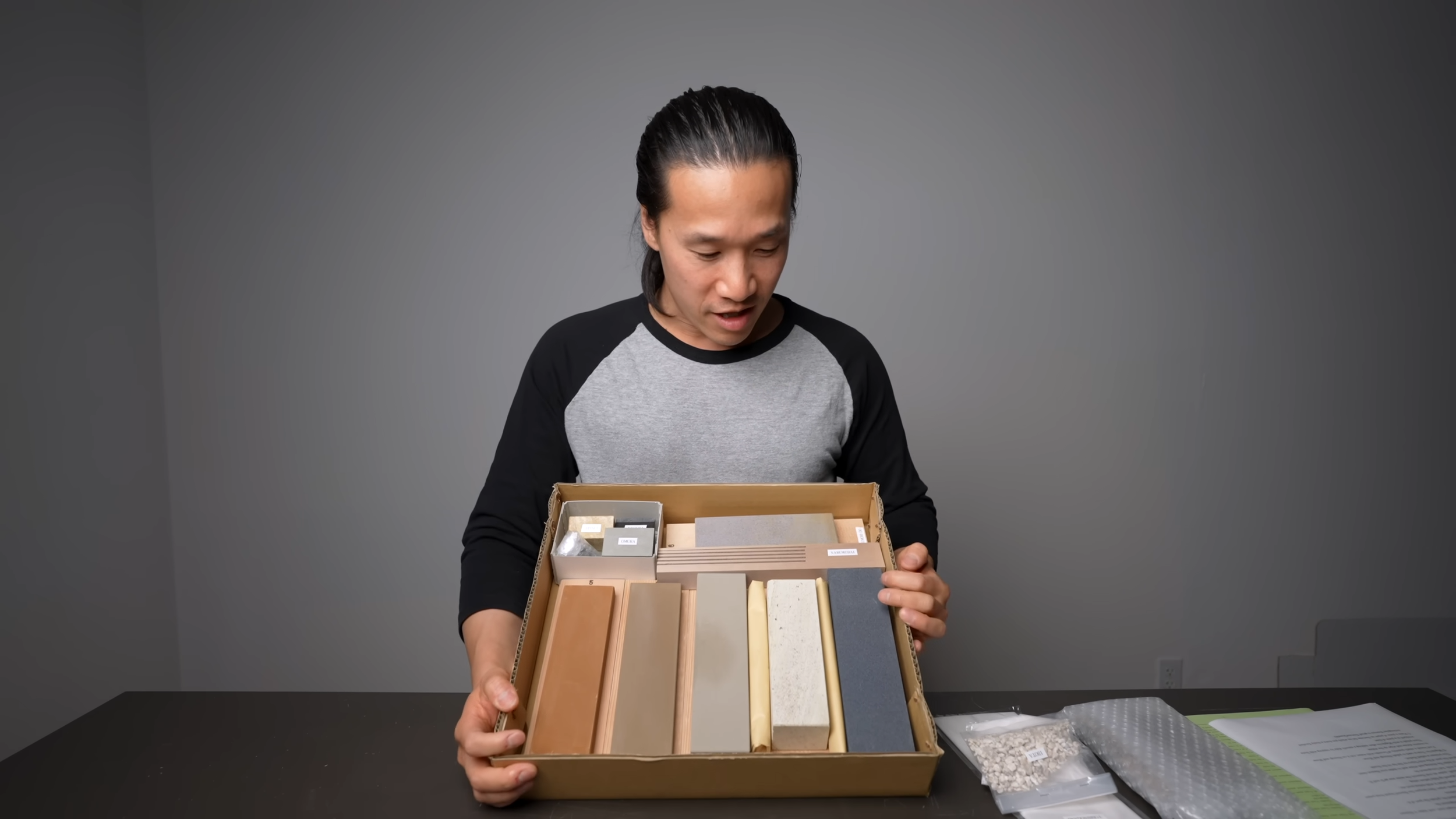
The $1,000 Polishing Kit:
Tools of the Togishi
Traditional sword polishing relies on a strict progression of synthetic and natural waterstones, followed by specialized burnishing tools to compress and harden the steel surface.
1. Progressive Abrasive Stones
A complete polishing progression moves through specialized grits designed to flatten geometry, remove micro-scratches, and highlight the contrast between hard apex steel and softer clad backing:
Foundation Shaping: Coarse-to-medium stones for correcting geometry.
Pre-Polishing: Refining the scratch pattern to prepare for grain revelation.
Finish/Hamon Polish: Fine-particle stones that bring out the misty, translucent Kasumi aesthetic along the temper line.
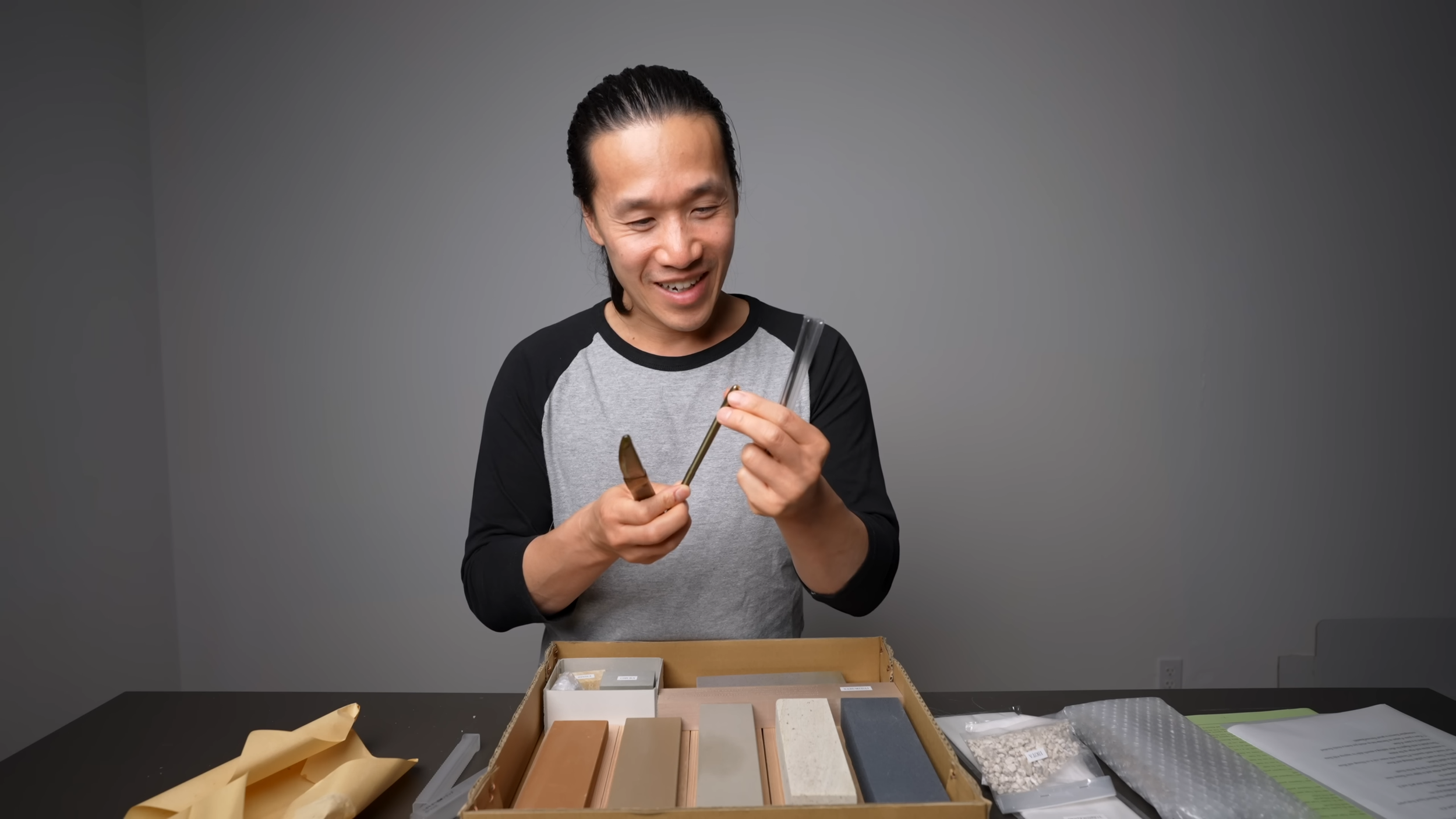
2. Specialized Burnishing Needles
(Migaki-bo)
The final high-gloss contrast on the spine (mune) and ridge line (shinogi-ji) is not created using traditional abrasive slurry. Instead, it is achieved using burnishing needles (migaki-bo).
Standard Burnishing Tools: Basic steel needles (~$150) used to harden and shine the steel through direct friction.
Master-Grade Hardened Needles: High-end, precision-shaped burnishing tools costing $1,000+ per pair. These custom-hardened tools compress the outer steel molecules without scratching the surface, yielding a deep, mirror-like reflectivity that lasts significantly longer than standard abrasive finishes.
The Practice Plan: Translating Sword Techniques to Single-Bevel Knives
Working on a museum-grade or rare antique Katana without prior experience risks ruining priceless historical geometry. True learning requires a structured practice progression.
To bridge the gap, classical togishi principles can be applied directly to single-bevel Japanese kitchen knives—specifically the Yanagiba (sashimi slicer).
[Yanagiba Restoration] ---> Practice flat-bevel tracking & burr control
[Wakizashi / Practice Blade] ---> Practice long-edge curvature & burnishing
[High-Value Katana] ---> Final preservation & curation
Why the Yanagiba is the Ultimate Practice Canvas
Matching Single-Bevel Geometry: Like a Katana, a Yanagiba features a distinct single-bevel structure (kataba) with a soft iron/clad backing and a hard steel core.
Exact Stone Progression: The steps required to polish a Yanagiba to a high-contrast Kasumi finish directly mirror the early-to-mid stages of sword polishing.
Manageable Scale: Practicing pressure control, flat-plane tracking, and burnishing needle operation on a 270mm or 300mm kitchen blade builds muscular memory before advancing to a full 70cm+ sword profile.
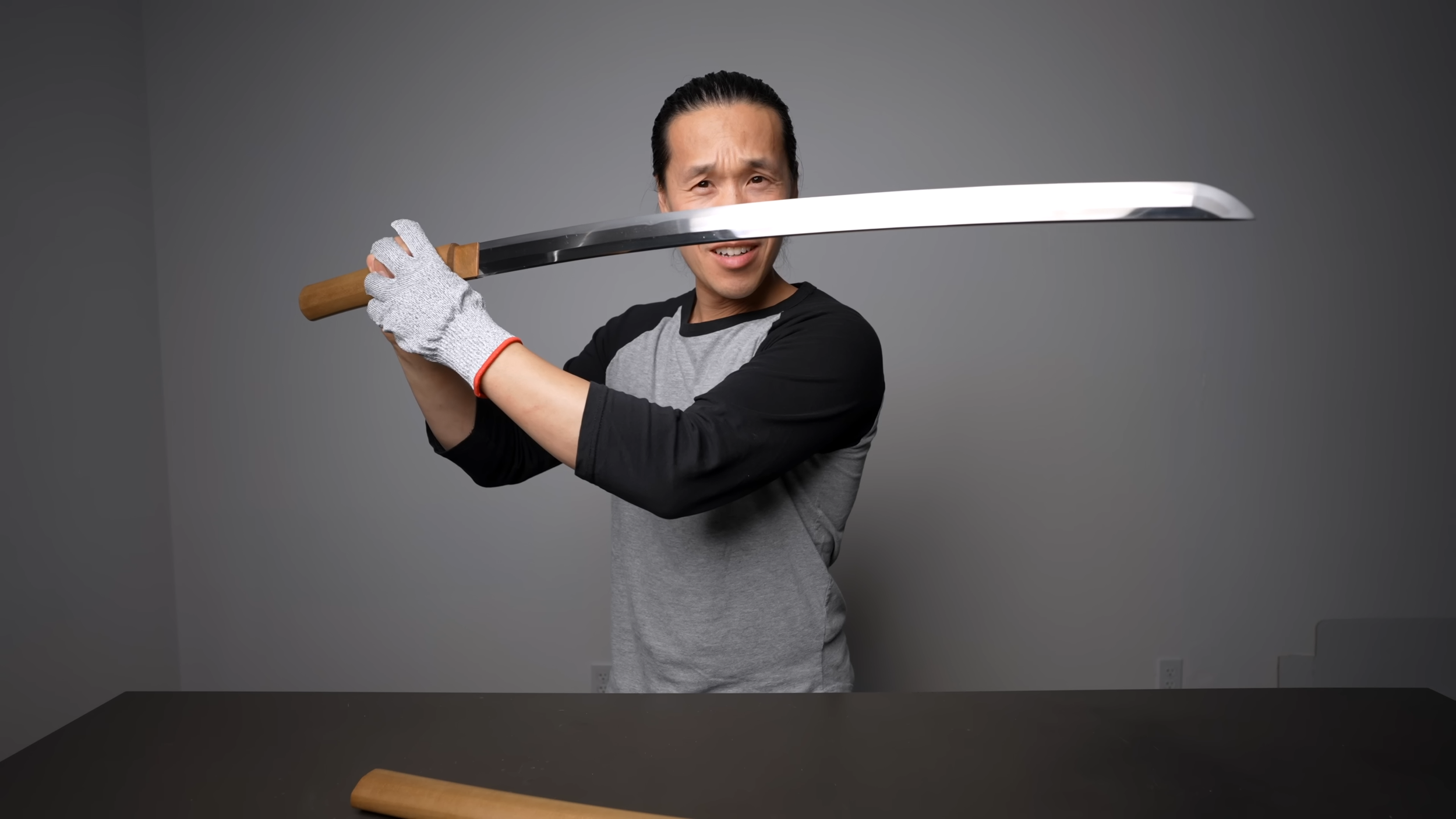
holding a real katana
Respecting the Craft Through Direct Experience
While traditionalists may debate self-taught sword restoration, acquiring authentic tools, studying foundational texts, and grinding through hundreds of hours on practice steel is the most genuine way to honor this ancient trade.
Whether working on a distressed vintage Yanagiba or preserving an authentic Japanese blade, the journey of mastering the stone is a lifelong pursuit—one stroke at a time.