Atoma 140 vs. 400 vs. 600: Which Diamond Plate Should You Buy?
The 140 flattens anything fast but eats stone; the 400 and 600 leave the same scratch pattern. How often you flatten, and how high you polish, decides which one you need.
By Burrfection EditorialSeptember 22, 2017Updated November 24, 20264 min read
This article contains affiliate links: I may earn a commission if you buy through them, at no extra cost to you. How this works

The short version
- Atoma 140: flattens any stone really fast, but it's extremely aggressive, takes off 10 to 15 sharpenings' worth of stone each time, and leaves polishing stones needing a lap.
- Atoma 400: takes off only two or three sharpenings' worth, needs no lapping, and doubles as a coarse stone for chips. My pick for most people.
- Atoma 600: the same scratch pattern as the 400 but removes less per stroke. Get it if you flatten every sharpening or polish at 4000 to 6000. All three are on the Atoma page at the Burrfection Store.
Atoma 140 vs. 400 for flattening
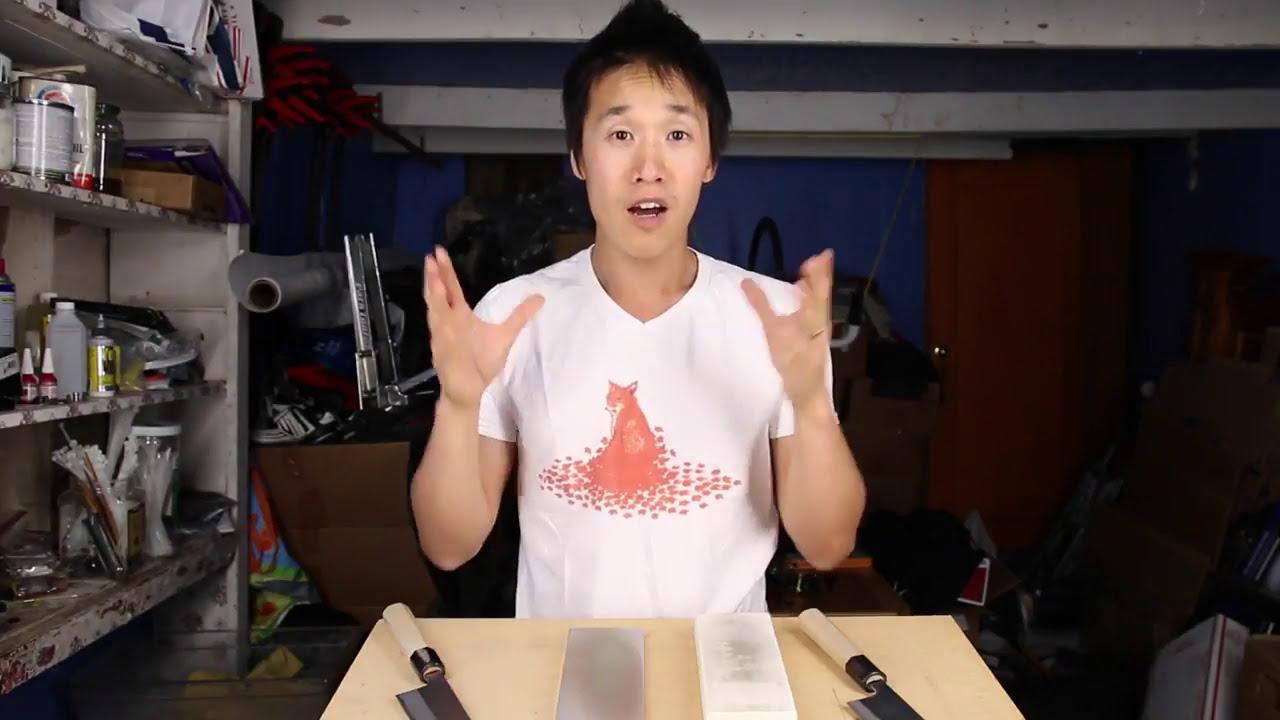
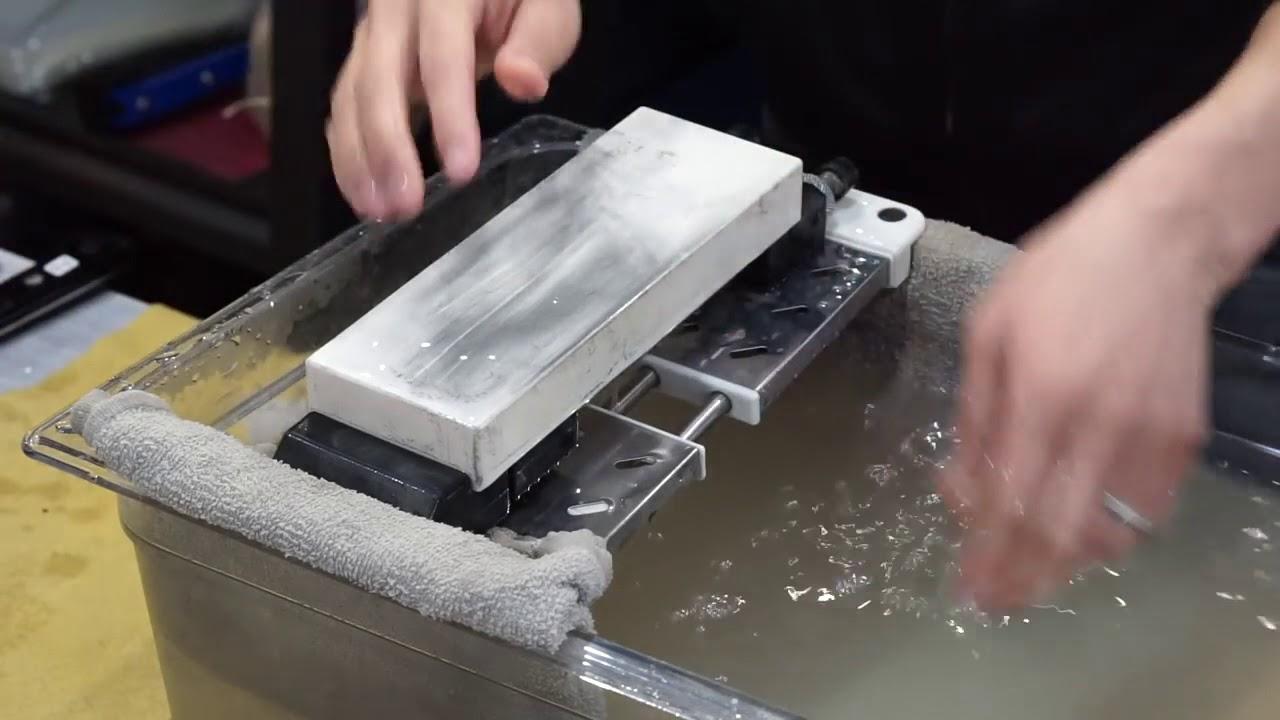
A viewer emailed to ask whether to flatten with the Atoma 140 or the 400 (0:00). I've used both extensively. The 140 can flatten any stone out there, grooves and all, really, really fast (0:20). But it's extremely aggressive: when I used it to repair other people's knives, it took metal off too fast in some cases (0:42), and on a softer Japanese whetstone it wears the stone down extremely fast.
Polishing stones need a lap after the 140
What I don't like about the 140 is that after I flatten a polishing stone like the Arashiyama 6000 or the Suehiro Rika 5000, the surface still needs a bit of lapping before it polishes well again (1:04). So I rub it against a 1000-grit stone to even it out (1:25). With the 400 I don't need to lap at all; I've flattened 5000 and 6000-grit stones with it and they feel really nice afterward (1:46).
How much stone each plate removes
The amount of stone each one removes is the big difference. Every time I flatten with the 140, I feel like I'm shaving off 10 to 15 future sharpenings (3:36). With the 400 I flatten just what I need and use up maybe two or three sharpenings' worth (3:58). The 140 does get smoother after at least ten flattenings or so, closer to what the 400 is naturally (3:14).
Atoma 400 vs. 600
I couldn't find any information online about the 600 and 1200, so I bought combo plates, a 140/600 and a 400/1200; you can choose any combination (0:21). The 400 and 600 look pretty much identical and feel the same (1:02). In scratch pattern they're identical too; the only way I could tell my knives apart was by keeping each one next to the plate it came off (1:22). Out of the box the 400 feels a little rougher, but both wear down and get quite smooth, which is a good thing, because they don't keep that harsh scratch pattern (1:43).
So the differentiator is how often you flatten. If you flatten once in a while, go with the 400; if you flatten often, once a week or every time you sharpen, go with the 600 (2:04). The 400 can be your coarse stone and your flattener, and with use it becomes finer, closer in feel to a 600 or 800, while keeping enough bite for chip repairs (2:25). The 600 takes off less material per stroke, which saves the life of your stones (2:48).
Polishing stones are the other factor. You can use the 400 on a 6000-grit stone, but it leaves a slight scratch pattern (3:53). If you polish at 4000, 5000 or 6000, get the 600; if you max out at 4000 or 5000, the 400 is probably a little better for you (4:14). These are my favorite diamond plates. I've used DMT and some Chinese brands I don't recommend. Atomas are a little pricey, but the 600 can stand in for your coarse and medium stones (4:36).
Which one should you buy?
My rule of thumb: if you work your stones hard and have one that gullies fast, the 140 gets it flatter, faster (4:22). If you flatten before each sharpening and want your stones to last, the 400 works better (4:43). Sharpen weekly and flatten every time? The 400, or the 600 for high polishing stones. Flatten once a month or every few weeks and want a very aggressive coarse stone? The 140 (5:05).
If you want to keep your stone collection small, the 400 can be your coarse stone and your flattener, followed by a 1000 and a polishing stone (2:08). If you buy the 140 instead, you'll probably still want a 400 or 500-grit stone, something like a Bester 500, between it and your 1000 for rebevels and chips (2:51).
| Atoma 140 | Atoma 400 | Atoma 600 | |
|---|---|---|---|
| Speed | Flattens anything fast | Moderate | Gentle |
| Stone used per flattening | 10–15 sharpenings' worth | 2–3 sharpenings' worth | Less than the 400 |
| On polishing stones | Needs lapping after | No lapping; slight scratches on a 6000 | Best for 4000–6000 |
| Chip repair | Very aggressive | Yes | Light |
| Best for | Monthly flattening, heavy use | Most people; flattening now and then | Flattening every sharpening |
| Where to buy | Burrfection Store | Burrfection Store | Burrfection Store |
Bottom line
For most people the Atoma 400 is the one: it flattens without wasting stone and doubles as a coarse stone. Get the 600 if you flatten every sharpening or finish on a 4000 to 6000, and the 140 only if you need raw speed for heavy repairs or a stone that dishes fast. Before you buy any of them, read how often you really need to flatten; the answer is less than you think. For the 140 in action, see my Atoma 140 review, and for the finest Atoma, Atoma 1200 vs. Bester 1200.
First access
Private drops, new knives and sales
Get them from Burrfection and our retail partners before anyone else. No spam; unsubscribe anytime.
Emails from Burrfection Inc. See privacy.