trust retailers BurrfectionStore | Gyuto | WasabiKitchen | Amazon
Disclosure: As an Amazon Associate, I earn from qualifying purchases.
Navigating the cutlery market across varying price points requires looking past marketing rhetoric and evaluating blades strictly on metallurgy, cross-sectional geometry, and whetstone maintainability.
Whether an 8-inch chef's knife costs $15 or $350, its utility is determined by how its profile engages the cutting board and how its steel matrix responds to abrasive waterstones. From high-turnover prep utility blades to powdered metallurgy benchmarks and heirloom carbon steel, every tier presents distinct mechanical compromises.
1. The Sub-$50 Utility Workhorses: Mercer, Messermeister, and the Fibrox Reassessment
The entry-level segment is dominated by high-impact polymers and mass-produced European stainless alloys (chiefly DIN 1.4116). In this tier, blade geometry and bolster design matter far more than exotic steel chemistry.
SUB-$50 VALUE ARCHITECTURE

Mercer Millennia ($15)       ──► Santoprene/Poly Handle │ High-value stamped baseline
Mercer Genesis ($30)         ──► Grippy Santoprene      │ Demi-bolster, zero heel guard
Messermeister 4-Seasons ($30)──► +6mm Heel Height       │ Superior knuckle clearance vs Fibrox
Mercer Renaissance ($40)     ──► Forged DIN 1.4116      │ Full exposed heel for flat bench contact
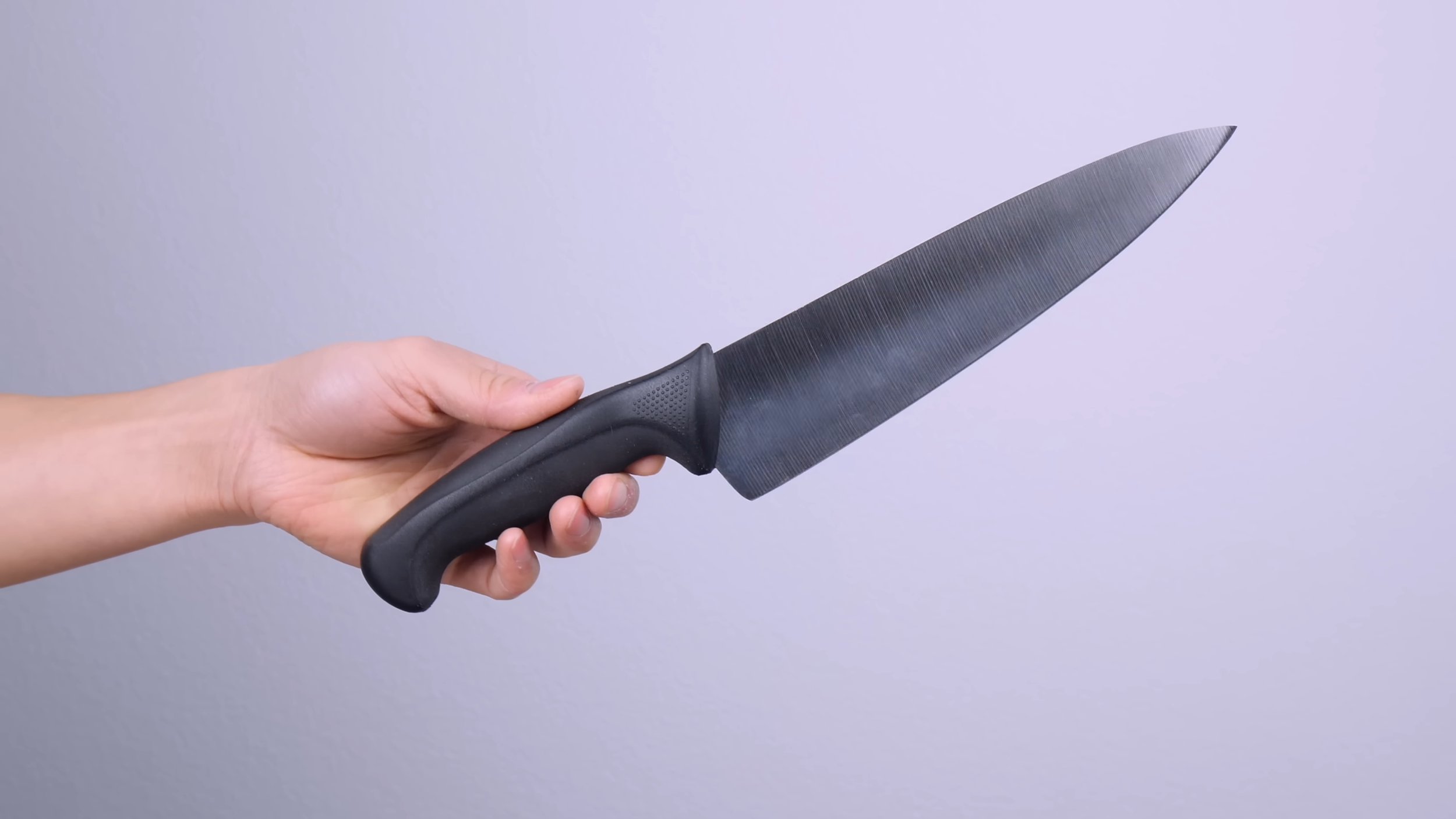
Mercer Millennia 8" (~$15): The Unbeatable Floor
For a knife that costs less than an entry-level combination waterstone, the Mercer Millennia delivers surprising cutting utility. Built with a high-friction, textured Santoprene and polypropylene handle, it provides positive traction even in wet, oily environments.
The Drawback: In an aggressive pinch grip, the index finger and thumb press directly against the abrupt, hard transition of the molded bolster, creating friction points during long prep sessions.
The Verdict: The absolute value benchmark for anyone needing a functional, abuse-tolerant 8-inch blade on a minimal budget.
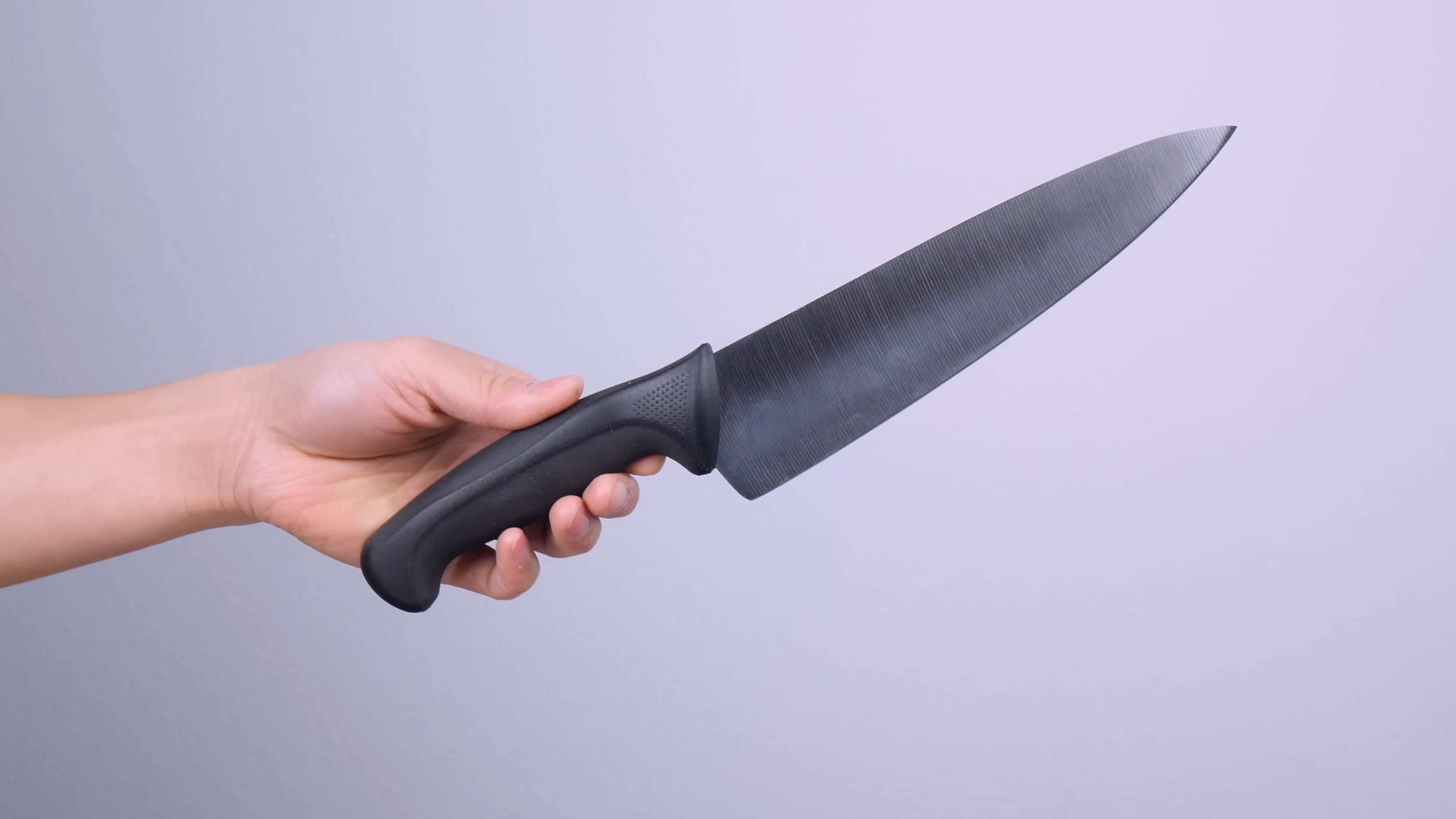
Mercer Genesis 8" (~$30): The Demi-Bolster Advantage
The Genesis refines the utility concept with a fully enclosed, ergonomic rubberized handle that softens the spine and choil transitions. Its most critical design choice is the demi-bolster.
Traditional full German bolsters extend all the way down to the cutting heel, acting as a physical stop. On the whetstone, full bolsters prevent the heel from making flat contact with the abrasive, eventually creating an unwanted recurve (a "bird's beak") as the rest of the edge is sharpened away. The Genesis leaves the heel completely unencumbered, allowing clean, full-length passes across bench stones.
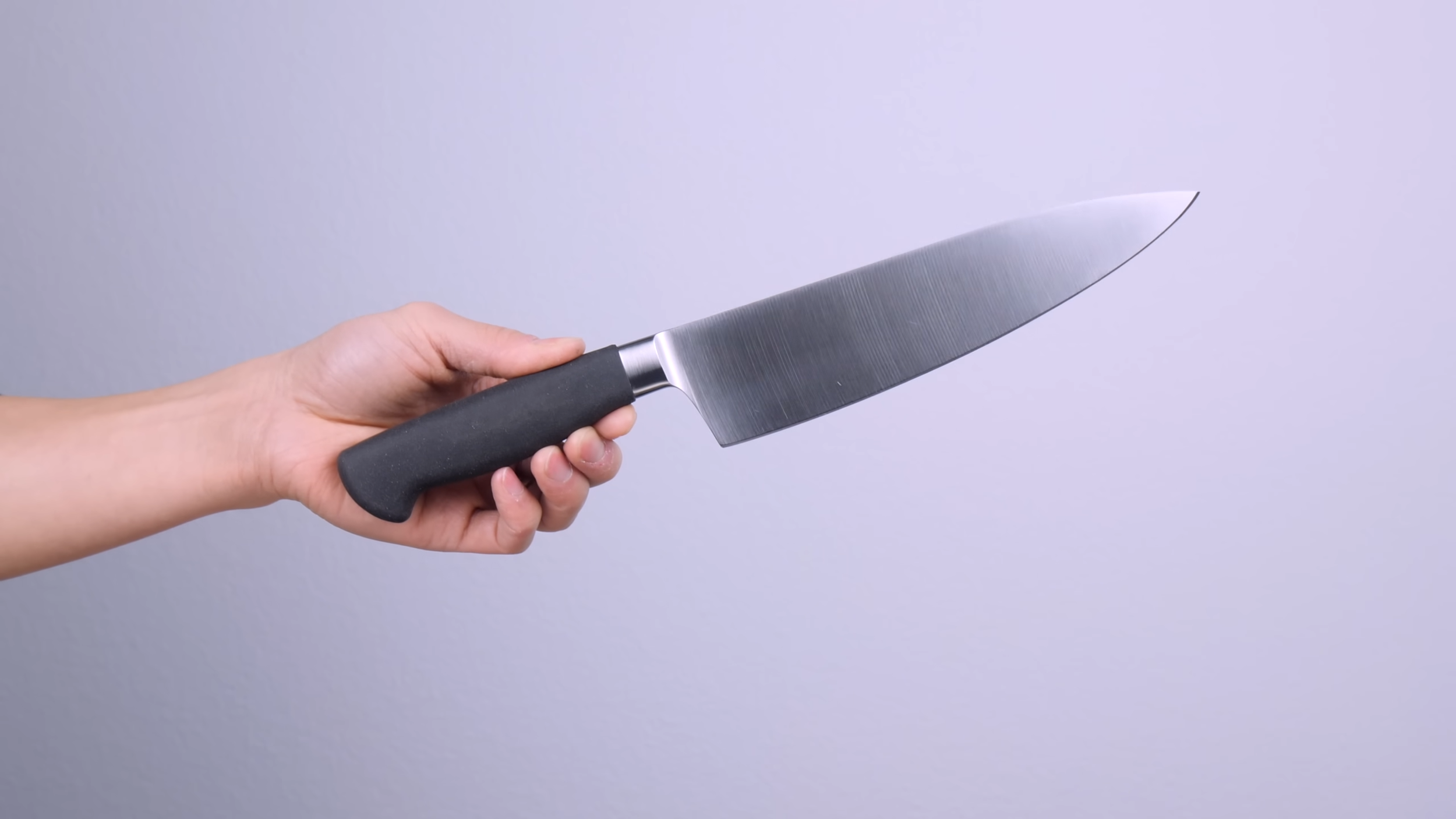
Messermeister Four Seasons 8" (~$30–$35): The Overlooked Workhorse
While the culinary industry has historically defaulted to the Victorinox Fibrox Pro 8" as the standard commercial recommendation, direct bench testing reveals noticeable ergonomic limitations in the Swiss classic. The Victorinox features a relatively narrow blade height and a flat, boxy handle that rolls easily in the palm under lateral pressure.
The Messermeister Four Seasons resolves these issues directly:
Blade Road Clearance: At its highest point, the Four Seasons provides roughly 6 mm of additional blade height over the Victorinox. This extra clearance prevents knuckles from rapping the cutting board and provides a more gradual, sweeping belly for push-cutting and rocking.
Handle Geometry: The handle features a fully rounded, ovalized polymer design that fills the palm comfortably without hot spots.
The Steel: Built with identical high-toughness, low-carbon German alloy (56–57 HRC) that can be realigned with a ceramic rod in seconds. At equivalent or lower pricing than the Victorinox, the Messermeister is the more compelling daily driver.
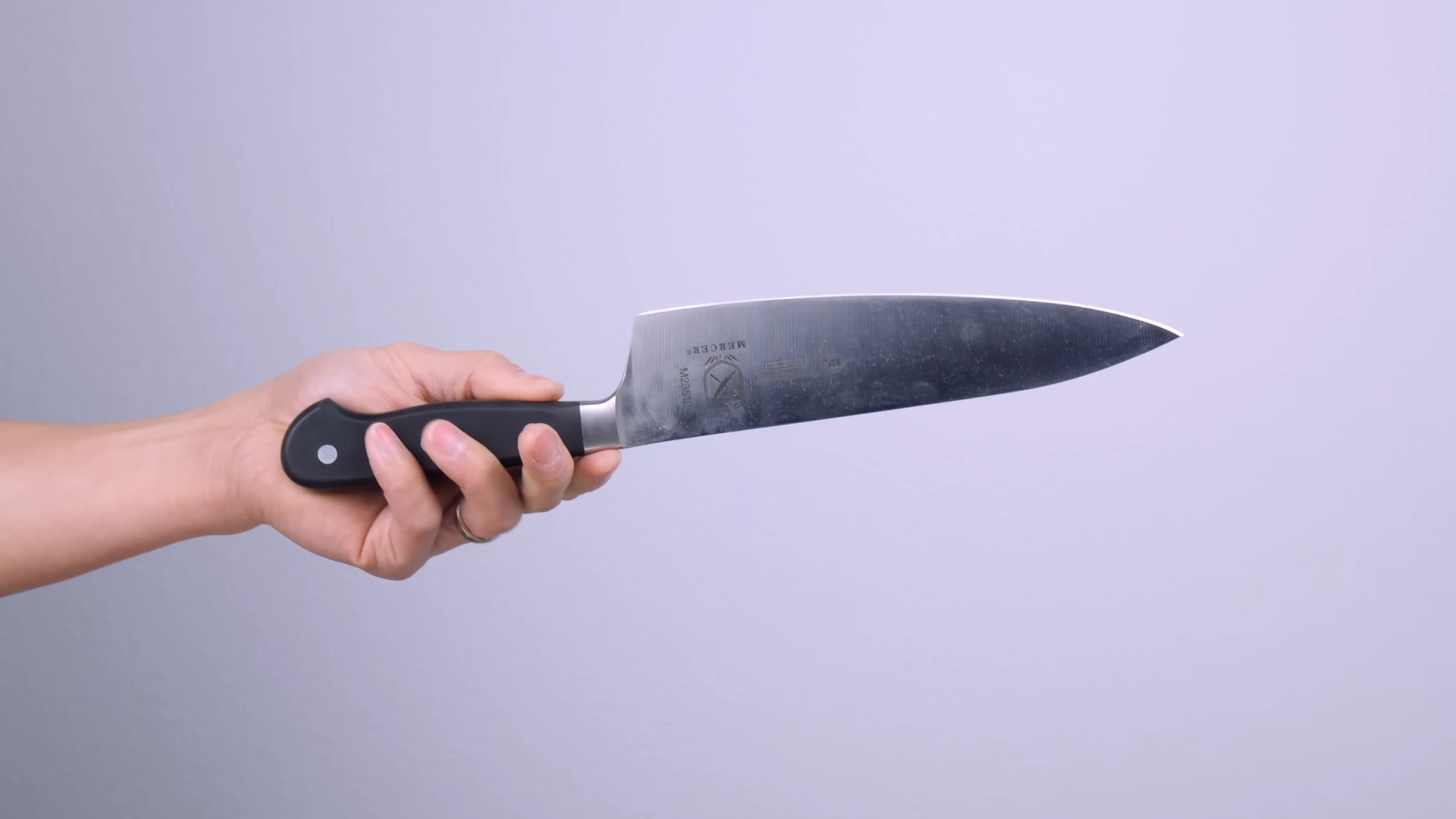
Mercer Renaissance 8" (~$40): Forged European Balance
The Renaissance shifts to traditional German architecture: fully forged DIN 1.4116 stainless steel, a triple-riveted polyoxymethylene (POM) handle, and a full tang.
Like the Genesis, Mercer omitted the thick finger guard at the heel. The result is a substantial, balanced German workhorse that behaves predictably under heavy prep while remaining completely accessible to regular whetstone maintenance.
2. The $80–$150 Enthusiast Tier: Japanese Precision Meets Production Scale
Moving past $80 transitions away from stamped commercial alloys into Japanese san-mai (three-layer) clad blades, higher carbon volumes, and secondary bevels ground for surgical separation rather than brute impact resistance.
THE MID-TIER METALLURGICAL STEP-UP
Standard German Utility (56–58 HRC) ──► High toughness, rolls under load, hone with steel
                   ▼
Takefu VG-10 San-Mai (60–61 HRC)    ──► Hard micro-carbide apex, rigid edge, whetstones only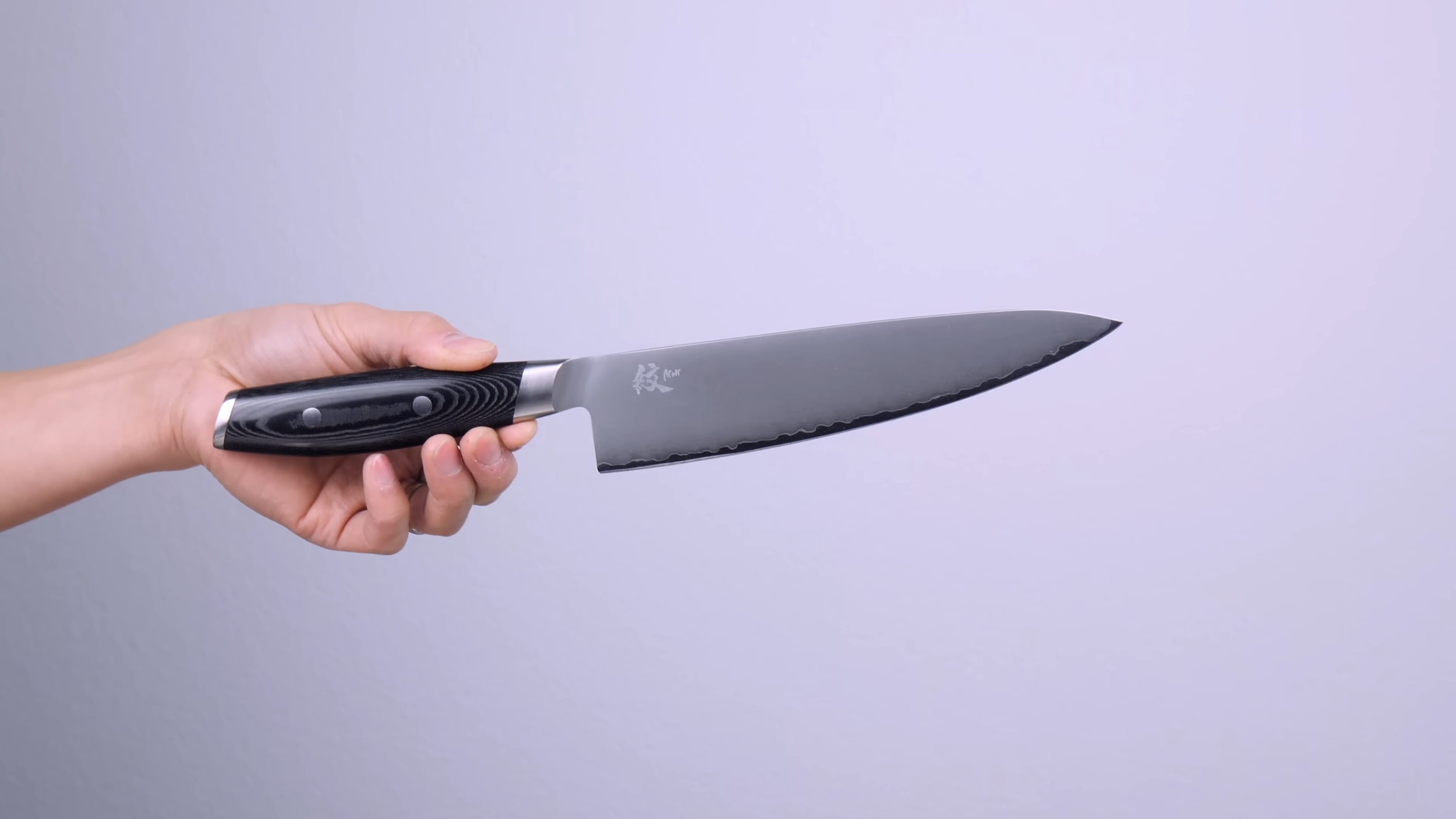
Yaxell Mon 8" Gyuto (~$80): The Sub-$100 Benchmark
Produced in Seki City, the Yaxell Mon represents the single most refined factory knife available under $100. It features a three-layer san-mai construction with a Takefu VG-10 core hardened to 60–61 HRC, clad in soft stainless steel.
Fit and Finish: The spine and choil are radiused to eliminate hard edges, while the dark canvas-micarta handle is shaped into an ovalized Western contour accented by double stainless rivets and an engraved end-cap.
Bench Feedback: Unlike budget stamped knives that produce ragged wire burrs, the Mon’s VG-10 core forms a crisp, detectable burr on a 1,000-grit synthetic waterstone that strips away cleanly on an intermediate 3,000 to 5,000-grit stone.
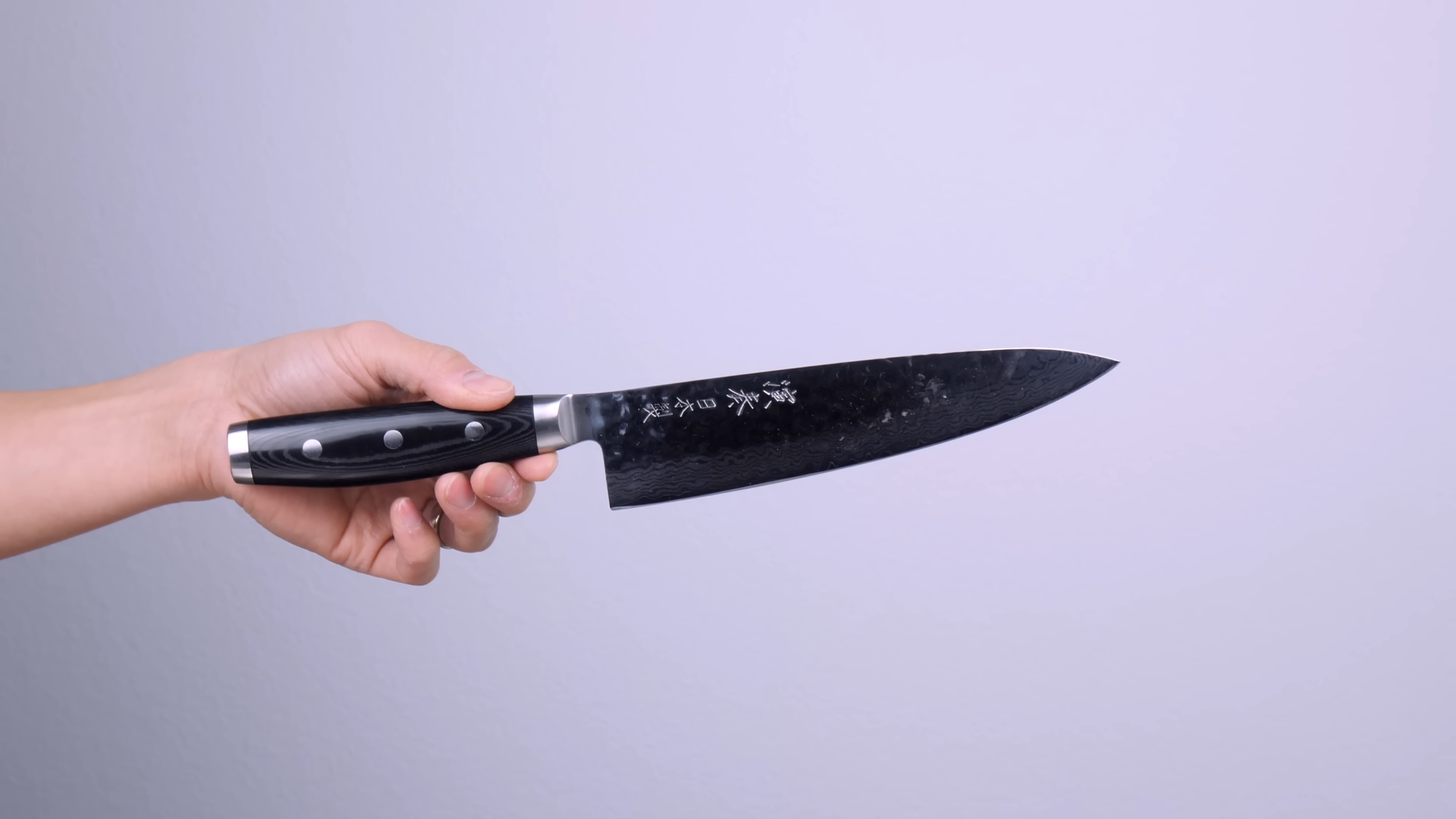
Enso HD 8" Gyuto (~$129): The Clad Aesthetic
Manufactured by Yaxell for the direct-to-consumer market, the Enso HD shares the same mechanical DNA as the Mon: an identical VG-10 core at 61 HRC and the same ergonomic micarta handle geometry.
The structural difference lies in the cladding: the Enso HD wraps the core in 37 layers of acid-etched Damascus steel. While the multi-layer cladding is primarily aesthetic, the knife features exceptional grind consistency along the primary bevel. Frequently discounted during seasonal promotions, it stands as one of the most accessible entry points into Japanese cutlery.
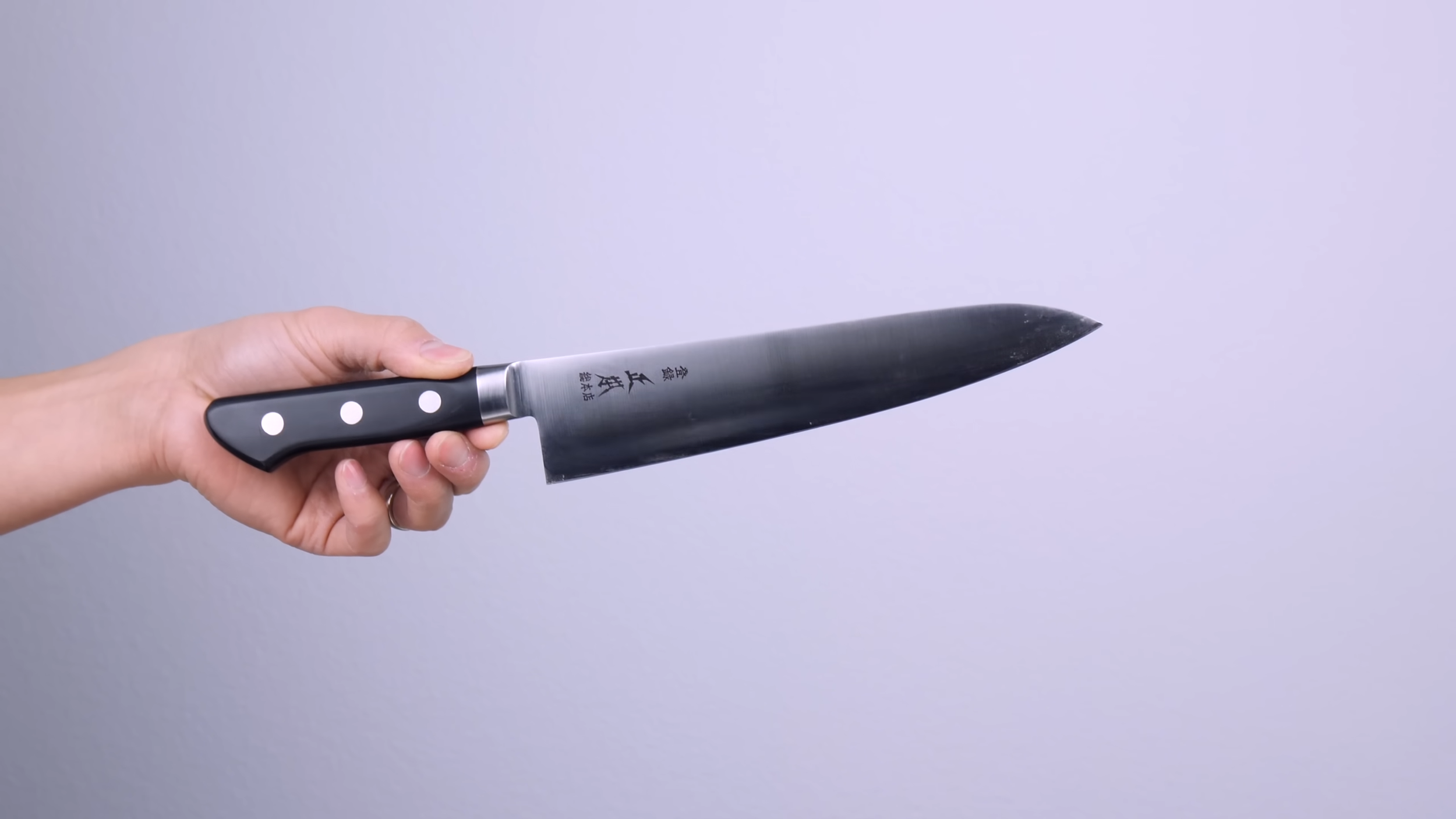
Masamoto VG 8.2" Gyuto: Pure Grind Over Specification
On paper, the Masamoto VG appears overpriced: a basic mono-steel construction paired with a simple, utilitarian pakkawood Western handle.
Yet on the cutting board, it consistently outperforms knives with flashier marketing specifications. Masamoto executes a severe, paper-thin distal taper from the spine down to the cutting edge. The blade glides through dense root vegetables with minimal wedging, demonstrating that edge and blade geometry will always triumph over raw metallurgical specs.
3. The $200–$300 Class: Powder Metallurgy and Super-Steels
In the $200 to $300 bracket, knives transition from ingot-cast alloys to powder metallurgy super-steels—predominantly Takefu SG2 (R2) micro-carbide steel hardened to 63 HRC. At this level, knives hold acute 12-to-15-degree apexes through weeks of heavy board contact.
POWDER METALLURGY COMPARISON: SG2 / 63 HRC

Model             Cladding Layers   Handle Style         Aesthetic / Grip
────────────────────────────────
Yaxell Gou        101 Layers        Black Micarta        Western Ovalized
Yaxell Super Gou  161 Layers        Red/Black Micarta    Western Heavy
Enso SG2          101 Layers        Black Micarta        Western Clean
Miyabi Birchwood  101 Layers        Karelian Birch       Traditional Wa "D"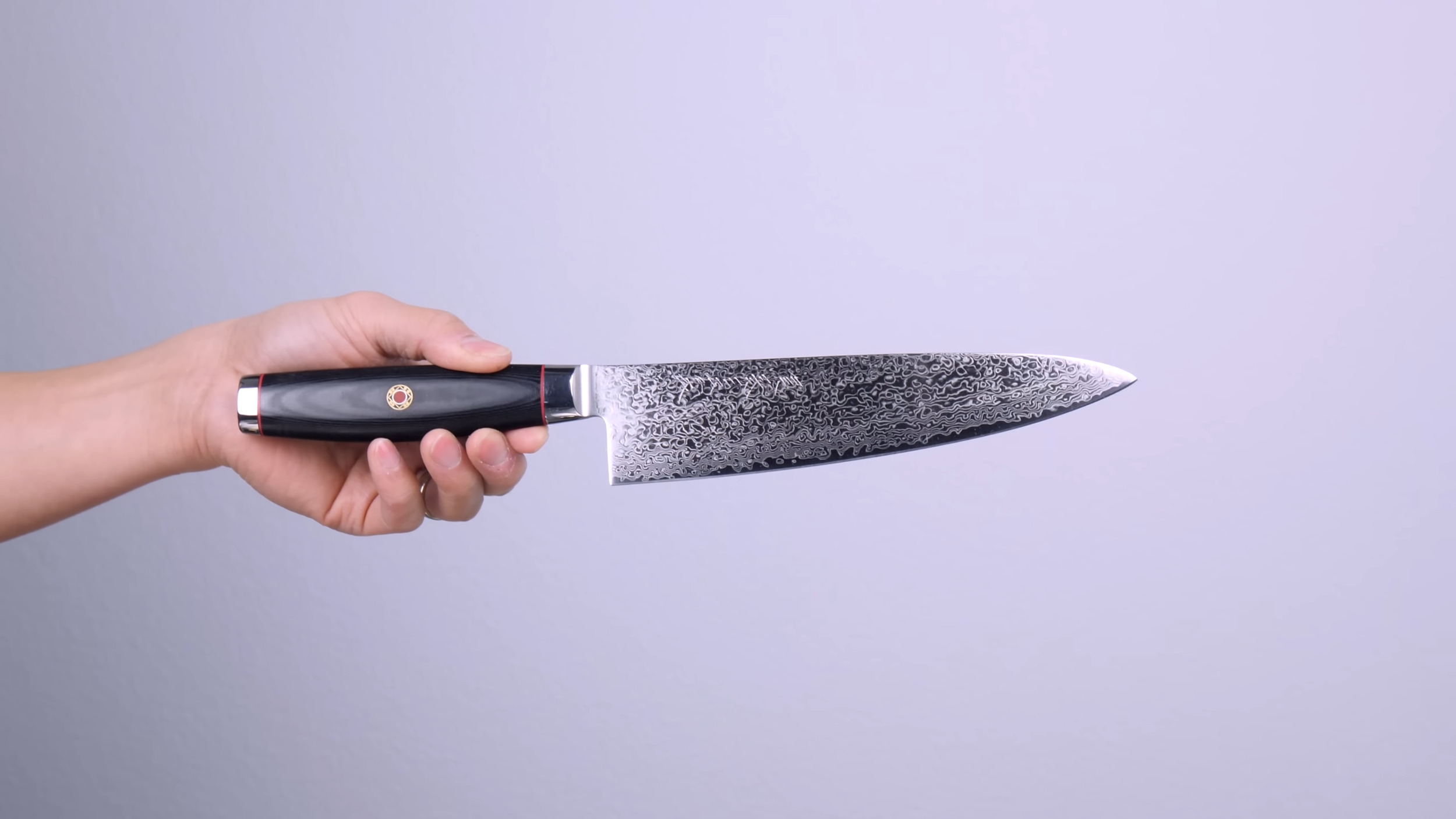
The Yaxell / Enso SG2 Ecosystem: Demystifying Layer Counts
Whether selecting the Enso SG2, the Yaxell Gou (101 layers), or the Yaxell Super Gou (161 layers), the cutting performance of the primary apex is functionally identical.
Cladding layer counts (101 vs. 161) are aesthetic treatments produced by forge-welding alternating sheets of stainless alloys. They add zero cutting efficiency or wear resistance to the core steel.
What you are paying for is the SG2 core: atomized powder metallurgy that produces an exceptionally uniform carbide matrix, capable of taking a mirror polish and maintaining razor keenness significantly longer than VG-10.
The dense, ovalized canvas-micarta handles provide some of the most comfortable, fatigue-free grips in production cutlery.
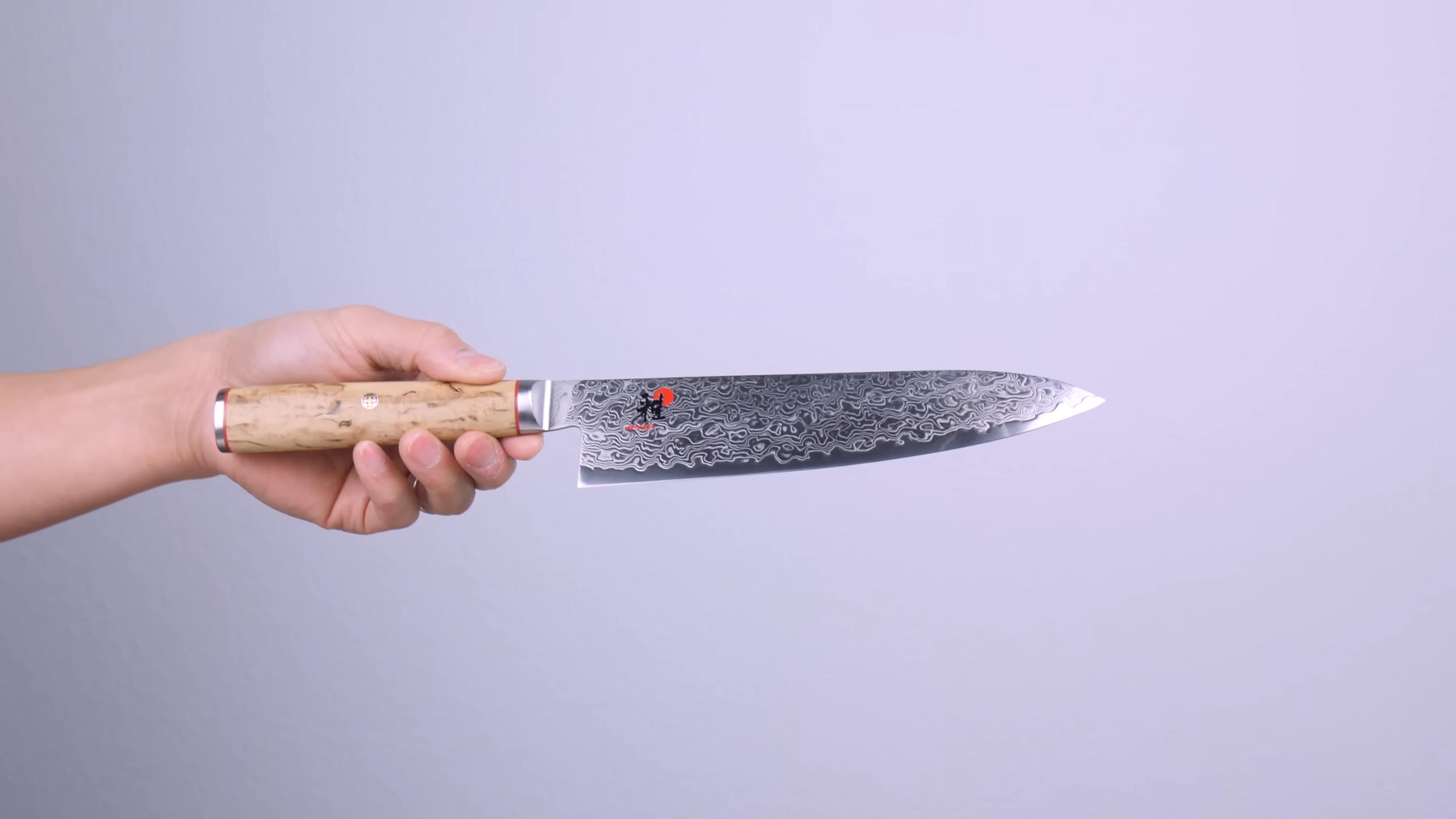
Miyabi Birchwood (5000MCD) 8": Traditional Japanese Silhouette
For those who prefer a traditional Japanese aesthetic over Western riveted handles, the Miyabi Birchwood remains an industry icon.
Ergonomics & Materials: Built around an SG2 core at 63 HRC, the knife features a Japanese D-shaped handle carved from figured Karelian (Masur) birch burl, finished with a mosaic pin and an engraved steel end-cap.
Board Clearance: The blade height sits approximately 2 to 3 mm shorter at the heel than Yaxell gyutos. While this initially raises concerns regarding knuckle clearance, the curvature of the neck and pinch transition provides ample room on the board.
Sharpening Reality: The polished 101-layer flower Damascus sheds low-moisture ingredients with noticeably less friction than deeply acid-etched Damascus blades, making it as pleasurable on the cutting board as it is on the whetstone bench.
4. The Outliers: Custom Heritage, High Carbon, and Vanishing Legends
Beyond $200 sits a category of knives chosen not for mass-market convenience, but for historical provenance, reactive carbon steels, and specialized cutting geometry.
+--------------------------------------------------------------------------+
| THE HIGH-CARBON EXPERIENCE                                               |
|                                                                          |
| Zwilling Kramer Carbon 8"                                                |
| ├── Steel: AISI 52100 Mono-Steel (~61 HRC)                               |
| ├── Dynamics: Enormous knuckle clearance, wide blade, distal taper       |
| └── Patina: Reactive blue-gray surface; develops character with use      |
|                                                                          |
| Sakai Takayuki / Akazawa Aogami Super                                    |
| ├── Smith: Hand-forged by Kenichi Shiraki                                |
| ├── Steel: Hitachi Aogami Super (65 HRC)                                 |
| └── Feel: Octagonal wa-handle; surgical bite, unforgiving to bad cuts    |
|                                                                          |
| Masamoto KS Gyuto                                                        |
| ├── Steel: Hitachi White #2 (Shirogami) Mono-Steel                       |
| ├── Profile: French Sabatier lineage; long flat section into acute tip   |
| └── Status: Indefinite production bottlenecks due to artisan scarcity   |
+--------------------------------------------------------------------------+
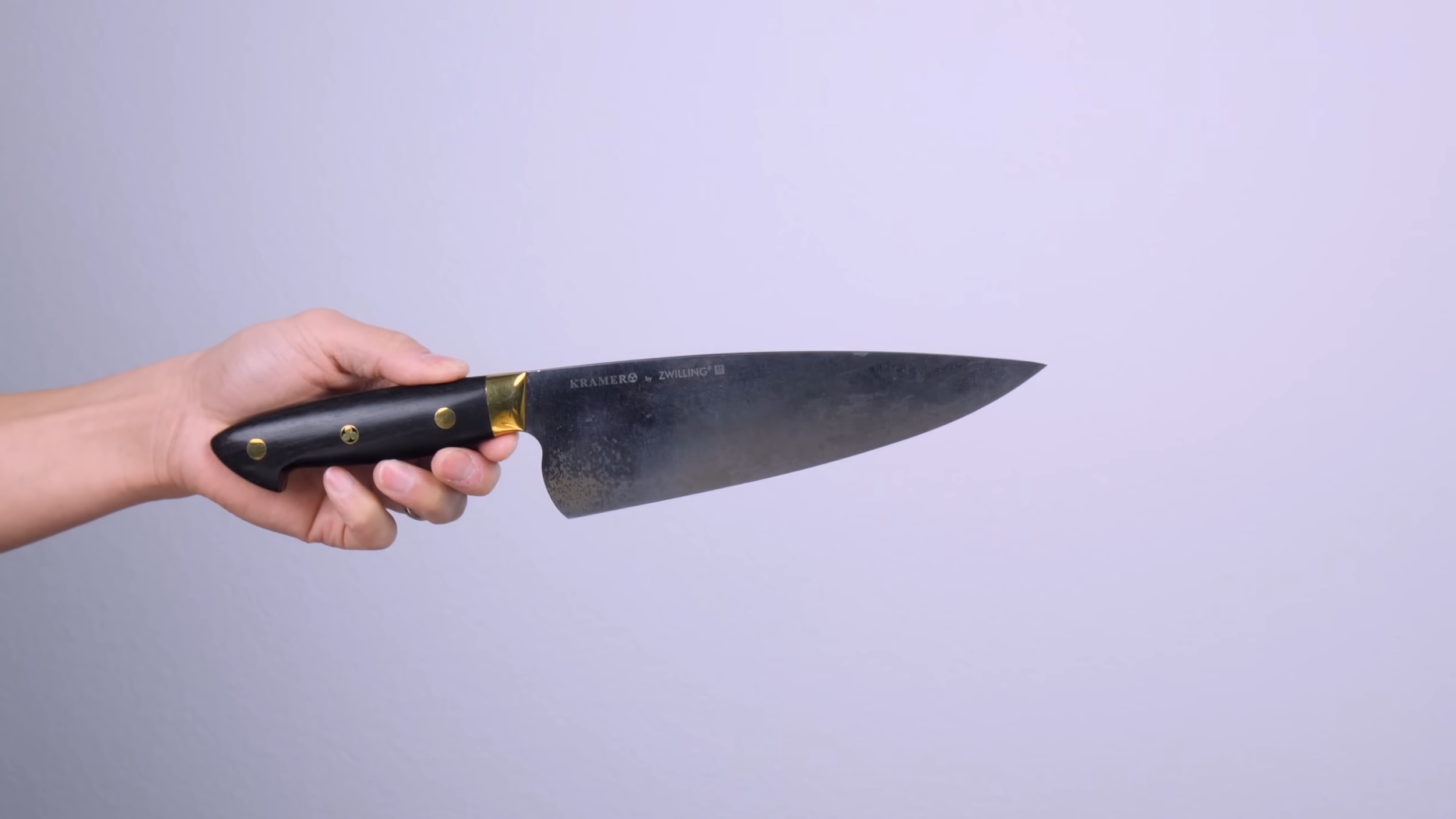
Zwilling Kramer Carbon 8": Custom Geometry in Production Form
Designed directly by Master Bladesmith Bob Kramer, this knife is an unapologetic departure from traditional European and Japanese profiles:
Metallurgy: Uses 52100 ball-bearing steel, a high-carbon alloy with exceptional toughness and fine grain structure. It is fully reactive: cutting a warm onion or a tomato will immediately initiate a blue-gray patina. Neglecting moisture will rust the blade within minutes.
Architecture: Features a massive blade height, a pronounced distal taper, brass rivets, brass bolsters, and a full tapered tang. As the knife oxidizes, the brass accents tarnish alongside the blade road, creating an evolving tool that ages alongside its owner.
On the Stones: 52100 is a dream to sharpen. It deburrs cleanly and takes an aggressive, toothy apex on medium-grit stones that bites into protein skins effortlessly.
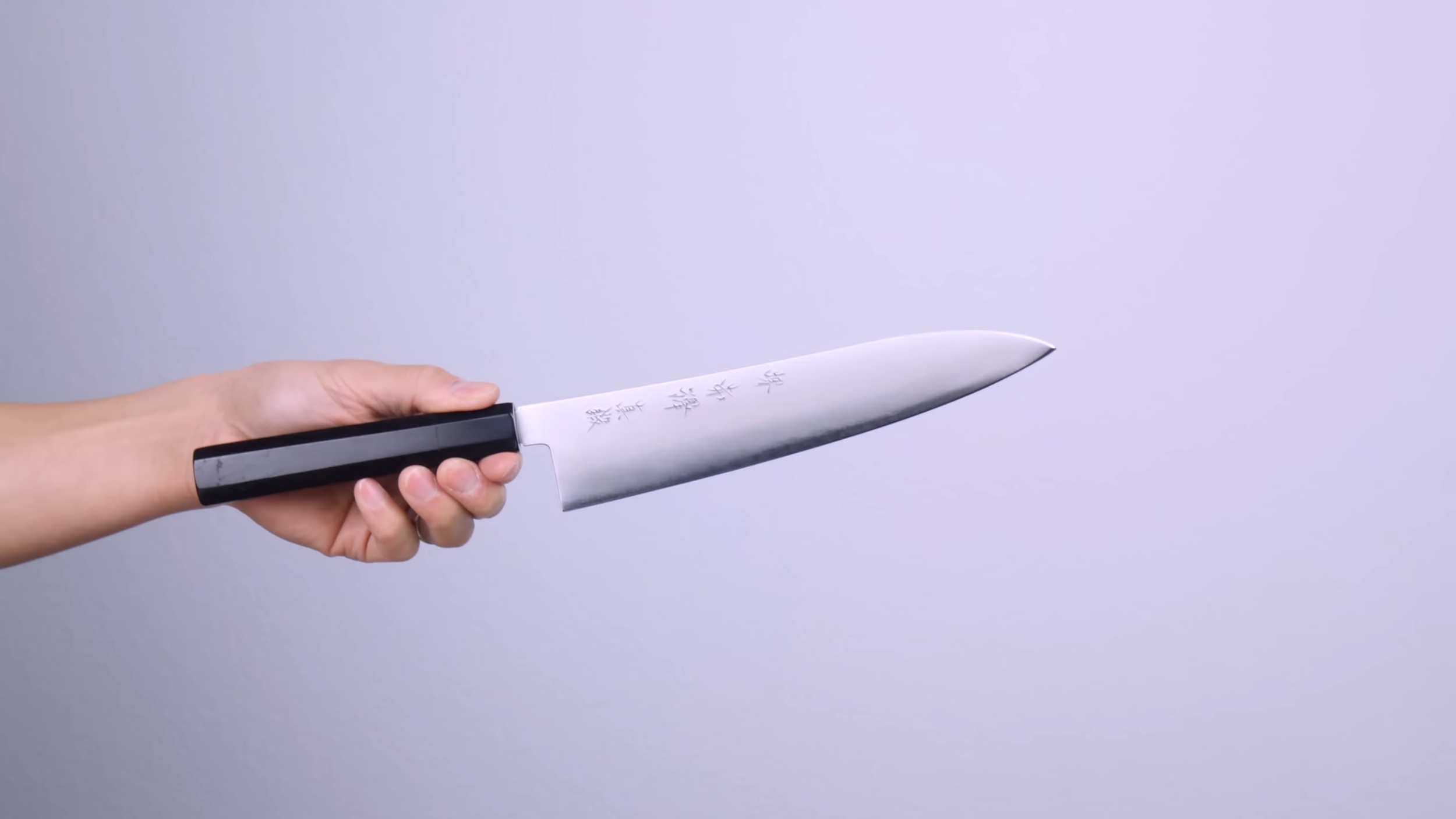
Akazawa / Shiraki Aogami Super 240mm: The Master Craftsman Apex
Forged by legendary master blacksmith Kenichi Shiraki, this blade showcases Hitachi Blue Super (Aogami Super) pushed to an extreme 65 HRC.
Fitted with an octagonal wa-handle, the knife balances weight toward the middle of the blade.
At 65 HRC, the edge holds its geometry under relentless culinary prep, but demands technical discipline. Lateral twisting, scraping sideways against a board, or impacting hard seeds will cause micro-fracturing along the apex.
Masamoto KS Gyuto: The Mythical Standard
The Masamoto KS holds near-mythic status within the culinary community, serving as the archetype for what a modern Japanese gyuto should be.
The Profile: Instead of an aggressive German curve, the KS utilizes a profile inspired by antique French Sabatiers: a long, flat cutting edge along the heel that sweeps smoothly into an elongated, acute tip.
The Metallurgy: Crafted from mono-steel Hitachi White #2 (Shirogami). White steel contains minimal alloy contaminants, allowing it to take an edge sharper than almost any modern stainless steel on natural waterstones.
The Supply Reality: The KS has become virtually impossible to purchase at retail. Hand-forging pure carbon mono-steel to this level of structural straightness requires specialized artisan labor. With foundries and senior smiths in Tokyo retiring without successors, production runs have slowed to a crawl. If you locate a legitimate KS at retail, it represents an endangered era of Japanese blacksmithing.
Technical Comparison Matrix
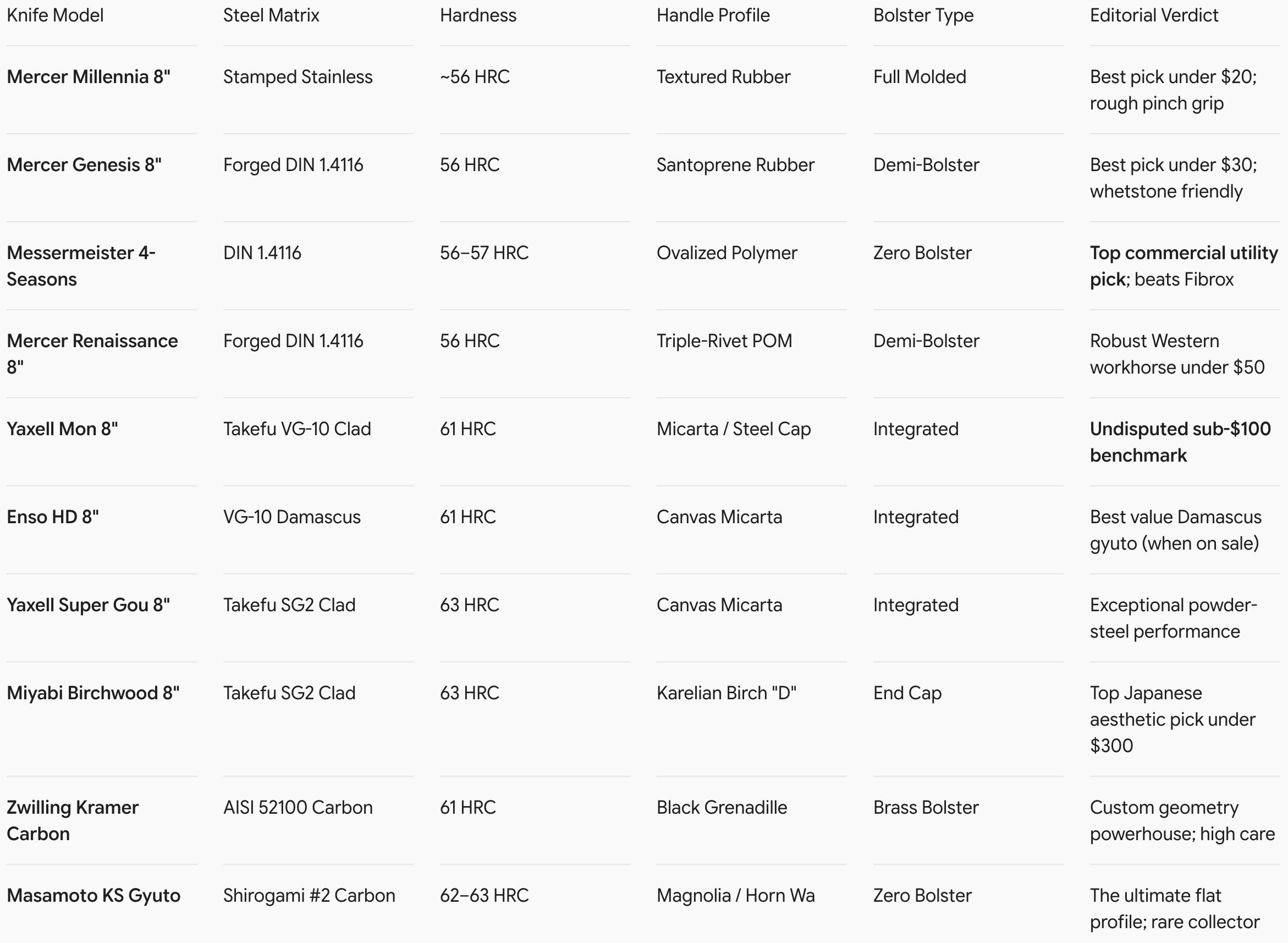
Allocating Your Cutlery Investment
A knife is ultimately an extension of your cutting board habits and your willingness to maintain an edge. Owning a $350 hand-forged artisan gyuto will not make you a better cook, and running high-end cutlery through an electric pull-through sharpener or throwing it into a sink will destroy it just as quickly as a budget blade.
If you need a reliable kitchen workhorse that will handle bones, dense squashes, and dishwasher abuse, spend $30 on the Messermeister Four Seasons or $40 on the Mercer Renaissance.
If you want to experience authentic Japanese sharpness and clean waterstone response without overspending, the Yaxell Mon at $80 remains the golden inflection point of performance-per-dollar.
If you appreciate the metallurgical edge-holding of powdered super-steels and have developed proper bench sharpening discipline, stepping up to an SG2 core via the Enso, Yaxell, or Miyabi Birchwood will provide a lifetime of frictionless slicing.
Match your steel to your maintenance habits, keep your whetstones flat, and let the geometry of the blade do the work.