A comprehensive metallurgical and ergonomic analysis of the best sub-$100 Japanese kitchen knives featuring Western (Yo) handles. We dissect the Seki Kanetsugu Pro M, Misono Molybdenum, Seki Satsuma AUS-8, and key crossover benchmarks like the Tojiro DP and Kanetsugu Pro J to determine where entry-level capital is best spent.
trust retailers BurrfectionStore | Gyuto | WasabiKitchen | Amazon
Disclosure: As an Amazon Associate, I earn from qualifying purchases.
all knives available at BurrfectionStore
For most home cooks and aspiring culinary professionals, $100 is the ultimate psychological and financial threshold. It marks the boundary where mass-produced, soft European block sets give way to authentic Japanese cutlery.
Stepping across this line does not require immediate immersion into the high-maintenance realm of reactive high-carbon paper steels or delicate octagonal wa-handles. In fact, the sub-$100 market is anchored by Western-handled (Yo) Japanese knives produced in industrial cutlers like Seki City.
These knives combine the ergonomic familiarity and low maintenance of Western scales with Japanese blade geometry: acute primary bevels, thin blade roads, and specialized heat treatments.
Navigating this hyper-competitive category requires an analytical breakdown of three standout sub-$100 blades, followed by two critical crossover benchmarks that sit right on the price border.
[ THE SUB-$100 JAPANESE CUTLERY LANDSCAPE ]

Seki Kanetsugu Pro M (~$80)  ──► Daido 1K6 / Moly-Vanadium @ 58 HRC │ Rounded Choil & Ergonomic Pakkawood
Misono Molybdenum (~$100)    ──► 13-Chrome Moly-Vanadium @ 57 HRC   │ Ultra-Flat Push-Cut Line Legend
Seki Satsuma (~$100)         ──► Aichi AUS-8 @ 57–58 HRC            │ Direct 1:1 Misono Architectural Twin

[ THE CROSSOVER CONTENDERS ($100–$110) ]
Tojiro DP 210mm (~$101)      ──► Takefu VG-10 Clad @ 58–60 HRC      │ San-Mai Utility & Upgraded Factory Apex
Seki Kanetsugu Pro J (~$110) ──► Aichi ZA-18 Core @ 60–61 HRC       │ Tsuchime / Faceted Linen Micarta
1. The Value Benchmark: Seki Kanetsugu Pro M (~$80)
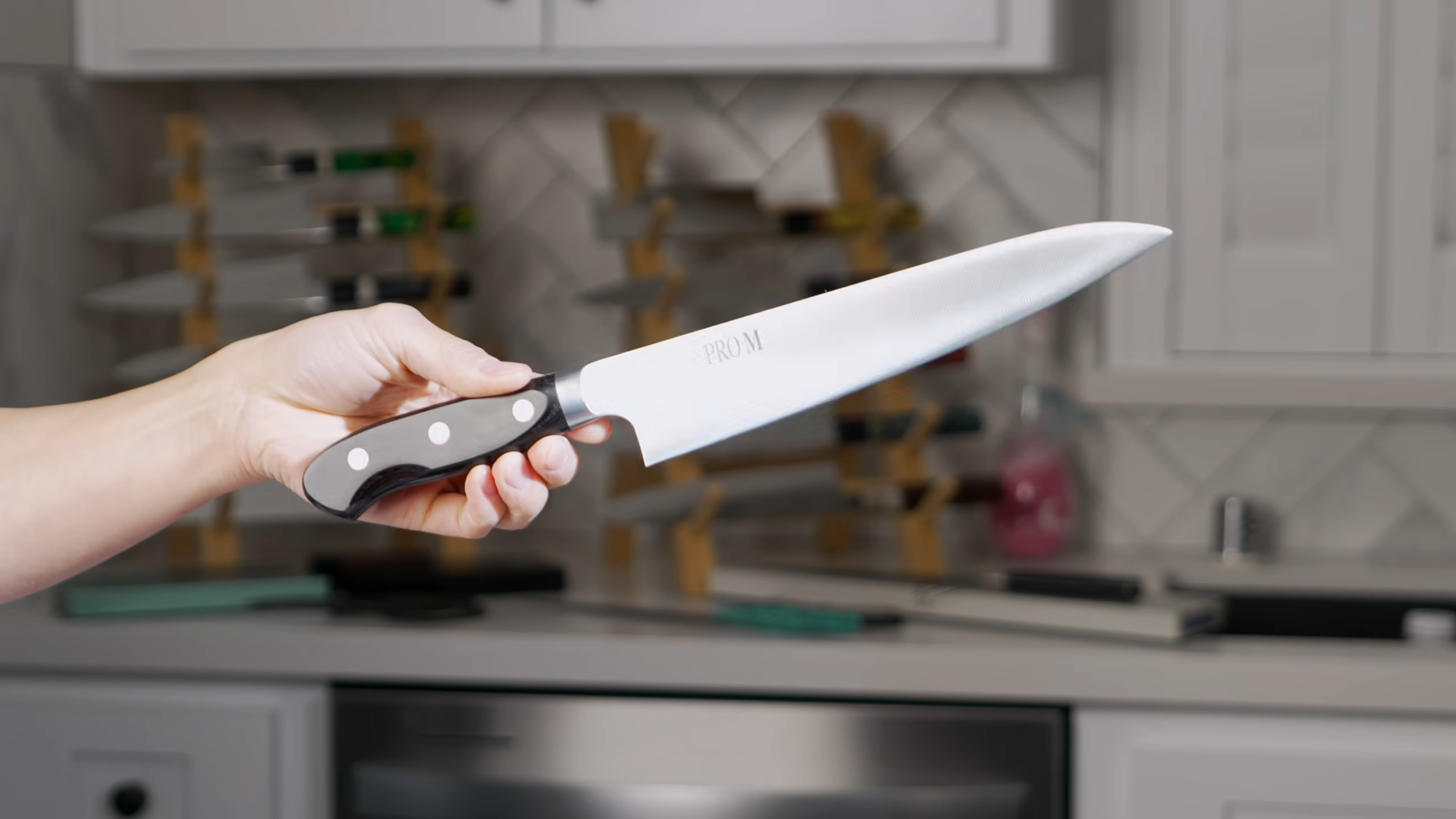
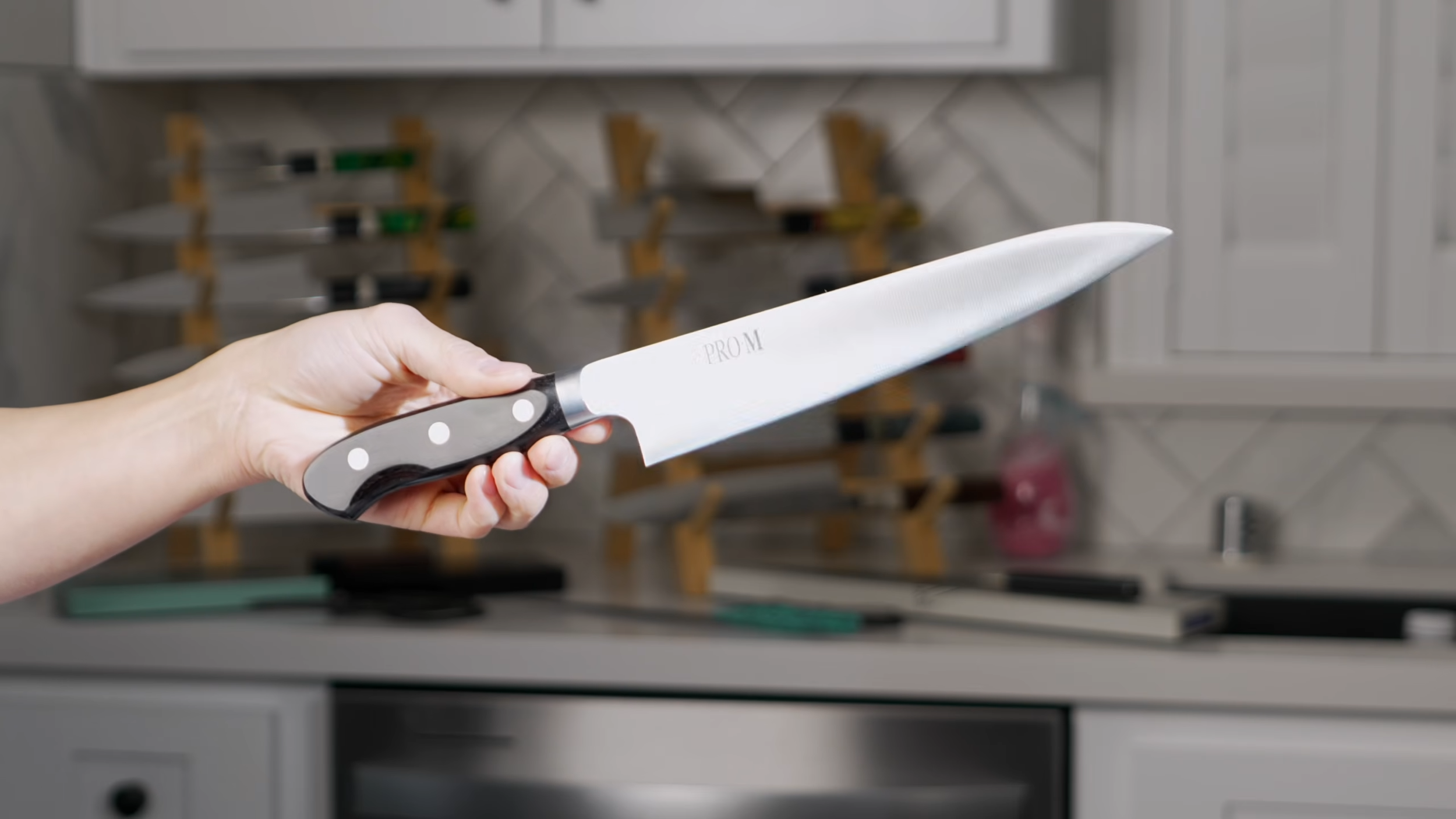
At roughly $80, the Seki Kanetsugu Pro M stands as the single highest-value gateway into Japanese cutlery. Produced by a maker with origins tracing back to master swordsmith Kanetsugu in the 14th century, this knife punches far above its price bracket in fit, finish, and tactile refinement.
SEKI KANETSUGU PRO M: ARCHITECTURE & RELIEF

Spine: ~2.0mm ──► Eased/Deburred Satin Line
                  ┌───────────────────────────────────────────────┐
                  │                                               │
                  │   Daido 1K6 Molybdenum Stainless (~58 HRC)     │
                  │                                               │
                  └─── Rounded Choil Radius ───\__________________/
                                                 ▲
                          No 90° pinch drag ─────┘
The Unprecedented Rounded Choil
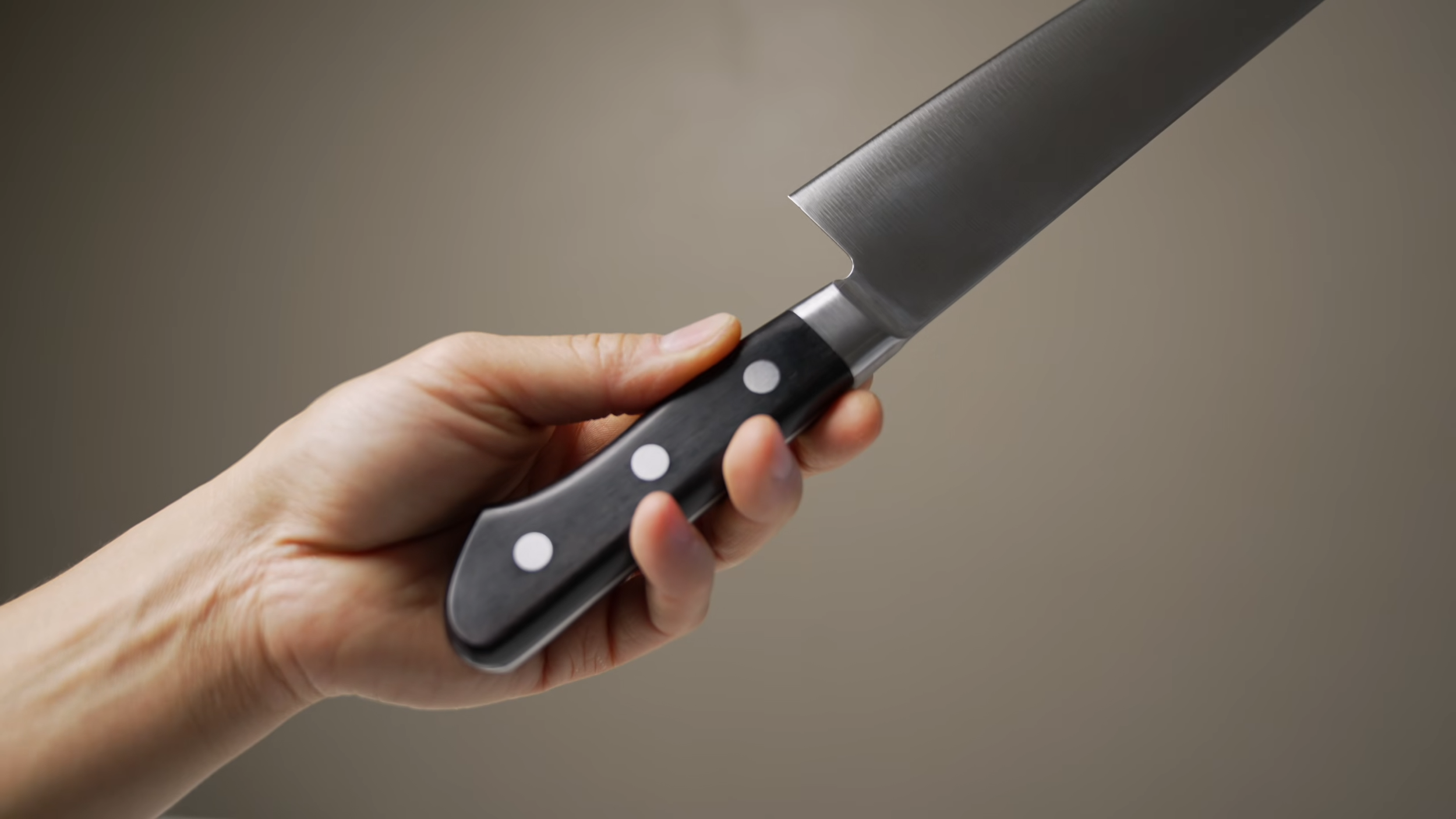
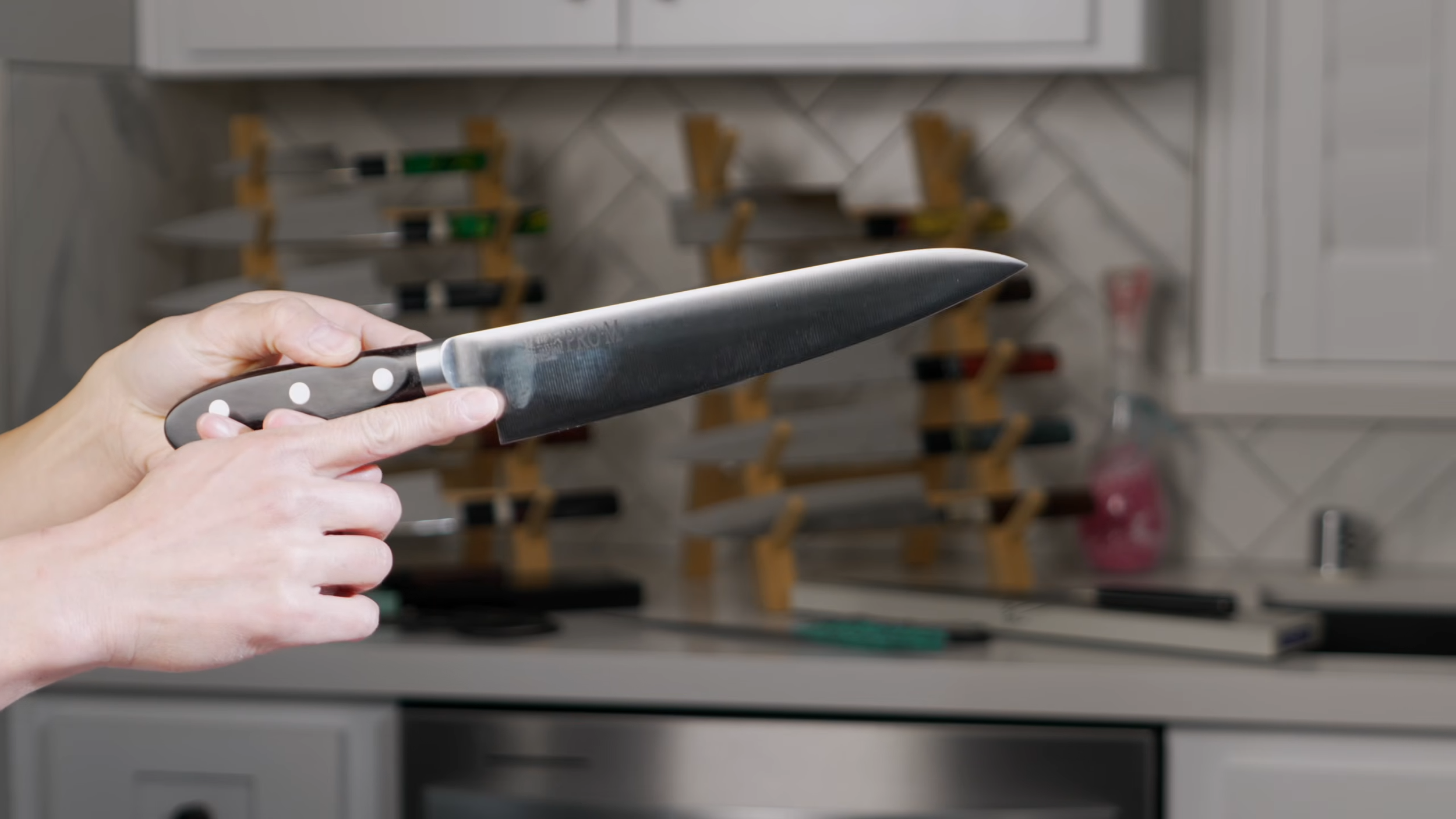
The most critical feature of the Pro M is its rounded choil and neck. In the sub-$100 category, manufacturers almost universally stamp their blades and skip hand-finishing to cut costs, leaving sharp, 90-degree corners right where the index finger wraps the neck during an aggressive pinch grip. Over an hour of prep, these sharp transitions create painful friction points.
The Pro M rounds and buffs this entire transition, offering a degree of comfort typically reserved for $200+ artisan knives.
Cutting Profile: The Push-Cut Bias
The blade geometry of the Pro M strikes a deliberate balance:
The Belly: It features a gently rising cutting path that accommodates light rocking, but leans heavily toward a flat, linear push-cutting stroke.
Heel Height: The blade measures 42 mm tall at the heel. While adequate for small-to-medium hands, cooks with large hands or thick knuckles who rock aggressively may prefer 44 mm to 45 mm of clearance to avoid board contact.
The Handle: The black pakkawood handle is contoured with generous palm swells, making it exceptionally secure for medium and larger hands.
Metallurgy & Bench Behavior
The Pro M utilizes a proprietary molybdenum-vanadium stainless steel (comparable to Daido 1K6) hardened to 58 HRC.
Wear Life: In standard domestic or light commercial duty, the edge maintains functional slicing keenness for 3 to 4 months before requiring stone maintenance.
On the Waterstones: At 58 HRC, the steel avoids the brittle micro-chipping of ultra-hard alloys while entirely sidestepping the gummy, stubborn wire burrs found on cheap 54 HRC German stamped steel. On a 1,000-grit synthetic waterstone, it deburrs cleanly in minutes.
2. The Kitchen Line Legend: Misono Molybdenum (~$100)
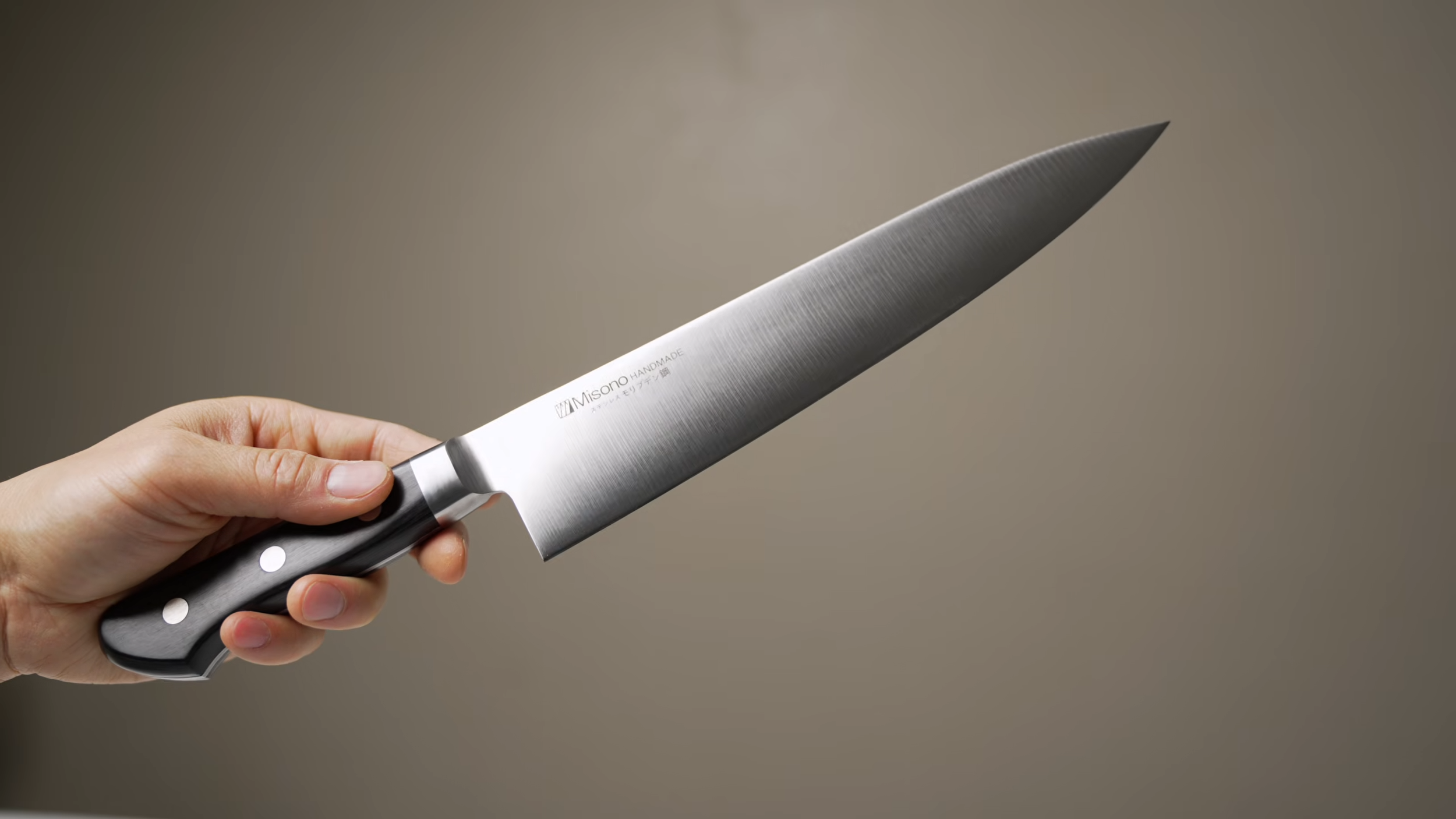
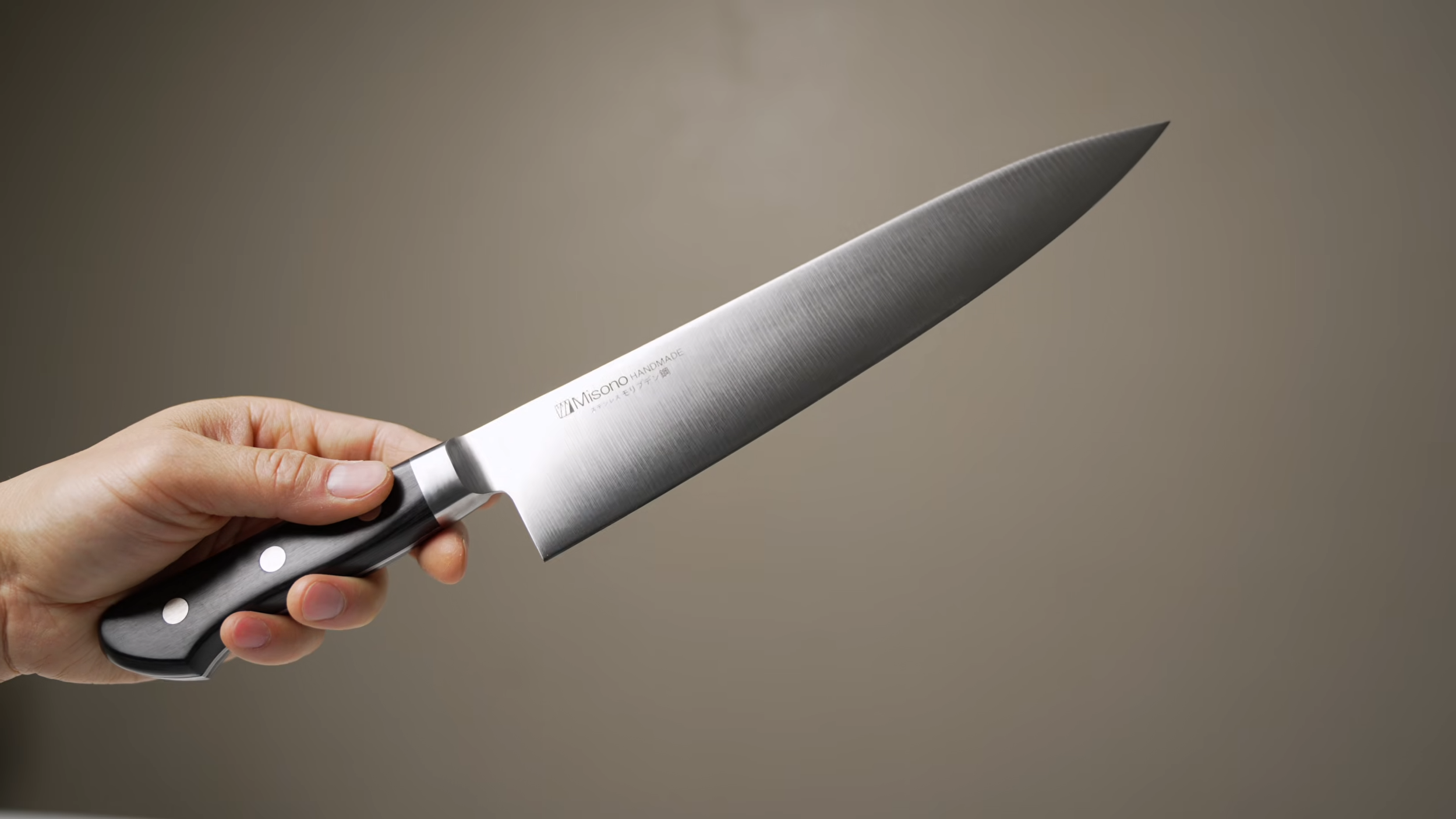
Walk into professional restaurant kitchens across Tokyo, Osaka, or Kyoto, and you will see one knife consistently resting on line stations: the Misono Molybdenum Standard Series.
Misono remains one of Seki City’s most respected industrial manufacturers. Their global reputation is built not on Damascus aesthetic flourishes, but on mechanical reliability, tight quality control, and functional cutting geometry.
[ PUSH-CUT GEOMETRY: MISONO VS. WESTERN ROCKER ]

Western Chef Knife (Deep Belly):
  Heel ───\____________________/~~~~~~\_____/─── Tip (High arc built for rocking)

Misono Molybdenum (Aggressive Push Road):
  Heel ──────────────────────────────/───── Tip (Ultra-low arc; maximizes board contact)
The Seki Export Shift: Why Western Handles Dominate
A common question among new buyers is why a prestigious Japanese house like Misono equips its standard series with Western riveted scales rather than traditional wood wa-handles.
Seki City is Japan's industrial cutlery capital. Unlike the boutique, hand-hammered workshops of Sanjo or Sakai that produce small batches of carbon wa-knives, Seki manufacturers scale for international commercial kitchens. Western handles—constructed from stabilized, resin-impregnated pakkawood with full-tang steel rivets—withstand commercial dish stations, temperature swings, and heavy sanitation cycles without cracking or loosening.
Slicing Mechanics & Blade Profile
The primary appeal of the Misono Molybdenum is its aggressive cutting profile:
The blade road runs nearly dead flat from the heel through two-thirds of the cutting length before gently curving upward to the tip.
This provides unmatched mechanical efficiency for push-cutting vegetables (onions, carrots, celery). The blade separates food cleanly without the "accordion" effect—where unsevered pieces remain connected by tiny hinges of skin due to blade belly curvature.
Heel Clearance: Like the Pro M, it sits at roughly 42 mm in height. The handle is slightly more compact, catering exceptionally well to small and medium hands.
Metallurgy: 13-Chrome Molybdenum Matrix
Hardened to 57 HRC, the alloy emphasizes structural toughness and ductility over extreme wear resistance. It takes an exceptionally fine edge on waterstones and can be realigned with an ultra-fine ceramic rod between full sharpening sessions.
The choil transition is stamped rather than hand-radiused, but the profile consistency and steel purity make it an enduring industry workhorse.
3. The Direct Alternative: Seki Satsuma AUS-8 (~$100)
Because Misono cutlery is heavily consumed by the domestic Japanese restaurant industry, global supply bottlenecks frequently leave the Molybdenum series backordered for months.
Enter the Seki Satsuma AUS-8.
MISONO MOLYBDENUM VS. SEKI SATSUMA COMPARISON

Metric             Misono Molybdenum               Seki Satsuma
─────────────────────────────────────────────────────────────────────────
Blade Steel        13-Chrome Moly-Vanadium         Aichi AUS-8
Hardness           57 HRC                          57–58 HRC
Edge Geometry      Asymmetrical Double Bevel       70/30 Asymmetrical Bevel
Heel Height        42 mm                           42 mm
Handle             Black Pakkawood Full-Tang       Black Pakkawood Full-Tang
Fit & Finish       Satin Machine Polish (Superior) Standard Clean Ground
Availability       High Turnover / Frequent OOS    Consistent Stock
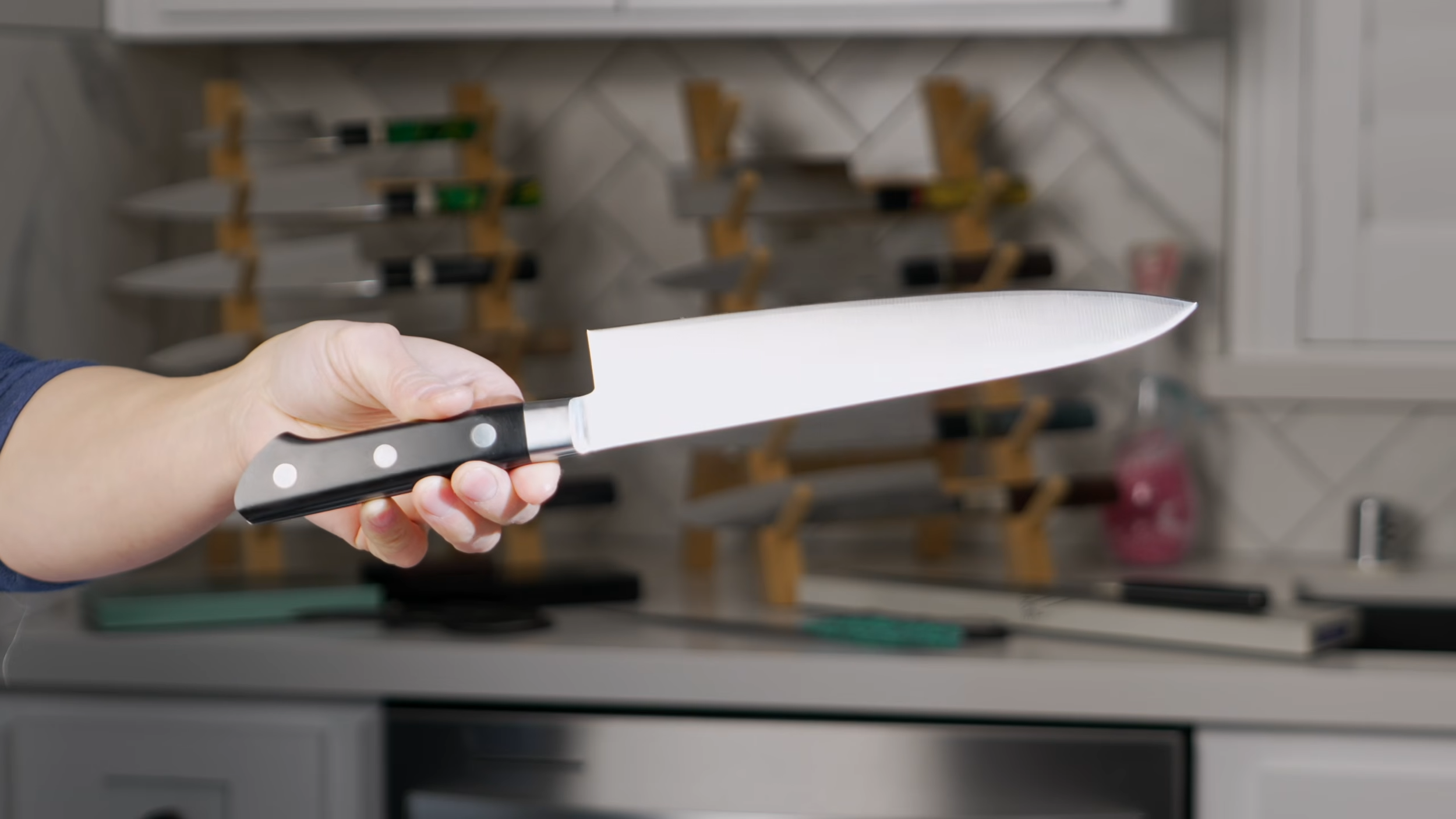
Architectural Twin: The Seki Satsuma is an almost exact geometric replica of the Misono Molybdenum. From the bolster drop and rivet placement to the low-profile blade belly and acute tip geometry, the knives handle identically on the cutting board.
Aichi AUS-8 Performance: Hardened to 57–58 HRC, the AUS-8 alloy contains vanadium for carbide refinement. It exhibits identical edge retention to the Misono, resisting micro-chipping while yielding an easy, responsive feel on 1,000 to 3,000-grit waterstones.
The Verdict: If the Misono Molybdenum is out of stock, the Seki Satsuma delivers 99% of its performance, cutting profile, and balance without compromise.
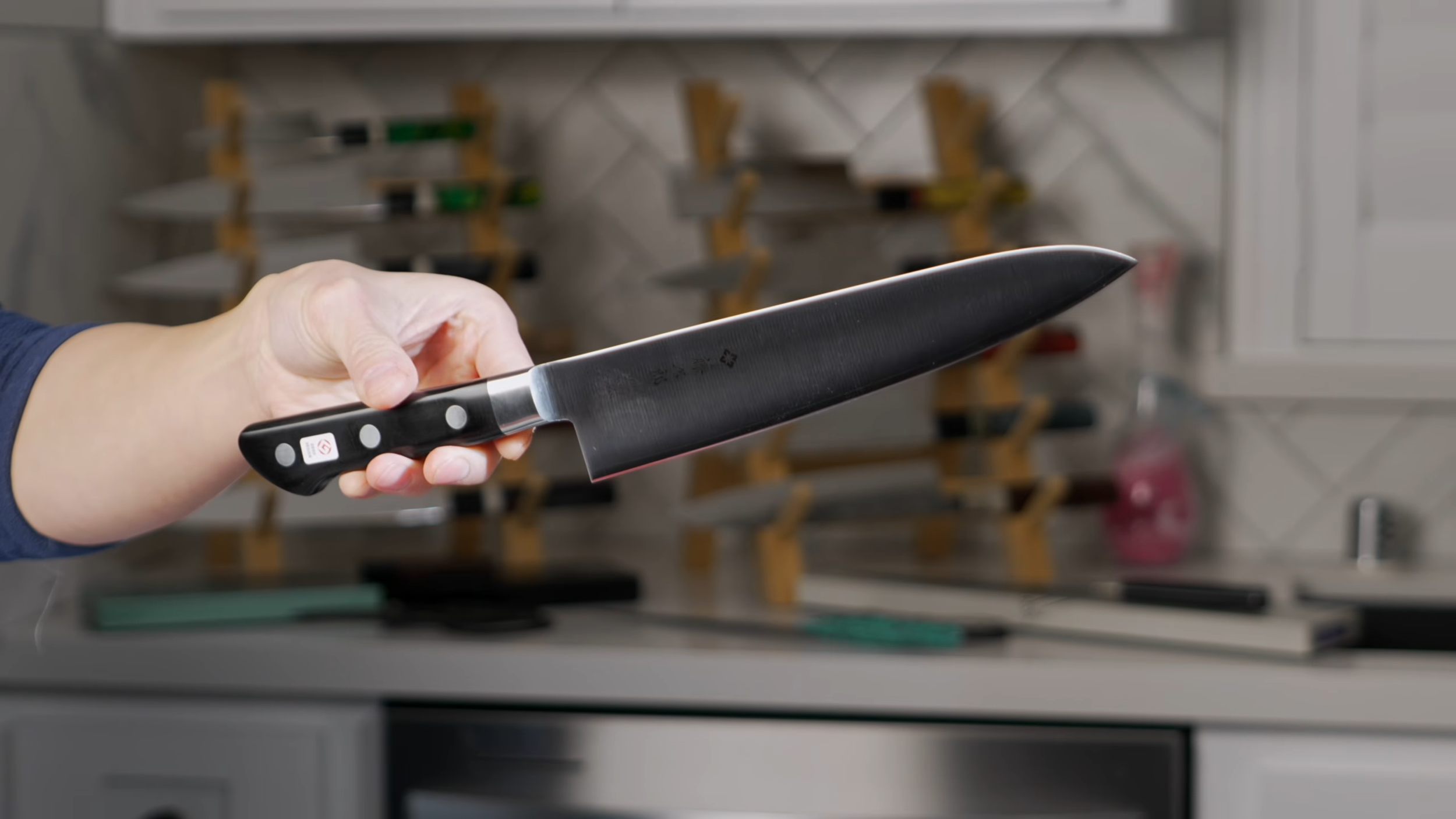
4. The $100 Crossover Contenders: Tojiro DP & Kanetsugu Pro J
If your budget can stretch by ten to fifteen dollars past the $100 mark, two additional knives enter the conversation, each introducing major metallurgical and aesthetic upgrades.
THE STEP-UP IN METALLURGICAL HARDNESS

Sub-$100 Class (AUS-8 / 1K6 / 13-Cr) ──► 57–58 HRC │ High ductility, honeable, frequent touch-ups
                         ▼
Crossover Class (VG-10 / ZA-18)      ──► 60–61 HRC │ High wear resistance, rigid apex, whetstone only
Tojiro DP 210mm Gyuto (F-808) (~$101): Upgraded Factory Honing
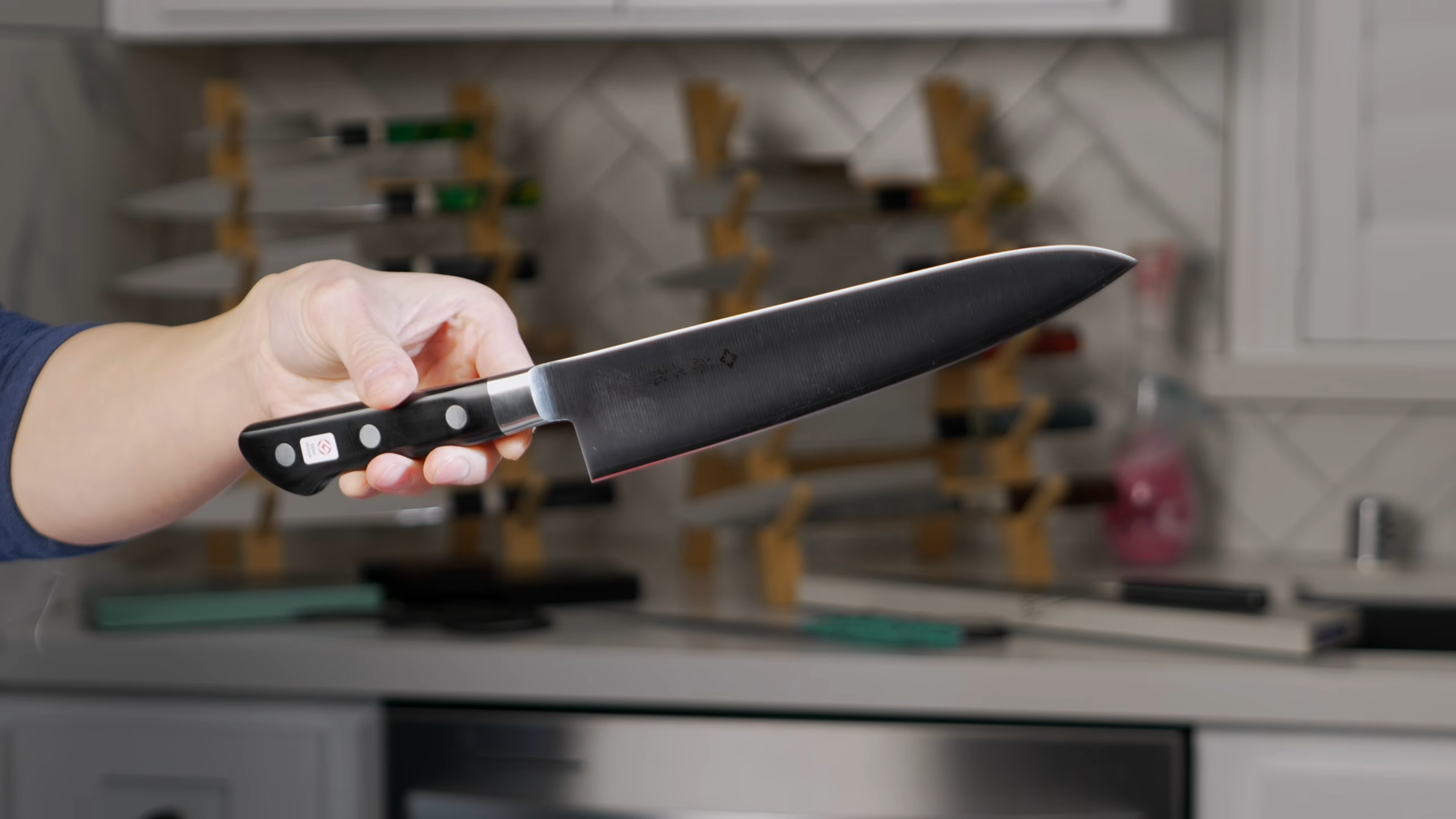
The Tojiro DP is arguably the most famous entry-level Japanese knife on earth. Built with a three-layer San-Mai construction featuring a Takefu VG-10 core hardened to 58–60 HRC clad in soft stainless, it has served as the classic gateway gyuto for decades.
Upgraded Grinding Standards: Historically, out-of-the-box edges on Tojiro DPs were inconsistent. Recently upgraded factory waterstone grinding cells in Niigata have changed that: modern DP releases arrive with cleaner, more acute apexes right out of the box.
Cutting Profile: Unlike the flat-biased Misono or Pro M, the Tojiro DP features a traditional curved belly that caters directly to Western cooks who prefer rock-chopping.
Ergonomic Caveat: The handle is slightly blocky and thin in cross-section. Cooks with large hands may find the squared edges somewhat fatiguing during extended prep.
Seki Kanetsugu Pro J (~$110): ZA-18 Super-Steel & Faceted Micarta
The Pro J is the premium sibling to the Pro M, incorporating modern high-end materials while staying remarkably close to the $100 price line:
Aichi ZA-18 Core Steel (60–61 HRC): ZA-18 was engineered to rival Takefu VG-10, featuring higher carbon, chromium, and cobalt content. It offers noticeably longer edge life and holds a fine 12-degree apex without micro-rolling.
Tsuchime (Hammered) Finish: The blade flats feature hammered indentations that introduce air pockets during slicing, reducing vacuum adhesion against starchy vegetables.
Faceted Linen Micarta Handle: The Pro J utilizes an ovalized black linen Micarta handle with flattened side facets. Unlike slick, fully round handles that roll in greasy hands, the faceted sides lock your grip into place. Micarta is completely waterproof and will never shrink or crack.
True 45 mm Heel Height: The Pro J increases heel height to 45 mm, providing total knuckle clearance above the cutting board for all hand sizes.
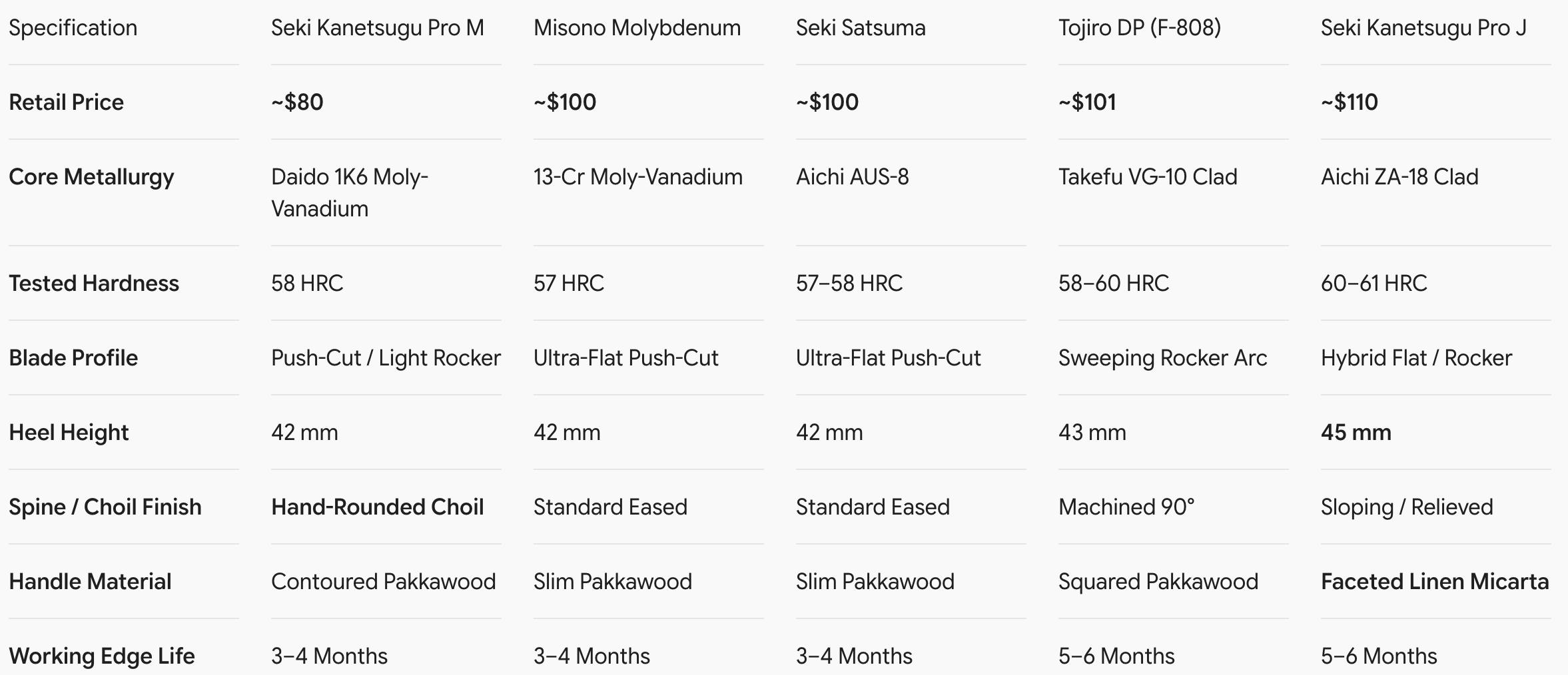
Technical Comparison Matrix
Sharpening Nuances: Maintaining Sub-$100 Japanese Steel
A Japanese knife ground to an acute 12-to-15-degree angle behaves completely differently from a thick German blade. Maintaining these knives requires strict bench protocols:
[ RECOMMENDED BENCH WATERSTONE PROGRESSION ]

Phase 1: Setting the Apex (Medium Synthetic)
  [ Naniwa Pro 800 or Shapton Pro 1000 ]
  ├── 15° Bevel Angle per side
  ├── Trailing pressure strokes
  └── Establish continuous micro-burr heel-to-tip

Phase 2: Refinement & Micro-Polishing
  [ Naniwa Pro 3000 or Suehiro Cerax 3000 ]
  ├── Featherweight passes
  └── Strips remaining burr; establishes clean toothy bite

Phase 3: Final Strop (Optional)
  [ Clean Leather or End-Grain Wood ]
  └── 5–10 trailing strokes to remove microscopic foil
Retire the Steel Honing Rod: Ribbed grooved butcher steels will gouge and micro-chip Japanese edges at 57–60 HRC. If you must align an edge between stone sessions, use an ultra-fine, smooth ceramic rod (2,000+ grit equivalent) with zero downward pressure.
Master the Medium Stone: You do not need an expensive five-stone progression for sub-$100 cutlery. A single, quality medium waterstone (such as a Shapton Pro 1,000 or Naniwa Pro 800) is all you need to keep these steels screaming sharp.
Deburring Discipline: Because alloys like AUS-8, 1K6, and 13-Chrome sit between 57 and 58 HRC, they are more ductile than 64 HRC super-steels. Do not over-sharpen. Once a burr forms, immediately switch to light, alternating edge-leading passes on the stone or a few pulls on a dense leather strop to detach the wire cleanly.
The Editorial Verdict: Where to Put Your $100
The Absolute Best Value: Seki Kanetsugu Pro M ($80). If you have a strict $80–$100 budget, stop here. The combination of an ergonomic contoured handle, a push-cut biased blade, and a hand-rounded choil is unmatched at this price point. It is the gold standard for entry-level Japanese cutlery.
The Commercial Purist Pick: Misono Molybdenum ($100). If your cutting technique relies on rapid, linear push-cutting and you want the battle-tested durability trusted by Japanese line cooks worldwide, the Misono remains an untouchable classic (with the Seki Satsuma standing by as a direct 1:1 replacement when stock dries up).
The Best Crossover Step-Up: Seki Kanetsugu Pro J ($110). If you can stretch your budget by ten dollars, the Pro J provides true enthusiast specifications: ZA-18 super-steel (61 HRC), a Tsuchime finish, an indestructible faceted Micarta handle, and full 45mm knuckle clearance.