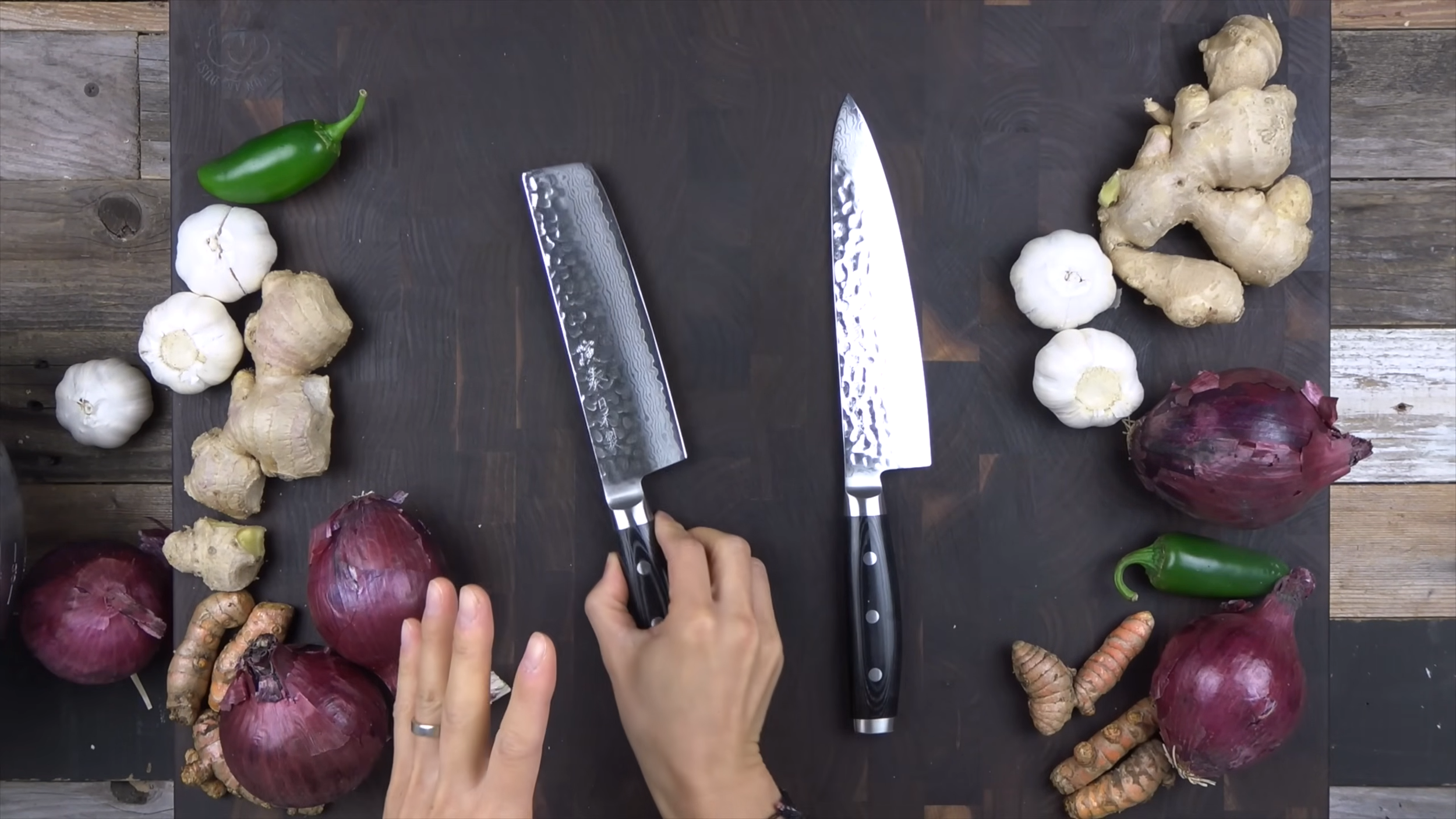
In the hierarchy of Japanese cutlery, the Gyuto is universally regarded as the indispensable generalist. Modeled after the Western chef's knife, its sweeping belly, tapered tip, and extended blade length make it the automatic daily driver for almost every kitchen task.
Yet among line cooks and high-volume vegetable prep specialists, the Nakiri maintains an intensely loyal following. Stripped of a pointed piercing tip and flattened out along the cutting edge, this rectangular blade looks almost primitive beside an elegant 210mm or 240mm Gyuto.
When pitted against dense, fibrous roots—raw horseradish, fresh turmeric, ginger, and towering mounds of pungent onions—the debate shifts from aesthetics to pure physics. Choosing between a Gyuto and a Nakiri is not just about blade shape; it is a critical optimization of mechanical force transfer, edge contact, and cutting stroke mechanics.
trust retailers BurrfectionStore | Gyuto | WasabiKitchen | Amazon
Disclosure: As an Amazon Associate, I earn from qualifying purchases.
1. Anatomical Architecture: The Tip vs. The Flat Profile
Understanding why these two knives perform so differently requires looking at their fundamental geometry.
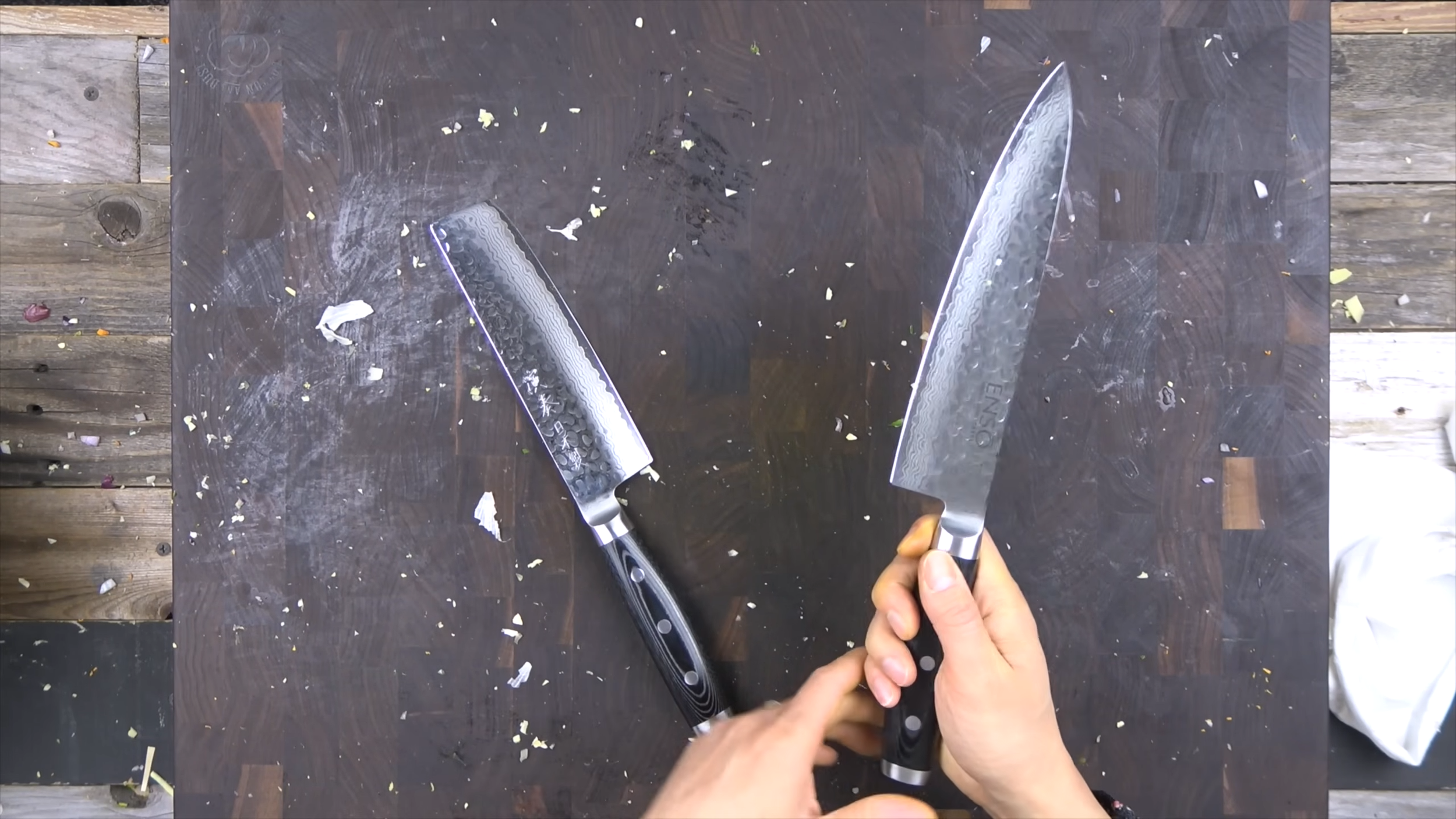
The Gyuto Architecture: Features a continuous, sweeping curve (the belly) that tapers up into an acute, piercing tip. It is a hybrid multi-tool built for slicing, rocking, drawing, and precision detailing.
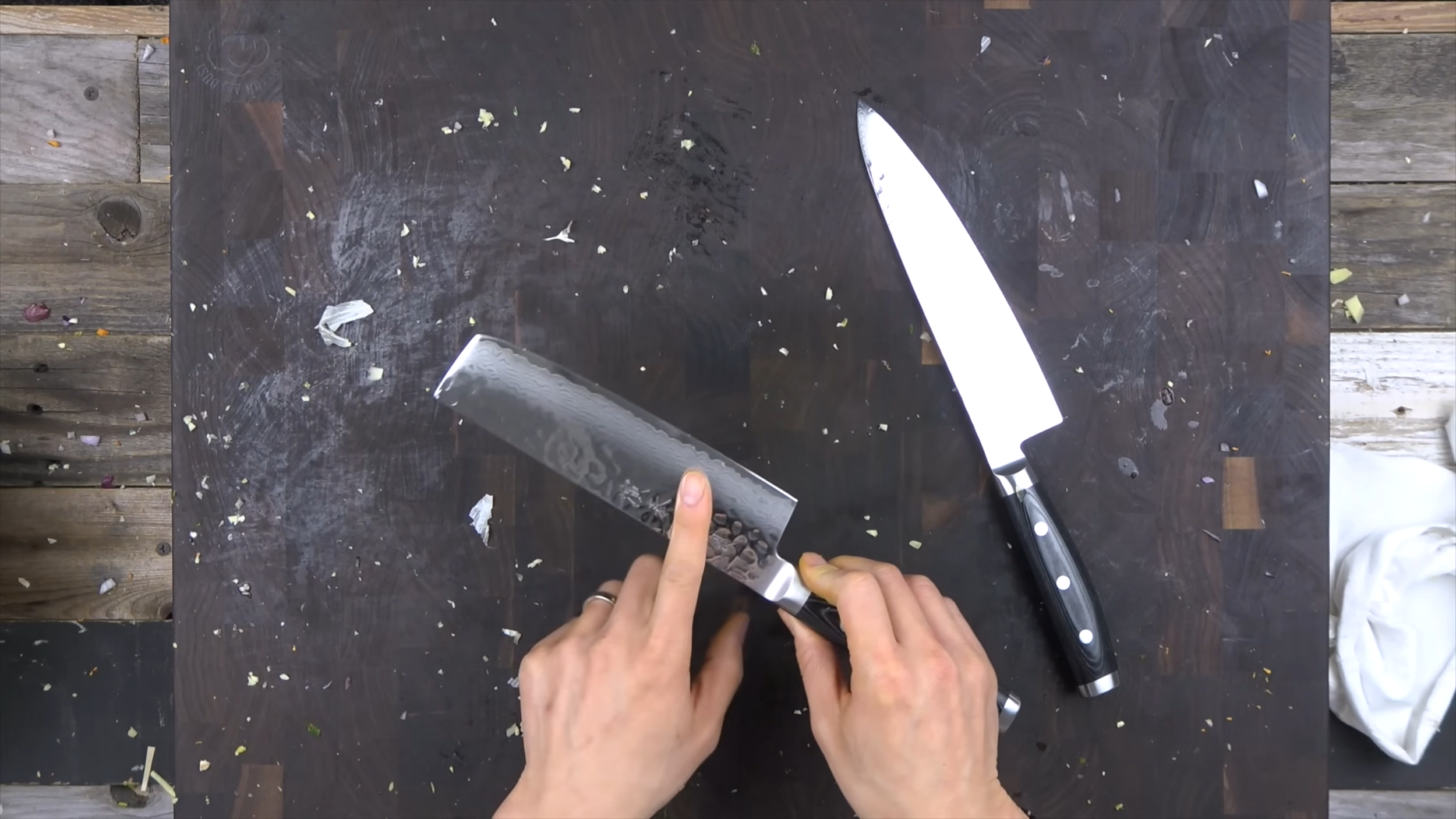
The Nakiri Architecture: Characterized by a dead-flat edge (or an incredibly subtle, low-arc belly) and a squared-off, blunted front end. It is a dedicated vegetable tool designed exclusively for up-and-down chopping.
By eliminating the tapered tip, the Nakiri shifts its center of balance slightly forward, naturally encouraging a downward thrusting motion. The Gyuto, with its tapered spine and belly, relies on a fluid, rolling slice to initiate a cut.
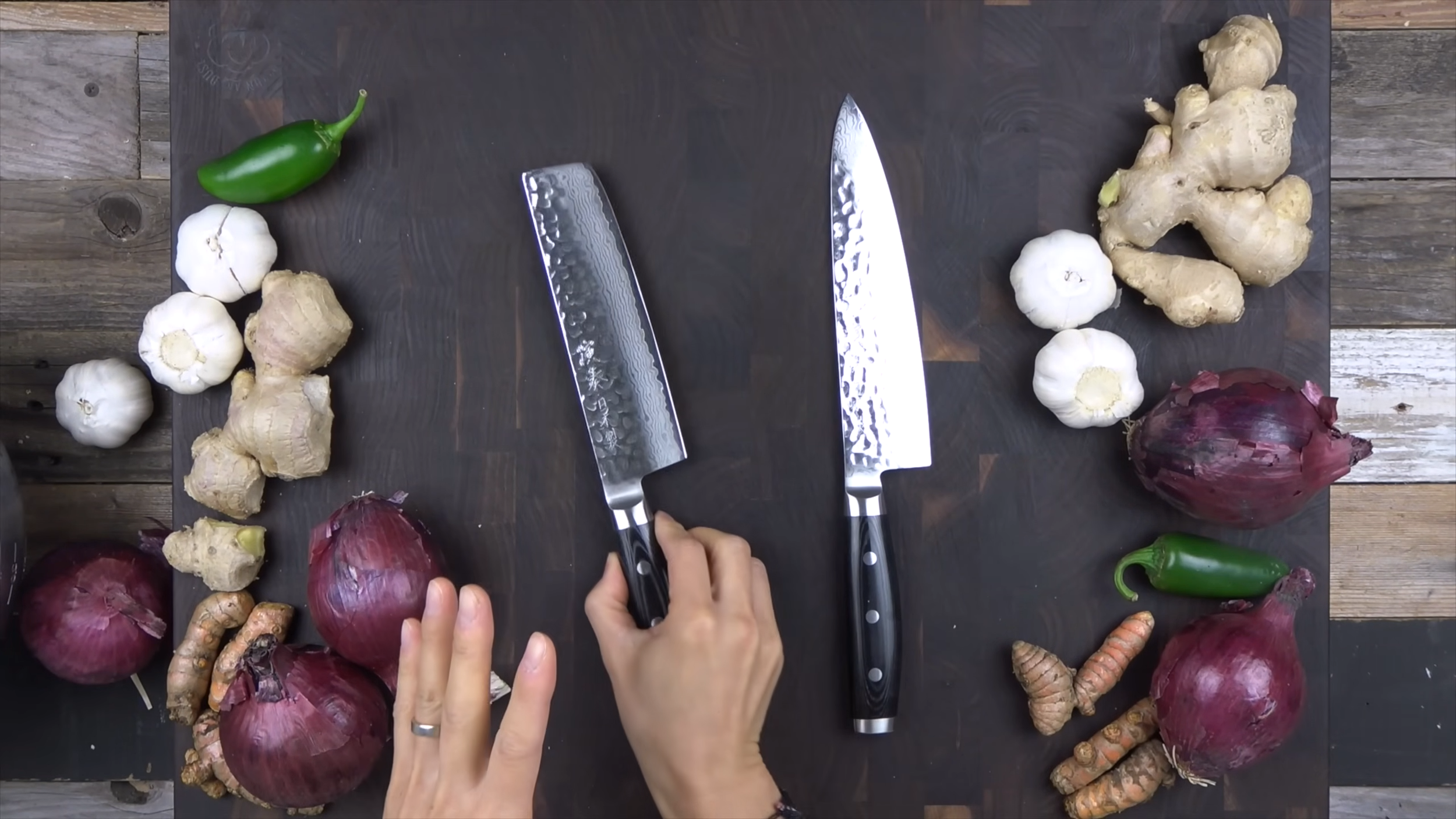
2. Force Distribution: The 6.5-Inch vs. 8-Inch Equation
The fundamental performance disparity between a Gyuto and a Nakiri comes down to how mechanical energy travels from your shoulder, through the steel apex, and into the cutting board.
The Nakiri Advantage: Concentrated Load
A standard Nakiri features a blade length between 160mm and 180mm (roughly 6.5 inches). Because the blade is intentionally compact, all downward kinetic energy is concentrated over a shorter, linear contact zone.
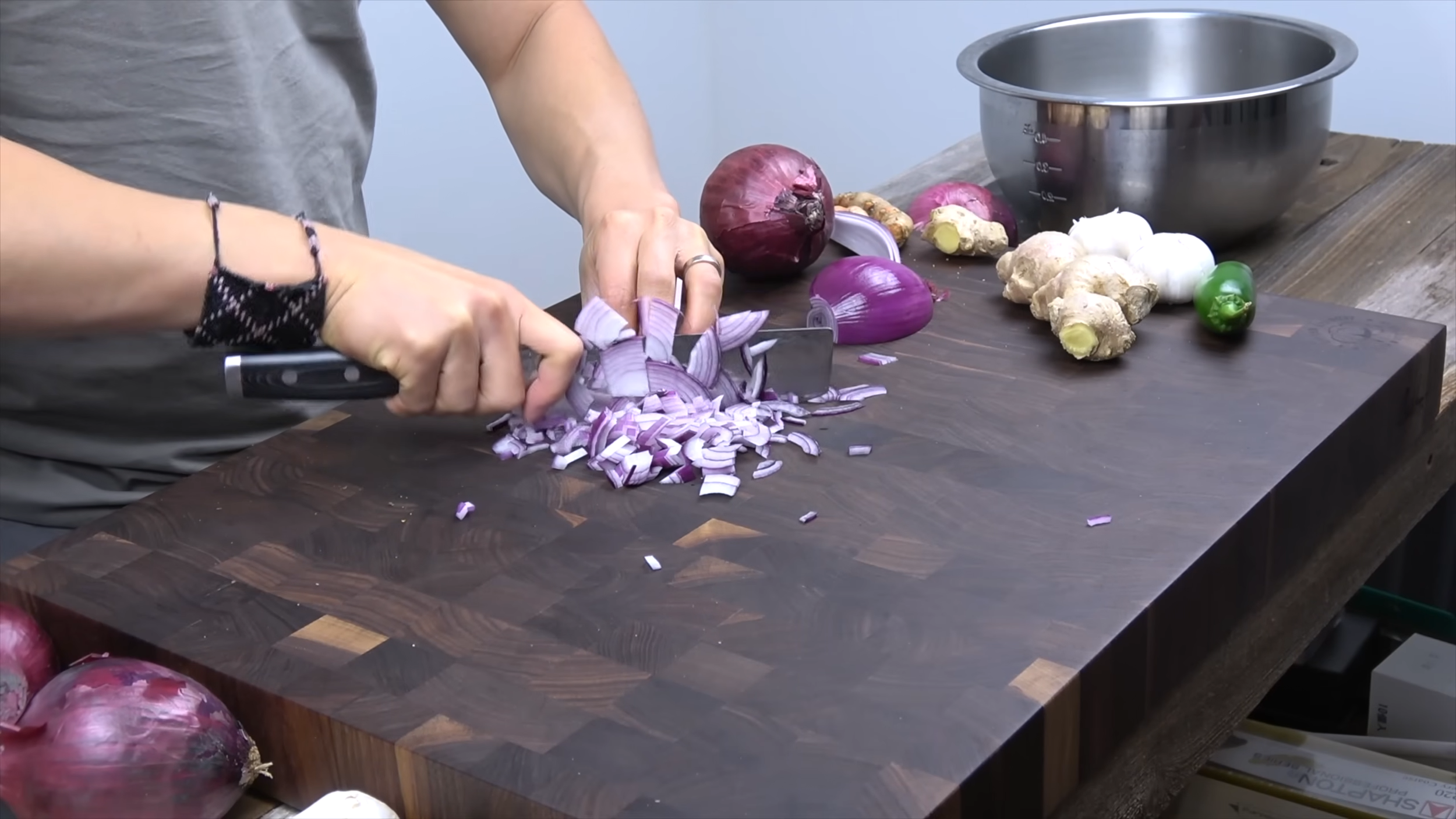
The Physics of Downward Chopping: When processing hard, woody aromatics like unpeeled ginger or turmeric root, downward force is not diluted across an unnecessary length of trailing steel. The blade bites directly through high-density cellular structures with minimal hand strain.
No "Accordion" Cuts: A curved knife belly frequently leaves the bottom skins of diced onions or celery stalks tethered together because the curve lifts away from the board at the heel or tip. The flat, linear edge of a Nakiri makes 100% flush contact with the board across the entire stroke, cleanly terminating every single cut.
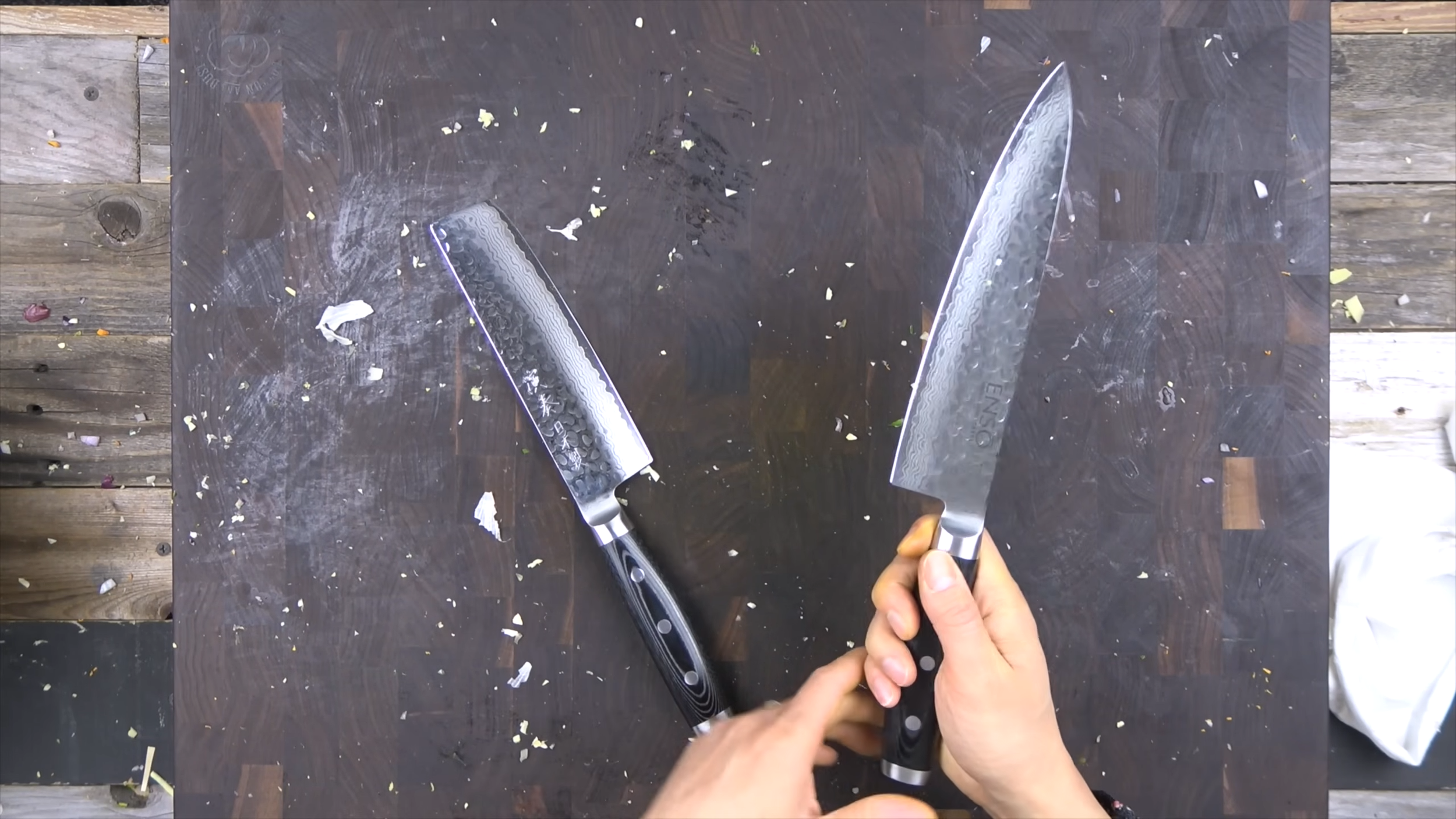
The Gyuto Advantage:
Draw Mechanics and Mass
A standard 210mm Gyuto distributes your effort across more than 8 inches of steel. While downward push-cutting force per square millimeter is technically lower than that of a Nakiri, the Gyuto compensates through momentum and slicing efficiency:
Linear Pull and Push: When tackling root vegetables, drawing or pushing the longer blade horizontally while moving downward recruits the razor-sharp micro-serrations of the apex, slicing cellular fibers rather than cleaving them purely with downward pressure.
3. Board Clearance and Stroke Dynamics
The physical geometry of the blade dictates the cutting technique you must use. Forcing a knife into an incompatible cutting motion wastes energy and dulls the apex prematurely.
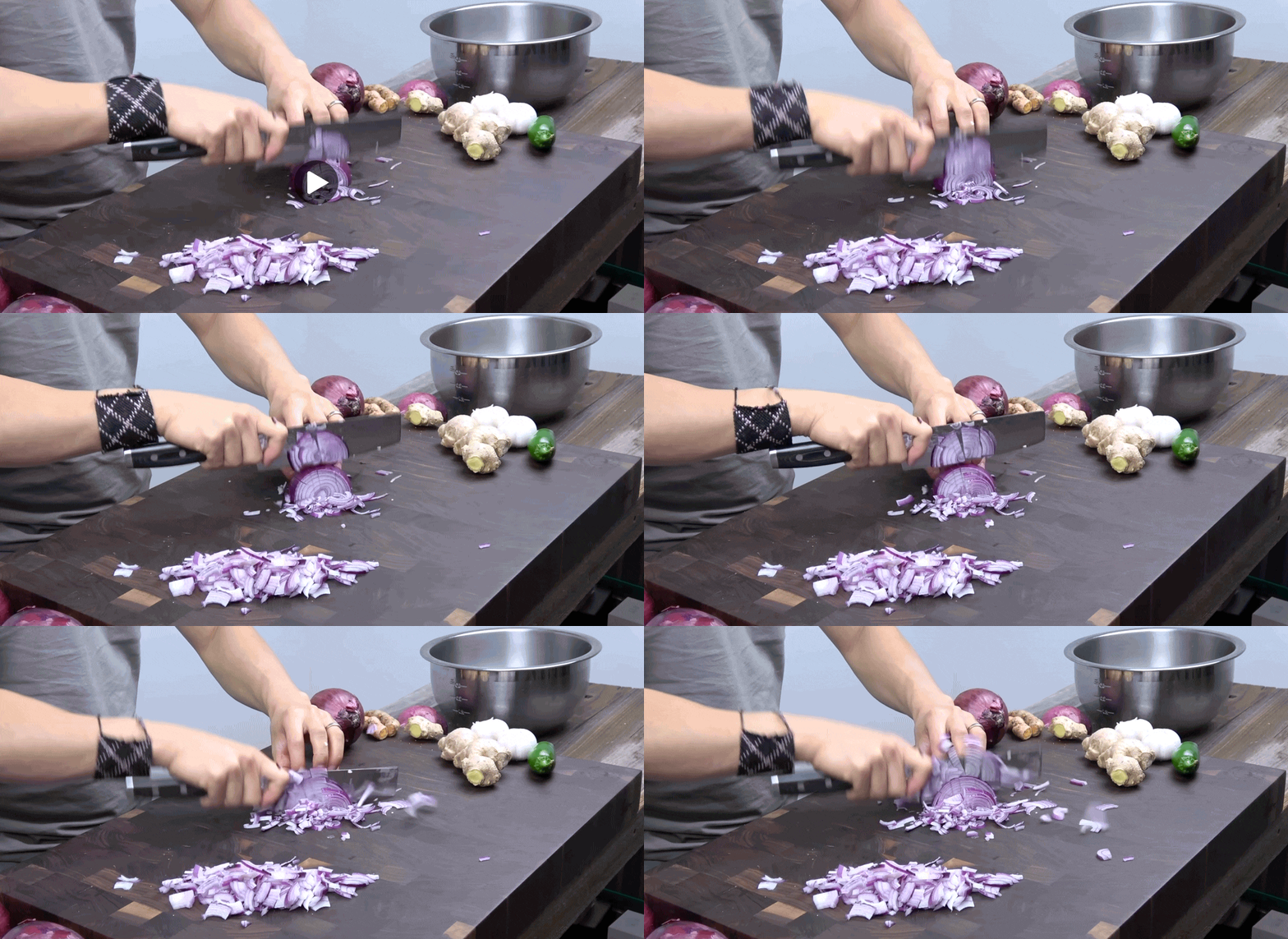
Rocking Height vs. Linear Chop
If you pile diced shallots or chopped celery into a tall prep mound, the limits of a Nakiri quickly become apparent:
The Height Ceiling: A Nakiri lacks an upwardly swept tip. If you try to rock the blade over a tall pile of food, the squared nose catches on the ingredients, forcing you to lift your entire arm to clear the cutting board.
The Rock-Cutting Pivot: The Gyuto's curved belly elevates its tip clearance to nearly double that of the Nakiri. By leaving the tip anchored or resting lightly on the cutting board, you can pivot the blade through massive piles of herbs or onions, sweeping through prep volume with rapid, circular rocking strokes.
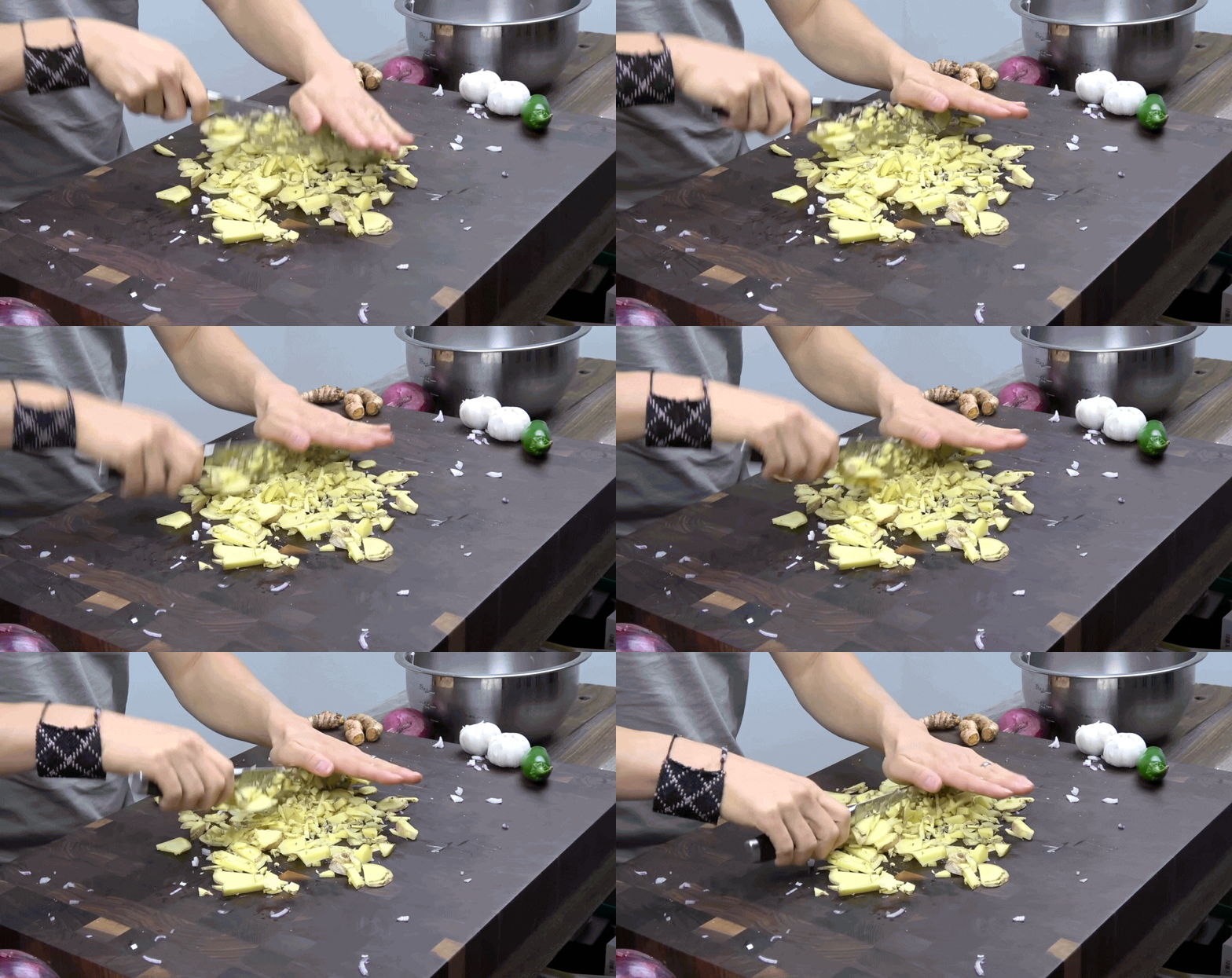
Tip Utility and Detail Work
A Nakiri is strictly a two-dimensional vegetable tool. The blunted nose completely eliminates the risk of snapping an acute tip during high-speed lateral chopping, but it leaves you entirely without a piercing instrument.
Scoring garlic cloves, executing horizontal relief cuts on onions, or trimming the silver skin off a pork tenderloin requires the acute, needle-like distal taper found only on a Gyuto.
Technical Comparison Matrix
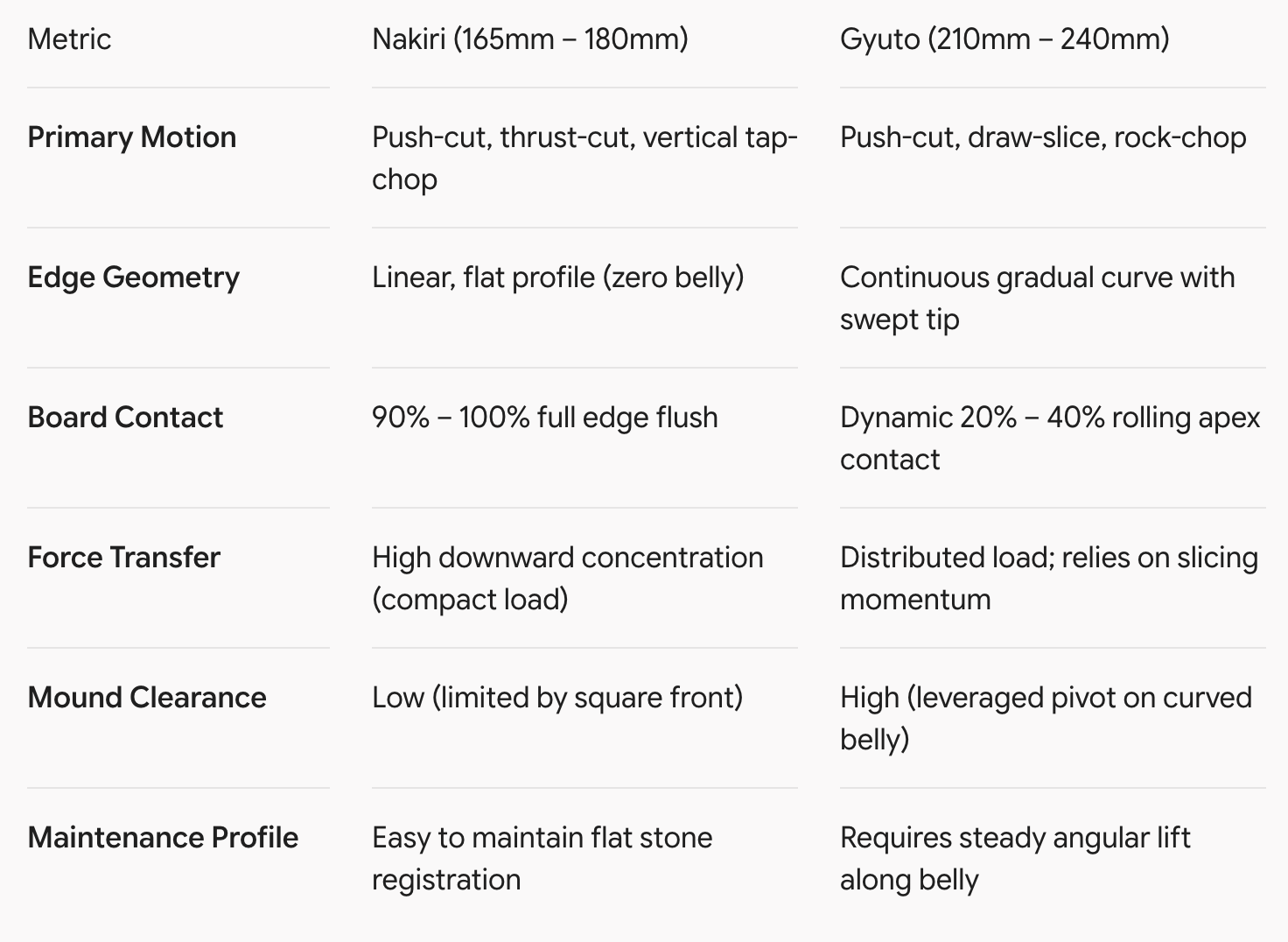
gyuto vs nakiri
The Verdict: Selecting Your Prep Workhorse
If your daily kitchen prep revolves around dense, continuous vegetable work—julienning root crops, shredding cabbages, dicing onions, and chopping hearty greens—the Nakiri is the far more ergonomic, efficient tool. Its focused center of gravity, flat edge registration, and zero-flex downward power eliminate accordion cuts and speed up repetitive prep line duties.
However, if you can only place a single Japanese knife on your magnetic bar, the Gyuto remains the undisputed king of versatile prep. Its ability to rock over large piles of produce, transition seamlessly into protein fabrication, and execute precision tip-work makes it the complete culinary instrument. The Nakiri optimizes vegetable preparation; the Gyuto commands the entire kitchen.