The greatest hazard to a razor-sharp edge often isn't the cutting board—it is the eight hours between culinary prep sessions.
Many home cooks spend hours refining a 15-degree apex on bench stones, only to compromise the edge by dropping the knife into an unshielded utensil drawer, wedging it into an abrasive wooden slot, or leaving it exposed on a countertop within reach of curious toddlers. Knife storage is an active component of blade maintenance.
Whether managing a growing collection of 210mm and 240mm gyutos, protecting high-carbon steel from moisture, or childproofing a busy family kitchen, choosing the proper storage system comes down to three technical criteria: edge clearance, capacity flexibility, and structural safety.
trust retailers BurrfectionStore | Gyuto | WasabiKitchen | Amazon
Disclosure: As an Amazon Associate, I earn from qualifying purchases.
1. Traditional Countertop Blocks: The Capacity Bottleneck
Standard countertop knife blocks remain the universal default in residential kitchens. While aesthetically classic, most mass-market blocks suffer from severe functional and ergonomic limitations.
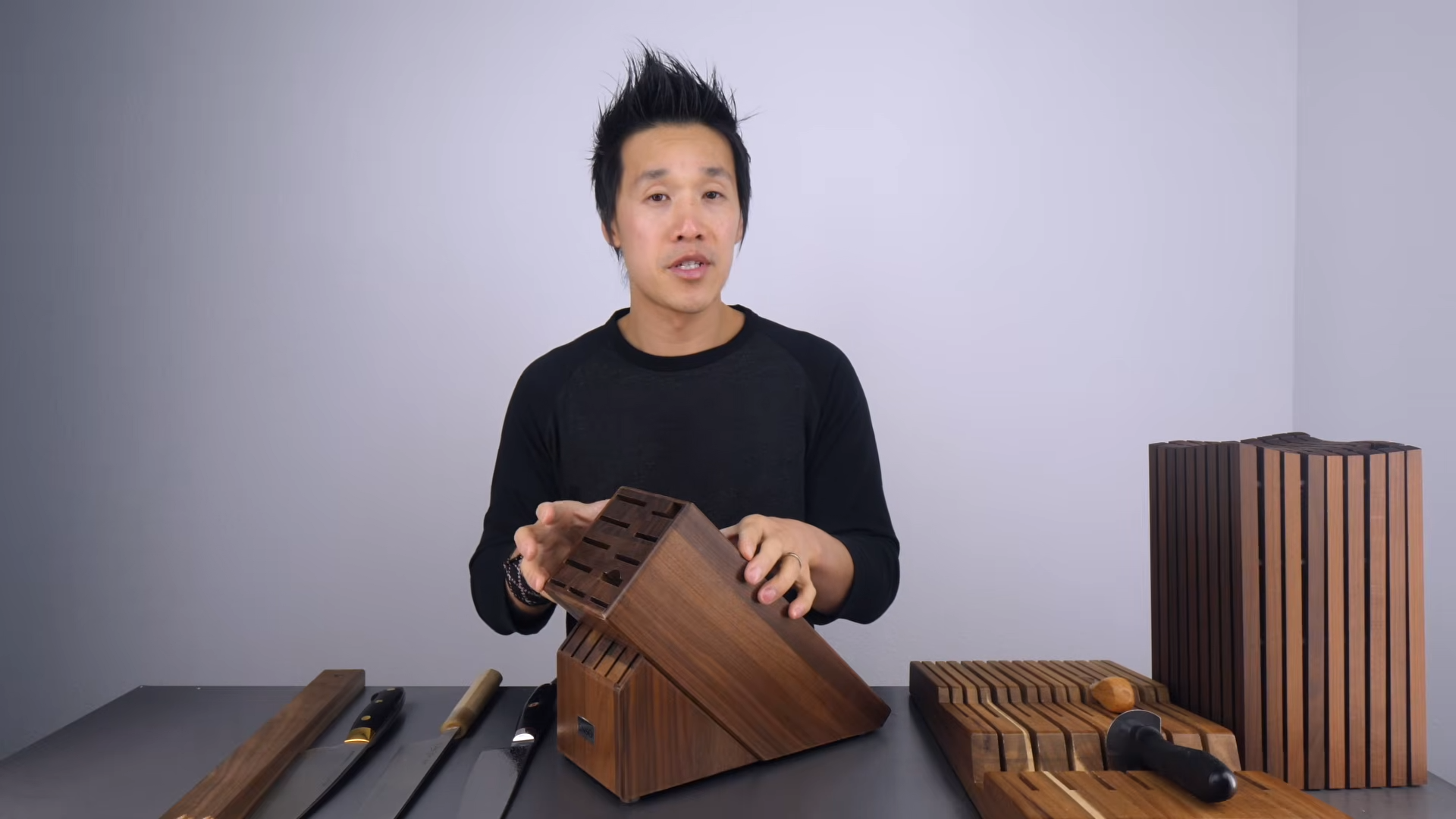
The Slot Allocation Flaw: Traditional blocks are designed around generic pre-packaged sets—meaning they typically feature one slot for an 8-inch chef's knife, one for a bread knife, and six to eight slots for steak knives. For knife enthusiasts who rotate between multiple 210mm gyutos, bunkas, and nakiris, 70% of the block becomes dead, unusable space.
The Modern Alternative ( Acacia Block): Clean, straight-edged blocks solve this layout problem by incorporating four dedicated, full-width slots designed specifically to accommodate tall, full-sized chef's knives. The dark, dense acacia construction avoids the dated, rounded look of vintage pine blocks while prioritizing functional blade height.
The Child Safety Problem: Any storage system that keeps exposed knife handles sitting upright at edge-of-counter height presents a structural hazard in homes with small children. If toddlers can climb chairs or reach countertops, countertop blocks become an immediate liability.
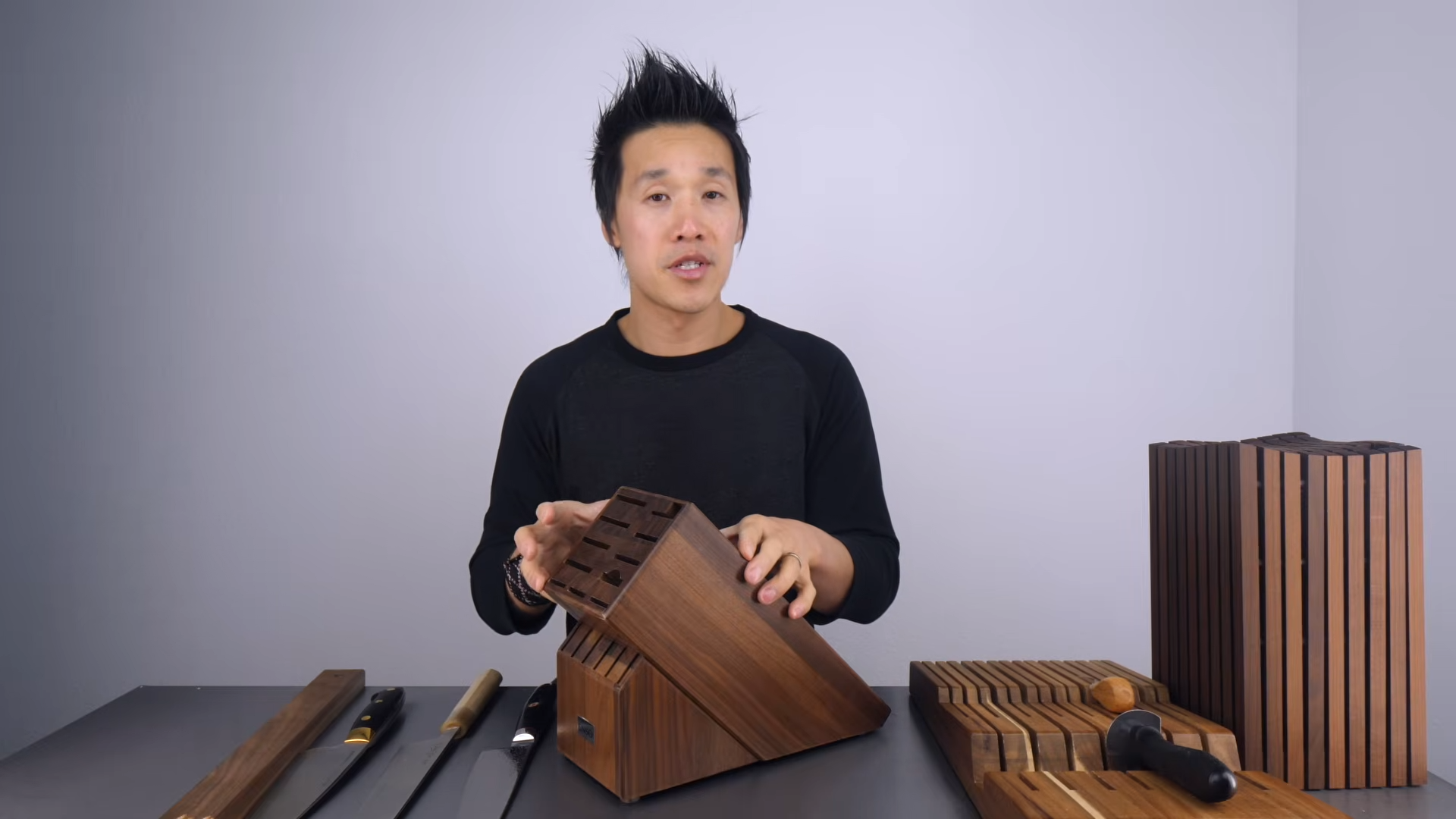
2. Designer Vertical Blocks: Visual Appeal vs. Practical Alignment
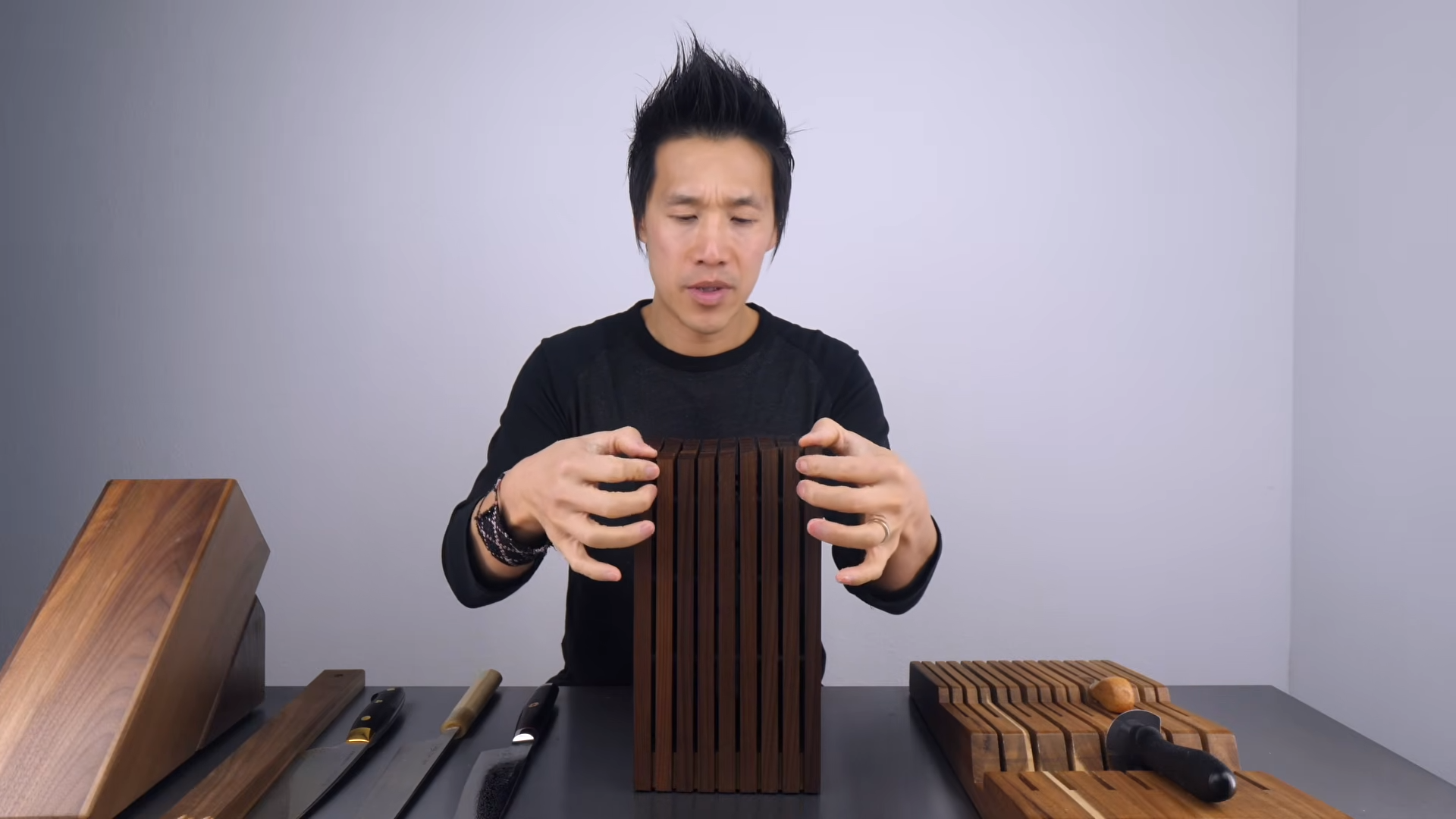
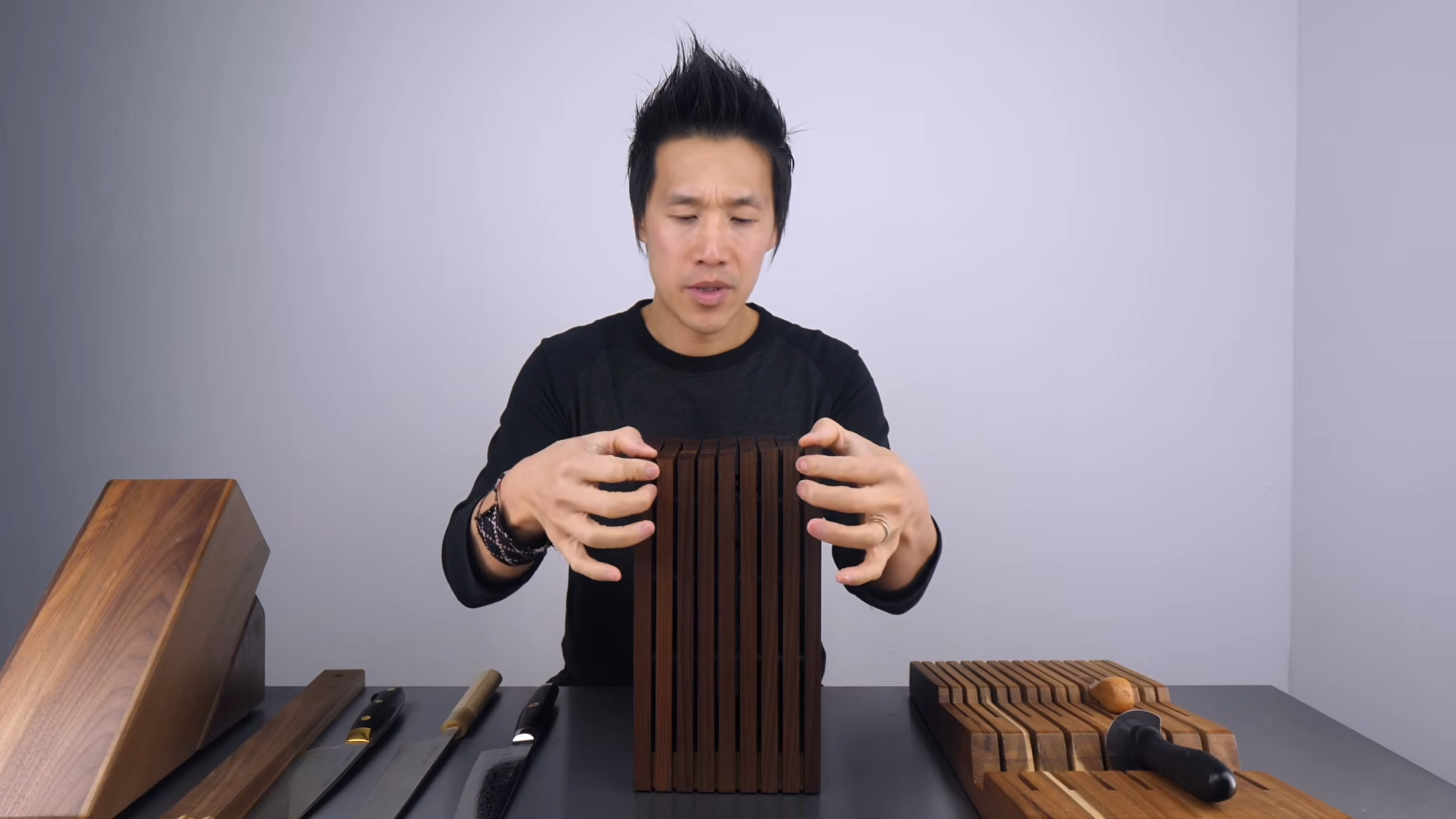
Architectural storage blocks—such as the Wüsthof Master Block—rethink countertop storage by utilizing vertical, modular hardwood slots held together with tension dowels.
The Aesthetic Advantage: Finished in clean hardwood with a non-slip felted base, these contemporary units display knives vertically with minimal counter footprint.
Mechanical Alignment Issues: Because the vertical slots are modular and pinned together, the wood slats can drift out of parallel over time. When slats shift, slots become unevenly compressed, requiring you to manually wedge them apart with a dull butter knife to restore clearance.
Handle Crowding: While advertised to hold up to 12 full-sized blades, inserting knives into every adjacent slot causes the handles to make physical contact. Over time, friction between composite Pakkawood scales, micarta, or stabilized wood handles leads to cosmetic wear and awkward retrieval angles.

3. The DIY Modular Cork System:
Maximum Customization on a Budget
For dedicated knife drawers that do not share space with standard kitchen utensils, high-density cork sheets provide an exceptionally effective, low-cost storage solution.
Microclimate Moisture Control: Natural cork has cellular properties that absorb trace ambient humidity. If a high-carbon or clad knife is returned to the drawer with minor residual moisture, the cork buffers against moisture pooling without degrading the steel.
Infinite Scalability: By slicing 2x4-inch blocks from heavy cork sheets, you create a customizable channel system along the back of the drawer. As your collection expands or transitions between different blade heights, you simply add or remove cork segments to fit the exact spine thickness of each knife.
The Single Limitation: Cork inserts require a dedicated, single-purpose drawer. If forced to share space with loose kitchen implements, this setup leaves the blades vulnerable to lateral strikes.

4. Two-Tier In-Drawer Trays: The Best Solution for Family Kitchens
When counter space is at a premium and drawer space must be shared, a structured two-tier in-drawer organizer represents the most balanced storage option available.
Separation of Real Estate: In smaller kitchens where cutlery must share drawer volume with ladles, peelers, and tongs, loose knives risk catastrophic micro-chipping whenever the drawer opens or closes. Hardwood in-drawer blocks isolate the blades inside routed wooden channels, completely shielding the cutting bevels from rattling utensils.
Enthusiast-Centric Capacity: Quality two-tier trays typically feature deep lower channels that hold up to seven full-sized chef's knives (up to 240mm), alongside upper tiers engineered for eight smaller utility, petty, or oyster knives.
Childproof Compatibility: In-drawer units allow you to install mechanical safety latches on the cabinet hardware. Even if toddlers can physically reach the drawer pull, a standard childproof latch prevents the drawer from opening beyond two inches, completely neutralizing access to live cutting edges.


5. Magnetic Wall Strips: Material Mechanics and Proper Release
Magnetic wall racks are the gold standard for high-volume prep kitchens and sharpening workshops. They eliminate drawer clutter, display blade geometry clearly, and keep knives instantly accessible. However, the construction material of the strip dictates the long-term cosmetic health of your cutlery.
Material Hierarchy
Bare Stainless Steel Strips: Avoid. Bare metal-on-metal contact will leave lateral scratch patterns across satin finishes, migaki polishes, and custom acid-etched Damascus cladding.
Leather-Faced Strips: Proceed with caution. While soft on steel, accidental edge contact will slice the leather face, creating unsightly, permanent gouges that collect kitchen grease.
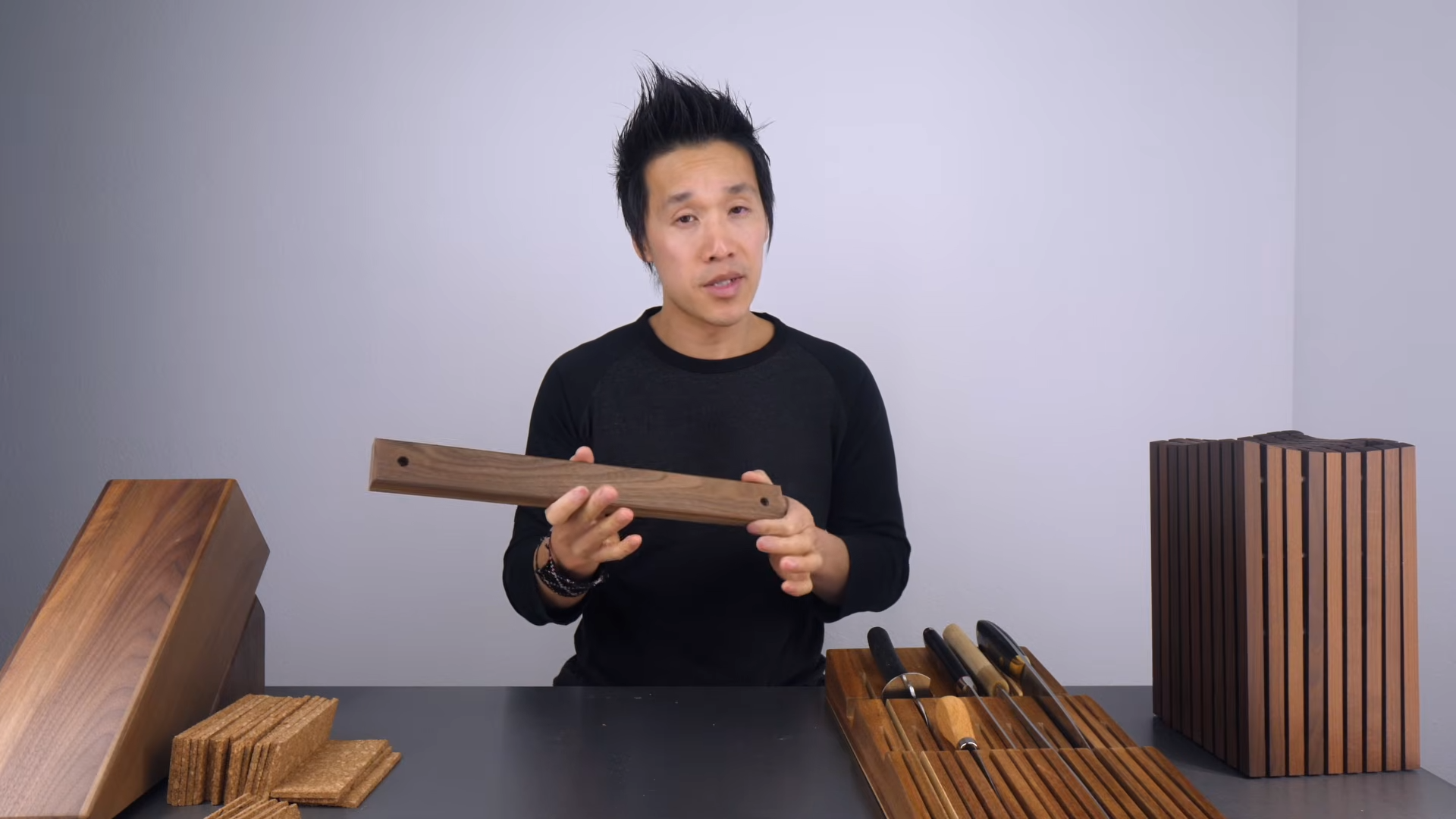
Solid Hardwood (Black Walnut): The Gold Standard. Rare-earth neodymium magnets embedded behind a solid slab of dense black walnut provide immense magnetic pull through the wood without risking steel-on-steel friction.
The Physics of the "Spine-Pivot" Release
High-strength magnetic bars can exert significant pull force on wide-profile blades. Attempting to wrench a thin, high-hardness knife directly outward perpendicular to the wall creates lateral torque across the blade face. On ultra-thin Japanese edges (61+ HRC), this lateral stress can lead to micro-chipping if the apex strikes the board during removal.
The Mechanical Rule: Always pivot before pulling. Rotate the knife so the cutting edge lifts clean off the wood first, leaving only the thick, durable spine in contact with the block. Once the magnetic seal is broken along the spine, draw the knife straight away from the mount.
Storage Systems: Technical Comparison Matrix
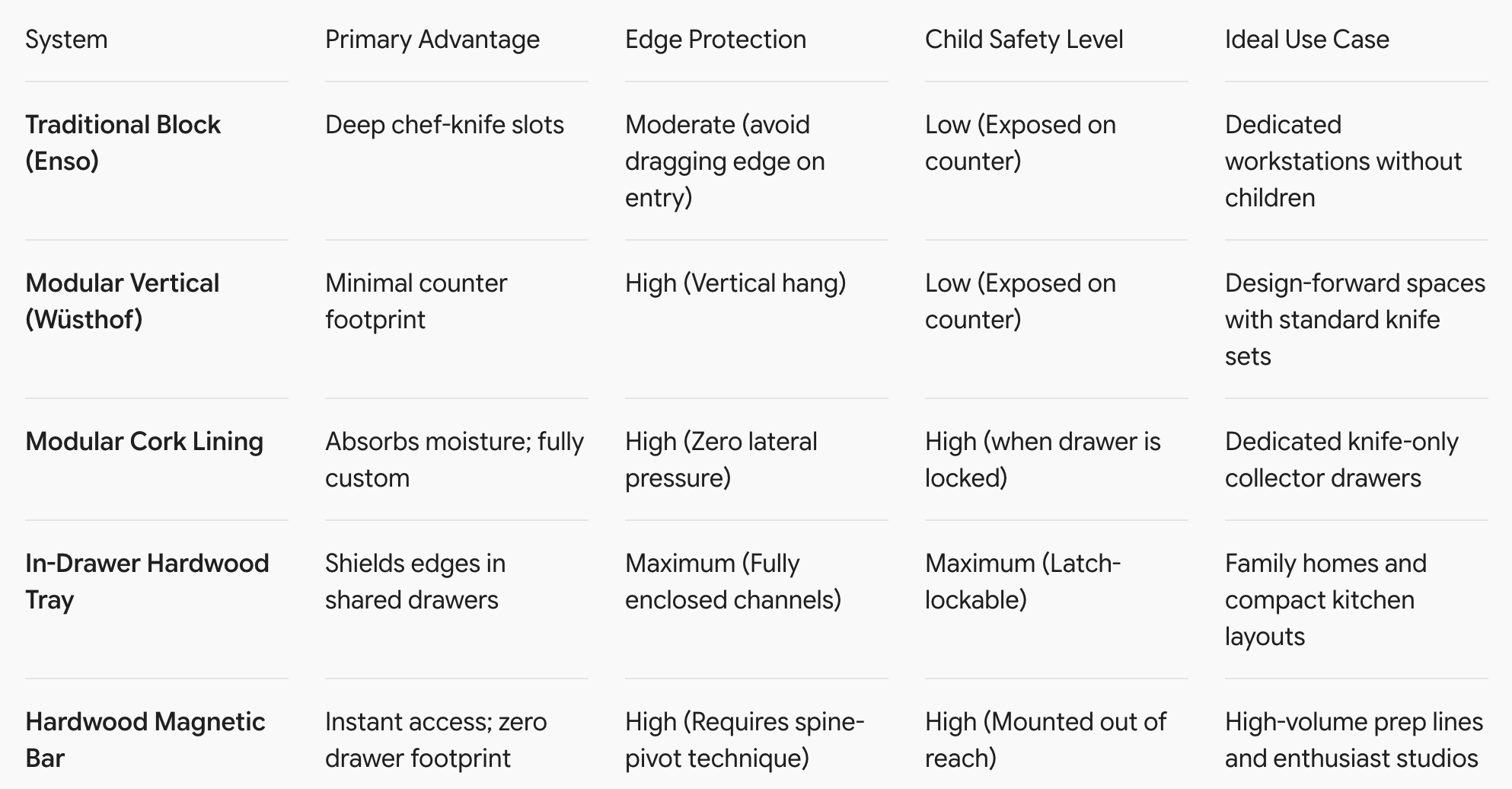
Storage systems compared
Matching Storage to Kitchen Reality
A knife collection is an investment in culinary efficiency, metallurgy, and sharpening craft. Storing high-performance steel should never be an afterthought.
If you have toddlers or young children in the home, the debate ends immediately: choose a two-tiered in-drawer hardwood block paired with a mechanical safety latch. It keeps your edges shielded from colliding cookware while removing dangerous cutting apexes from your home's sightlines.
If your workspace is a controlled environment dedicated to prep efficiency and testing, mount a hardwood magnetic strip high on the wall. Master the spine-pivot release, keep your bench clear, and preserve your edges exactly the way they left the whetstones.