

The $160 Kitchen Showdown: Masamoto VG Gyuto vs. Wüsthof Classic Ikon
When investing roughly $160 in a primary 8-inch workhorse chef’s knife, the kitchen knife community frequently converges on two perennial favorites: the Japanese-style Masamoto VG 210mm Gyuto and the German-engineered Wüsthof Classic Ikon 8-inch Cook’s Knife.
While both knives trade blows with premium handles and high-performance stainless steels, their design philosophies, steel hardness levels, and maintenance requirements cater to radically different cooking styles. Here is how these two heavyweights stack up on the bench and the board.
Disclosure: As an Amazon Associate, I earn from qualifying purchases.
1. Steel Mechanics & Maintenance Realities
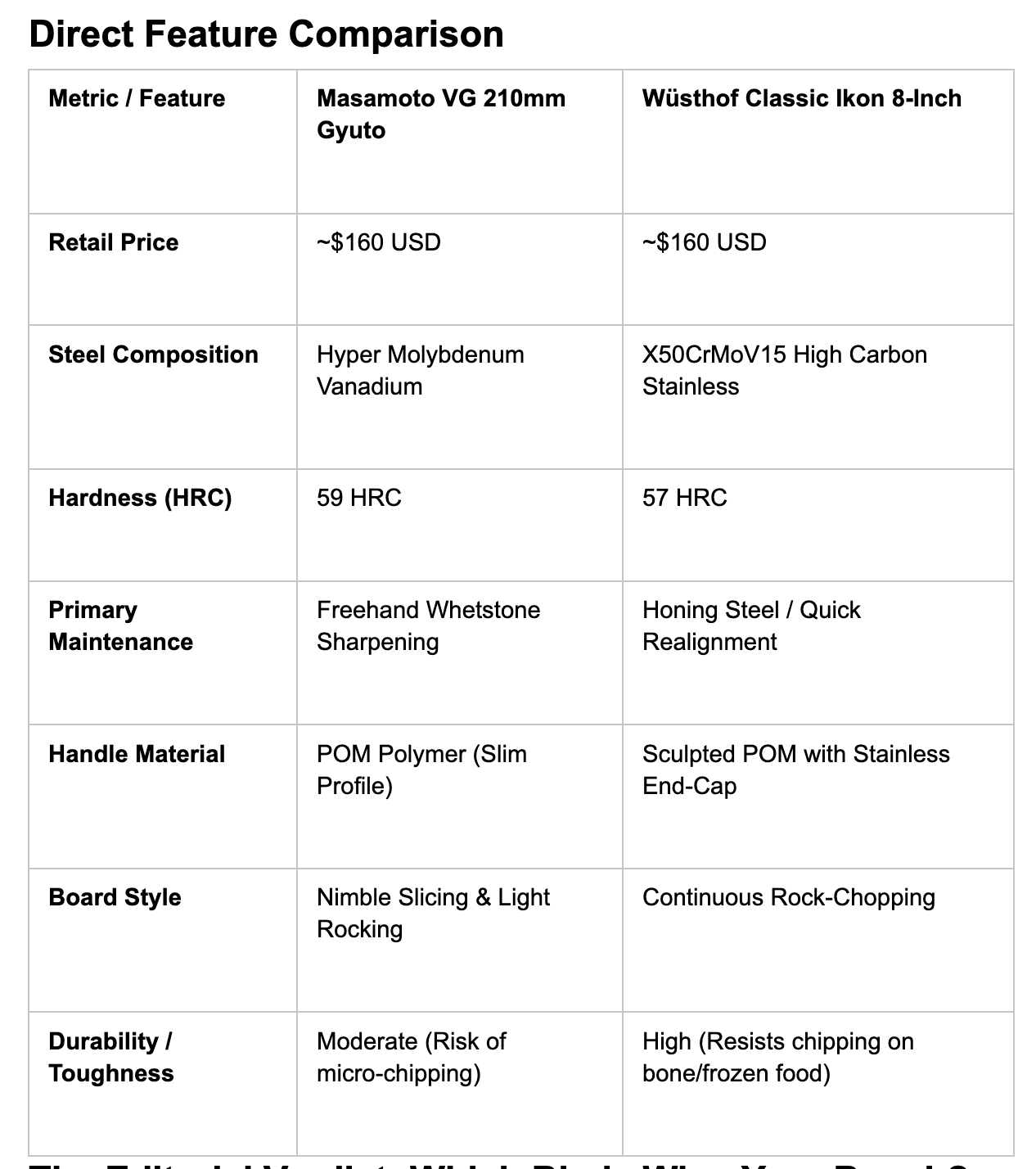
The fundamental difference between these two knives comes down to Rockwell hardness (HRC), edge retention, and the method required to keep them sharp.
[Soft / Flexible] <--- Wüsthof (57 HRC) --- Medium (58-60 HRC) --- Masamoto (59 HRC) ---> [Hard / Brittle]
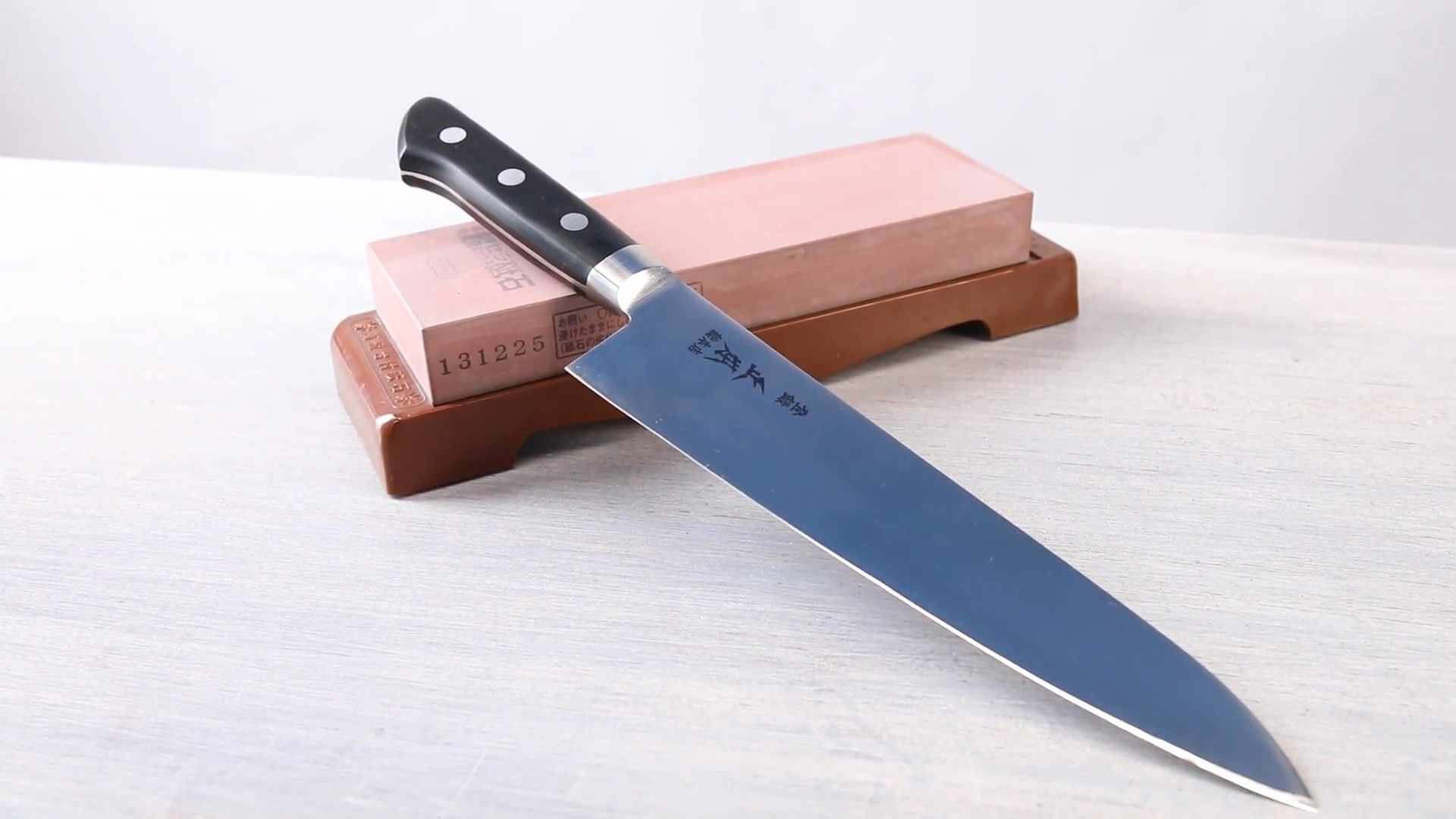
masamoto vg gyuto chef knife
Masamoto VG 210mm Gyuto (Hyper Molybdenum Vanadium)
Hardness Rating: Hardened to approximately 59 HRC—placing it right at the threshold of medium-hard Japanese cutlery.
Edge Potential: Capable of taking an exceptionally keen, precise apex edge that outperforms Western cutlery on raw slicing acuity.
The Maintenance Catch: At 59 HRC, this steel cannot be realigned with a standard honing steel. Maintaining its edge requires a dedicated commitment to freehand whetstone sharpening. Re-establishing an optimal edge takes 10 to 15 minutes of structured bench time.
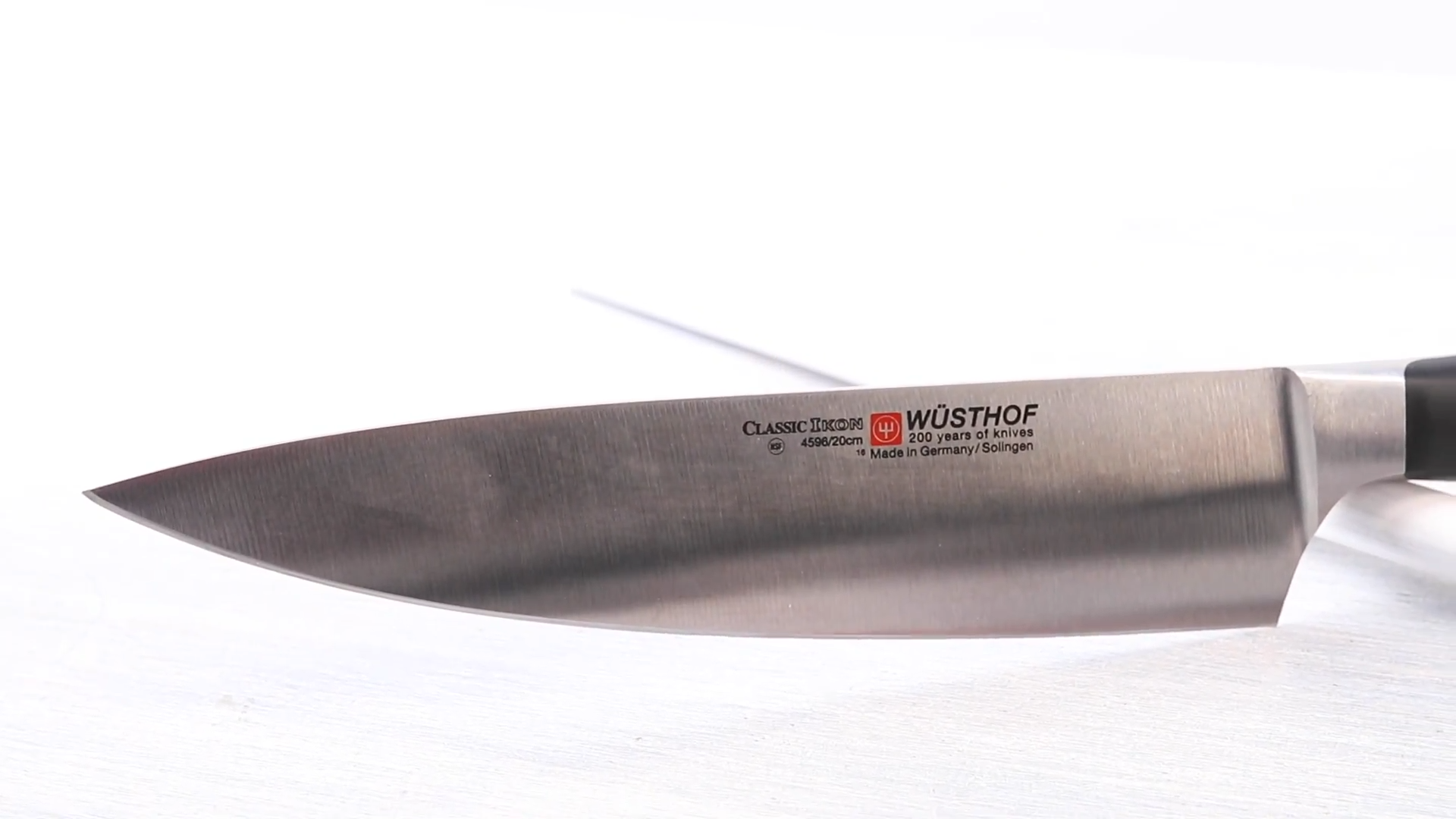
wusthof ikon chef knife profile
Wüsthof Classic Ikon 8-Inch (X50CrMoV15 Stainless Steel)
Hardness Rating: Heat-treated to 57 HRC—a tough, forgiving German stainless benchmark.
Edge Potential: Reaches roughly 90% to 95% of the absolute sharpness of the Masamoto in practical daily prep.
The Maintenance Catch: Because the steel is slightly softer and more ductile, it rolls rather than chips under heavy load. A simple 10-second pass across a ceramic honing steel before prep immediately resets the apex, making daily maintenance virtually instantaneous.
2. Fit, Finish, and Quality Control
When spending $160, manufacturing consistency and quality control (QC) become primary deciding factors.
Masamoto VG-210 (Score: 7.5/10)
Ergonomics: Features a slim Western-style POM polymer handle scale set with flush rivets. The scales fit smaller to medium hands comfortably, though the overall handle geometry feels somewhat basic.
Quality Control Variance: Because these knives are imported individually or in small distributor batches, QC can fluctuate. Common issues reported across multiple samples include chipped tips straight out of the box or hairline cracks around handle rivet contact points.
Customer Support: Resolving defect claims on imported Japanese cutlery often requires navigating third-party vendors rather than dealing with a direct domestic warranty department.
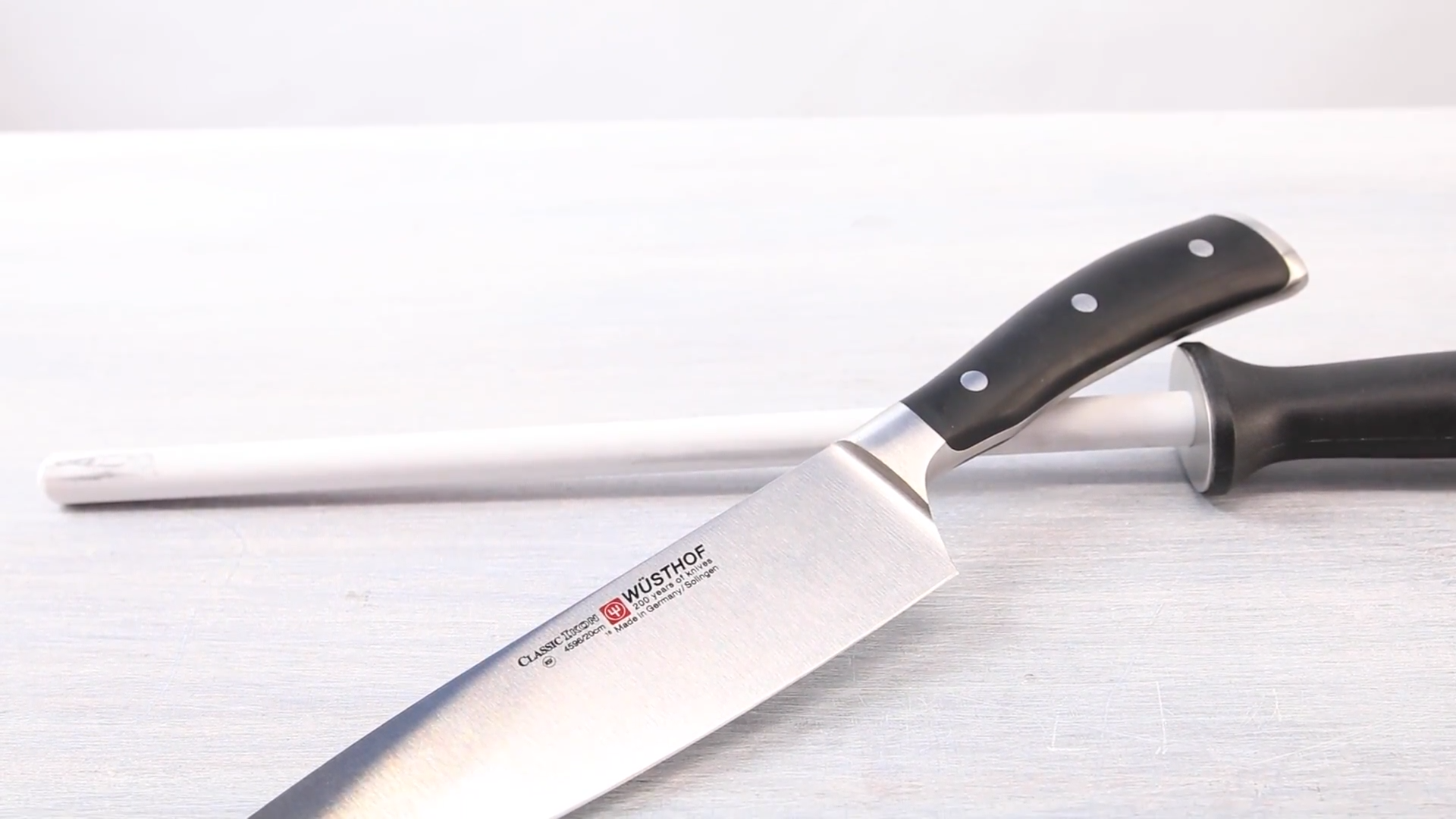
wusthof ikon chef knife with honing rod
Wüsthof Classic Ikon 8-Inch (Score: 9/10)
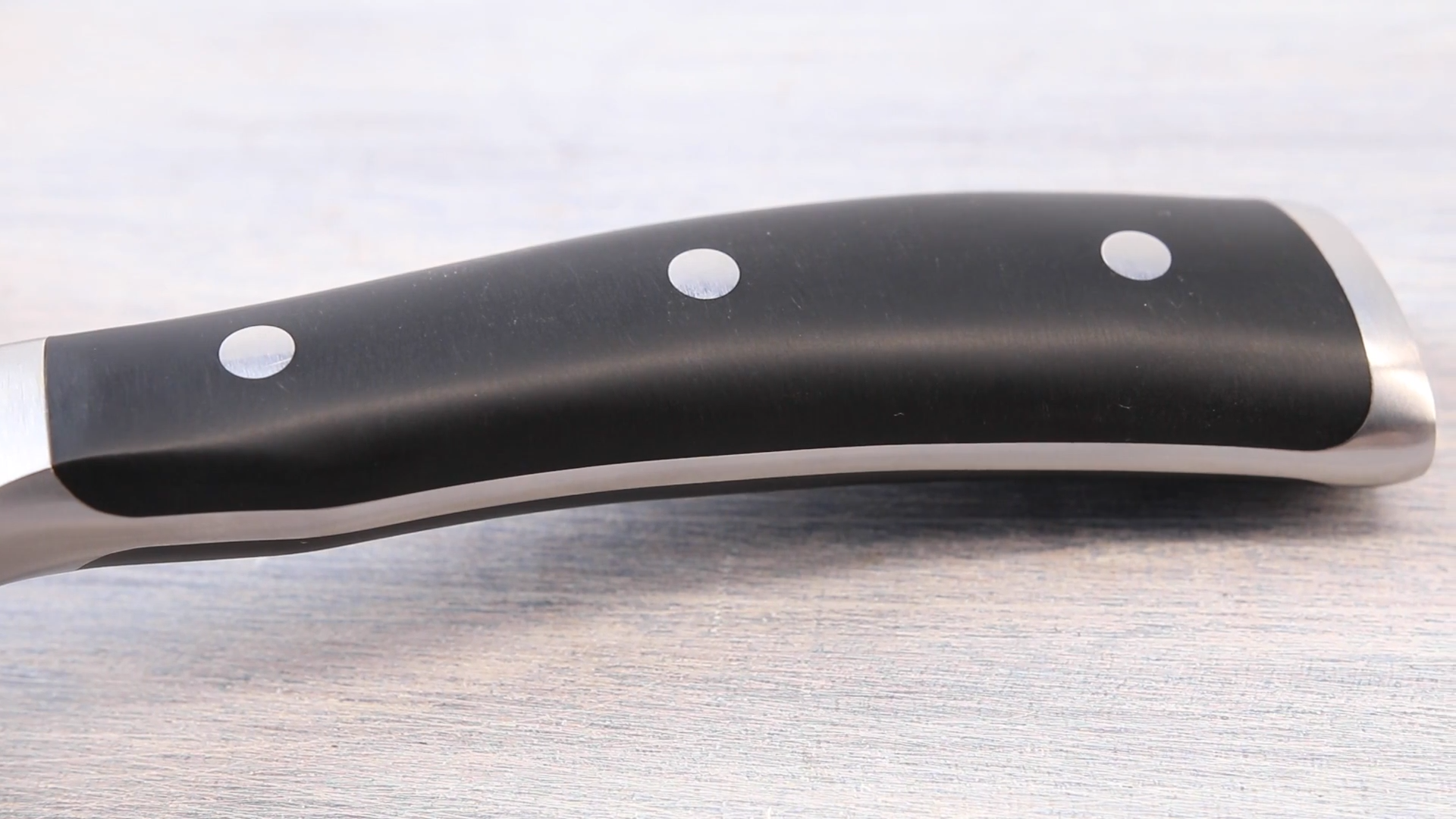
Ergonomics: Highly sculpted, ergonomic POM polymer scales paired with a heavy stainless steel end-cap. The rear cap balances the blade and doubles as an anvil to crush garlic or whole spices.
Precision Assembly: Seamless handle-to-tang transition with zero loose rivets, structural gaps, or chatter.
Minor Nitpick: The spine edges arrive slightly hard-cornered from the factory. A quick 20-second buff with ultra-fine sandpaper rounds the spine for comfortable pinch-grip work.
Domestic Support: Backed by robust domestic customer service, offering straightforward replacement coverage for manufacturing defects.
When spending $160, manufacturing consistency and quality control (QC) become primary deciding factors.

3. Cutting Dynamics on the Board
Board performance highlights the clear divide between Japanese slicing agility and German rock-chopping durability.
Masamoto VG Gyuto: (Nimble, Center-Weighted, Light Rocking)
Wüsthof Classic Ikon: (Continuous Belly Curve, Zero-Flat Rocker)
The Masamoto Profile: Nimble and light in hand. Because much of the physical weight sits in the handle, the blade glides through slicing strokes. It features a moderately pronounced belly curve that supports light rocking while preserving enough flat surface for push-cutting.The Wüsthof Profile: Built for fluid, continuous rock-chopping. The edge features a sweeping belly curve with zero flat spots, preventing the knife from "clunking" or catching on the cutting board during rapid prep.
The Editorial Verdict: Which Blade Wins Your Bench?
The choice between the Masamoto VG and the Wüsthof Classic Ikon depends entirely on your willingness to maintain your tools
Choose the Masamoto VG Gyuto if you already practice freehand whetstone sharpening, prefer a nimble, blade-light feel, and want a precise slicing edge that holds its apex through extended production work.
Choose the Wüsthof Classic Ikon if you want an indestructible daily driver that re-sharpens in 10 seconds on a honing steel, features flawless ergonomics, and is backed by hassle-free warranty support.