Arkansas Whetstones Review: Soft, Hard, Black Hard and Translucent Compared
America's natural stones are graded by density, not grit. Slower than Japanese synthetics, but extremely flat, almost no load-up, and the best feedback I've felt.
By Ryky TranNovember 8, 2018Updated November 24, 20263 min read
This article contains affiliate links: I may earn a commission if you buy through them, at no extra cost to you. How this works

The short version
- Arkansas stones are graded by density, not grit. Soft is roughly a 1000 to 1500, Black Hard about 5000 to 6000, Translucent about 8000. None gives a mirror.
- Slower than Japanese synthetics, but the feedback is unmatched, they're extremely flat, and they barely load up.
- My favorite is the Black Hard. At $30 to $70, they're also far cheaper than Japanese natural stones.
Four stones, graded by density
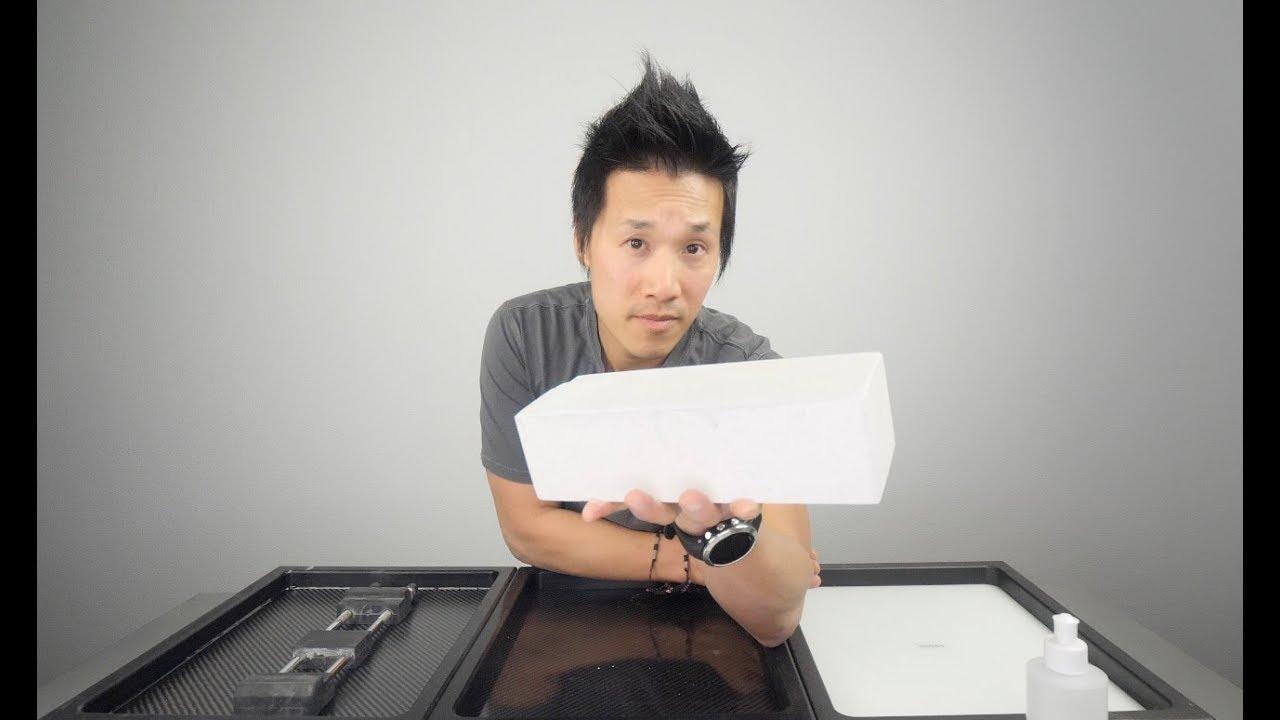
I tested four Arkansas stones I'd never used: Soft, Hard, Black Hard and Translucent (0:43). Hold a light to them and the Soft, Hard and Black Hard block it completely, while the Translucent lets light through (0:22). A decent Japanese natural stone runs $200 to $300 and can go up to $2,000 (1:03); Arkansas stones are about $30 to $70. They're rated by density rather than grit, and the denser the stone, the finer it is (1:24). Tap them and you can hear it: the Soft thuds, and each harder stone rings higher, with a nice ping on the Black Hard (2:06). I used a few drops of honing oil on a silicone mat; the oil stays on the surface and holds the metal swarf (2:28).
Soft and Hard
The Soft is roughly a 1000 to 1500-grit whetstone (28:19): about five passes for a burr on the first side and two or three on the second, and the popping you hear is just sediment (28:40). It makes very little slurry, so it shouldn't need flattening for a long time (29:01). The Hard has better feedback and tactile feel; sharpening on it is meditative (29:23). It raised a burr in two passes and felt like a harder Chosera 3000 (12:16), with no load-up at all (16:53).
Black Hard and Translucent
The Black Hard is my favorite. It wasn't as slow as I expected, and the feedback is unmatched (29:44). The polish tops out around 5000 to 6000 grit; you won't get a mirror (30:28). It looks synthetic, pure black, perfectly smooth and flat (31:31), and probably won't need flattening for at least four or five years (31:51). The Translucent I couldn't tell apart from the Black Hard; it's harder to find and comes in smaller sizes (32:13).
Who they're for
The feedback is immediate, so you can make micro-corrections, but that can intimidate a beginner; a King 1000 or Cerax 1000 is more forgiving (32:55). The slow speed gives you time to adjust (33:16). If you already own a 500 or 1000 synthetic, keep using it (33:38); as a step up from a 1000, an Arkansas is an option against a $50 to $60 Japanese stone, with a slightly higher polish and a cleaner edge (34:00). There's virtually no load-up from the Hard up to the Translucent, and only a little on the Soft (35:24). If you want a mirror, though, a Shapton Glass 8000 or Chosera 10,000 will get you there and these won't; they're slower than good Japanese synthetics, with better feedback (36:05). Water, soapy water or honing oil all work as a lubricant (36:25), and they're flatter than my best synthetics (37:08).
| Soft | Hard | Black Hard | Translucent | |
|---|---|---|---|---|
| Approx. grit | 1000–1500 | Like a hard 3000 | 5000–6000 | About 8000 |
| Feel | Some sediment | Great feedback | Unmatched feedback | Like the Black Hard |
| Load-up | Minimal | Virtually none | Virtually none | Virtually none |
| Where to buy | Amazon | Amazon | Amazon | Amazon |
Bottom line
Arkansas stones are slow but wonderfully flat, clean and communicative. The Black Hard is the one I'd buy, as a finishing stone after a synthetic 1000. They won't give you a mirror; for that, see my Kitayama 8000 review. For Japan's natural stones, read my Amakusa review.
First access
Private drops, new knives and sales
Get them from Burrfection and our retail partners before anyone else. No spam; unsubscribe anytime.
Emails from Burrfection Inc. See privacy.