Do Honing Rods Work? Ceramic Rod vs. Whetstone Test
Two equally sharp Tojiros, dulled on a brick, brought back one with a $65 ceramic rod and one on a Super Stone 3000. The rod won, by a hair, and I'd still buy a stone.
By Burrfection EditorialSeptember 8, 2017Updated November 24, 20263 min read
This article contains affiliate links: I may earn a commission if you buy through them, at no extra cost to you. How this works

The short version
- Yes, ceramic honing rods work. Ten strokes per side brought a brick-dulled edge right back, and after a second round the rod knife cut slightly better than the stone knife.
- A ceramic rod is not a steel. It removes metal like a very fine stone; a steel rod only bends the edge back into line.
- For the same money I'd still buy a stone, like a King KDS 1000/6000 combo, because a rod can only maintain an edge, never rebuild one.
The test
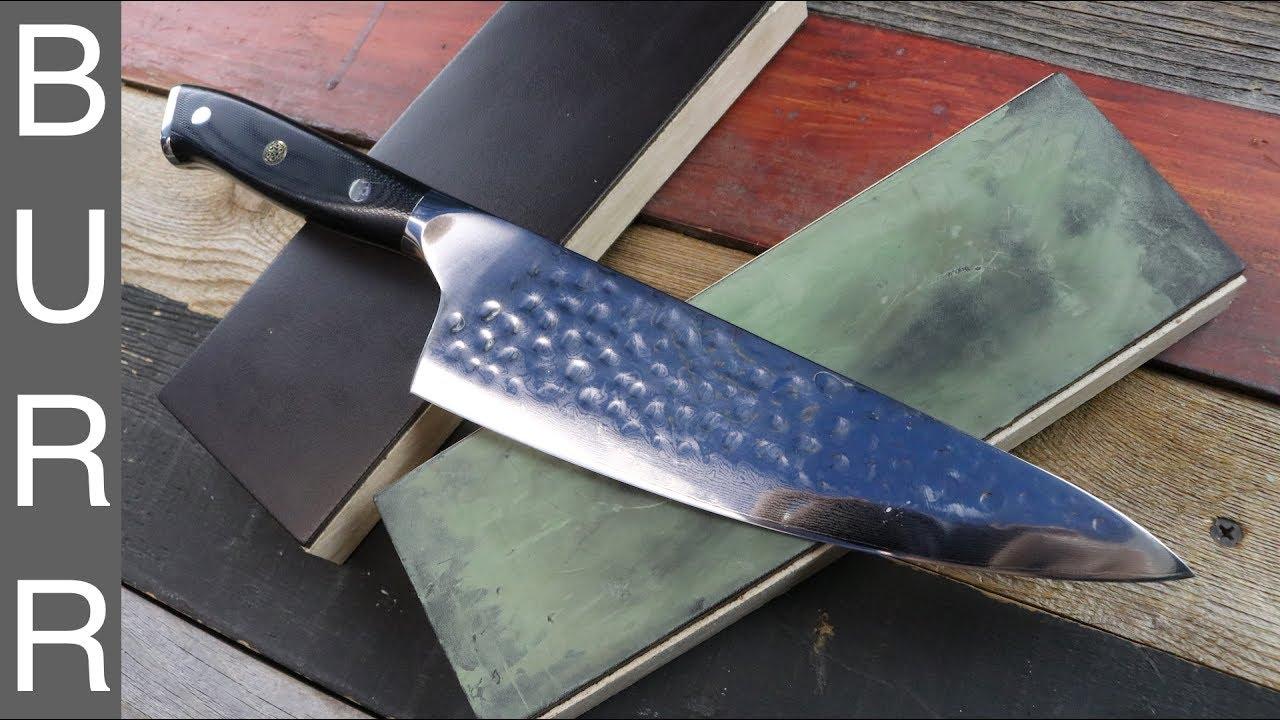
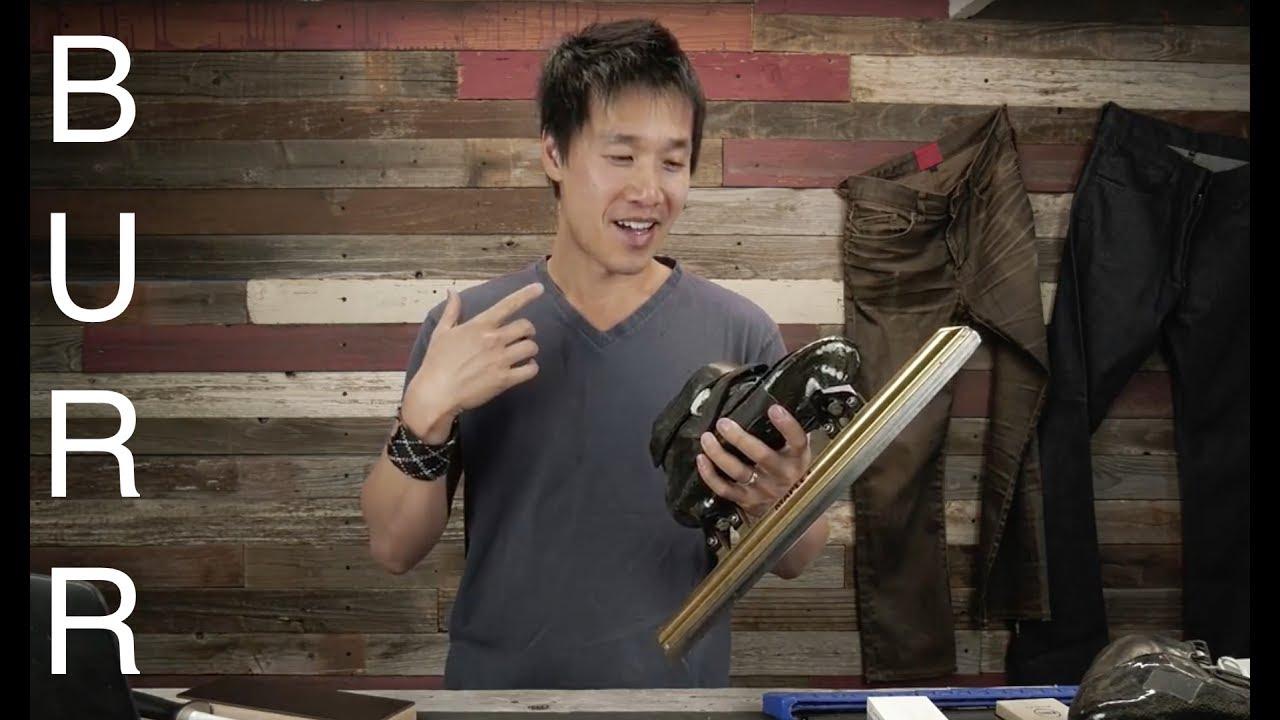
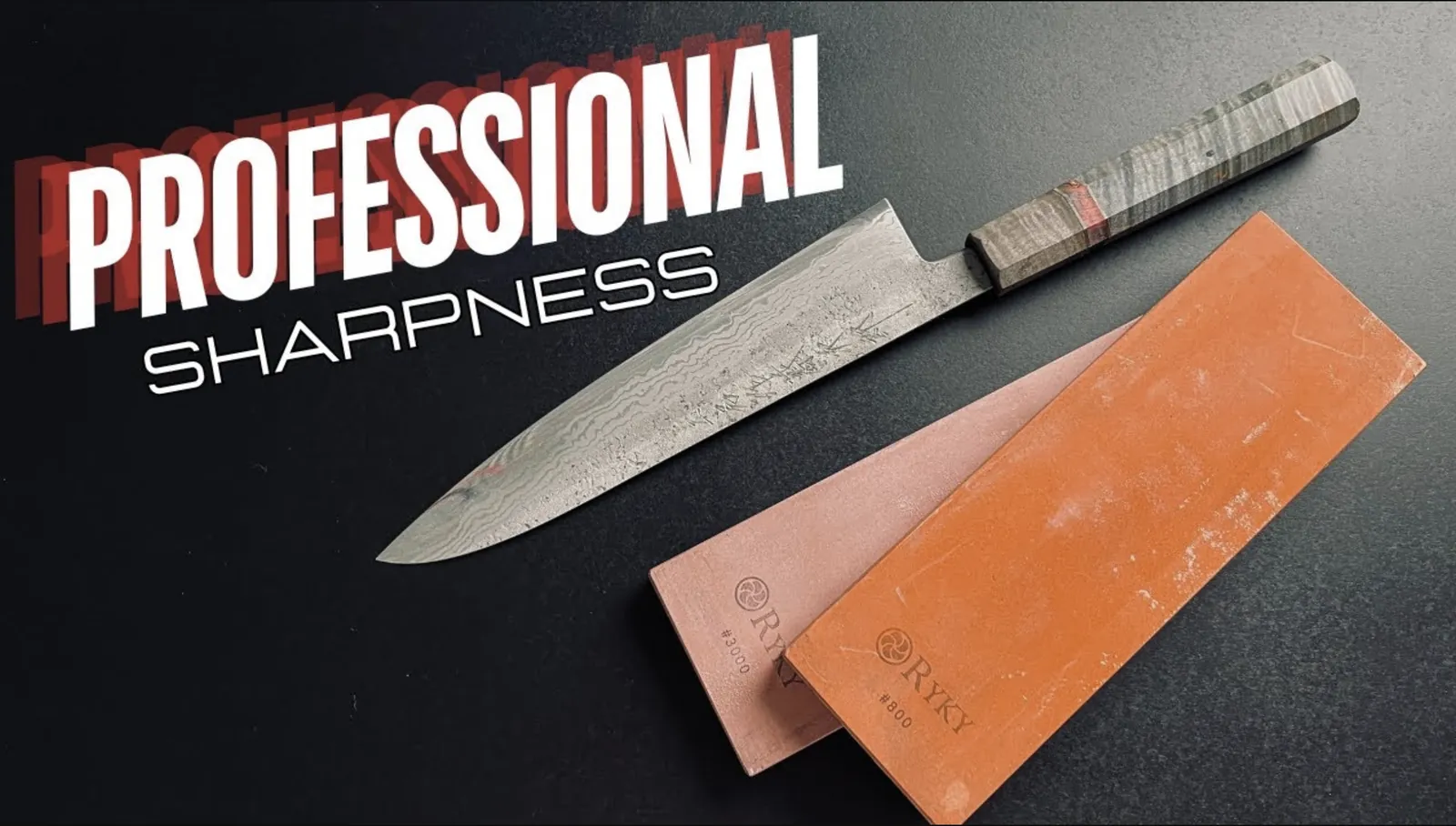
Most ceramic rods sit somewhere around 3000 to 6000 grit, sometimes 2,500, and they aren't apples to apples with Japanese whetstones (0:44). Mine was an unbranded ceramic honing rod, supposedly 3000 or 6000 grit, that cost $65. To compare it fairly, I used two equally sharp Tojiro knives and a Naniwa Super Stone 3000, which is splash-and-go and close to the rod in grit (1:26).
I dulled both knives with about five strokes per side on a brick, a lot less than the 20 to 30 I normally use in my tests (2:59). Afterward neither one was cutting anything (3:43). The idea was to simulate a knife that's been used for a while, which is exactly what a rod is for.
Round one and round two
On the rod, ten strokes per side brought the edge back (4:04). On the stone, I did the same thing: ten light, stropping-style strokes per side, and that edge came back too (5:00). Then I gave each knife another ten per side (6:26).
This is where it got interesting. The stone-stropped knife started cutting poorly, while the rod knife felt really good (8:23). On the final paper test the ceramic rod had done the better job (10:20). Honestly they were about the same, but the rod knife made a slightly higher-pitched cut, which to me means a slightly cleaner edge (11:19).
There's a fair reason for that result. A stone isn't designed only for stropping; normally you sharpen on it first and strop afterward. A rod is designed to be stroked and nothing else, so this test plays to its strengths (11:43).
Ceramic rod vs. steel rod
People lump all rods together, but they work differently. A steel rod realigns the edge: it pushes a rolled edge back into line, and bending the metal back and forth like that eventually makes it fatigue and break off (12:47). A ceramic rod actually removes metal. After a few strokes you can see dark marks where the blade touched it (13:08). So a ceramic rod is really a very fine, very narrow sharpening stone.
What I'd buy instead
The rod cost $65 retail. A King KDS 1000/6000 combination stone runs about $55 to $65 and gives you two grits, a real sharpening side and a polishing side (13:30). The Super Stone 3000 costs more, but if you touch up your knife every day or every two or three days, a stone like that does the same job as a rod; you'll still want a lower-grit stone eventually (14:10). For a budget start, get the King combo, or a King Deluxe 1000 plus a King 6000 (14:53).
| Ceramic honing rod | Naniwa Super Stone 3000 | King KDS 1000/6000 | |
|---|---|---|---|
| What it does | Fine touch-ups | Touch-ups and polishing | Sharpening and polishing |
| In my test | Slightly better edge | Very close behind | Not tested here |
| Can it rebuild a dull edge? | No | Slowly | Yes (1000 side) |
| Price when tested | $65 | More than the rod | $55–65 |
| Where to buy | Amazon | Amazon | Amazon |
Bottom line
Honing rods do work, and a ceramic one can bring a lightly dulled edge back as well as, or a hair better than, a 3000-grit stone. But in the long run you'll want stones, because a rod can only maintain an edge. If you already own one, use it between sharpenings; if you're choosing, start with a combination stone or a sharpening kit from the Burrfection Store. For my full daily routine, see how to keep your knives sharp every day, and for the stone side of this test, my best polishing whetstone picks.
First access
Private drops, new knives and sales
Get them from Burrfection and our retail partners before anyone else. No spam; unsubscribe anytime.
Emails from Burrfection Inc. See privacy.