How to Keep Your Knives Sharp Every Day: One Minute on a Strop or Stone
My daily routine for sharp Japanese knives: a minute of light strokes on a 3000-grit stone or a loaded leather strop, every few days. And when a honing rod is the better choice.
By Burrfection EditorialJuly 15, 2017Updated November 24, 20264 min read
This article contains affiliate links: I may earn a commission if you buy through them, at no extra cost to you. How this works
The short version
- One minute is enough. On a knife that's still fairly sharp, 12 to 15 light strokes per side on a 3000-grit stone or a loaded leather strop brings the edge right back.
- No pressure at all. Let the edge just kiss the stone or strop. A small J at the start of each stroke protects the tip.
- Japanese knives (59 HRC and up) suit a strop or stone every few days. Softer knives (58 and below) are better served by a honing rod before each session.
The question I get most
"How do you keep your knives sharp day to day?" is one of the questions I get most, so here's exactly what I do in my own kitchen (0:00). There's never just one way, but this has worked really well for me, and it takes a minute or two. I don't do it every single day anymore, more like every three or four days, because mornings get busy.
It's aimed at people who don't have time before work: a cook who has five minutes to get ready before service, not the 15 or 20 minutes a full sharpening takes (4:57). That's also why it suits a splash-and-go stone: I keep one under my kitchen cabinet, splash on some water and go. A soaking stone needs time you may not have (5:39).
On a 3000-grit stone
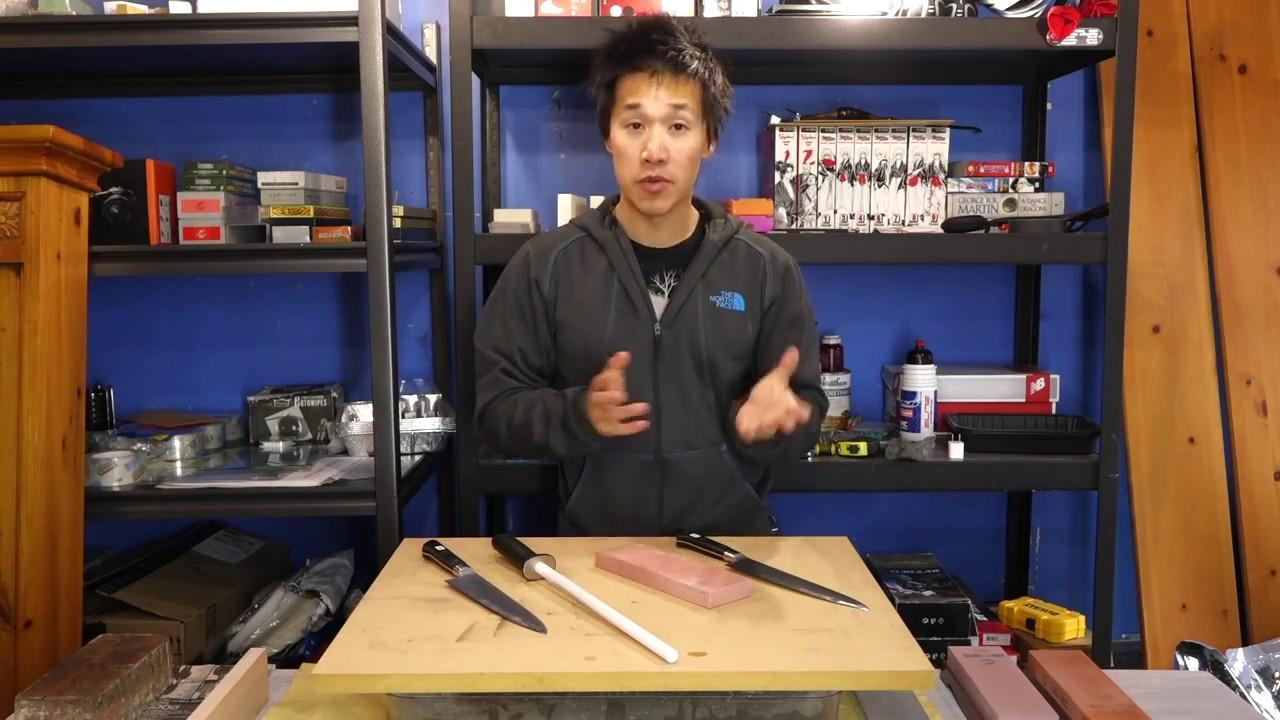
My two test knives had been polished on a 5000 and a 6000, and I dulled them on wood and then, a bit more than I meant to, on my brick (3:12). That left them more like a week or two of wear than a day's, closer to needing a 1000-grit stone. Normally, with a fairly sharp knife, I just strop on the stone for two or three minutes at most, about a minute per knife (6:01).
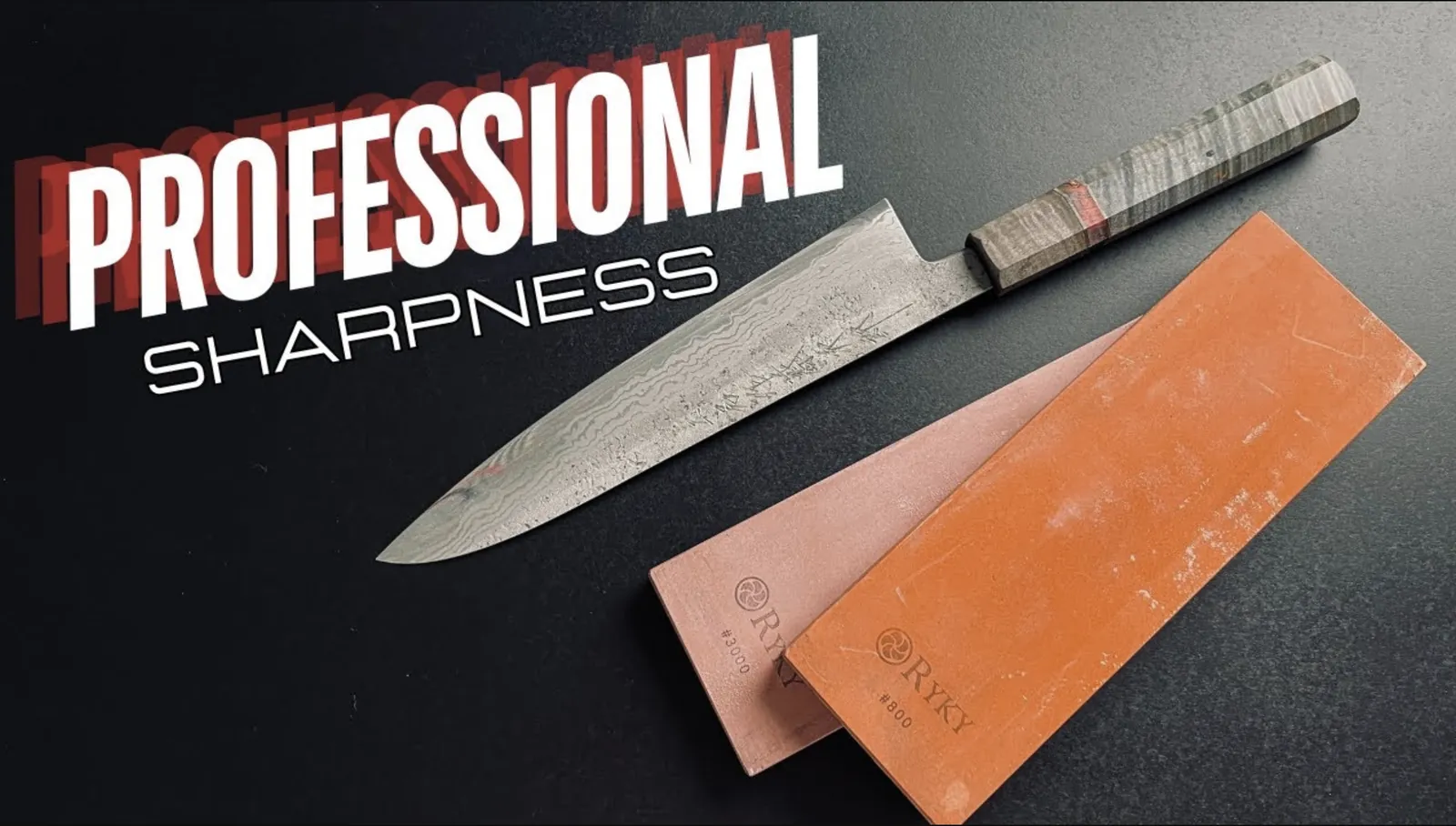
For my own knives I sharpen on a Chosera 800 and polish on a Chosera 3000 (now the Naniwa Pro 800 and 3000) and stop there (6:44). I like the finish the 3000 leaves, and it's a fast-cutting stone; I don't care for the mirror most 6000s give. About 15 strokes per side on the 3000 gave a fairly clean edge even after the brick. For the knife the brick had really roughed up, a quick 10-strokes-per-side session counting down on the 3000, under a minute, brought the edge fully back with no skipping on paper (12:41).
On a leather strop with compound
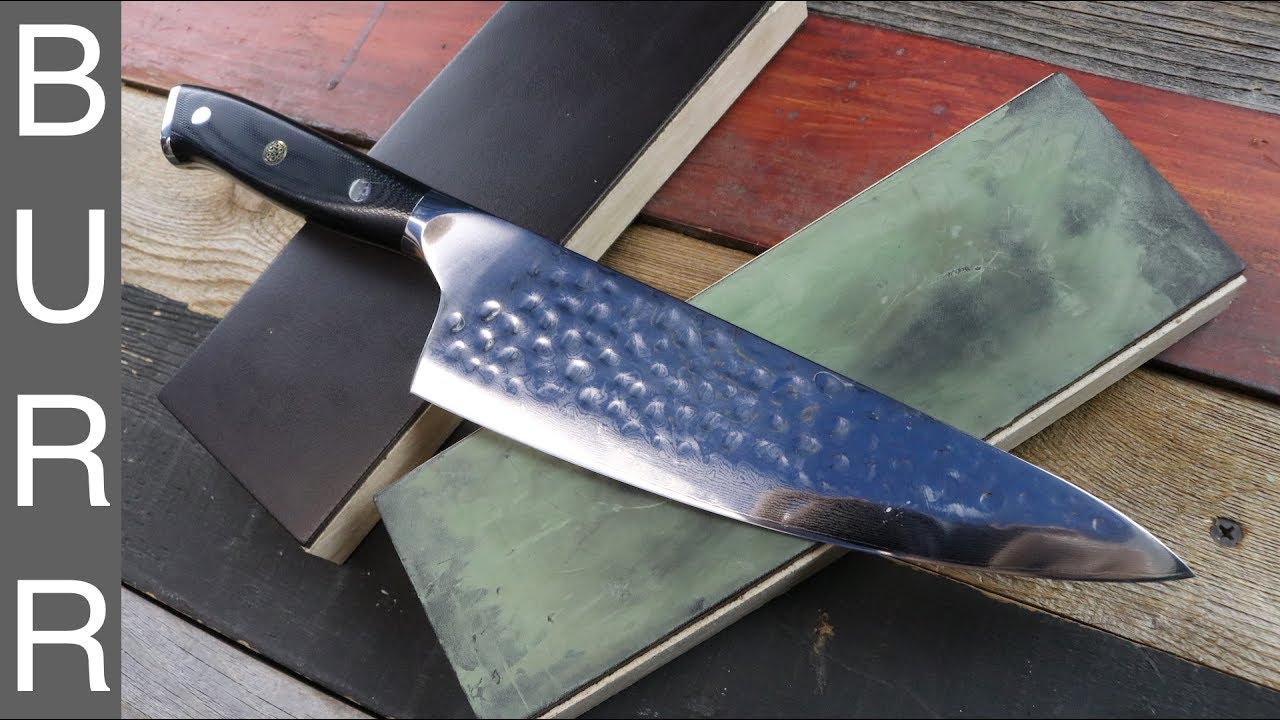
Since I started making my own strops from good leather and hardwood, I've been testing whether a strop does as well (8:09). I couldn't find good ones on Amazon at the time; a lot were expensive for poor materials. Load it with compound; mine was an inexpensive white block, and a diamond paste like DMT Dia-Paste does the same job. You can strop without compound, but in my experience compound makes it 30 to 40 percent faster with about the same result (8:51).
Then single strokes, about 15 per side, with as little pressure as possible, just letting the edge kiss the strop (10:56). A subscriber asked why I make a J motion on edge-trailing strokes. The reason is simple: pulling away from the tip and then curving up lets the tip get stropped without digging into the stone or cutting a hole in the strop (9:35). You can go heel to tip instead; do whatever's comfortable. I explain the stroke in more depth in how to strop a knife.
To simulate a normal morning, I gave a sharp knife just three light strokes on the brick, which left it rough (15:02). Twelve strokes per side on the strop, under a minute, and the edge was very clean again, close to its original 3000-grit polish (16:49).
Strop or honing rod?
This routine works best on Japanese knives around 59 HRC and up, because they hold an edge well; you can do it once a day, in the morning or before bed (18:13). For knives at 58 HRC and below, you're better off with a rod, ceramic or steel, before you cook and every few hours. Softer steel's edge falls out of alignment quickly, and you may only have 10 seconds between tasks, so a European-style knife suits a ceramic honing rod. A rod isn't good for Japanese knives, though: after the rod, my edge cut roughly, and ten strokes per side on the strop made it very clean again (19:39).
Why I like a strop
If you don't want to spend $100 to $150 on a Chosera 3000, a strop is a cheap alternative, or a $40 to $50 stone at 5000 or 6000 grit (21:54). I find strops a little easier to use: they're more forgiving than a whetstone and need no water. Load the surface once with compound, and about once a week rub a dab of mineral oil across the whole strop; it lifts the load-up and exposes fresh compound.
Bottom line
Keeping knives sharp doesn't take a full sharpening. Every few days, spend a minute on light strokes, on a 3000-grit stone like the Naniwa Pro 3000 or a loaded leather strop, with no pressure and a small J at the tip. Use a rod for soft European knives. And when the edge is truly dull, go back to the stones; see how to sharpen a Japanese knife from A to Z.
First access
Private drops, new knives and sales
Get them from Burrfection and our retail partners before anyone else. No spam; unsubscribe anytime.
Emails from Burrfection Inc. See privacy.