How to Care for Japanese Knife Handles: Wax vs. Mineral Oil
Side by side after six months: seasoned handles, oiled handles and neglected ones, including a cracked ebony handle. Here's the simple routine that keeps wa handles looking new.
By Ryky TranJune 24, 2023Updated November 25, 20264 min read
This article contains affiliate links: I may earn a commission if you buy through them, at no extra cost to you. How this works
The short version
- Season wooden handles before first use and about once a month, with wax or mineral oil. Wax lasts longer and holds the wood together better.
- Don't use cooking oils: olive and vegetable oils go rancid and build up gunk.
- Neglect shows: an unseasoned ebony handle cracked, and a customer's walnut handle was worn dull by the rough side of a sponge.
Wax or mineral oil?
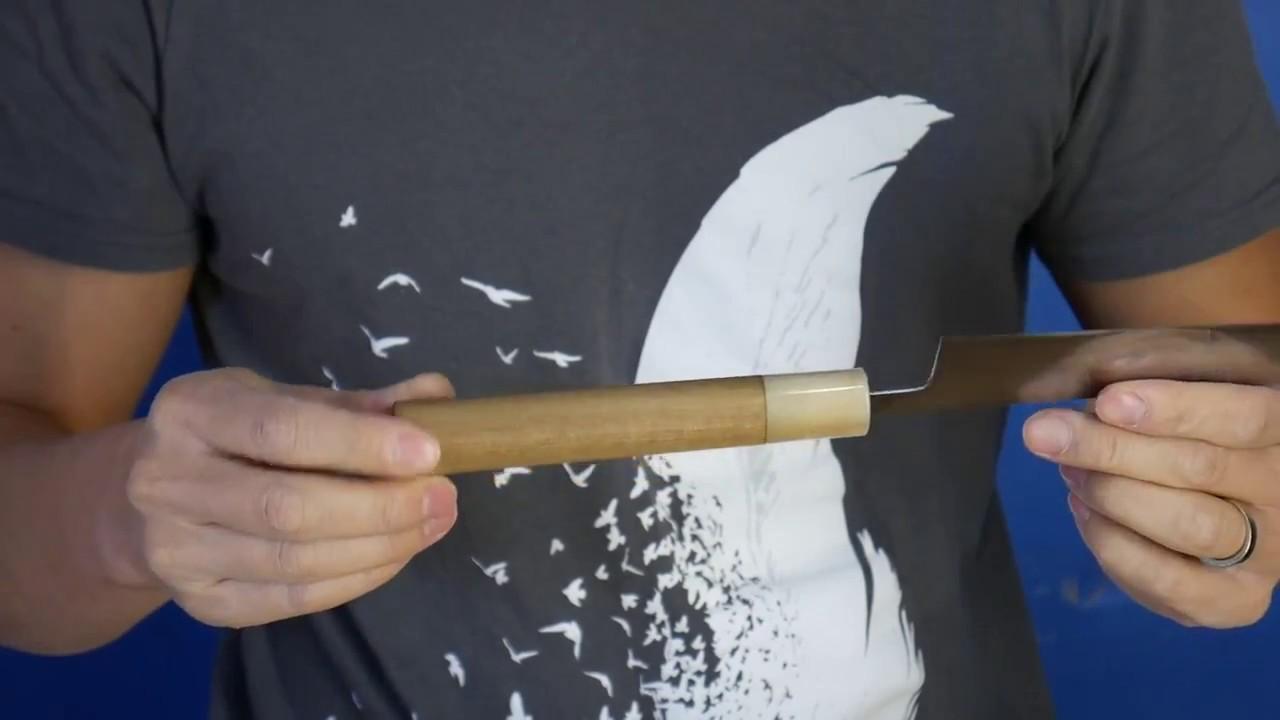
I get a lot of questions about caring for Japanese wa handles, so I pulled handles from my own kitchen to show what care, and neglect, look like (0:15). If you don't have wax, mineral oil is perfectly fine; I prefer wax because it stays on longer and holds the wood together better (0:36). Avoid canola, vegetable and olive oil: they go rancid over time, and if you apply too much too often, they build up a gunk (0:58).
Six months of seasoning, side by side
A new magnolia handle is light with very little grain (1:19). After six months of use, seasoned before first use and then monthly with oil or wax, mine was simply darker, with no grit or dark oil stains (1:40). The seasoning keeps grime from seeping in; unseasoned magnolia can turn gray or brown and look ugly (2:02).
A walnut handle that I waxed once when I got it, with one light oiling halfway through, held up very well after four to six months (2:23). It lost some sheen, but the wood was intact (2:45). Two handles I'd treated with oil only, on my Anryu and a Kato, looked fine (3:27), but the wood had started to splinter ever so slightly; maybe the oil didn't penetrate as deeply or stay on as long between applications (3:48).
What neglect looks like
I deliberately never seasoned one ebony handle (4:10). Ebony is one of the most prized handle woods, but neglected, it cracks: this one has a crack behind the spine and another beside it (4:32). It also lost all its sheen and picked up scratches, which show more on dense ebony than on soft magnolia (4:53).
Then there's a customer return of a knife I designed, sent back two or three months after purchase (5:57). The walnut handle had no luster left, and the blade was badly scratched (6:40). My best guess: it was washed with the rough side of a sponge and never oiled or waxed (7:02). Compare that with an ebony petty I used for six months and seasoned monthly: no scratches, a nice sheen, and solid construction (7:46). (More on scratches in how to avoid knife scratches.)
How I wax a handle
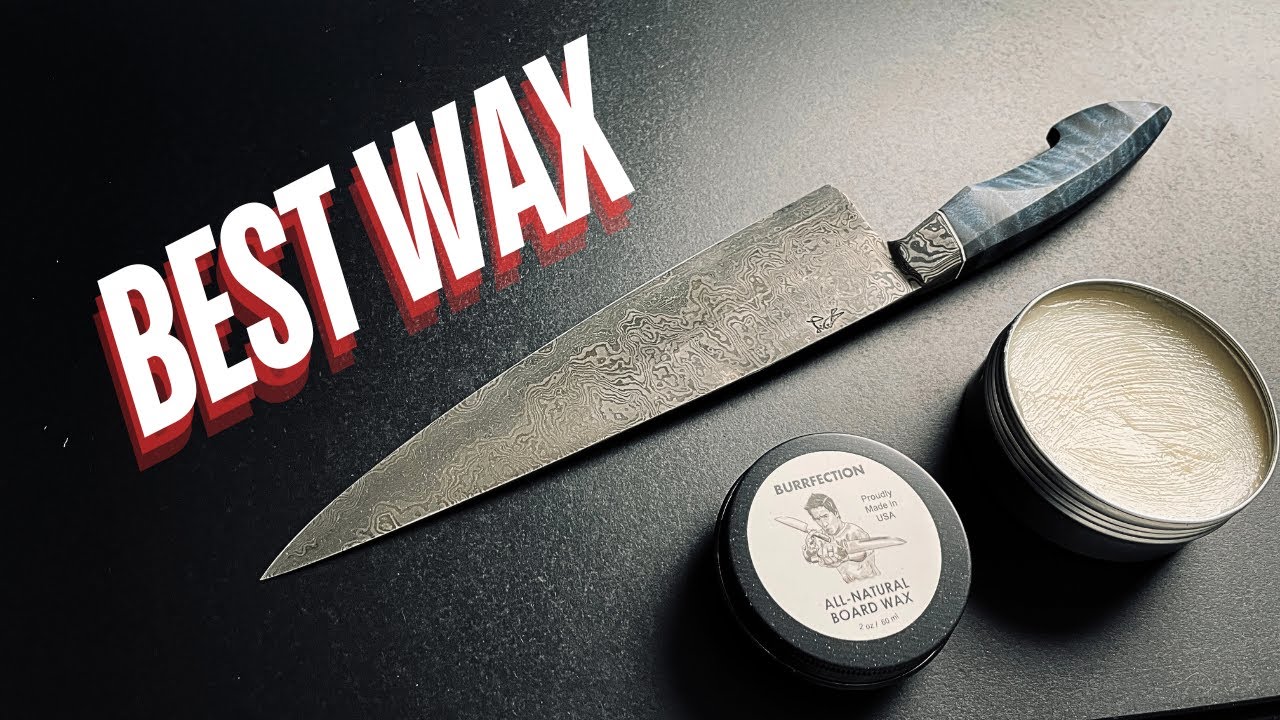
I apply it with a buffing rag, though any towel works (9:13). I make my own handle wax, a harder formula with about twice the wax of my board wax, which is softer and easier to spread on cutting boards (9:33). I work it into the handle with my fingers, which really settles it into the wood; mineral oil works the same way (9:54). My wax has no petroleum products, just coconut oil and waxes, and no walnut oil, since some people are allergic to walnut (10:55). Within a few minutes, the wood turns darker and richer (12:14). Handles should look rich, with a low sheen and no cracks.
Buffalo horn ferrules don't absorb wax, but wooden ferrules benefit from it too (13:15). For a banged-up handle, sand lightly along the grain with 320 or 400 sandpaper to smooth it and remove splinters, taping off a horn ferrule so you don't scratch it (13:37). Keep the corners pronounced; you don't want them sharp, but you don't want them rounded off either (13:59). (For a fully sealed, waterproof finish, see how to waterproof a wooden knife handle.)
Protecting carbon blades in storage
People often complain that carbon knives keep developing patina in storage (14:56). You can clean it off with washing soda, and before storing, wipe a thin layer of mineral oil on the blade as a barrier (15:16). Wax works even better because oil can dry out over time; I wouldn't do it every night, but it's ideal before travel or long-term storage (15:40). Many makers ship knives this way: a new Masamoto, for example, comes coated in what I believe is tsubaki oil, and some factories use a thin lacquer you have to wash off (16:01). (More in how to remove rust and patina.)
Reviving a dry handle
A knife by maker Jared Lee had sat in its box for three years, and while its handle had no cracks, the wood was very dry (17:35). A few minutes of working wax in by hand brought it right back (18:41). Mineral oil would look much the same, but either way an iridescent quality appears in the wood, and the grain comes alive (19:03). That's the other reason to season a handle: it protects the wood and makes it beautiful (19:27). And with a thin protective layer, grease from cooking can't soak in, so the handle is easy to keep clean for years (19:49).
Bottom line
A beautiful handmade knife deserves a minute of care: season the handle before first use, then wax or oil it about once a month, wash with the soft side of the sponge, and never use cooking oil. That keeps grease from soaking in and keeps handles looking almost new for years, on Japanese wa handles and Western wooden handles alike (20:31). My Burrfection handle wax is made for exactly this.
First access
Private drops, new knives and sales
Get them from Burrfection and our retail partners before anyone else. No spam; unsubscribe anytime.
Emails from Burrfection Inc. See privacy.