

The Sub-$200 Blue Super Benchmark: Rethinking Value in Japanese Cutlery
Disclosure: As an Amazon Associate, I earn from qualifying purchases.
For nearly half a decade, a single knife sat undisturbed at the pinnacle of the mid-tier Japanese cutlery hierarchy: the Akazawa Aogami Super. In the $350 category, few blades could match its combination of elite core steel, extreme hardness, and refined handling. It became the gold standard against which all other reactive carbon steel knives were measured.
However, the Japanese knife landscape has shifted. Two formidable contenders—the Yoshihiro and the Kaishin—now offer identical Aogami Super core steel, high-performance heat treatments, and hand-engraved kanji at a price point under $200.
A rigorous, six-month comparative testing period reveals how these three knives perform under daily kitchen use, how their geometries differ, and whether a $350 price tag remains justified in the modern era.
Products in the video

profile of the Kaishin (right) and Yoshihiro (left)
1. The Metallurgy of Edge Retention: 64–66 HRC Aogami Super
Aogami Super (Blue Super) is renowned among blacksmiths and culinary professionals for its wear resistance and aggressive cutting feel. While standard commercial heat treatments typically target a Rockwell hardness (HRC) of 62–63, all three of these blades are pushed to an elevated 64–66 HRC.
[Standard Aogami Super] ---> 62–63 HRC (Standard Retention)
[Targeted Heat Treat] ---> 64–66 HRC (Extended Edge Life: 5+ Months)
This structural hardness drastically alters the maintenance lifecycle:
Standard Stainless/Powdered Steels (VG10 / SG2): Under regular daily kitchen duty, blades in this category typically require routine stone maintenance every two to three months to maintain crisp apex performance.
Elevated Aogami Super (64–66 HRC): In multi-month endurance testing, these blades sustained micro-bevel integrity for over five months of continuous prep work before requiring a touch-up on high-grit whetstones.
At this level of hardness, the steel holds a hair-splitting edge significantly longer, though it demands disciplined cutting technique to avoid micro-chipping on dense ingredients.

Kaishin’s goose neck choil
2. Controlling Reactive Carbon: The Patina & Protection Protocol
The primary anxiety for cooks transitioning to reactive carbon steel is oxidation. Left unmanaged, moisture will react with raw steel to form rust. However, forcing a controlled patina—or managing its growth—creates a stable oxide layer that shields the blade.
To evaluate long-term oxidation behavior, a controlled oil-barrier test was conducted across the blades over six months of active use:
The Tsubaki Oil Barrier Experiment
Applying a microscopic layer of Tsubaki (Camellia) oil or high-purity mineral oil to one side of the blade acts as a physical barrier against atmospheric moisture and acidic food compounds.
Unprotected Carbon Steel: Rapidly develops a rich, iridescent blue-grey oxidation line along the exposed Aogami Super core edge.
Oil-Protected Carbon Steel: Displays a heavily muted, controlled patina formation. The oil barrier prevents aggressive staining from highly pigment-rich ingredients like turmeric and carrots, which can penetrate soft stainless or iron cladding.
Key Takeaway: You do not need to prevent patina entirely; attempting to do so defeats the purpose of owning carbon steel. A light wipe of Tsubaki oil post-washing slows oxidation, protects soft cladding from organic dyes, and eliminates the risk of harmful red iron oxide (rust).

Akazaway chef knife profile
3. Ergonomics & Fit and Finish: The Choil Factor
While blade steel garners the headlines, daily cutting comfort is dictated entirely by the fit and finish of the spine and choil (the curved rear edge of the blade behind the heel).
The Akazawa: Features a traditional, square-cut choil with slightly eased edges. While functional, long sessions in a full pinch-grip can create tactile friction on the index finger.The Yoshihiro & Kaishin: Both feature exceptional rounded and high-polished choils. By rounding the metal transition point where the blade meets the tang, the finger rests against smooth, mirror-polished steel.
For cooks utilizing a proper pinch-grip, the sub-$200 Yoshihiro and Kaishin surpass the original Akazawa in raw handling comfort.
Selecting between these three knives comes down to matching their edge profiles to your natural cutting stroke.

a relatively flatten belly of Japanese gyutos
4. Blade Geometry & Cutting Profiles
Selecting between these three knives comes down to matching their edge profiles to your natural cutting stroke.
Akazawa & Kaishin: The Classic Japanese Flat Profile
Geometry: Linear lower half with a subtle belly near the tip.
Cutting Motion: Engineered strictly for push-cutting, pull-cutting, and vertical chopping.
Strengths: Excellent board contact with zero light bleed under the edge; ideal for precision vegetable prep.
Drawback: Resists rock-chopping; forcing a roll on these blades risks digging the tip into the cutting board.
Yoshihiro: The Neutral Progressive Radius
Geometry: A continuous, gentle curve extending smoothly from the heel through to the tip.
Cutting Motion: Versatile hybrid profile that accommodates both push-chopping and slight rocking strokes.
Strengths: Highly approachable for users transitioning from Western/German chef knives to Japanese cutlery.

Octagonal wa handle with good oil finish
5. Handle Craft & Wood Preservation
The price gap between these models is heavily influenced by handle materials. Upgrading a standard Ho wood (Magnolia) handle to a dense Ebony handle generally adds $60 to $100+ to the retail cost.
Handle Sizing & Hand Match
Akazawa (Ebony Wa-Handle): Exceptionally slim in both height and circumference. Best suited for small-to-medium hands or cooks who prefer a lightweight, blade-forward balance.
Yoshihiro (Standard Wa-Handle): Neutral, traditional octagonal proportions. Fits comfortably across almost all hand sizes.
Kaishin (Modern Robust Wa-Handle): Features a thicker circumference, minimal taper from ferrule to end-cap, and a premium buffalo horn collar. Ideal for medium-to-large hands seeking a firm, substantial grip.
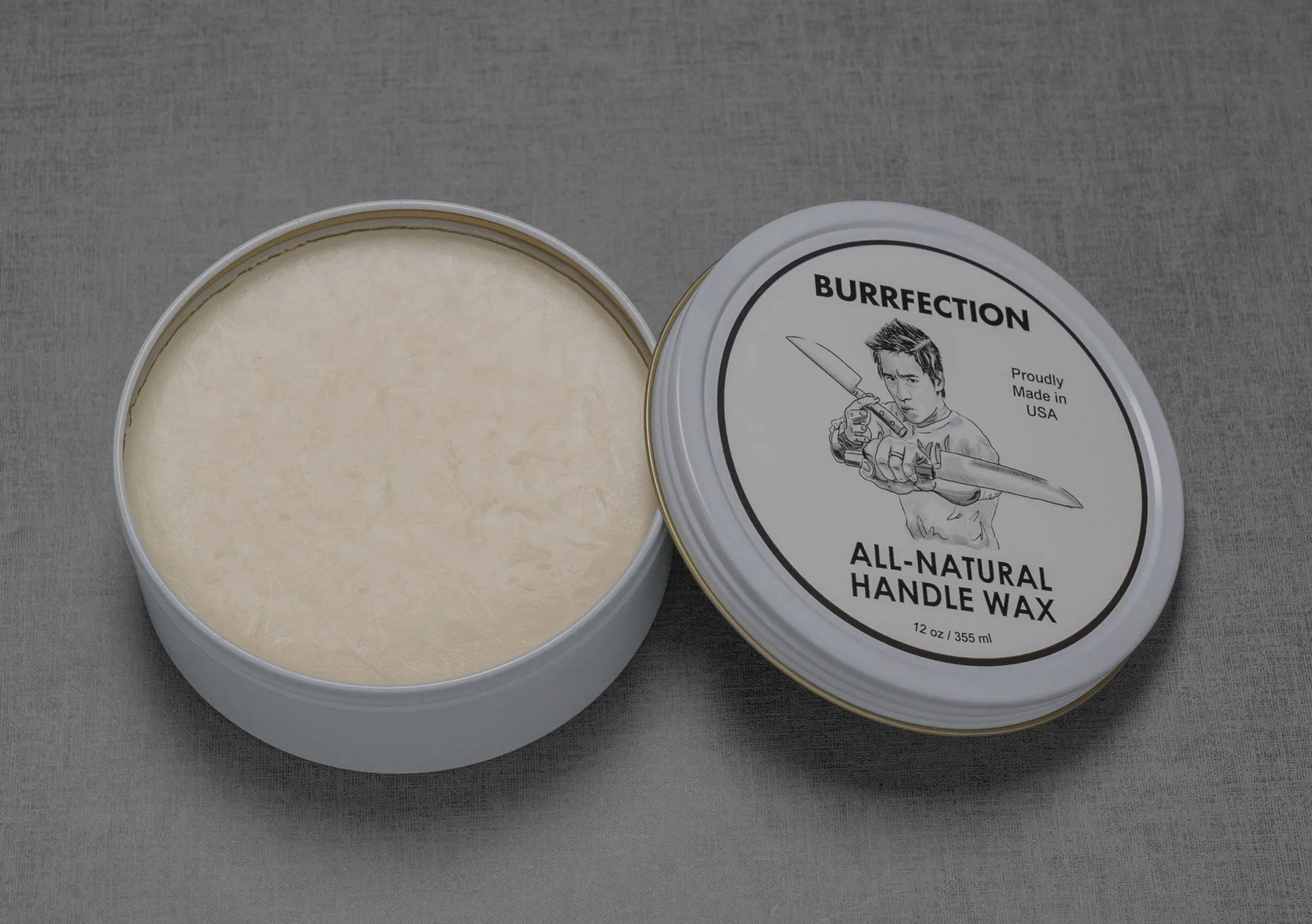
The Natural Beeswax Preservation Protocol
Factory wood finishes often strip away the natural warmth of wood grain or leave a synthetic, rubbery coating. To preserve raw octagonal handles against water saturation without ruining their tactile feel:
Preparation: Combine natural beeswax and mineral oil to create a paste.
Application: Apply 2 to 3 thin coats directly to the dry wooden handle before first use.
Result: The wax penetrates the pores, sealing out standing moisture and preventing handle rot while leaving the natural grain intact. Reapply every six months.
Final Value Proposition: Which Knife Wins?
All three options showcase elite Japanese craftsmanship, featuring hand-forged construction and hand-engraved kanji. However, the market has evolved:
Buy the Akazawa ($350) if you explicitly demand a slender, pre-installed dense Ebony handle and prefer a flat, traditional cutting profile.
Buy the Kaishin (<$200) if you want an aggressive flat profile, a high-polished choil for pinch-grip comfort, and a robust handle with a premium buffalo horn ferrule.
Buy the Yoshihiro (<$200) if you want the most versatile, neutral cutting profile for everyday kitchen prep alongside top-tier fit and finish.
At under $200, the Yoshihiro and Kaishin completely redefine the price-to-performance threshold for Aogami Super cutlery—delivering true custom-level performance at half the price of legacy benchmarks.
Products in the video