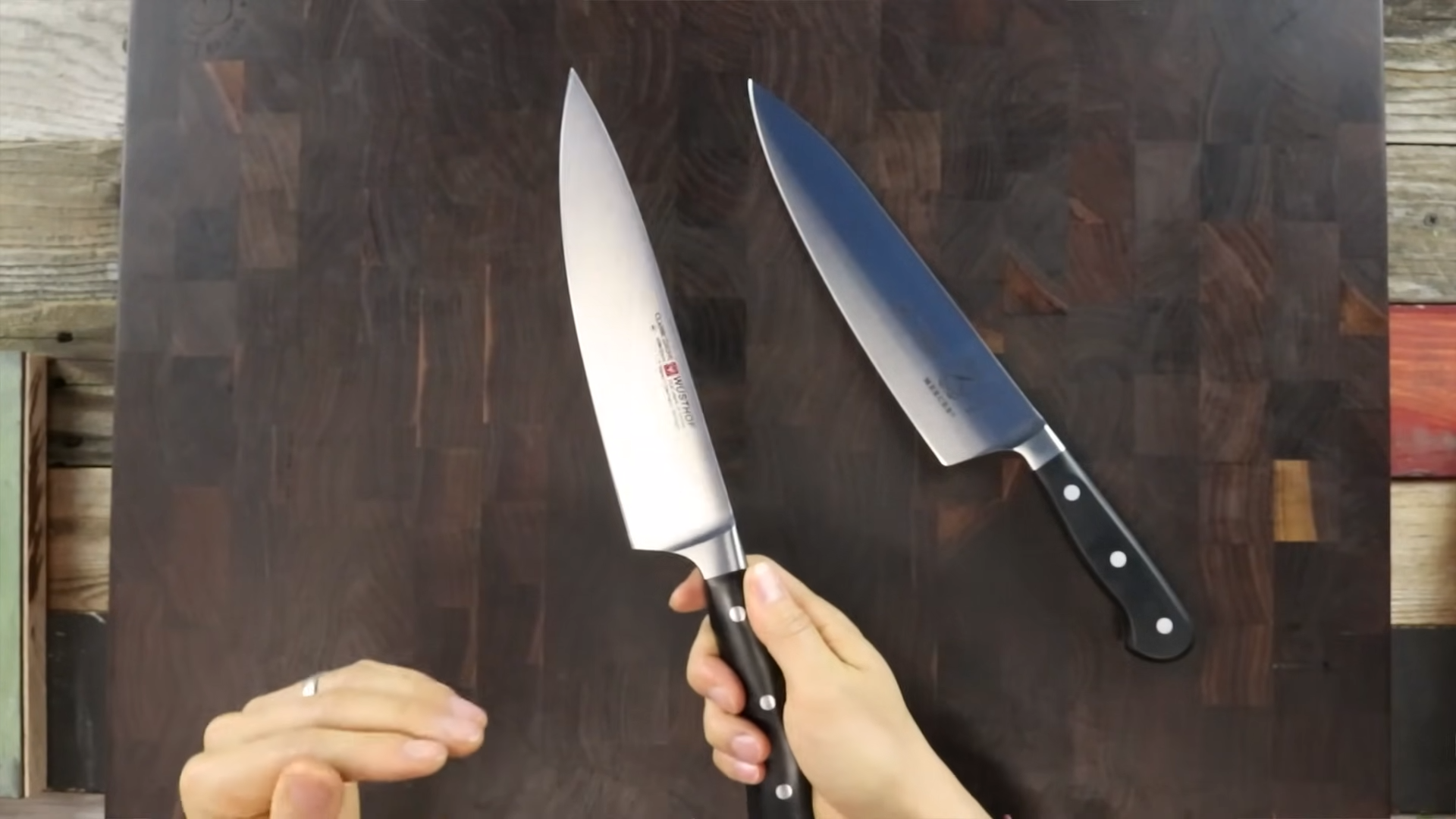
When shopping for high-end European cutlery, brand prestige often obscures mechanical reality. For decades, the German knife conversation has been dominated by legacy cutlery houses from Solingen—chief among them Wüsthof. Their flagship Classic Ikon represents the peak of modern Western industrial knife design, combining traditional German durability with striking, ergonomic sculpting.
Yet beneath the polished marketing and heritage emblems lies a persistent metallurgical truth: the steel composition across most high-end German knives is virtually identical.
Enter the Mercer Renaissance Chef’s Knife. Sitting at roughly a quarter of the price of the Classic Ikon, the Renaissance targets commercial culinary students and line cooks. When stripped down to core geometry, pinch-grip ergonomics, edge retention, and whetstone response, this matchup highlights the dividing line between aesthetic luxury and pure, bench-level performance.
trust retailers BurrfectionStore | Gyuto | WasabiKitchen | Amazon
Disclosure: As an Amazon Associate, I earn from qualifying purchases.
available on Amazon Ikon Mercer
1. Shared Metallurgy: Demystifying X50CrMoV15
Before analyzing blade geometry, we must examine the alloy composition. Both the Wüsthof Classic Ikon and the Mercer Renaissance are forged from the standard benchmark of German cutlery: DIN 1.4116 / X50CrMoV15.
[ X50CrMoV15 Chemical Breakdown ]
├── Carbon (C): ~0.50%       -> Base matrix hardness & tensile strength
├── Chromium (Cr): 14–15%    -> Complete corrosion resistance & stain prevention
├── Molybdenum (Mo): ~0.5%   -> Pitting resistance & grain refinement
└── Vanadium (V): ~0.15%     -> Wear resistance & carbide stabilization
Heat-treated to roughly 56–58 HRC, this steel intentionally trades absolute apex longevity for extreme impact toughness. Unlike Japanese high-carbon steels (such as Shirogami or Aogami) or powder-metallurgy stainless grades (like SG2/R2) that operate at 61–65 HRC, X50CrMoV15 will not chip when striking bone or hitting dense vegetable cores.
The trade-off is edge retention:
The Real-World Working Life: Under daily commercial or heavy home culinary use, both knives hold their crisp, razor apex for approximately 4 to 5 days before micro-deflection and edge rollout occur.
The Reality Check: In terms of raw steel performance and edge life, the Mercer does not surrender an inch of territory to the Wüsthof. They share the same carbide density, the same structural toughness, and the same frequency of edge maintenance.
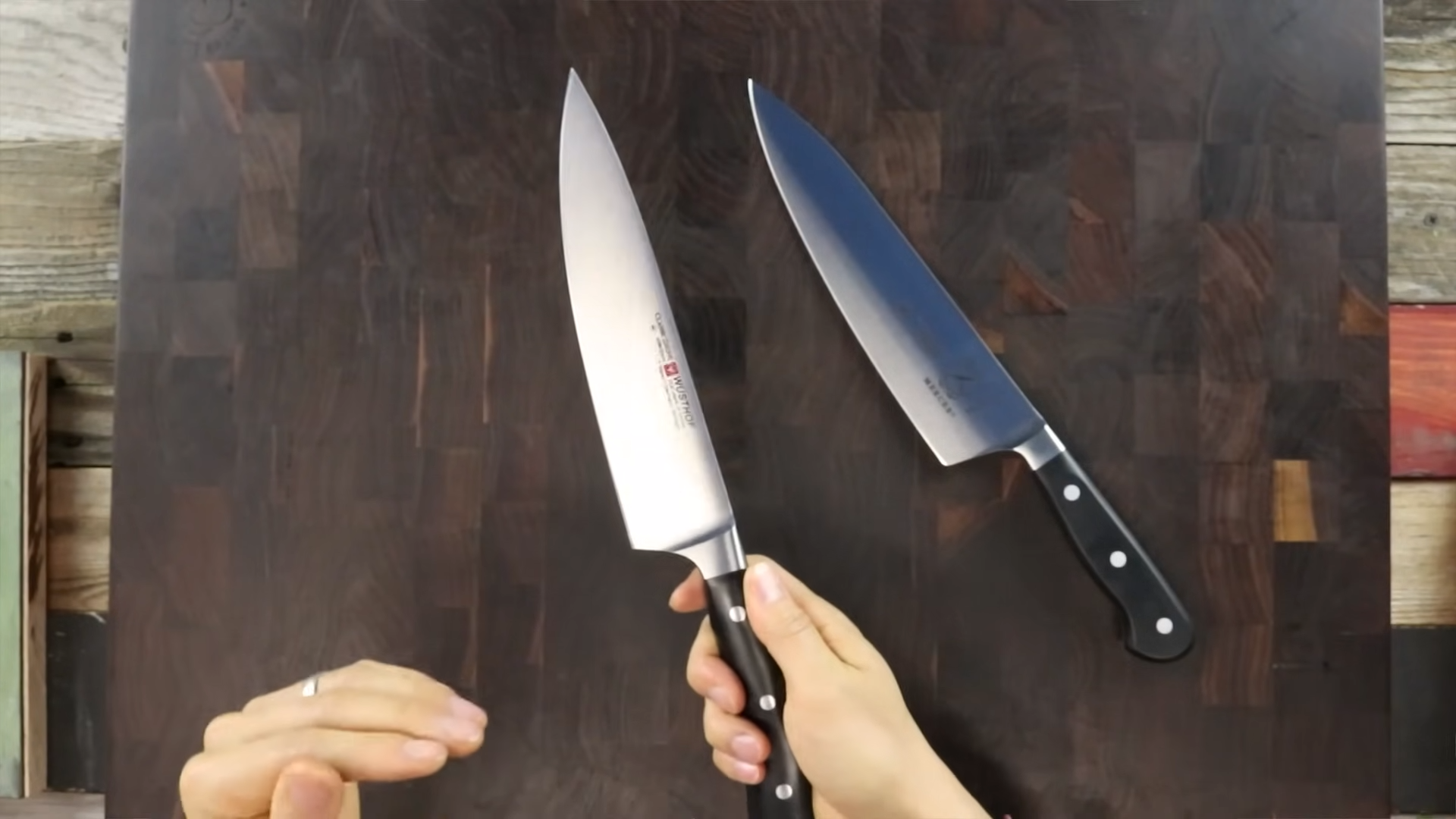
2. Geometry and Profile: Rocking Belly vs. Positional Stop
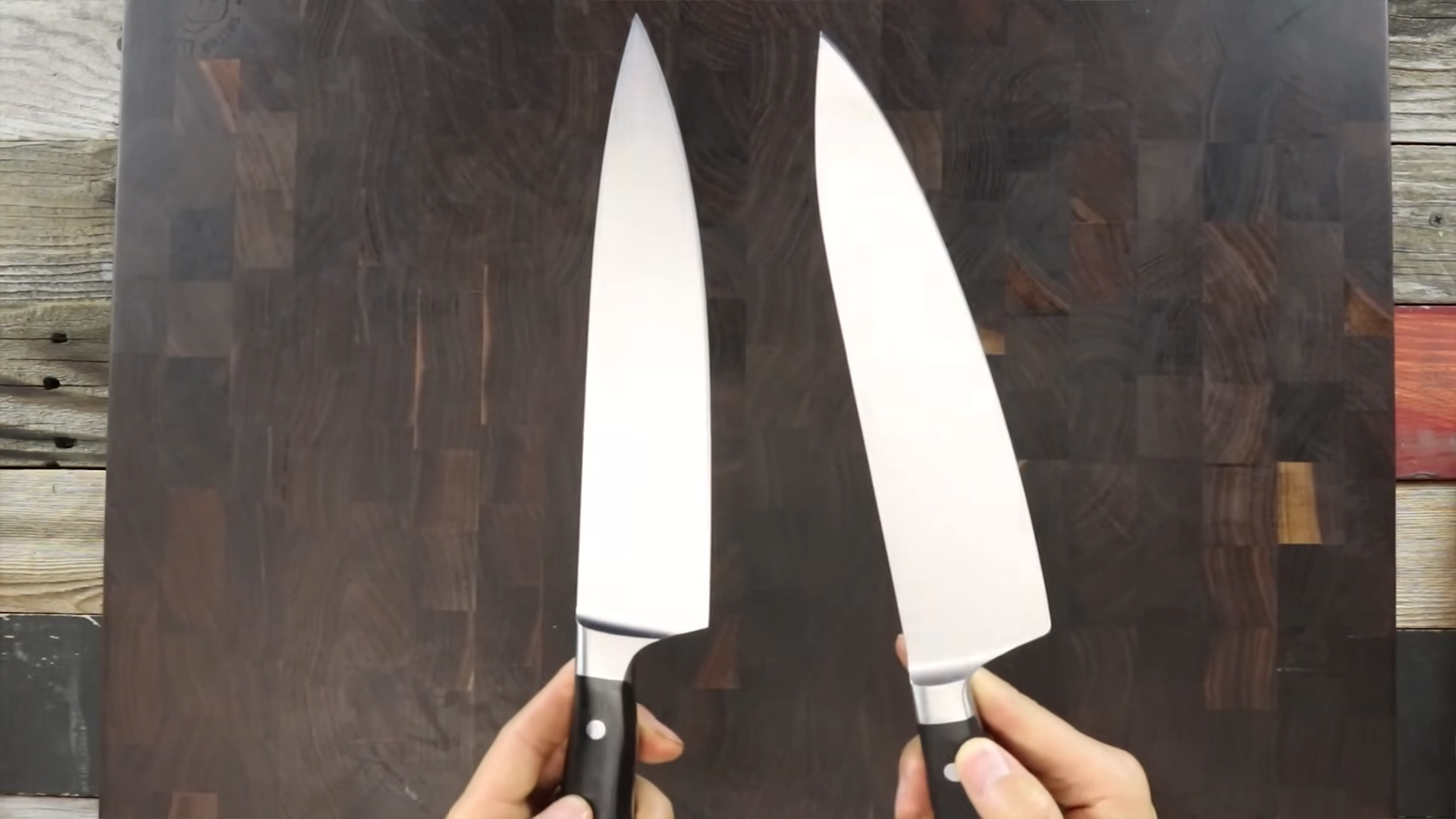
While the steel may be identical, the profiles reveal distinct cutting philosophies.
WÜSTHOF CLASSIC IKON: Dual-Stage Profile
            [ Slight Belly Curve ]               [ Flat Spot ]
Tip --------------------------------------------/============ Heel
*Provides a tactile mechanical stop for push-cutting and heel-chopping.

MERCER RENAISSANCE: Continuous Sweeping Radius
            [ Seamless Continuous Rocking Radius ]
Tip --------------------------------------------------------- Heel
*Zero flat spots; optimized for rhythmic rocking and continuous herb prep.
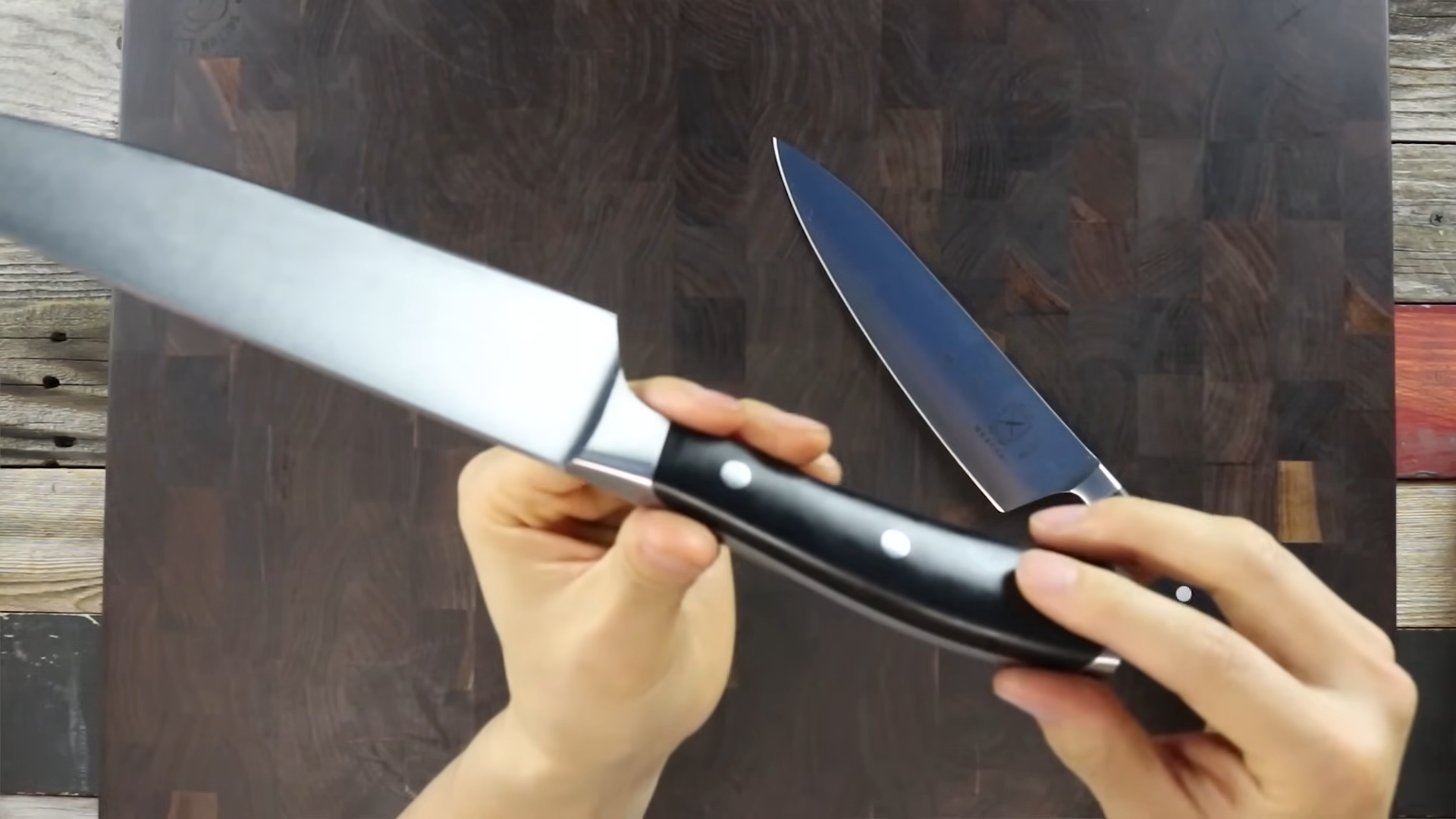
The Wüsthof Classic Ikon: Tactile Precision
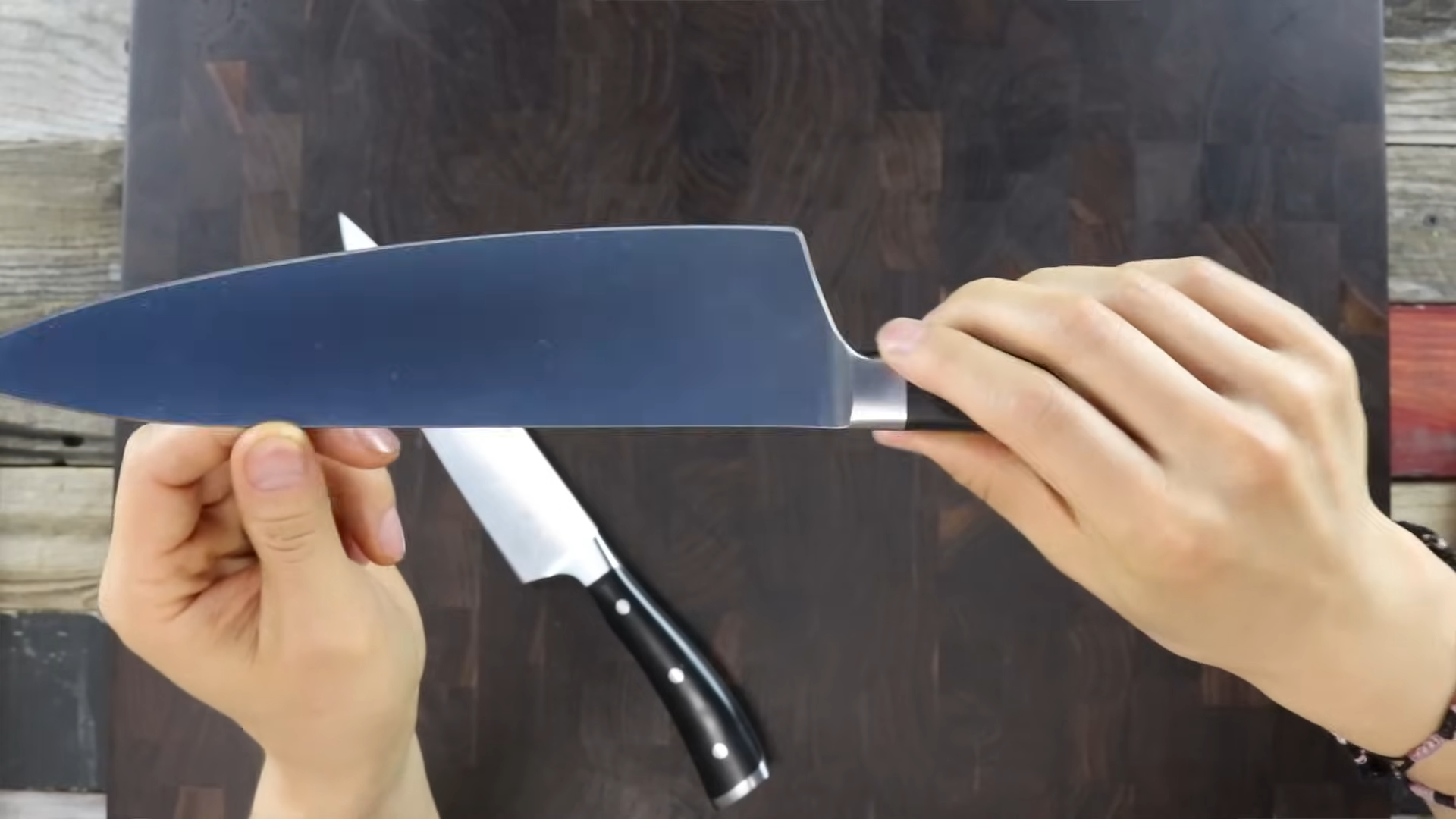
The Ikon features a classic, balanced German curve through the front two-thirds of the blade, terminating in a short, subtle flat spot at the heel.
This heel flat acts as a sensory reference point on the board. When pulling the knife back through an onion or push-cutting carrots, you feel an unmistakable tactile stop.
It provides exceptional directional control for cooks who combine rolling chops with flat push-cuts.
The Mercer Renaissance: Unbroken Flow
The Renaissance employs a continuous, unbroken curve from tip to heel without a defined flat spot.
When rocking through fresh herbs, mushrooms, garlic, or leafy greens, the knife moves smoothly without bottoming out.
For cooks who primarily rely on French-style or traditional Western rocking motions, the Mercer feels remarkably fluid on the cutting surface, avoiding the abrupt "thud" that comes when an inexperienced hand misjudges a flat heel.
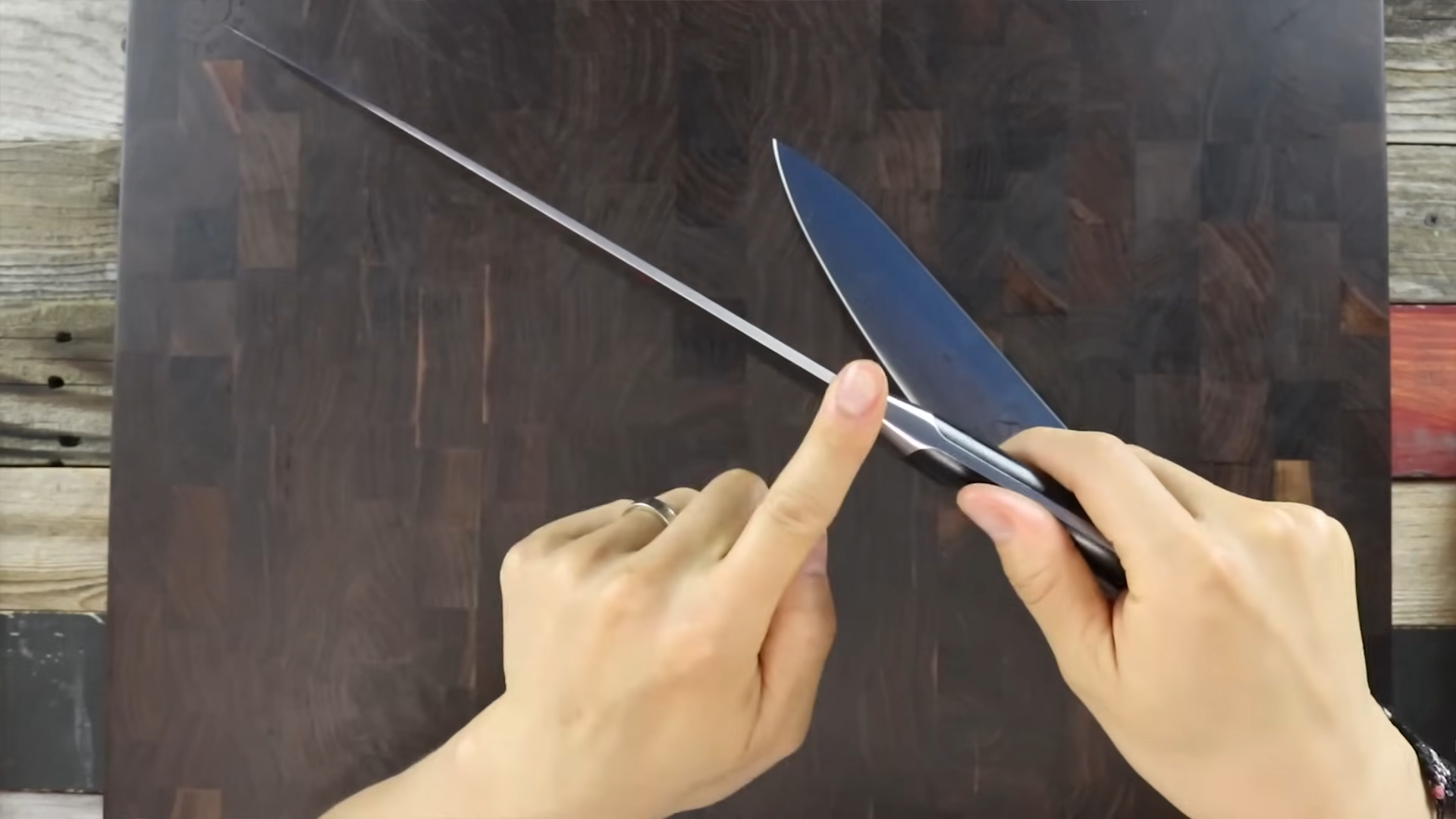
3. Ergonomics, Spine Relief, and Fit & Finish
The handle is where Wüsthof justifies its luxury pedigree, but the spine and bolster finish tell a surprising story.
Handle Architecture: Sculpted Luxury vs. Sanitary Utility
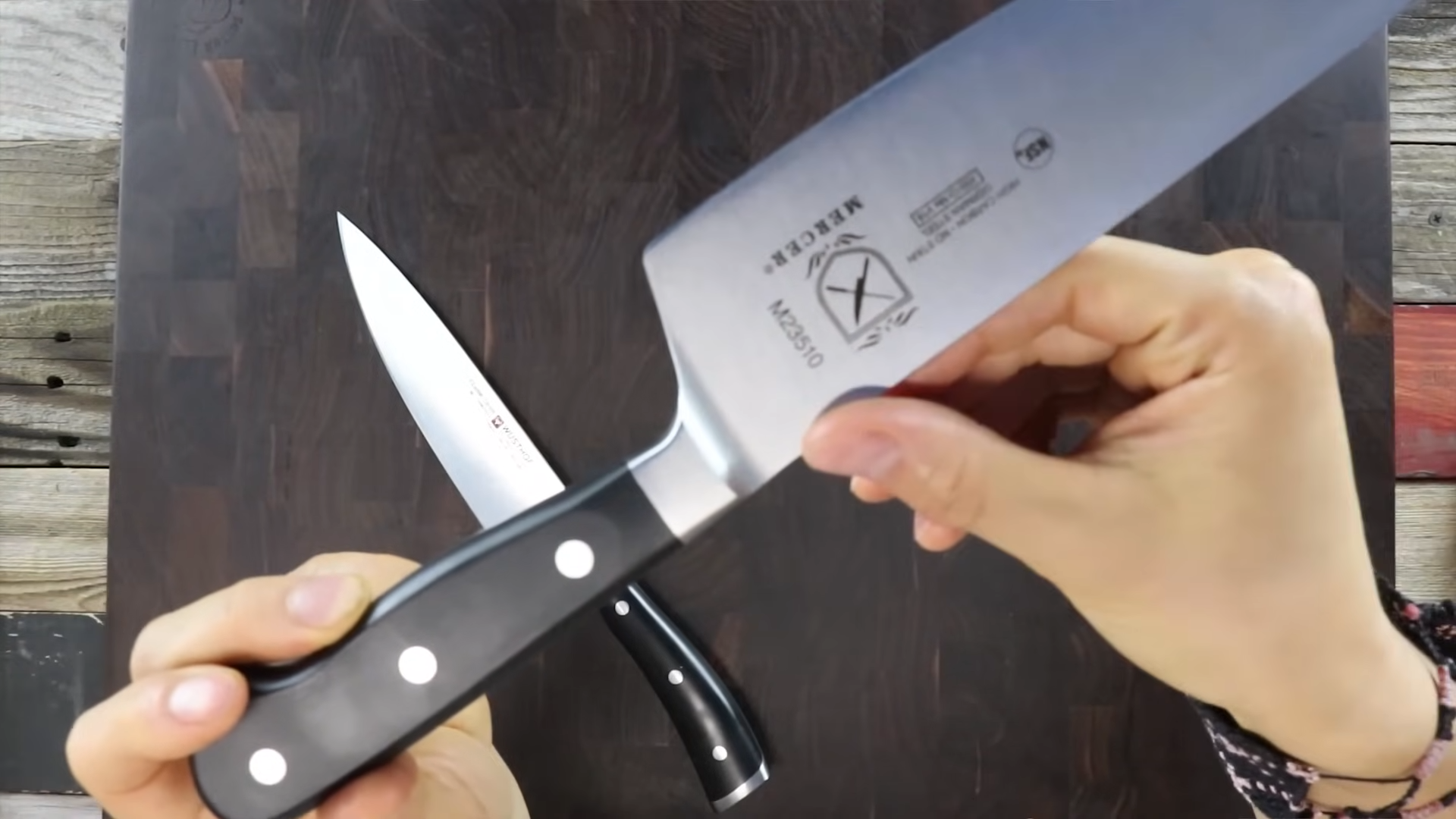
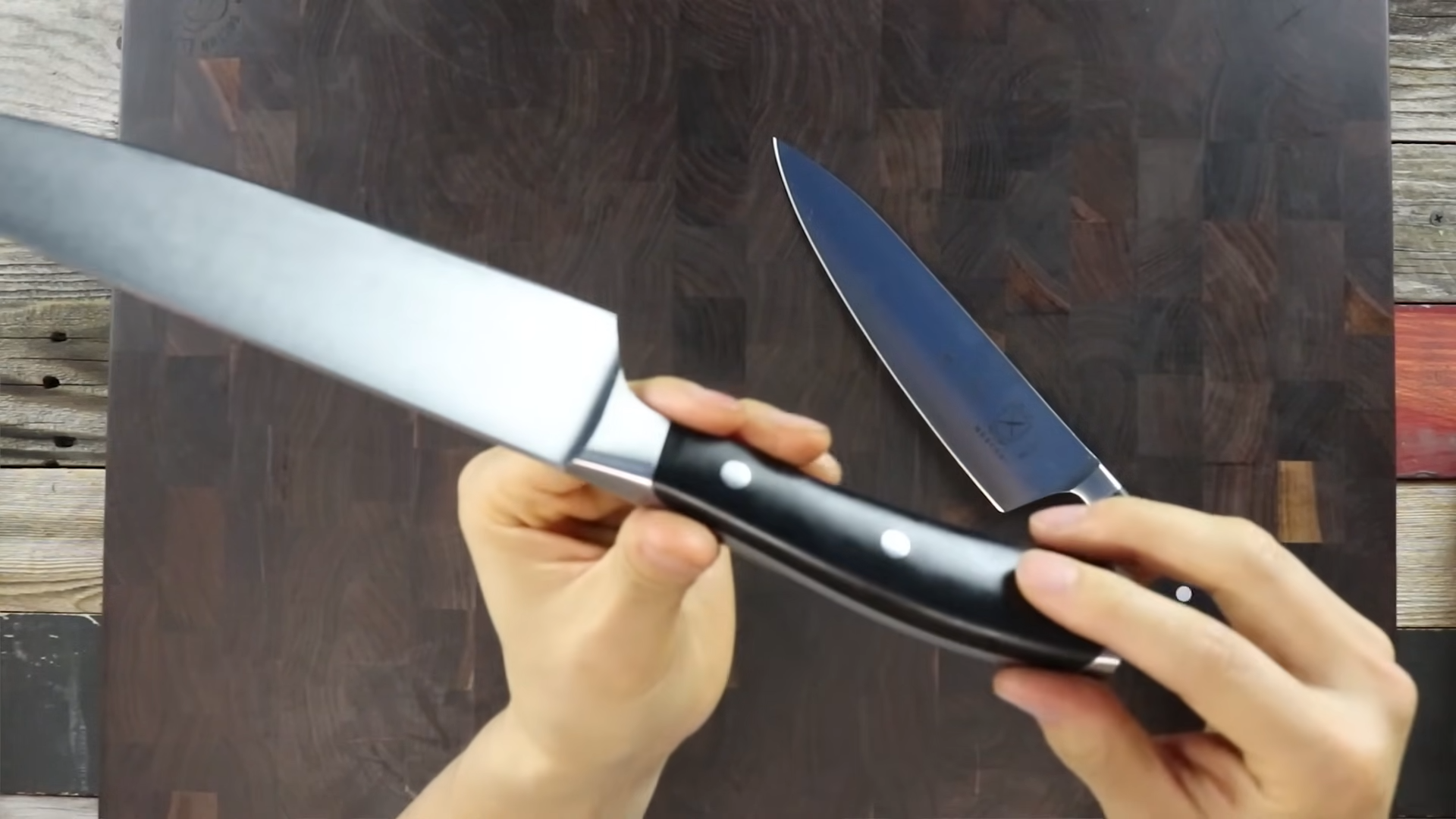
Wüsthof Classic Ikon: The handle is an ergonomic masterpiece. Molded from dense POM (polyoxymethylene)—a moisture-resistant, non-porous polymer—it features a double-swell palm contour and a rear butt-bolster that balances the blade over the hand. It fills the grip effortlessly, drastically reducing hand strain during extended butchery or prep sessions.
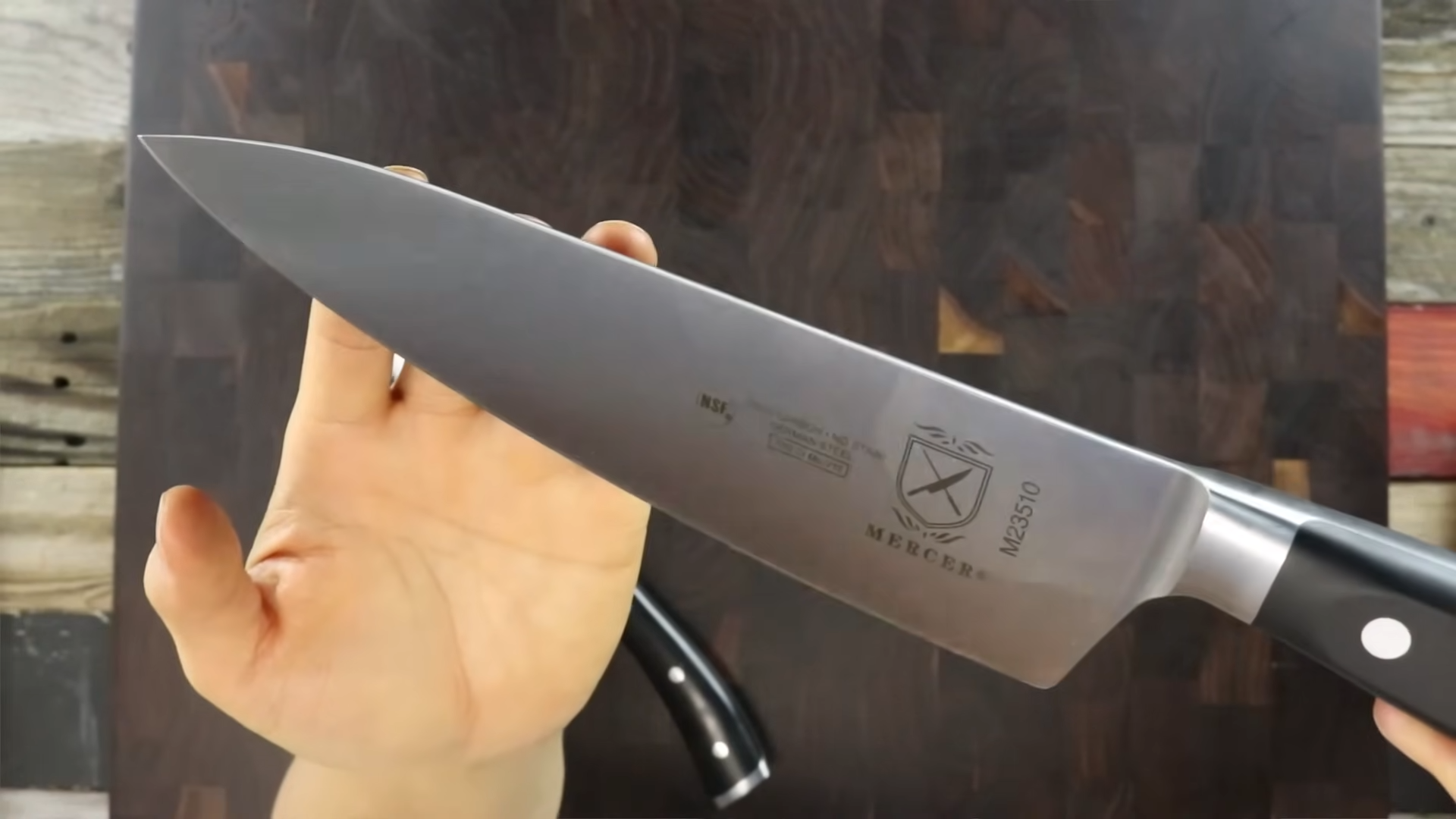
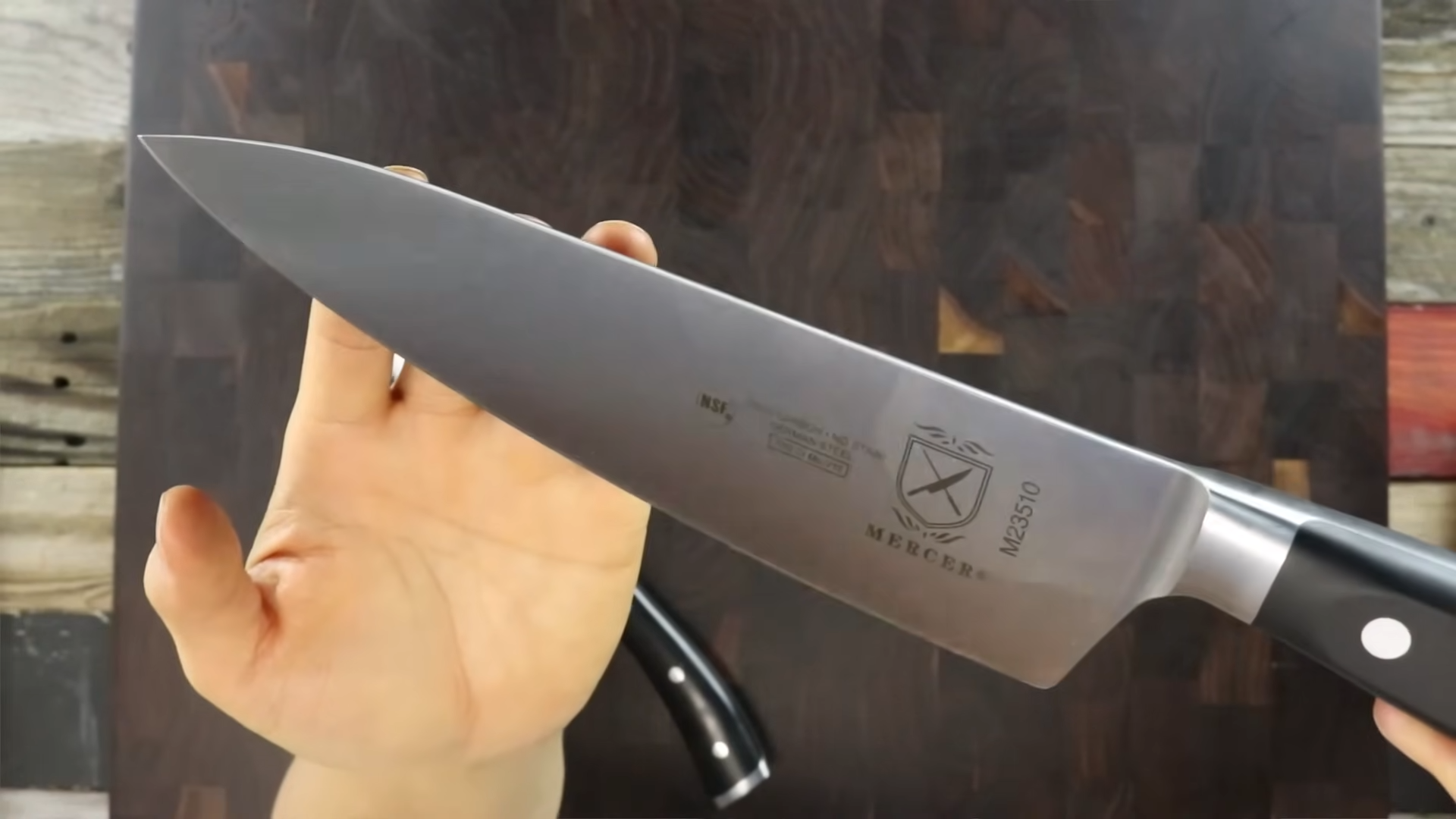
Mercer Renaissance: The handle is also POM, triple-riveted and NSF-certified for commercial food safety. The tolerances are vacuum-tight; there are zero gaps between the full tang and scale liners. However, the profile is flat and blocky, closely mirroring the standard Wüsthof Classic rather than the sculpted Ikon. It is safe, durable, and sanitary, but lacks the contoured ergonomics of its rival.
The Pinch Grip and Spine Finish
This is where the budget Mercer unexpectedly outperforms the flagship German knife:
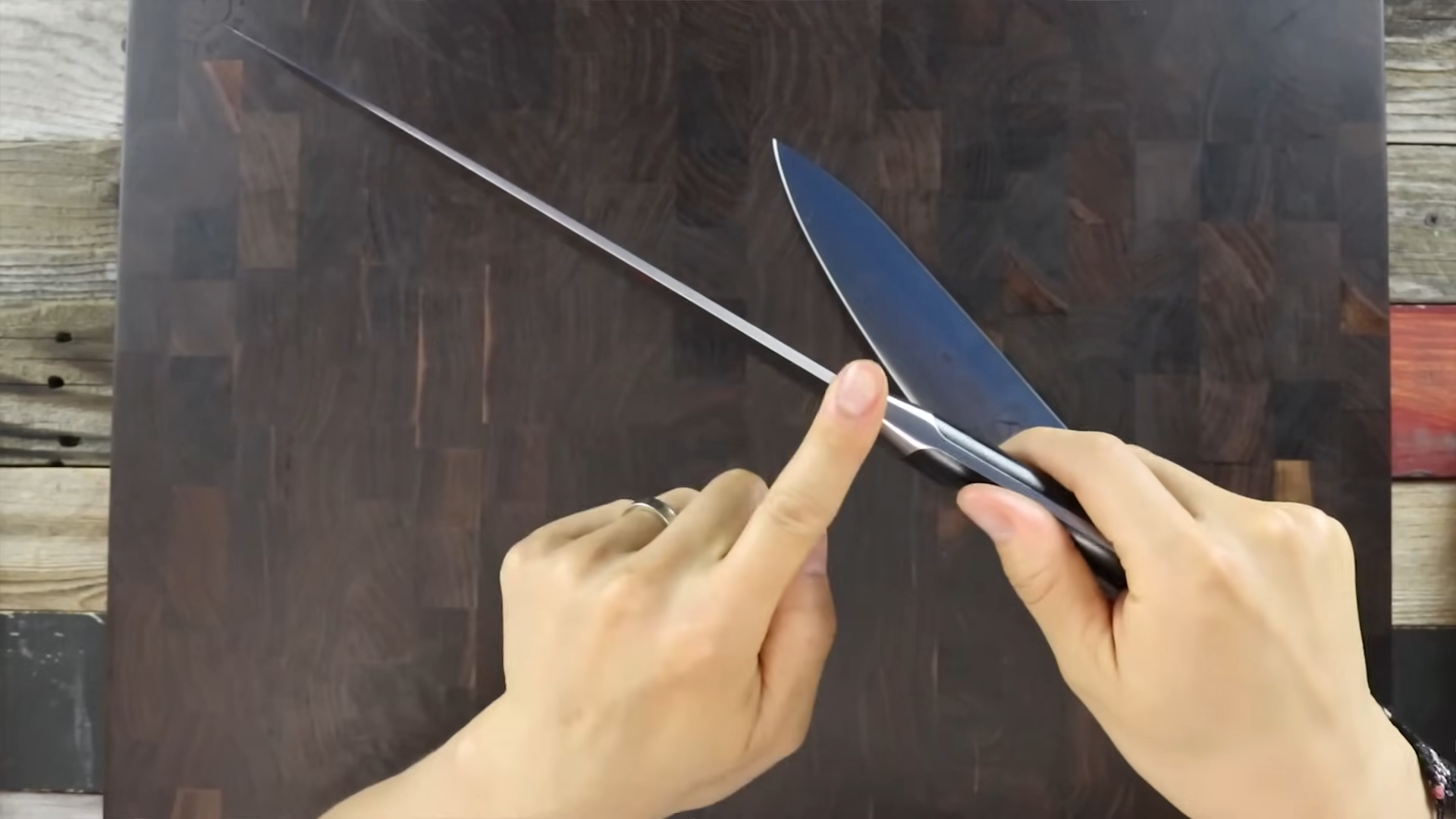
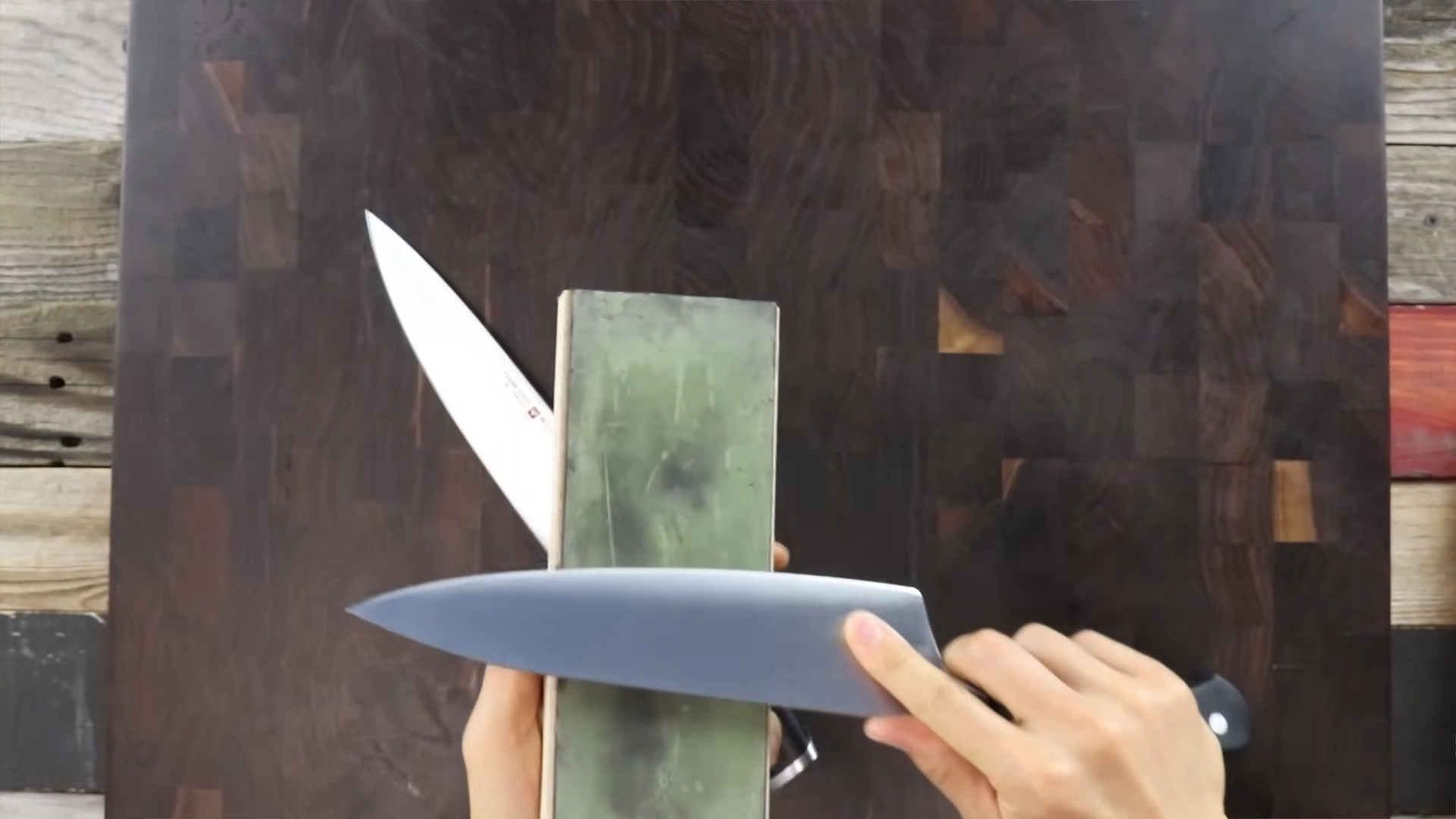
The Spine: The Wüsthof Ikon leaves the factory with crisp, 90-degree spine corners. During extended pinch-grip prep—or when placing your index finger over the spine while sharpening on whetstones—these hard edges create distinct pressure points. The Mercer features a softly crowned and polished spine, providing far better comfort right out of the box.
The Demi-Bolster: Both knives utilize an open, half-bolster design (eliminating the thick, unsharpenable heel of vintage European knives). However, Mercer shaves the bolster transition further back toward the handle, creating a deeper, more radiused pocket for your middle finger at the choil. The result is a pinch grip that feels noticeably more refined than the Ikon's tighter transition.
4. The Maintenance Protocol: Mastering Soft Steel Refinement
Running high-toughness, sub-59 HRC European steel requires an entirely different sharpening strategy than hard Japanese cutlery. Because the matrix contains higher ductility, the apex rolls rather than micro-chips.
+--------------------------------------------------------------------------+
| 3-TIER MAINTENANCE WORKFLOW FOR X50CrMoV15                               |
|                                                                          |
| 1. Daily Realignment (Days 1–5):                                         |
|    Standard grooved or ceramic honing steel. Re-centers rolled apex.     |
|                                                                          |
| 2. Weekly Refining Cycle (Every 5–7 Days):                               |
|    Smooth leather paddle strop loaded with 0.5–1.0 micron compound.      |
|    10–12 alternating edge-trailing strokes cleanly burnishes the edge.   |
|                                                                          |
| 3. Semi-Annual Bench Session (Months 6–12):                              |
|    Full waterstone progression: 1000-grit synthetic (Naniwa Pro /        |
|    Shapton Kuromaku) followed by 3000-grit refinement and deburring.     |
+--------------------------------------------------------------------------+
The Loaded Strop Upgrade
Most home cooks immediately reach for a grooved steel rod when a German knife loses its bite. While an unribbed or fine-grit ceramic rod effectively pushes a rolled edge upright, it does nothing to re-polish the micro-bevel.
To push these knives well past standard factory performance, integrate a leather strop loaded with chromium oxide or micro-fine diamond paste:
After 4 to 5 days of use, instead of grinding away steel on coarse stones, execute 10 to 12 light, edge-trailing passes per side at the factory bevel angle (roughly 14°–15°).
The sub-micron abrasive cleanly strops away accumulated micro-burrs and refines the scratch pattern without thinning the blade face.
This disciplined 30-second stropping ritual regularly extends the interval between full waterstone sharpening sessions from a few weeks to 6 to 12 months.
Whetstone Behavior
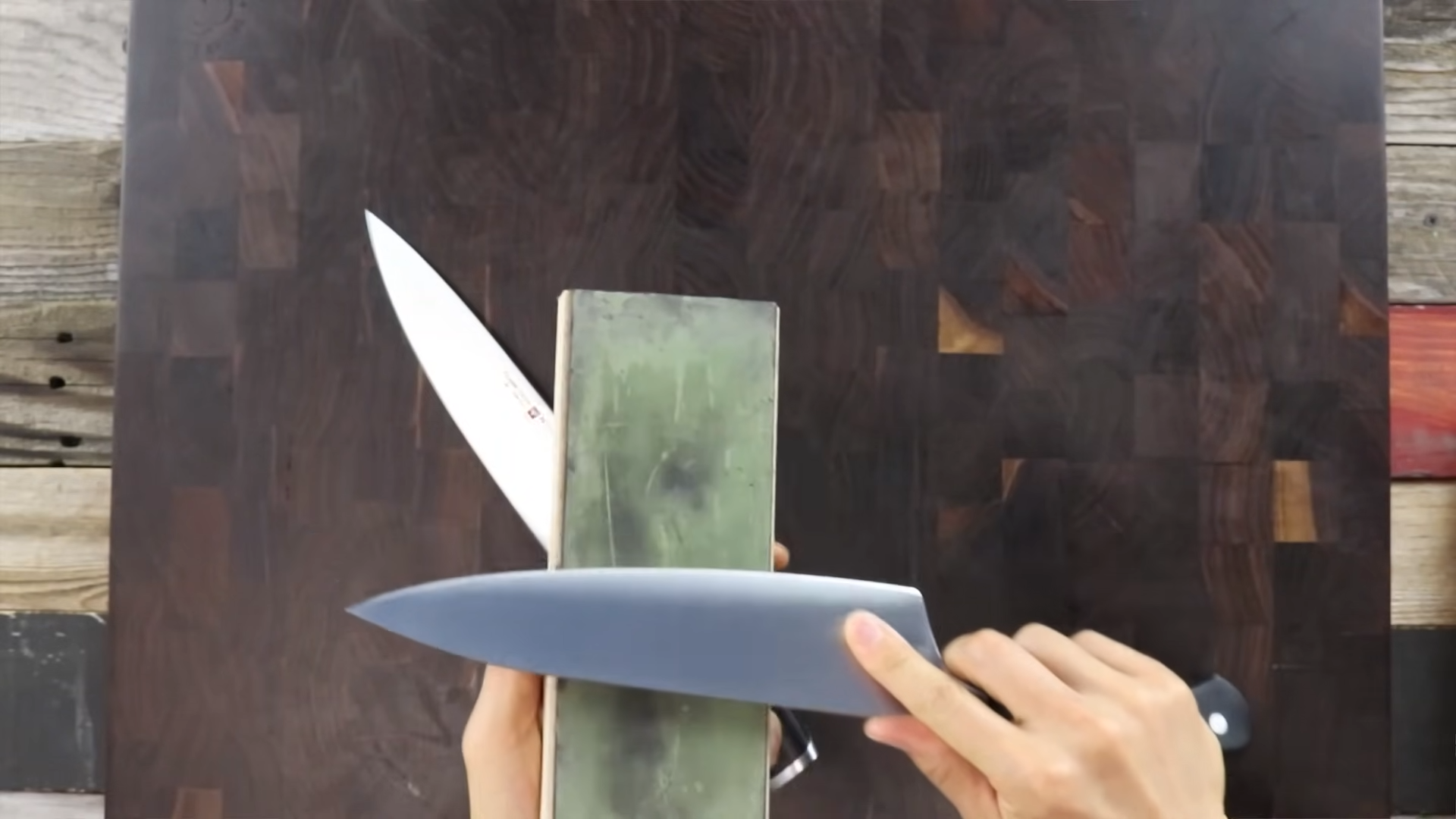
When these knives do hit the bench, the experience is straightforward. X50CrMoV15 forms a persistent, gummy wire burr under abrasion.
Do not sharpen this steel on fine polishing stones (6000+ grit); the soft matrix quickly sheds its cutting aggression on high-polish stones, creating a slick apex that slides right off tomato skins.
Finish these blades on a clean 1000-grit to 2000-grit medium synthetic stone (such as a Shapton Pro 1000 or Naniwa Chosera/Pro 800), deburr thoroughly using light cross-hatch passes, and strip the microscopic wire burr clean on your loaded leather strop.
Direct Specification Comparison
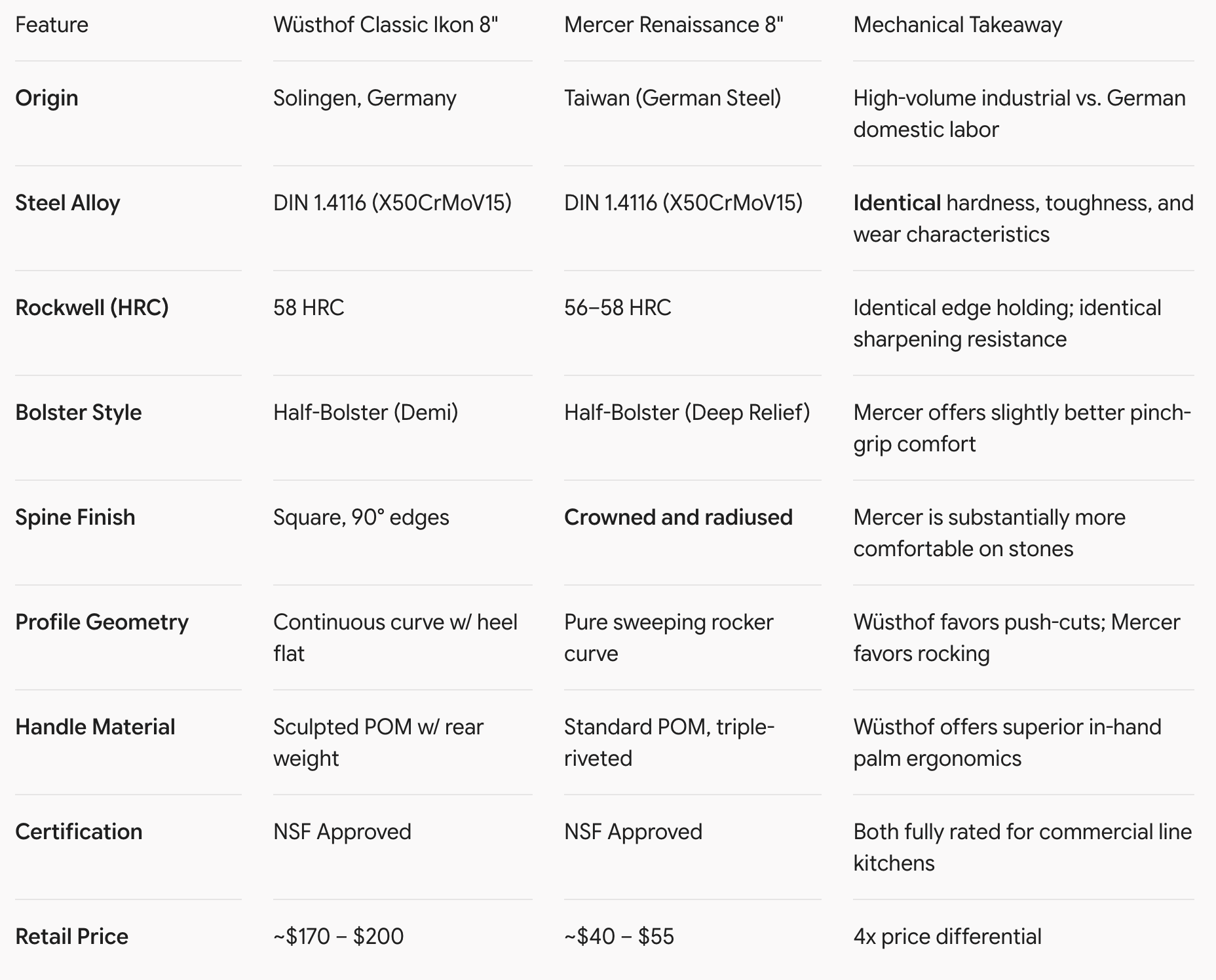
Wusthof Ikon vs Mercer Renaissance Chef Knife
Choosing the Right Tool for the Station
The choice between these two knives comes down to ergonomics versus value.
If you value elite handling, refined aesthetics, and the balanced feel of an undulating, rear-weighted palm swell, the Wüsthof Classic Ikon remains one of the finest Western chef's knives ever produced. You are paying a premium, but that investment lands directly in handle contours that are virtually unmatched on production German blades.
However, if your priority is pure mechanical utility and price-to-performance efficiency, the Mercer Renaissance is unbeatable. It delivers the exact same metallurgical performance, offers an arguably superior crowned spine, and incorporates a better pinch-grip bolster relief at roughly a fourth of the investment. For prep cooks, culinary students, or home cooks building out a high-performance kit on a budget, the Mercer provides real German performance without the brand-name tax.