Naniwa Pro 1000 (Chosera 1000) vs. Shapton Glass 1000: Which 1000-Grit Stone Wins?
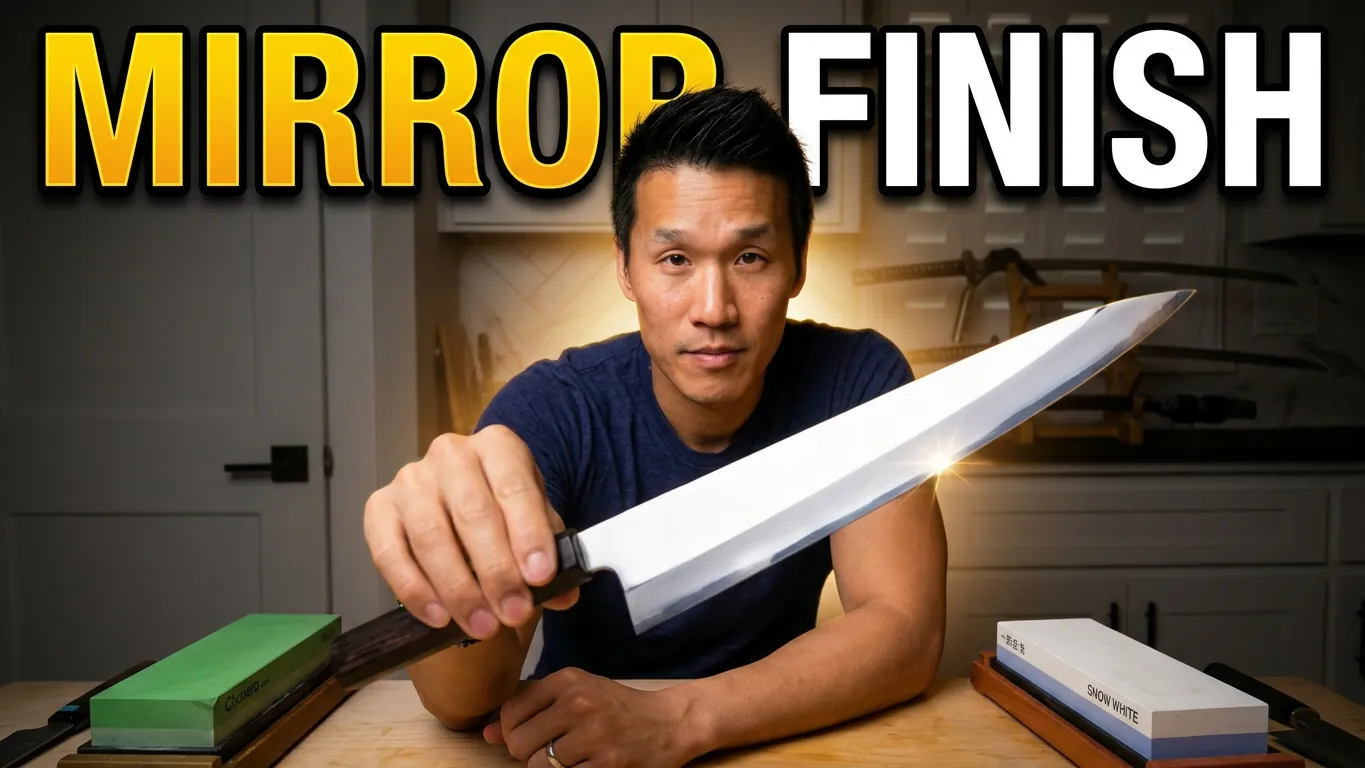
Two identical knives, dulled the same way and sharpened the same way, one on each stone. The Chosera is faster and feels better; the Shapton Glass gives more immediate feedback.
By Burrfection EditorialMarch 25, 2017Updated November 21, 20264 min read
This article contains affiliate links: I may earn a commission if you buy through them, at no extra cost to you. How this works

The short version
- The Naniwa Pro 1000, the stone formerly called the Chosera 1000, wins. It cut faster, barely loaded up, felt better in the hand and left a slightly cleaner edge.
- The Shapton Glass 1000 gives the most immediate feedback. It's harder and less forgiving: it tells you right away when your angle is off.
- The Chosera also lasts longer. It's nearly three times as thick, so there's far more stone to wear through.
A fair, side-by-side test
People kept asking me which 1000-grit stone is better, and I have so many that I wanted real side-by-side results instead of opinions (0:00). The trick to a fair comparison is using the same knife twice, so I sharpened two identical Dalstrong Shogun X chef's knives, one on each stone (0:42). Both had sharp, clean edges from an earlier session, and I dulled both with 20 strokes on my brick until neither would cut paper. Both stones had been flattened and used exactly once before, and I used the same full-stroke method and, as best I could, the same pressure on each (4:45).
One caveat: you'd normally never start a knife this dull on a 1000-grit stone, and these knives are fairly hard, so both stones look slower here than they'd feel in normal use (8:27). Normally you'd start on a 320 or a 500.
Shapton Glass 1000: hard, dense and immediate
On the Glass, it took about 150 strokes to raise a burr on the first side and roughly 120 on the second (5:25). Partway through, the stone started to load up (9:48). That's the trade-off of a very hard, densely packed stone: each stroke removes so little of the stone that it never exposes fresh abrasive, so the metal shavings stay on the surface and slow the cutting. The feel is really good, though. The feedback is immediate; you know exactly what the knife is doing (15:47).
Naniwa Pro (Chosera) 1000: faster, and it stays clean
Officially it's the Naniwa Professional now, but it's been the Chosera for so long that I still call it that (16:28). It's also splash-and-go. It took about 120 strokes on the first side and around 90 on the second, roughly 30 strokes faster than the Glass on each side (18:51). And when I looked at the two stones afterward, the Chosera had virtually zero load-up, while the Glass was visibly loaded (25:55).
Feedback vs. feel
These two are very interesting to compare (26:58). Because the Shapton Glass is so hard, its feedback is immediate. It's also less forgiving: when you're off angle, the stone lets you know, and you have to work harder to get back to exactly the right angle. The Chosera's feedback isn't quite as immediate, but it has the better tactile feel: more organic and less synthetic, and it gives you a little room to correct your angle as you go. My scorecard: cutting speed goes to the Chosera, feedback goes to the Shapton Glass, and hand feel goes to the Chosera.
The edge each one leaves
On magazine paper, the Shapton Glass knife made a fairly clean cut (31:15). But from the very first cut on the Chosera knife, I could tell it had a slightly cleaner edge, and going back and forth confirmed it: the Glass edge has a slightly lower-pitched sound as it cuts. To be fair to the Glass, I don't clean stones midway through a test, and cleaning off its load-up halfway might have changed the result (33:42).
Stone life, and the best stone cleaner
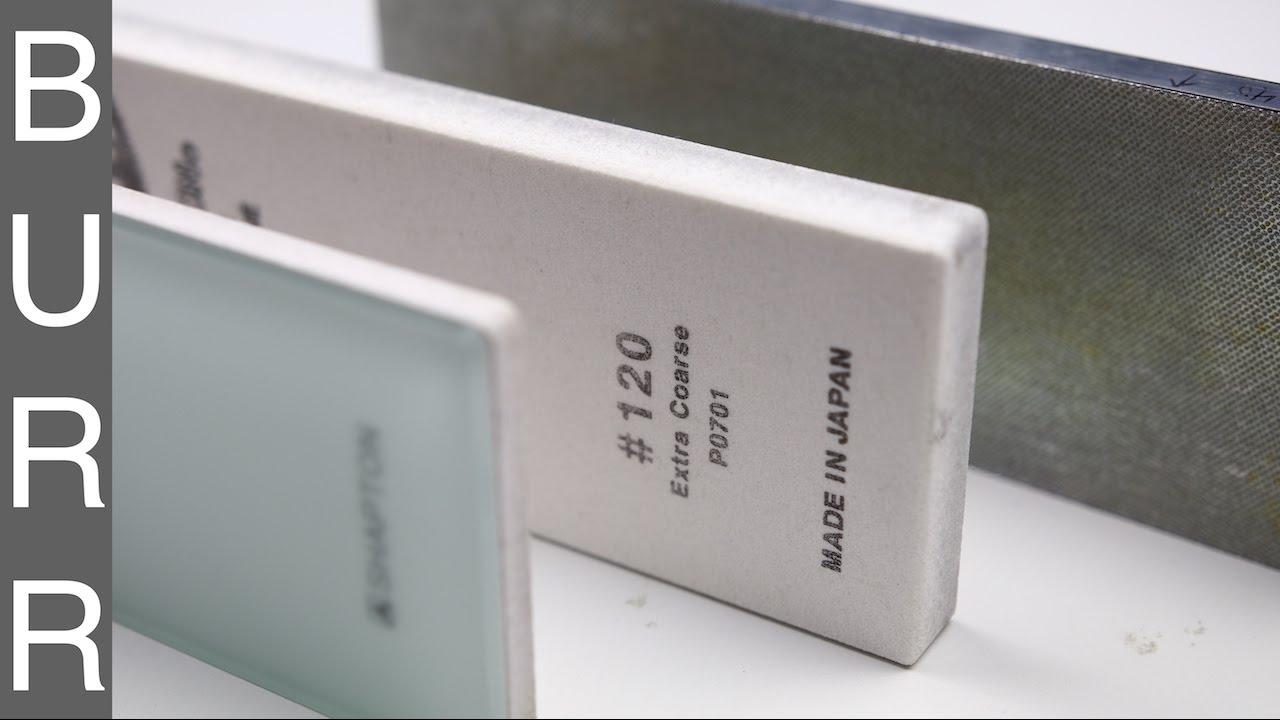
If you like to keep your stones flat, note that the Chosera is nearly three times as thick as the Shapton Glass (34:24). The Glass may be harder and go longer between flattenings, but with three times the stone, the Chosera will give you a longer life.
Whichever you buy, skip the nagura and get a rust eraser to clean it (29:03). A few strokes, a few seconds, and the stone is as good as new. A pack of two lasts forever, and a nagura wears down really fast.
| Naniwa Pro 1000 (Chosera 1000) | Shapton Glass 1000 | |
|---|---|---|
| Strokes to a burr | About 120, then 90 | About 150, then 120 |
| Load-up | Virtually none | Visible; slows cutting |
| Feedback | Good, a little softer | Immediate |
| Hand feel | Better: organic, forgiving | Hard, less forgiving |
| Edge | Slightly cleaner | Fairly clean |
| Thickness | Nearly 3x the Glass | Thin |
| Where to buy | Burrfection Store | Amazon |
Bottom line
Both are really nice stones, and I can't discount the Shapton Glass: it feels great and its feedback is the most immediate of the two. But in a head-to-head I have to pick a winner, and the Naniwa Pro 1000 (Chosera 1000) takes the crown: faster, cleaner, better-feeling and longer-lasting. For how it compares with its sibling, see my Naniwa Pro 800 review, or get the 1000 as part of the Naniwa sharpening kits at the Burrfection Store.
First access
Private drops, new knives and sales
Get them from Burrfection and our retail partners before anyone else. No spam; unsubscribe anytime.
Emails from Burrfection Inc. See privacy.