
Shapton Pro 320 vs. Shapton Glass 320: Which Coarse Stone to Buy
Same speed, very different stones. After more than a dozen sharpenings on each, the Glass 320 wins on feel, edge and wear, and the Pro 320 only shines on harder knives.
By Burrfection EditorialFebruary 3, 2017Updated November 24, 20264 min read
This article contains affiliate links: I may earn a commission if you buy through them, at no extra cost to you. How this works

The short version
- The Shapton Glass 320 is the better stone. Just as fast, with amazing tactile feel, very slow wear and a clean edge on everything from 55 to 66 HRC.
- The Shapton Pro 320 is a good value for harder knives. On 55 to 57 HRC knives the edge wasn't clean; from 59 up, it got considerably better.
- On the 120s it's the other way around: the Shapton Pro 120 beat the Shapton Glass 120 in almost every category.
How I tested them
I do more than a dozen sharpenings on a stone before I review it, which is why these reviews don't come out often (0:00). I'd rather give you a proper assessment than an opinion from one session. These two 320s went through knives from 55 all the way up to 66 HRC, alongside the 120s from my Shapton 120 vs. Atoma 140 comparison.
Shapton Pro 320: fast, but picky about the knife
In speed, the Pro 320 raised a burr with push-and-pull in two to three passes, occasionally four when I wanted a more consistent edge (1:02). On wear I'd give it a 5 or 6 out of 10, where 10 is very fast: after every session there's a good amount of bluish-gray slurry under the stone holder. I think it will still last you five or six years, though I wouldn't use it every day. It has stayed flat since its first flattening out of the box, so it doesn't groove or dish quickly.
Where it gets interesting is knife hardness (1:44). Knives at 55 and 57 HRC didn't work well on it; my Wüsthof got a decent edge, but not as clean as I'd like. At 59 and 60, both the edge and the feedback got considerably better, and it handled knives up to 66. The feedback is okay rather than great; splash-and-go stones don't always have the best feedback. And the edge wasn't very toothy or very sharp. Compared with the 120s, which got 55 to 66 HRC knives cutting paper easily, I think you're better off with a 120 than this 320. It's still a very good stone, and a good value if your knives are harder than 60.
The first session: a soft Zwilling Pro
My first sharpening on the Pro 320 shows why it prefers hard steel (0:00). The knife was my Zwilling Pro chef's knife, dulled with 20 strokes on my brick. It's heat-treated to about 55 HRC: in my kitchen it goes dull in about three days of regular use, while my 57 HRC Wüsthofs last about a week (18:44). Before starting, I ran the stone lightly over my Atoma 400 to clear surface imperfections, putting no weight on the plate: let it sit on the stone, grab the sides and move it up and down (2:56). You don't have to; you can use a stone the day you get it. It's a true splash-and-go, with water beading on top instead of soaking in.
The stone felt really nice, crisp and responsive, and raised a burr in three passes, then two on the other side (6:10). A tip for knives like this one: the Zwilling's thick spine and partial bolster extend past the edge at the heel, so you'll hear it grind the stone now and then. Turn the knife a little past perpendicular, or lift it a millimeter or two at the tip, so you don't wear down the stone's corners (8:33). Keep the burr fine with light pressure; a burr that's too thick makes it harder to remove.
After a countdown of edge-trailing strokes, the first cut test was only okay. Then I realized the gaffer's tape on my fingers had dulled my feel for the stone. With the tape off, a quick touch-up on the stone and a few gentle strokes gave a much cleaner edge that feathered paper nicely, a good result for a 320 (24:24). Remember, this is a reprofiling stone, not a finishing stone.
Shapton Glass 320: in a league of its own
The Glass 320 is a work of art in my opinion, and in speed the two stones are neck and neck (3:28). That's all they have in common. The tactile feel is amazing: it's the first stone under 500 grit I've truly enjoyed sharpening on. It gave a really clean edge on everything from 55 to 66 HRC. And it wears very slowly, which matters on a stone that's only about 7mm thick on its 6mm glass base; coarse stones usually wear faster than fine ones (4:32).
I always felt the Glass 120 was finer than a true 120, closer to a 320 (4:54). But the tactile feel of the Glass 320 is a world apart from it. If you're choosing a coarse Glass stone, go for the 320, hands down. My only complaint: I wish it were thicker, the same material all the way through, so it would last ten years instead of four or five (6:43).
| Shapton Pro 320 | Shapton Glass 320 | |
|---|---|---|
| Speed | Burr in 2–3 passes | Neck and neck with the Pro |
| Feel and feedback | Okay | Amazing; best I've felt under 500 |
| Wear | 5–6 out of 10; noticeable slurry | Very slow |
| Best on | 59 HRC and up | 55 to 66 HRC |
| Edge | Not very toothy or sharp | Clean and consistent |
| Where to buy | Amazon | Amazon |
Bottom line
Across all four Shapton coarse stones, the picture is clear (5:38). At 120, the Shapton Pro 120 is the better stone: excellent feel, just as fast, and a true 120. At 320, the Shapton Glass 320 is hands down better: just as fast, with much better feedback, slower wear and a more consistent edge on any knife from 55 to 66 HRC. The Pro 320 is still a good stone, just not in the same league. For more coarse-stone picks, see my whetstones by grit roundup, or browse coarse whetstones at the Burrfection Store.
First access
Private drops, new knives and sales
Get them from Burrfection and our retail partners before anyone else. No spam; unsubscribe anytime.
Emails from Burrfection Inc. See privacy.
Keep reading
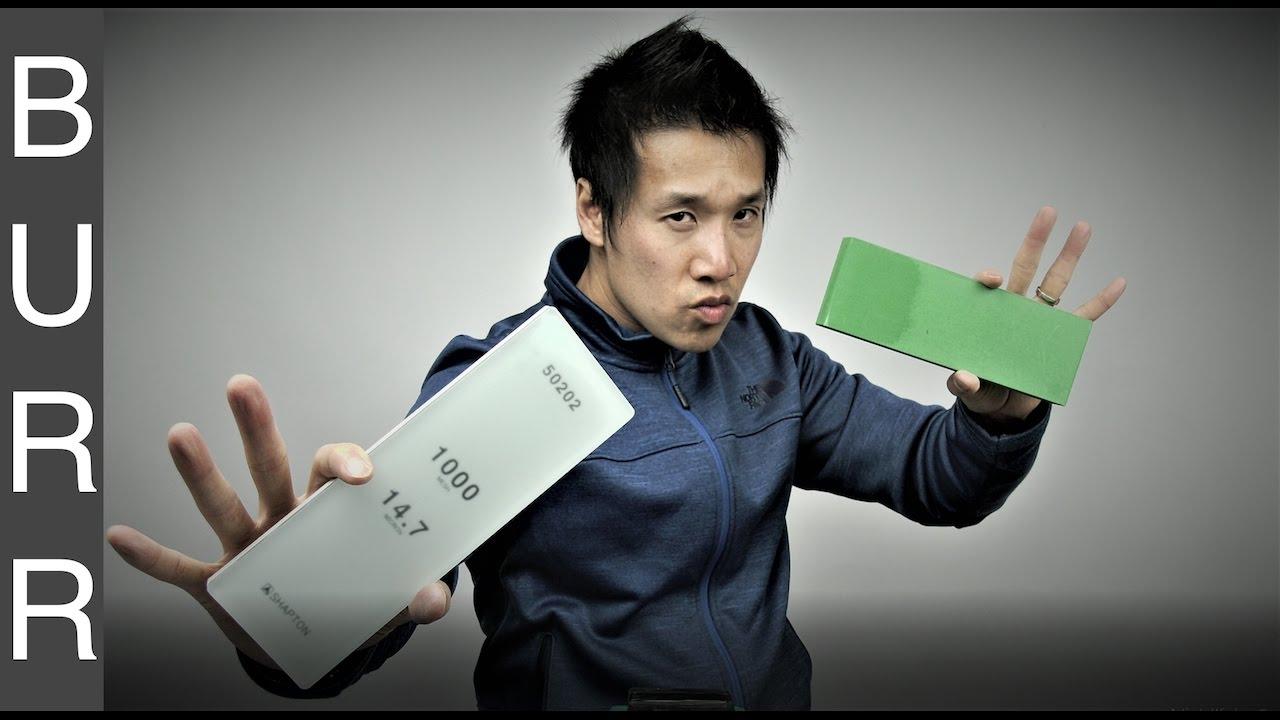
Naniwa Pro 1000 (Chosera 1000) vs. Shapton Glass 1000: Which 1000-Grit Stone Wins?
March 25, 2017 — 4 min
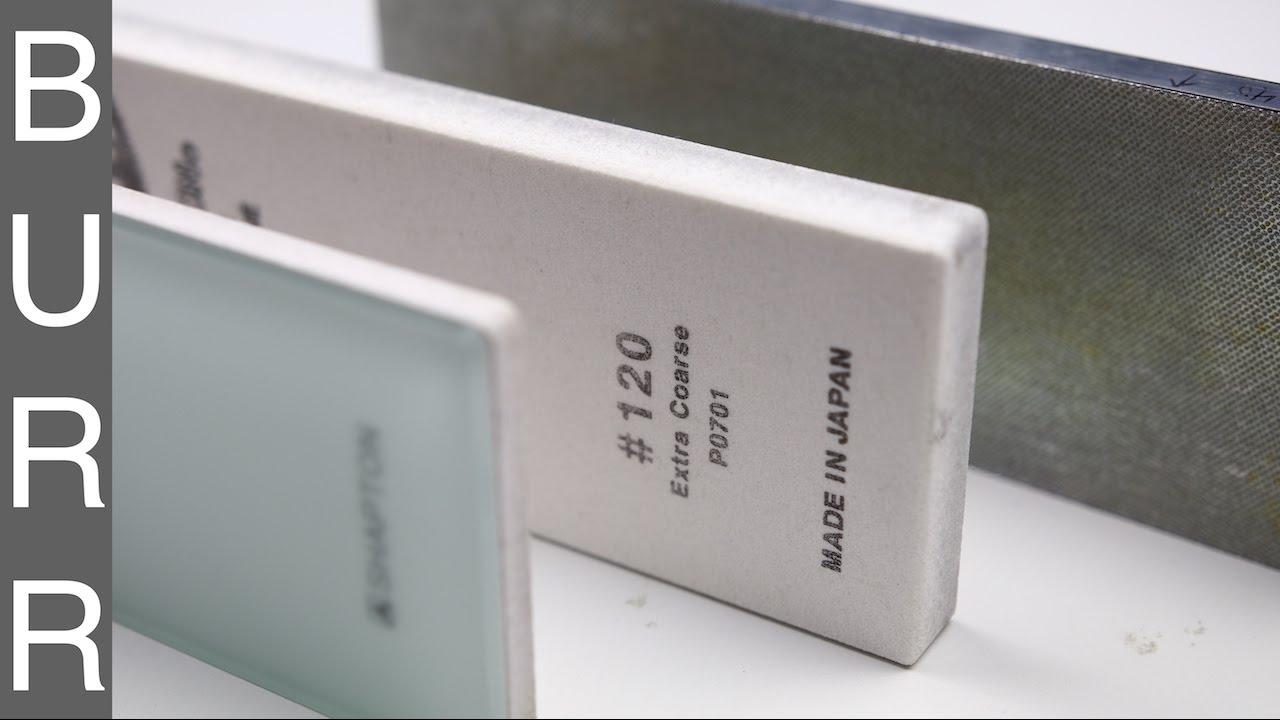
Shapton Pro 120 vs. Shapton Glass 120 vs. Atoma 140: Best Extra-Coarse Stone
January 24, 2017 — 6 min
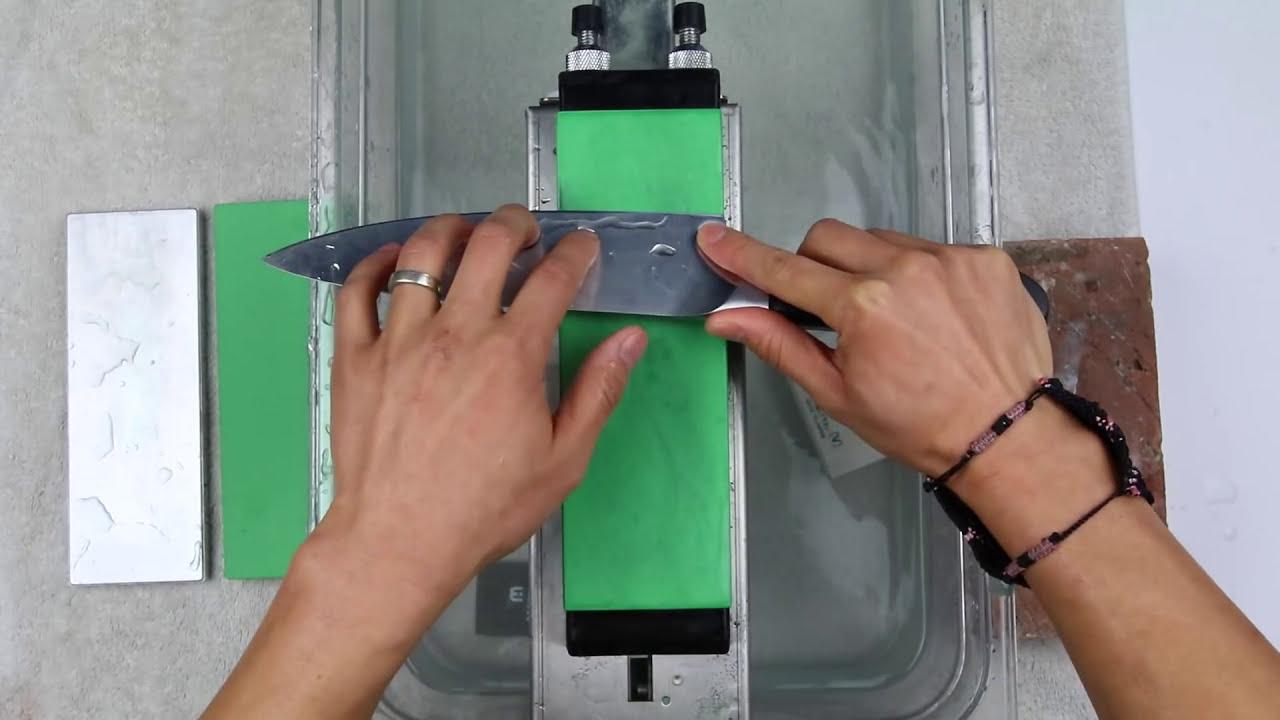
Naniwa Super Stone 400 Review: A Luxurious Coarse Stone That Slows Down on Hard Steel
January 18, 2017 — 5 min