Anryu vs. Kato Workhorse vs. Yu Kurosaki: Does a $2,000 Knife Cut Better?
Four years with a $2,000 Kato Workhorse and a $200 Anryu, plus a Yu Kurosaki side by side. In the kitchen, the price gap almost disappears.
By Burrfection EditorialFebruary 13, 2026Updated November 25, 20263 min read
This article contains affiliate links: I may earn a commission if you buy through them, at no extra cost to you. How this works
The short version
- The Anryu does everything the Kato Workhorse does at a tenth of the price. The only food where the Workhorse pulled ahead for me was butternut squash.
- Anryu vs. Yu Kurosaki: Blue #2 vs. SG2 and very different hammer marks, but blindfolded, you couldn't tell them apart in the kitchen.
- For 99 percent of people, buy the Anryu. Buy the Kurosaki for its artistry, and the Workhorse only if money is no object.
There's no perfect knife
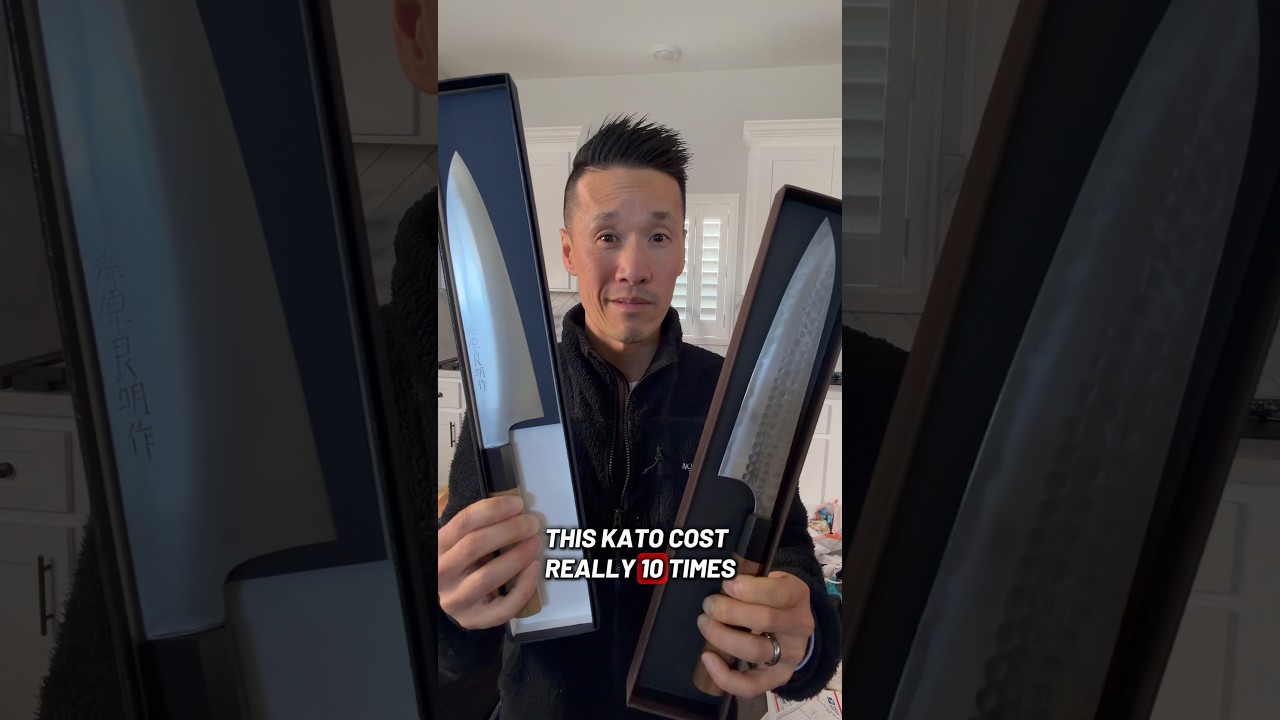
A subscriber asked me what the best knife for the money is (0:01). I started Burrfection to find the perfect knife and soon learned there's no such thing, so here are two knives that do the same job at vastly different prices (0:21). The Kiyoshi Kato Workhorse, when you can find one, sells for $2,000 to $2,500. My Anryu is a fourth-generation knife; today the fifth generation sells for about $200 (0:43). The Workhorse is White #2 and the Anryu Blue #2, but there isn't a big difference in steel quality.
Four years with both
I've used both at home for close to four years, and the Anryu has developed a nice, healthy patina (1:05). The Kato costs ten times as much, and the Anryu does 100 percent of what the Kato does in everyday use. There's exactly one ingredient where the Workhorse outperforms it: butternut squash (1:27). I cut that maybe three or four times a year. The reason is the spine: the Workhorse is about a millimeter to a millimeter and a half thicker from heel to tip, even though both have a nice distal taper (1:48).
Which one should you buy?
I don't baby knives I'm reviewing; I use them as everyday knives (2:09). The Kato is one of the best-performing knives I own, top three for sure. If you're made of money and can find one in stock, go ahead. But for 99 percent of us, the Anryu is the better knife (2:29). (More on the Workhorse in the artisan knives in my kitchen.)
Anryu vs. Yu Kurosaki
The other pair I get asked about constantly is Anryu and Yu Kurosaki, probably the most sought-after maker today (0:00). I paid about $230 for my Yu Kurosaki; five years later, it would sell for around $600. My fourth-generation Anryu cost about $200, and since Anryu retired, one on the gray market could approach $2,000 (0:20). The fifth generation is now made by Ikeda-san and sells for about $200 to $250 (0:41).
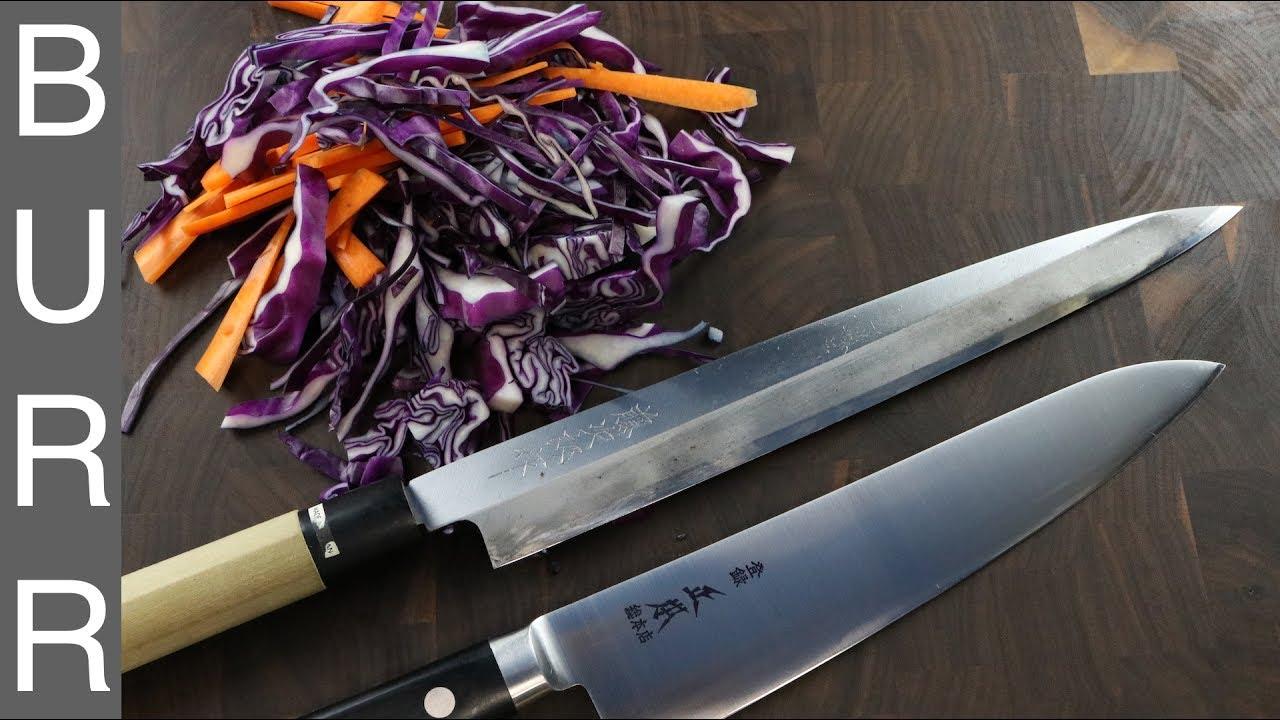
Kurosaki's hammer marks are instantly recognizable, while the Anryu has the classic round-dimple tsuchime you picture when you think of Japanese hammered finishes, less artistic but nothing wrong with it (1:03). Every dimple on both knives is hammered in one at a time. The Anryu is Blue #2 and the Kurosaki SG2, but in raw kitchen performance they feel exactly the same; blindfolded, you couldn't tell which is which (1:24). Both are hand-forged by the artisans who make them, sharpened on large Japanese grindstones, with octagonal wa handles and a comfortable gooseneck choil (1:44). That big bevel from the grindstones is the secret to how well Japanese knives cut, and I've never had either arrive dull (2:04). The Burrfection Store gets only about five to ten of each per quarter, so sign up for the restock notification (2:26).
| Anryu (5th gen) | Yu Kurosaki | Kiyoshi Kato Workhorse | |
|---|---|---|---|
| Steel | Blue #2 | SG2 | White #2 |
| Price | About $200–$250 | About $600 today | $2,000–$2,500 if you can find one |
| Finish | Classic round tsuchime | Distinctive artistic hammering | Workhorse, thick spine |
| Kitchen performance | Everything the others do | Same as the Anryu | Edges ahead on butternut squash |
| Where to buy | Burrfection Store | Burrfection Store | Amazon |
Bottom line
Past a certain point, price buys rarity, artistry and a name, not better cutting. The Anryu cuts like a $2,000 Workhorse, and it cuts like a Yu Kurosaki; choose the Kurosaki if its look speaks to you. For most cooks, a fifth-generation Anryu is the smartest buy in hand-forged Japanese knives. For how I weigh all this, see how to choose a kitchen knife.
First access
Private drops, new knives and sales
Get them from Burrfection and our retail partners before anyone else. No spam; unsubscribe anytime.
Emails from Burrfection Inc. See privacy.