Yanagiba vs. Gyuto for Vegetables: Can a Sushi Knife Be Your Chef's Knife?
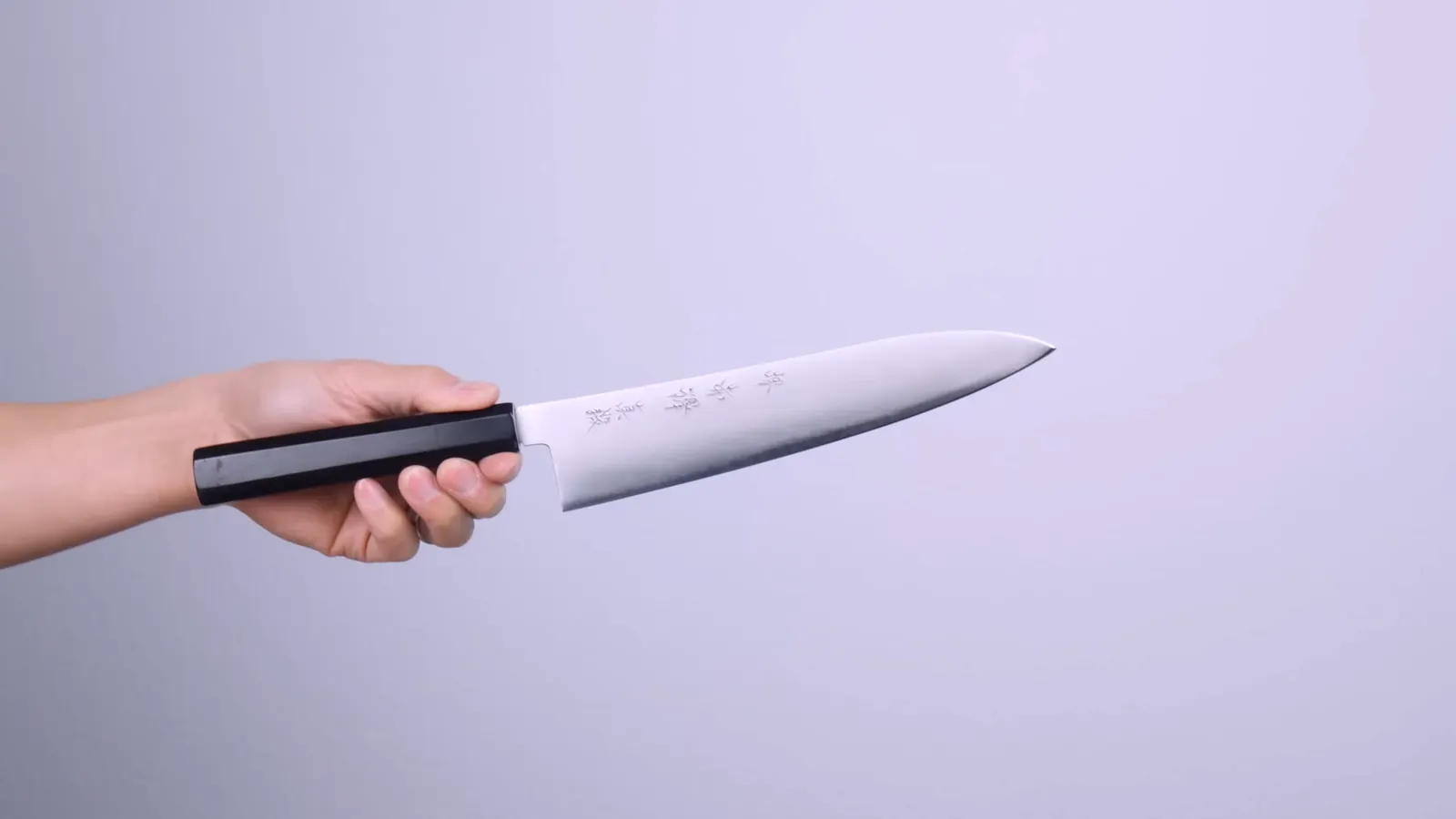
I made a salad and a stir-fry with a Masamoto VG gyuto, then the same vegetables with a Tojiro yanagiba. The yanagiba is sharper, but the gyuto won almost everything.
By Burrfection EditorialAugust 5, 2017Updated November 24, 20263 min read
This article contains affiliate links: I may earn a commission if you buy through them, at no extra cost to you. How this works

The short version
- Buy a gyuto first. For everyday vegetables, the Masamoto VG outperformed the yanagiba in nearly every way, even though the yanagiba was a little sharper.
- A yanagiba steers. Its single bevel pushes the blade to the left on dense food, so straight cuts through carrots and cabbage curve.
- It's short and thin behind the edge. Your knuckles hit the board, food sticks to the flat side, and there's no weight to power through hard vegetables. Leafy greens are fine.
The question
People getting into Japanese knives often ask if they can buy a yanagiba instead of a chef's knife, because yanagibas look amazing (0:00). My answer is always: what will you use it for? So here's a simple, unscientific test: I made a salad and a stir-fry for my daughter with a gyuto, then the same vegetables with a yanagiba. Fair warning, I'm not a trained chef; my knife skills aren't great, but I know how to use a knife, and this is how I actually cook at home (1:02).
Both knives were sharp and kitchen-ready (2:04). The Masamoto VG gyuto had last been sharpened four or five months earlier, on a King 6000. The Tojiro shirogami yanagiba was a bit sharper, finished on a Naniwa Snow White 8000.
The gyuto: easy everything
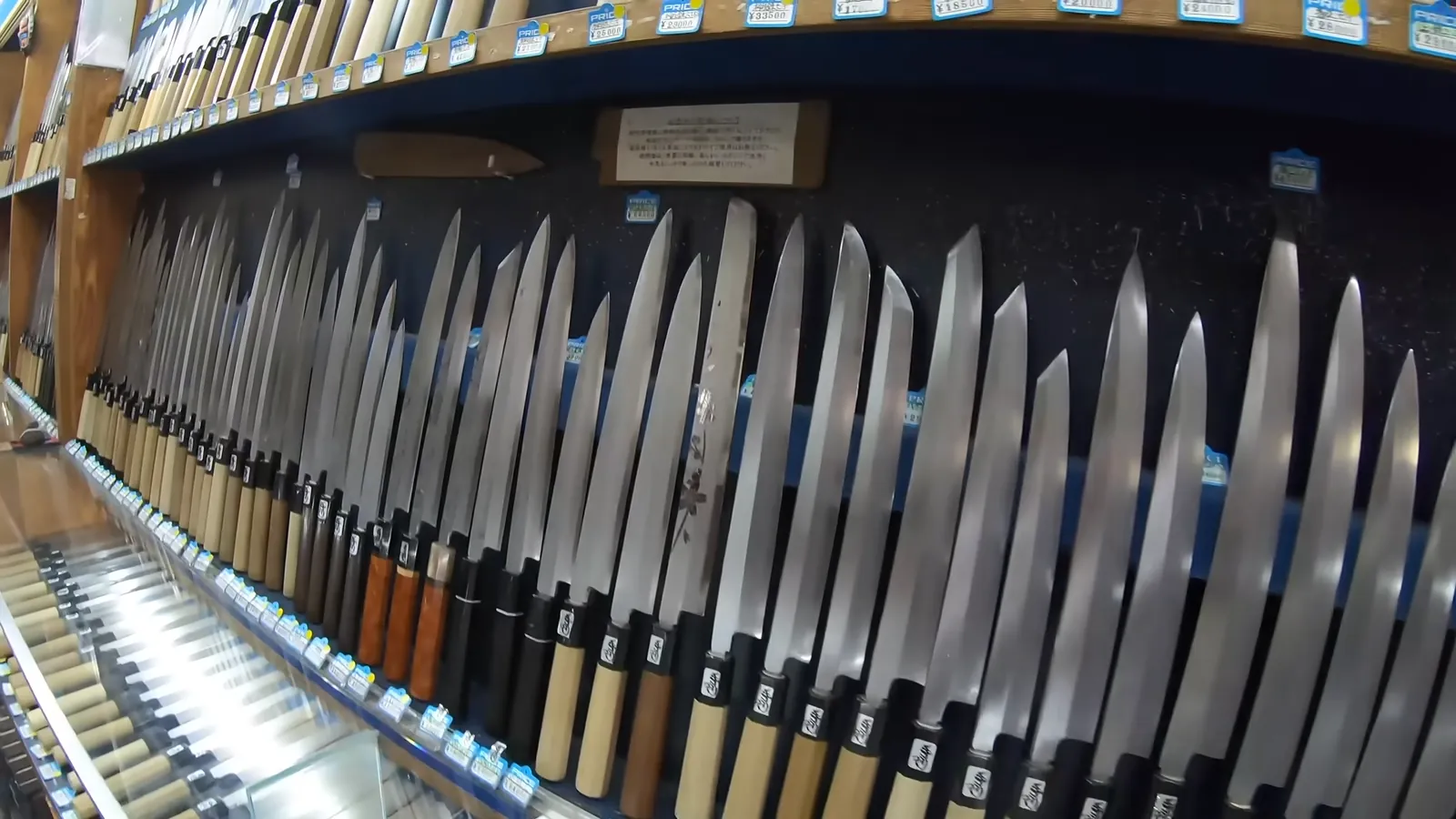
Romaine, red onion, potato slices and wedges, carrot sticks and rings, cabbage: the Masamoto handled it all easily (3:32). It's been one of my favorite knives since I started buying Japanese knives, my second after the Tojiro DP (10:41). Near the thick end of a carrot, quick chops get a little harder, so you slow down, but it never hesitated. I know the lure of a yanagiba: search for Japanese knives and they're everywhere, and you see the chef using one at your local Japanese restaurant (4:57). That's fine, but at home on vegetables you may not be using it to its potential.
The yanagiba: sharp, but awkward
Leafy greens were no problem. But the yanagiba is short in height, so with its straight profile I had to push-cut and consciously keep my knuckles off the board (15:04). On potatoes my control was worse, my slices were thicker, and the slices stuck to the flat side, so I couldn't lift the knife quickly; let the knife do the work and slow down (16:05). It's so sharp that a row of thin slices sometimes stayed standing on the potato.
On the red onion, the carbon steel started forming a patina right away from the acid (19:11). A pinch grip is the only way to control it on vegetables, but the spine isn't rounded and digs into your finger. On carrots, I had to move the cut back toward my hand for leverage and push down rather than chop (21:34). And the biggest limitation: straight cuts curve. This is a right-handed knife with the shinogi on the right, and its wedge shape pushes the blade to the left on every cut through a carrot or cabbage (22:16). A left-handed yanagiba would curve right. On cabbage, the friction built up, my grip got uncomfortable, and without weight behind the edge it just doesn't have the cutting power of a gyuto (26:24).
Two quick tips from the session. Never scrape food across the board with the edge; flip the knife and use the spine, or you'll ruin the edge fast (25:22). And after washing a carbon knife, I wipe the whole blade with a rag soaked in food-grade mineral oil, which you'll find cheaply in the laxative aisle at a pharmacy (29:44). It slows the patina, keeps it even, and keeps rust away, especially after onions or lemons.
Which should you buy?
The gyuto outperformed the yanagiba in ease of use and practicality in pretty much every test (31:11). Unless you're cutting fish or meat several times a week, a yanagiba probably shouldn't be your first Japanese knife. I love mine, but in the past four or five months I used one maybe once or twice, and even for smoked salmon I reached for a gyuto (33:19). A yanagiba is a work of art and a joy to sharpen; you won't regret owning one. Just know its limits, and don't let an impractical first knife turn you off Japanese knives.
Bottom line
For everyday cooking, start with a gyuto: it's more versatile, easier to handle, and with good technique it can get just as sharp. Add a yanagiba later if you cut a lot of fish. Browse gyutos at the Burrfection Store and on Gyuto.com, and when you're ready for a sushi knife, the yanagibas at the Burrfection Store. For more on choosing a first knife, see gyuto vs. santoku.
First access
Private drops, new knives and sales
Get them from Burrfection and our retail partners before anyone else. No spam; unsubscribe anytime.
Emails from Burrfection Inc. See privacy.