Japanese Knife Terms Explained: A Glossary From Gyuto to Kurouchi
Pakkawood, kurouchi, Aogami, shinogi, nagura: the Japanese knife and whetstone words you'll see in reviews and shops, each in one plain line.
By Burrfection EditorialNovember 21, 20266 min read
This article contains affiliate links: I may earn a commission if you buy through them, at no extra cost to you. How this works
The short version
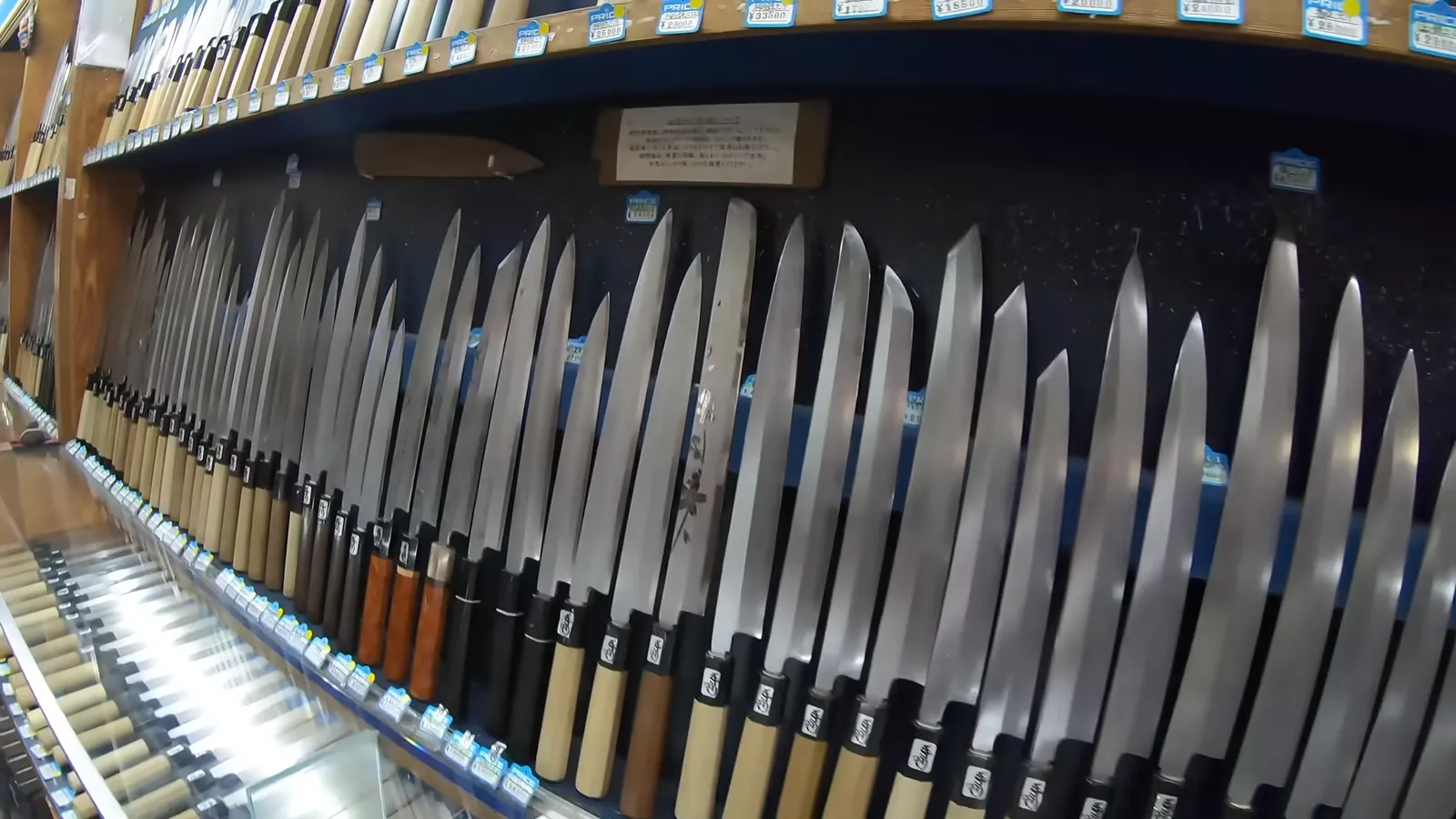
- Shapes tell you what a knife is for: a gyuto is the all-rounder, a yanagiba slices fish, a honesuki breaks down poultry.
- Steel and finish tell you how it behaves: carbon steels like Shirogami and Aogami take a keen edge but can rust; finishes like kurouchi and Damascus are about looks and character.
- Sharpening words like burr, nagura and splash-and-go come up in every whetstone review on this site, so here they are in one place.
Japanese knives come with a vocabulary of their own, and it can make shopping or reading reviews harder than it needs to be. Here's every term I use regularly on this site, explained in one line each, with a link to where I go deeper. If a word you're looking for is missing, let me know and I'll add it.
Knife shapes
Most home cooks need only one or two of these. If you're choosing your first, start with my gyuto vs. santoku and gyuto vs. Western chef's knife comparisons.
| Term | What it means |
|---|---|
| Gyuto | The Japanese chef's knife: the all-purpose shape, usually 210 to 240mm. See the gyutos at the Burrfection Store. |
| Santoku | A shorter all-rounder with a flatter edge and a rounded tip, great in smaller kitchens. Santokus at the Burrfection Store. |
| Nakiri | A rectangular vegetable knife with a flat edge for push cuts. See gyuto vs. nakiri. |
| Bunka | A compact all-rounder with an angled (k-tip) point, like the Naru bunka. |
| Petty | A small utility knife for fruit, herbs and detail work. |
| Sujihiki | A long, narrow double-bevel slicer for meat and fish. |
| Yanagiba | The long single-bevel sushi slicer. See my Tojiro yanagiba review. |
| Takohiki | A Tokyo-style single-bevel slicer with a square tip. |
| Deba | A thick, heavy single-bevel knife for breaking down fish. |
| Usuba | A thin single-bevel vegetable knife used by professional chefs. |
| Kiritsuke | A long knife with an angled tip; traditionally single-bevel, now often double-bevel. |
| Honesuki | A Japanese boning knife for poultry. See the best honesuki. |
Steels
Steel decides how hard a knife is, how long it holds an edge and whether it can rust. For more on what the numbers mean in practice, see 5 knives you should never buy.
| Term | What it means |
|---|---|
| HRC | Rockwell hardness. Most Western kitchen knives sit around 55–58; Japanese knives usually 60–64. Harder holds an edge longer but can chip. |
| Carbon steel | Steel without enough chromium to resist rust: sharpens beautifully, but it can rust and builds a patina. |
| Stainless steel | Steel with enough chromium to resist rust; lower maintenance. |
| Shirogami (White steel) | A pure, simple Japanese carbon steel that takes a very keen edge. See the Tojiro Shirogami #2 review. |
| Aogami (Blue steel) | Japanese carbon steel with added chromium and tungsten for better edge retention than White. |
| Aogami Super (Blue Super) | The toughest-wearing of the Blue steels. See the Yoshihiro Aogami Super review. |
| Molybdenum steel | High-carbon stainless steel with added molybdenum for better strength, toughness and corrosion resistance. See the Misono Molybdenum review. |
| VG-10 / VG-MAX | Popular Japanese stainless steels; VG-MAX is Shun's slightly harder variant. See Shun Classic vs. Kanso. |
| SG2 / R2 | A powder stainless steel that runs very hard and holds an edge a long time. |
| HAP40 | A very hard powder high-speed steel, often 65–66 HRC. See the Gihei HAP40 review. |
| Ginsan (Silver #3) | A stainless steel that sharpens much like carbon steel. |
Finishes and construction
These describe how the blade was made and what it looks like.
| Term | What it means |
|---|---|
| Kurouchi | A rustic, blackened finish left on the blade from the forging process. |
| Kasumi | A misty, hazy polish, and also the name for a soft-iron-clad carbon knife. |
| Nashiji | A textured "pear skin" finish. |
| Tsuchime | A hammered finish whose dimples can help food release. |
| Damascus | Layered steel cladding that shows a wavy pattern. |
| San-mai / clad | A hard steel core sandwiched between softer outer layers. |
| Honyaki | A blade forged from one piece of high-carbon steel, without cladding; difficult to make and expensive. |
| Single bevel | Sharpened on one side only, like a yanagiba or deba; the back (ura) is slightly hollow. |
| Double bevel | Sharpened on both sides, like a gyuto or santoku. |
| 70/30 bevel | A double-bevel edge ground more on one side than the other. |
| Shinogi line | The ridge where the bevel meets the flat of the blade. |
| Hira | The flat face of the blade above the shinogi line. |
| Ura | The hollow-ground back of a single-bevel knife. |
| Distal taper | The blade getting thinner from handle to tip. |
Handles and fit
Handles are where many budget Japanese knives cut corners, and where good ones shine.
| Term | What it means |
|---|---|
| Wa handle | A traditional, lightweight Japanese handle, often octagonal or D-shaped. See octagonal wa handles on Gyuto.com. |
| Western (yo) handle | A riveted handle like a German knife's, with a full or partial tang. |
| D-handle | A wa handle with a D-shaped cross-section, made for right- or left-handed use. |
| Pakkawood | A durable, engineered composite made by bonding thin layers of hardwood veneer with resin under intense heat and pressure. |
| Ferrule | The collar where the blade meets a wa handle, often horn, wood or resin. |
| Choil | The spot where the edge ends at the heel; a well-rounded choil is more comfortable in a pinch grip. |
| Tang | The part of the blade that runs into the handle. |
| Bolster | The thick metal collar on many Western knives where blade meets handle. |
Sharpening
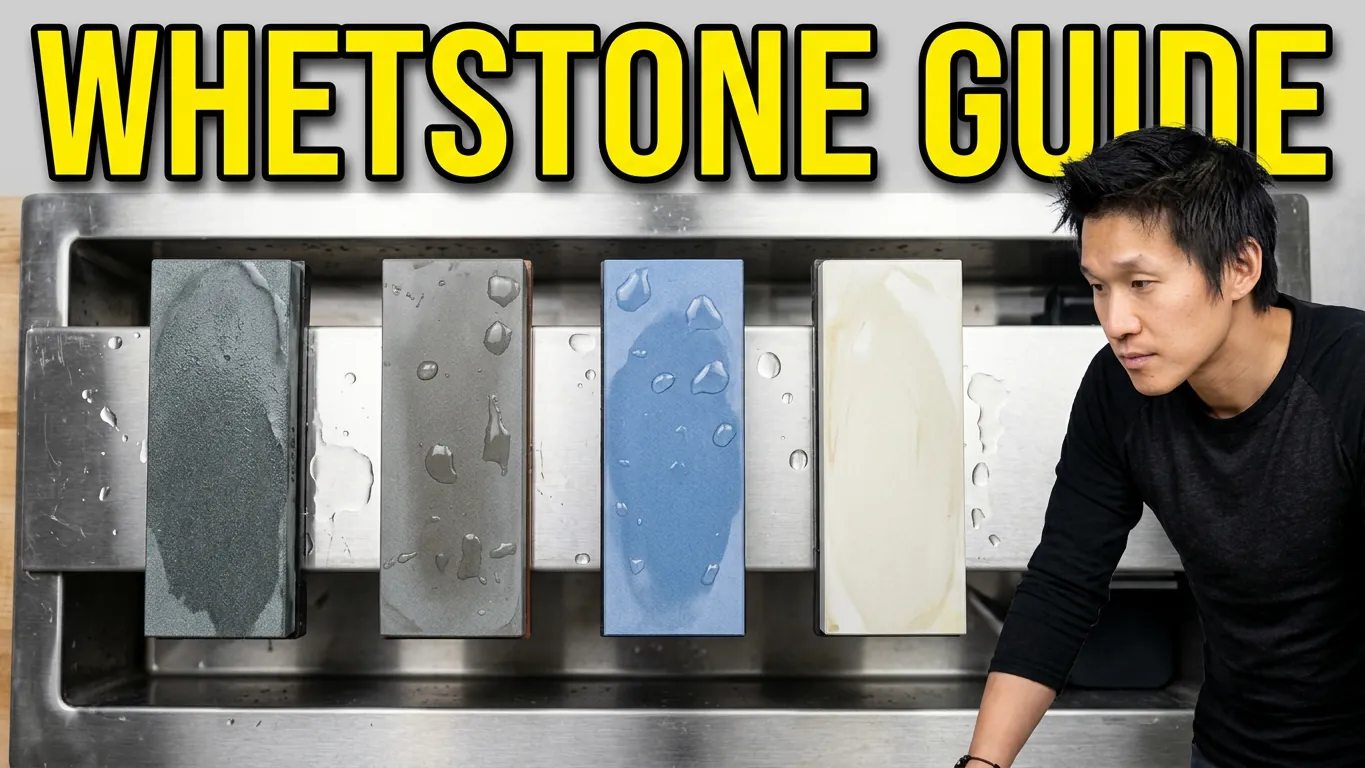
These come up in every whetstone review and sharpening guide here. If you're new, start with my essential sharpening kit and the whetstone grit guide.
| Term | What it means |
|---|---|
| Grit | How coarse or fine a stone is: low numbers (120–400) repair, around 1000 sharpens, 3000 and up polishes. |
| Splash-and-go | A whetstone you just wet and use, no soaking, like the Naniwa Pro 800. |
| Soaking stone | A whetstone that needs to sit in water before use, like the King Deluxe 1000. |
| Burr | The thin fold of metal that forms on the opposite side of the edge, the sign you've sharpened all the way to the apex. |
| Deburring | Removing the burr, for example with light edge-trailing strokes on the stone. |
| Edge trailing / edge leading | Strokes where the edge points away from / into the direction of travel. |
| Nagura | A small dressing stone used to clean and refresh a whetstone's surface. I mostly use a rust eraser instead. |
| Flattening plate | A diamond plate like the Atoma 140 used to keep stones flat. |
| Strop | Leather (or the stone itself) used for final, light edge-trailing strokes. See how to strop a knife. |
| Patina | The gray-blue oxide layer carbon steel develops with use; it protects against rust. See how to remove rust and patina. |
Bottom line
You don't need to memorize any of this to buy a great knife, but knowing a dozen of these words makes reviews and product pages much easier to read. When you're ready to shop, browse the gyutos at the Burrfection Store or on Gyuto.com, and pick up a sharpening kit to keep it sharp.
First access
Private drops, new knives and sales
Get them from Burrfection and our retail partners before anyone else. No spam; unsubscribe anytime.
Emails from Burrfection Inc. See privacy.