Real Japanese Knives on Amazon: My Approved List (and How to Spot the Fakes)
Prefer to shop on Amazon? These are knives I know are actually made in Japan, not knives with Japanese-sounding names built to fool first-time buyers.
By Burrfection EditorialNovember 24, 20265 min read
This article contains affiliate links: I may earn a commission if you buy through them, at no extra cost to you. How this works
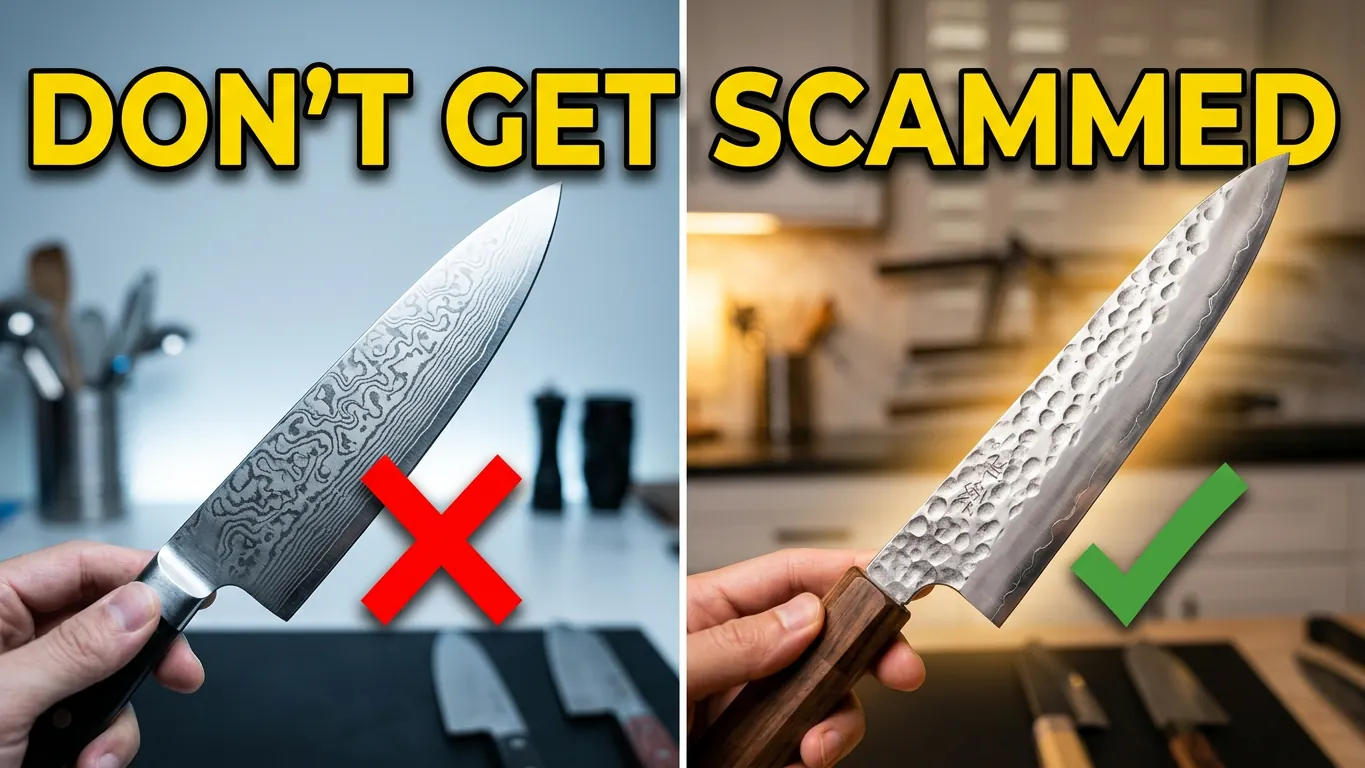
Search Amazon for "Japanese knife" and you'll get pages of Damascus-looking blades with Japanese-sounding names, kanji on the steel, and prices that seem too good to be true. Most of them aren't made in Japan, and some are built specifically to fool people who are buying their first Japanese knife. I've taken a few of them apart, and I wrote up exactly how one of those "90% off" deals works in are you buying fake Japanese knives?
So if you only shop on Amazon, this is the list I'd give a friend: knives from makers I know, made in Japan, that you can actually order there. Where I've reviewed a knife, I've linked the full review so you can see how it performed. Where I haven't, I've kept the description to what the knife is, not how it cuts.
How to tell a real Japanese knife from a fake
The simplest rule is the one I keep repeating: if a "Japanese" knife doesn't say Made in Japan, it most likely isn't. Look for a maker you can actually identify, like Tojiro, Shun, Miyabi, Masamoto or Yaxell, rather than a brand that only exists on Amazon and social media ads. Be extra careful with heavily advertised knives, huge discounts and identical listings that show up under different brand names. None of that means a knife made elsewhere is bad; plenty of them are fine. It means that if you're paying for a Japanese knife, you should get one. For more on the knives I'd avoid entirely, see 5 kitchen knives you should never buy.
My approved list
These are the knives on my approved list right now. For chef's knives I've listed the 8-inch (210mm) size, the most versatile one for home cooks; most of them also come shorter or longer on the same Amazon page. Santokus are listed at their usual 7 inches (180mm). Tojiro sells its DP line in Japan as "Fujitora-saku", so that's the name you may see on the Amazon listing.
| Knife | What it is |
|---|---|
| Tojiro DP (Fujitora) Gyuto 210mm, FU-808 | The knife from my Tojiro DP review: one of the best Japanese knives under $100 |
| Tojiro Santoku 170mm with steel bolster | Tojiro's santoku for people who chop more than they rock (see gyuto vs. santoku) |
| Tojiro Damascus 2-piece starter set | A two-knife set rather than a single knife |
| Yoshihiro Hammered Damascus Sujihiki, octagonal handle | A long slicer from Yoshihiro, the Sakai brand behind the gyuto in my Yoshihiro Aogami Super review |
| Sakai Takayuki Kurokage Hammered Kengata | A kengata (sword-tipped gyuto) from one of Sakai's best-known makers |
| Miyabi Mizu 8" Chef's Knife | The SG2 Miyabi I compare in Miyabi knives compared |
| Shun Classic Blonde Chef's Knife | The Shun Classic blade with a light handle (see Shun Classic vs. Shun Kanso) |
| Masamoto VG Gyuto 210mm (8.3"), Duracon handle | The stainless Masamoto from my KS vs. VG review: rocks easily and holds a good edge with almost no upkeep |
| Miyabi Birchwood SG2 8" Chef's Knife | 100-layer Damascus over SG2 with a Karelian birch handle; my pick in Miyabi Birchwood vs. Miyabi Black |
| Miyabi Artisan 8" Chef's Knife | SG2 with a pakkawood handle that fit my hands better than any D-shaped handle (see Miyabi knives compared) |
| Global 8" (20cm) Chef's Knife | Global's classic all-stainless chef's knife, made in Japan |
| Yoshihiro VG10 16-Layer Hammered Damascus Gyuto 210mm | A VG10 gyuto with a Western mahogany handle |
| Yoshihiro VG10 16-Layer Hammered Damascus Santoku 180mm | The same line as a santoku |
| Yoshihiro VG10 46-Layer Hammered Damascus Gyuto 210mm, octagonal ebony handle | A VG10 gyuto with a Japanese-style octagonal handle and wooden saya |
| Sakai Takayuki 33-Layer Hammered Damascus VG-10 Gyuto 180mm | A compact VG-10 gyuto from Sakai, shipped from a Japanese seller |
Japanese knives I've reviewed that you can find on Amazon
These come straight from my reviews. Each link goes to the knife on Amazon, and the review link tells you why it made the cut.
| Knife | My verdict | Review |
|---|---|---|
| Yaxell Mon 8" | The best fit and finish I've found under $100; a rocking knife | Review |
| Yaxell Super Gou | My pick for a Western-handled Japanese knife under $300 | Tier list |
| MAC Chef's Series 8" | A tough, forgiving workhorse that resists chipping | Review |
| Shun Classic 8" chef's knife | One of the best-finished knives I've handled at its price | Review |
| Shun Kanso 8" chef's knife | Rustic and balanced; a great first Japanese knife after Western ones | Review |
| Miyabi Fusion Morimoto Edition | VG10 at about 60 HRC; a friendly step into Japanese knives | Review |
| Enso HD chef's knife | Yaxell quality, often 10–20% less than comparable Miyabi or Shun | Review |
| Misono Molybdenum gyuto | An aggressive, fairly straight profile for about $100 | Review |
| Seki Kanetsugu Pro M gyuto | My best-value pick under $100, with a very comfortable handle | Buyer's guide |
| Masamoto KS gyuto 210mm | White #2 carbon steel for fine, dexterous work; my favorite of the two | Review |
| Misono UX10 honesuki | My best overall poultry knife | Guide |
| Tojiro shirogami yanagiba | A real White #2 sushi knife for about $100; the one to learn on | Review |
| Shun Pro yanagiba | One of the most beautiful knives I've seen, razor sharp out of the box | Review |
Before you buy
A few things apply no matter which knife you pick. A Japanese knife is harder and thinner than a German one, so it can chip if you twist it, pry with it or hit bone; my gyuto vs. Western chef's knife explains the trade-off. Keep it on a wood or rubber board; my edges have never lasted longer than on a Hasegawa board. If you want a Japanese board from Amazon, the Yoshihiro Hi-Soft cutting board is made in Japan and soft on edges, though in my testing a Hi-Soft board showed cut marks and stains more than the Hasegawa. And plan to sharpen it on a whetstone. One good 800 to 1000-grit stone is enough to start, as I show in sharpening on just an 800.
Bottom line
You don't have to gamble on Amazon. Stick to makers you can identify and look for Made in Japan, and any knife on this list will serve you well. If you're open to shopping beyond Amazon, the Burrfection Store and our retail partner Gyuto.com carry many more Japanese knives, including several on this list.
First access
Private drops, new knives and sales
Get them from Burrfection and our retail partners before anyone else. No spam; unsubscribe anytime.
Emails from Burrfection Inc. See privacy.