

Electric Knife Sharpeners vs. Whetstones: Convenience or Uncompromising Quality?
The quest for a razor-sharp kitchen edge usually leads to a pivotal crossroad: invest in the mechanical speed of an electric sharpener, or commit to the ancient, tactile discipline of Japanese whetstones?
At a budget of roughly $150, both avenues promise a transformed blade. On one side sits high-end automated convenience—exemplified by top-tier units like the Wüsthof by Chef’s Choice. On the other sits a versatile three-stone whetstone progression: a coarse fixer, a mid-grit workhorse, and a fine polishing stone (such as the Suehiro Cerax 320, Cerax 1000, and Rika 5000).
When put to the test against high-hardness steel—specifically premium cutlery rated at 62–63 Rockwell (HRC)—the performance differences reveal that automated convenience carries an aesthetic and structural cost.
Items shown in video
Suehiro Cera 1k, and Suehiro Rika 5k
Disclosure: As an Amazon Associate, I earn from qualifying purchases.
The Electric Option: Automated Speed with Aesthetic Trade-Offs
Priced between $150 and $190, multi-stage electric sharpeners represent the pinnacle of home automation. Designed to standardize bevel angles through fixed internal slots, they aim to deliver reliable edges without requiring manual technique.

Performance & Workflow
works, but with lots of limitations
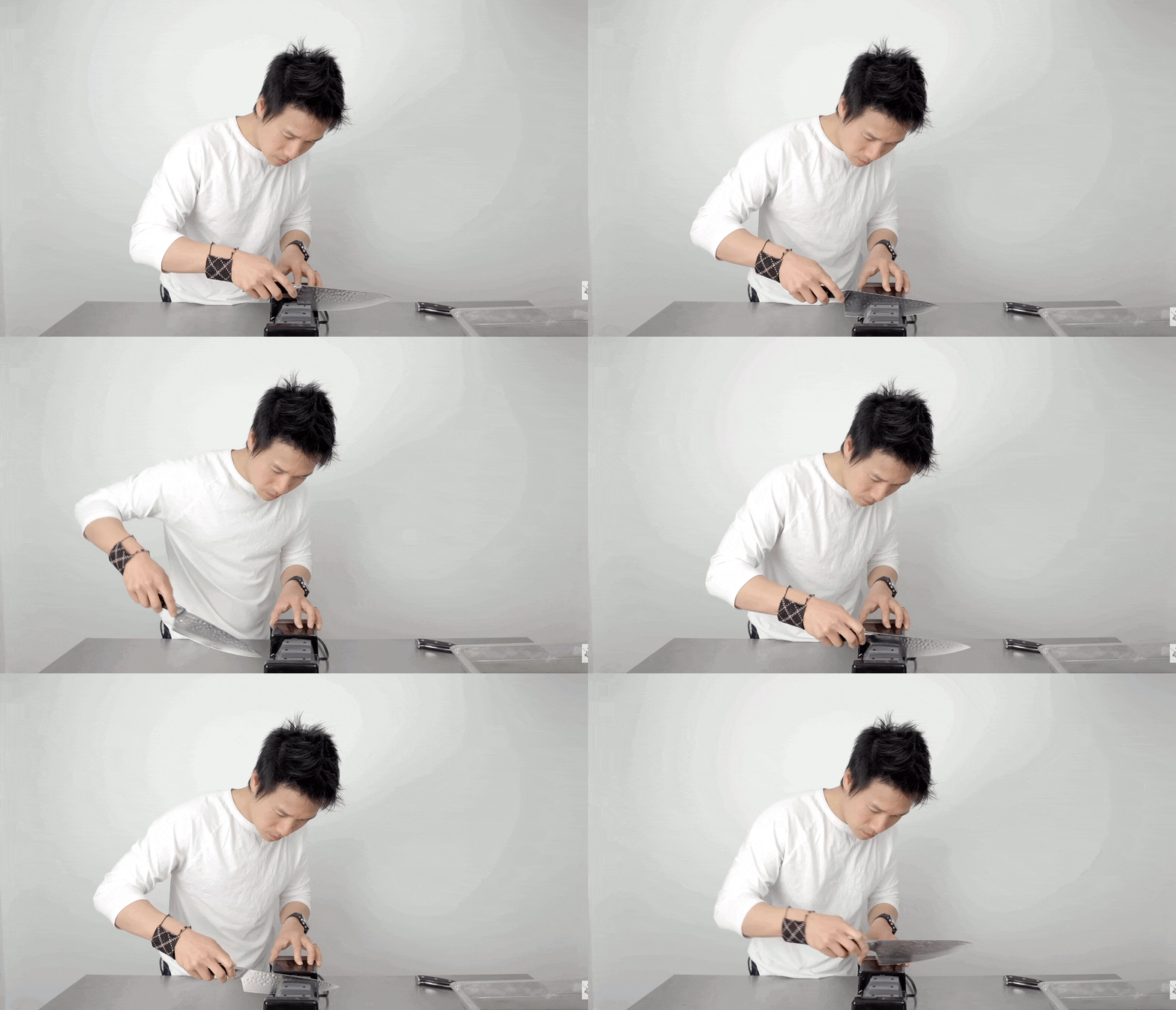
Rapid Cycle: Completing a standard protocol—alternating passes on primary sharpening, light honing, and timed stropping stages—takes slightly over five minutes for an 8-inch chef's knife.
Stability & Noise: A heavy-duty base with rubber feet keeps the unit planted on stainless steel worktops, operating at a manageable noise level.
Grit Ceiling: Internal abrasive wheels max out at an estimated 1000 to 1500 grit. This produces a functional, toothy edge suitable for everyday kitchen prep on standard Western cutlery (55–58 HRC).
The Hidden Drawbacks
Cosmetic Scratches: Fixed guidance fairings obscure the blade path during insertion. As a result, the blade face frequently drags against internal plastic components, creating prominent half-inch hairline scratches along the entire length of the knife.
Inflexibility with Hard Steel: Fixed pull speeds and pre-set angles struggle on ultra-hard steel (62+ HRC), increasing the risk of uneven grinding or chatter marks along the edge.
Zero Repair Capability: Electric wheels cannot remediate chips, bent tips, or gouges. A chip as small as 1 millimeter renders an automated unit useless for knife restoration
The Whetstone Progression:
Total Control and Superior Keenness
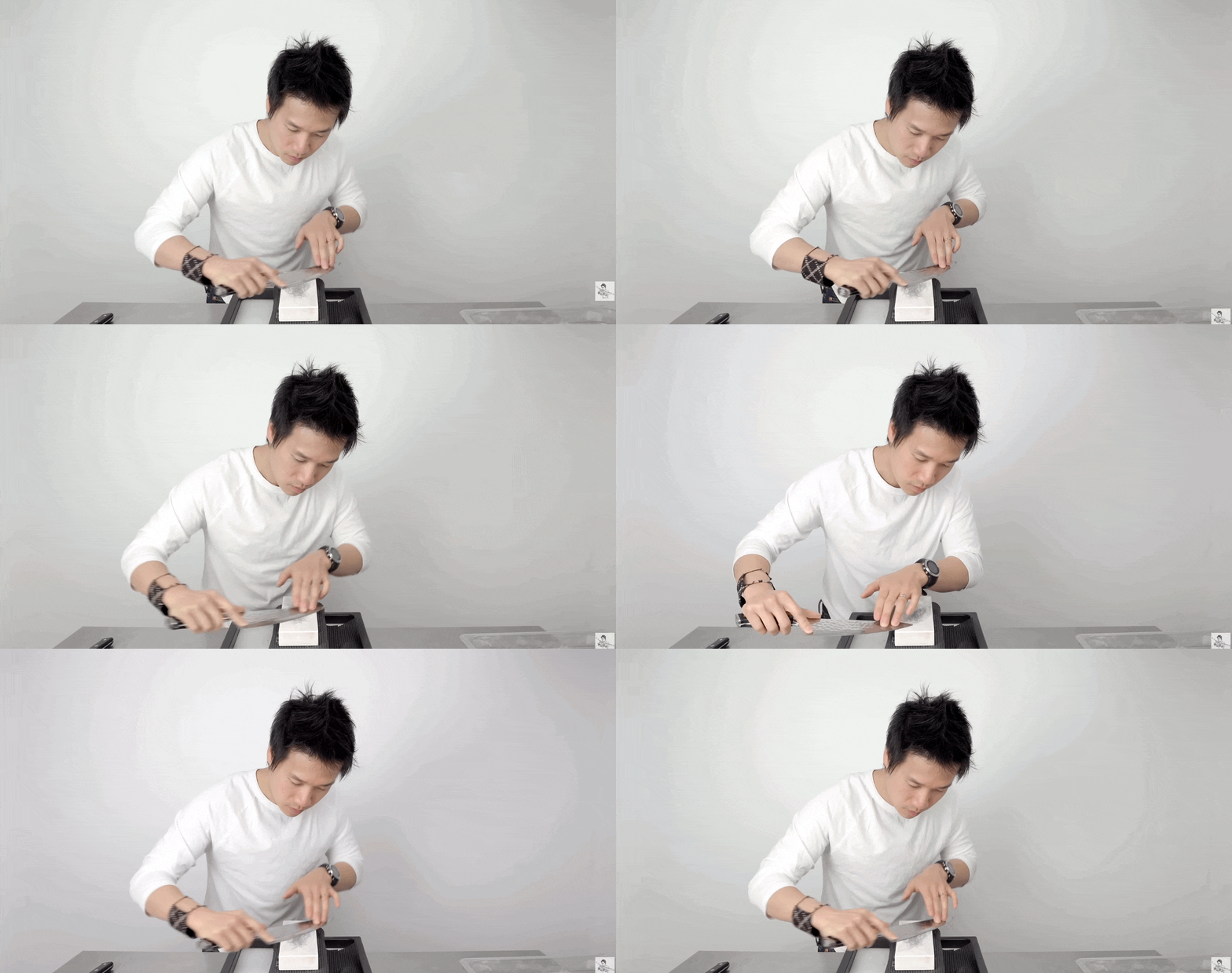
For roughly $150 total, a curated set of soaking stones provides a complete sharpening kit capable of handling everything from structural repair to mirror-polished refining.
The Three-Stone Toolkit
Coarse (e.g., Suehiro Cerax 320): Serves as an aggressive foundation stone to repair chips, re-profile bevels, or quickly rebuild a neglected edge.
Medium (e.g., Suehiro Cerax 1000): The primary benchmark stone. Capable of taking almost any steel to a crisp, razor-sharp edge on its own.
Fine (e.g., Suehiro Rika 5000): A refining stone that leaves a hazy, semi-mirror Kasumi finish—a classic aesthetic that highlights the natural beauty of the wood and steel clad.
Performance & Capabilities
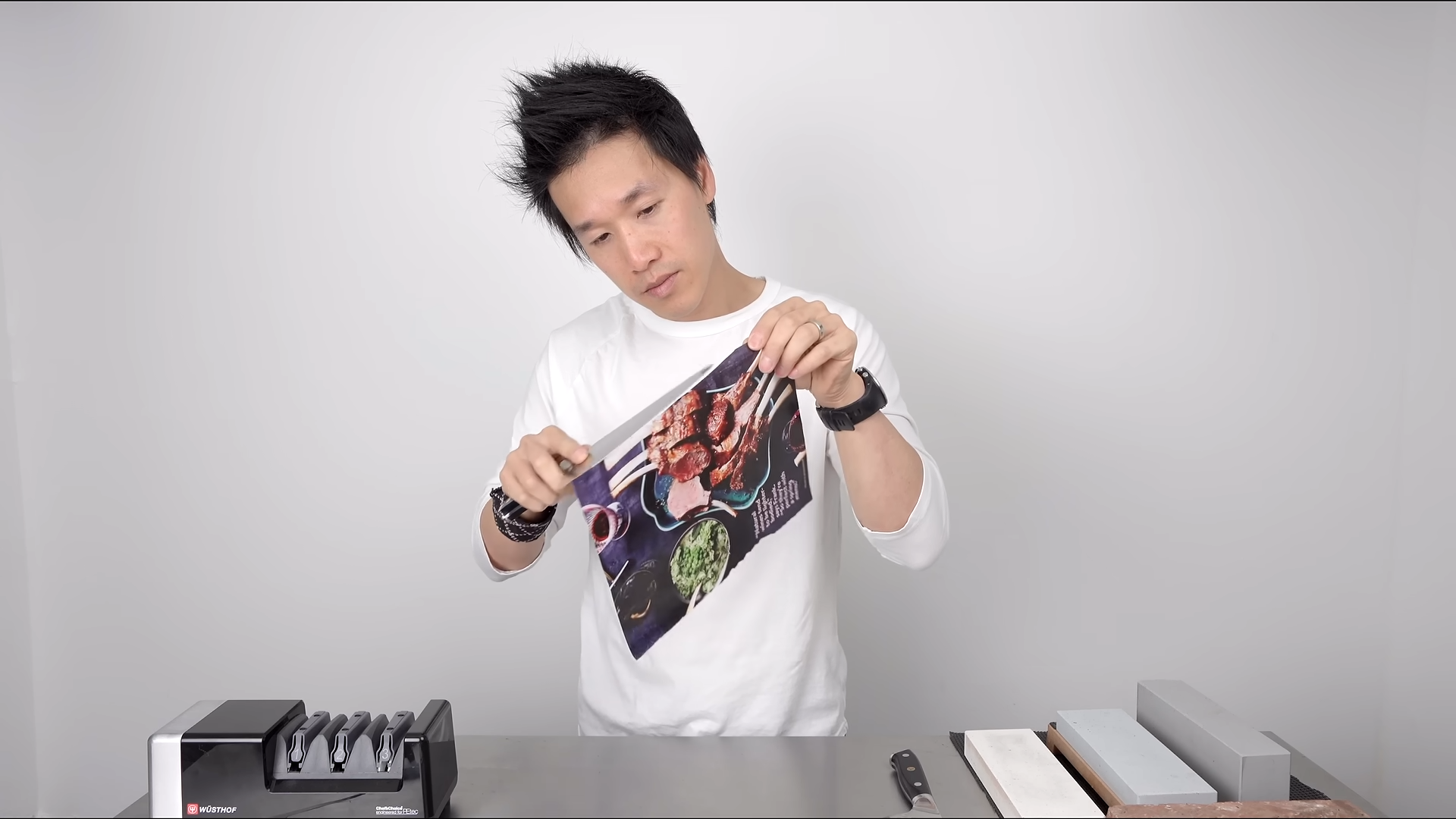
Unmatched Keenness: Direct paper-slicing and push-cut tests demonstrate an apex edge two to three times sharper than the finest stage on an electric sharpener.
Blade Preservation: Manual sharpening isolates contact exclusively to the cutting bevel, protecting the satin or polished face of the knife from scuffs.
Complete Versatility: Freehand sharpening allows custom bevel angles, thin geometry adjustments, and total chip removal regardless of steel hardness.
Time Efficiency: Active sharpening across a full three-stone progression takes approximately seven minutes (excluding stone soaking time).
Zero Repair Capability: Electric wheels cannot remediate chips, bent tips, or gouges. A chip as small as 1 millimeter renders an automated unit useless for knife restoration
testing knife’s edge after sharpening
Evaluating the Trade-Offs: Which System Wins?
compare the pros and cons of whetstone vs machine sharpening

Which is better?
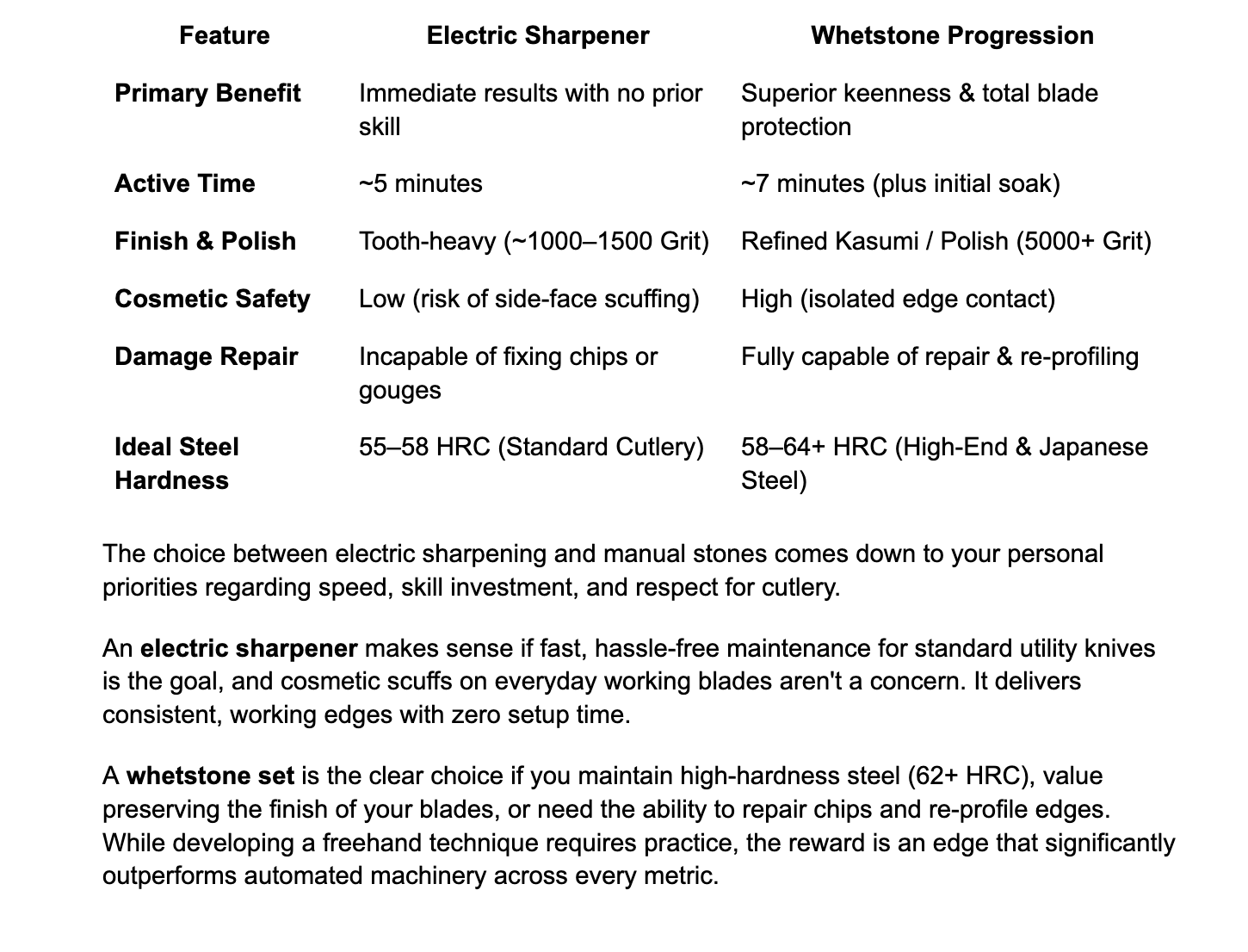
The choice between electric sharpening and manual stones comes down to your personal priorities regarding speed, skill investment, and respect for cutlery.
An electric sharpener Chef’s Choice Sharpener makes sense if fast, hassle-free maintenance for standard utility knives is the goal, and cosmetic scuffs on everyday working blades aren't a concern. It delivers consistent, working edges with zero setup time.
A whetstone set Suehiro Cera 1k, and Suehiro Rika 5k is the clear choice if you maintain high-hardness steel (62+ HRC), value preserving the finish of your blades, or need the ability to repair chips and re-profile edges. While developing a freehand technique requires practice, the reward is an edge that significantly outperforms automated machinery across every metric.
Items shown in video
Chef’s Choice Sharpener / Suehiro Cera 1k, and Suehiro Rika 5k