Visiting Hinoura Hamono: Tamahagane, Damascus and a Father-Son Forge in Sanjo
A day with Tsukasa and Mutsumi Hinoura: chestnut handles, a two-year waiting list, and a tamahagane knife that even its maker isn't allowed to sell.
By Ryky TranMay 28, 2024Updated November 25, 20263 min read
This article contains affiliate links: I may earn a commission if you buy through them, at no extra cost to you. How this works
The short version
- Hinoura is a two-person forge: father Tsukasa and son Mutsumi Hinoura, whose family has made knives since 1905 and tools before that.
- Their style is lean and rustic: a spine that tapers early toward the tip, raw forged finishes, and handles with no step at the ferrule.
- Tamahagane is tightly controlled: Tsukasa's tamahagane knife can't be sold, while his Damascus knives carry a two- to three-year wait.
Getting there
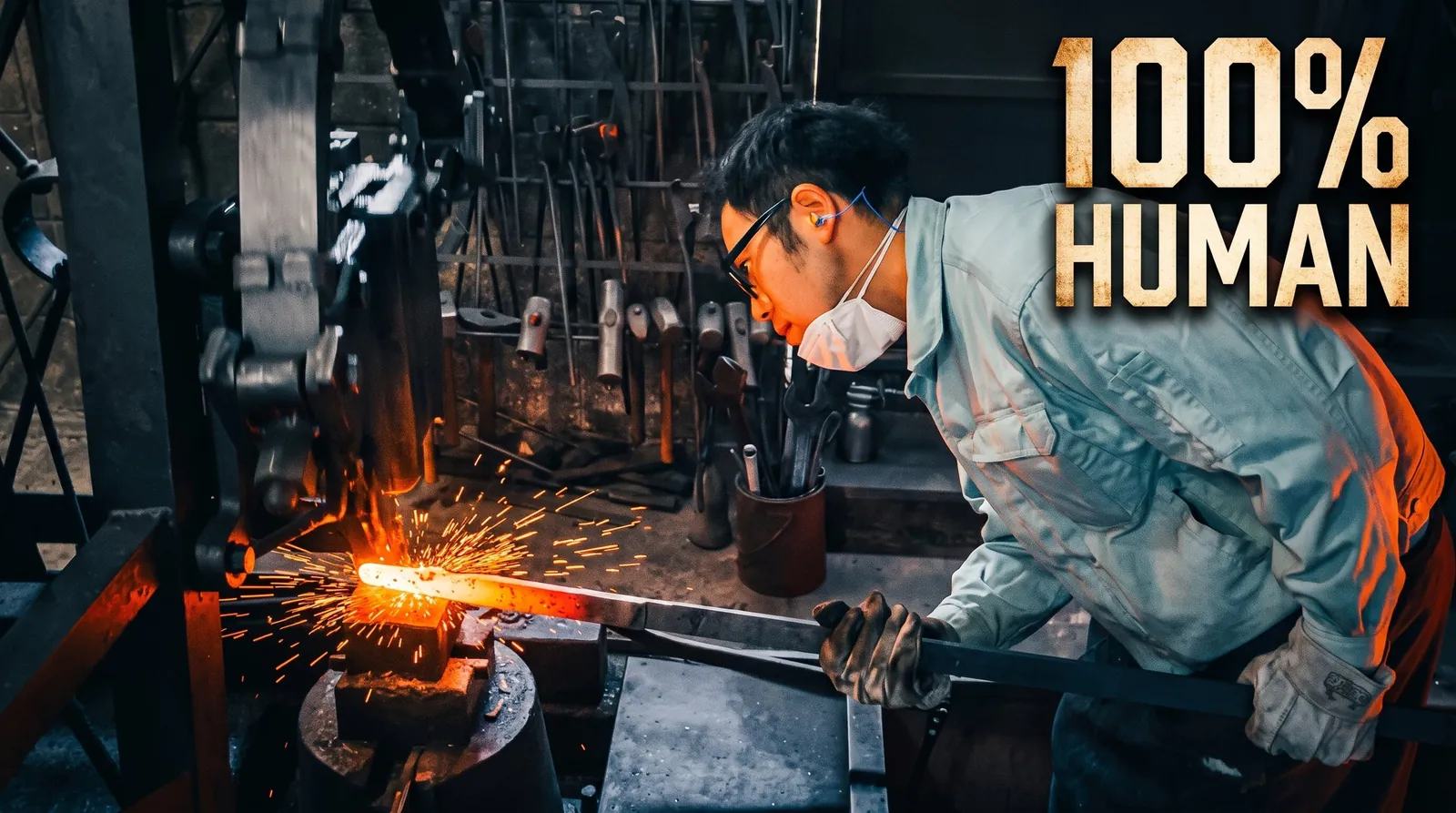
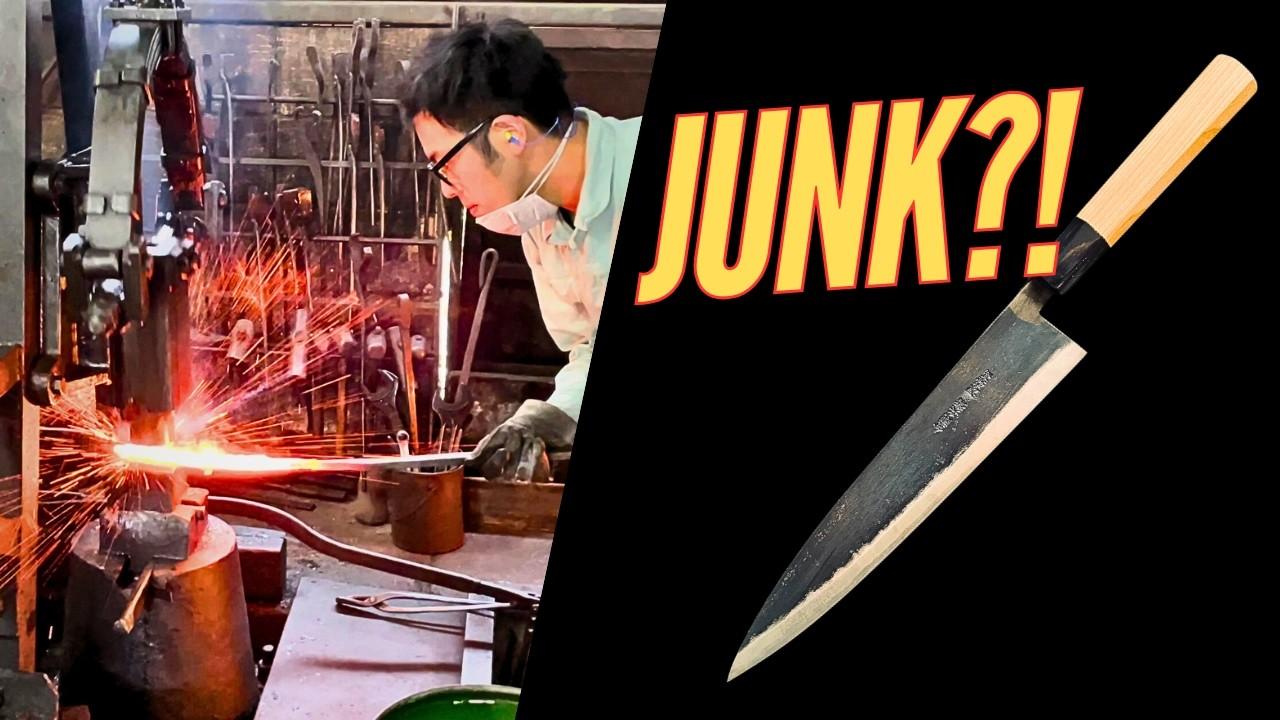
Hinoura Hamono is a team of two, father and son, both amazing knife makers (0:22). I first visited in 2019, but that video squeezed five days into ten minutes, so this time I wanted you to see, and hear, the whole visit, including the long conversations my translator summarizes in one sentence (1:05). From Tokyo, it's an hour and a half to two hours by bullet train (4:15). Like many Japanese businesses, the Hinouras live and work on the same property (4:58).
A family of toolmakers
The first Hinoura started knife making in 1905, and the family made tools before that (6:25). Their knives have always been known for chestnut handles (7:52), and they showed me new handles for upcoming blades. There's absolutely no step between the ferrule and the handle body (8:37). Run your finger along most octagonal handles and you'll feel one; that's not poor quality, just less finishing. These are immaculate.
Their profiles are leaner than the typical gyuto (10:16). Many Japanese makers keep the spine straight until a couple of inches from the tip; Hinoura's spine starts coming down at about the one-third mark, which gives the knife a sleek look. And their knives are very rustic, with that oxidized, forged look. Their nashiji finish is the rawest: you see the hammer marks, the burn marks and the scale flaking off (10:59).
The knife you can't buy
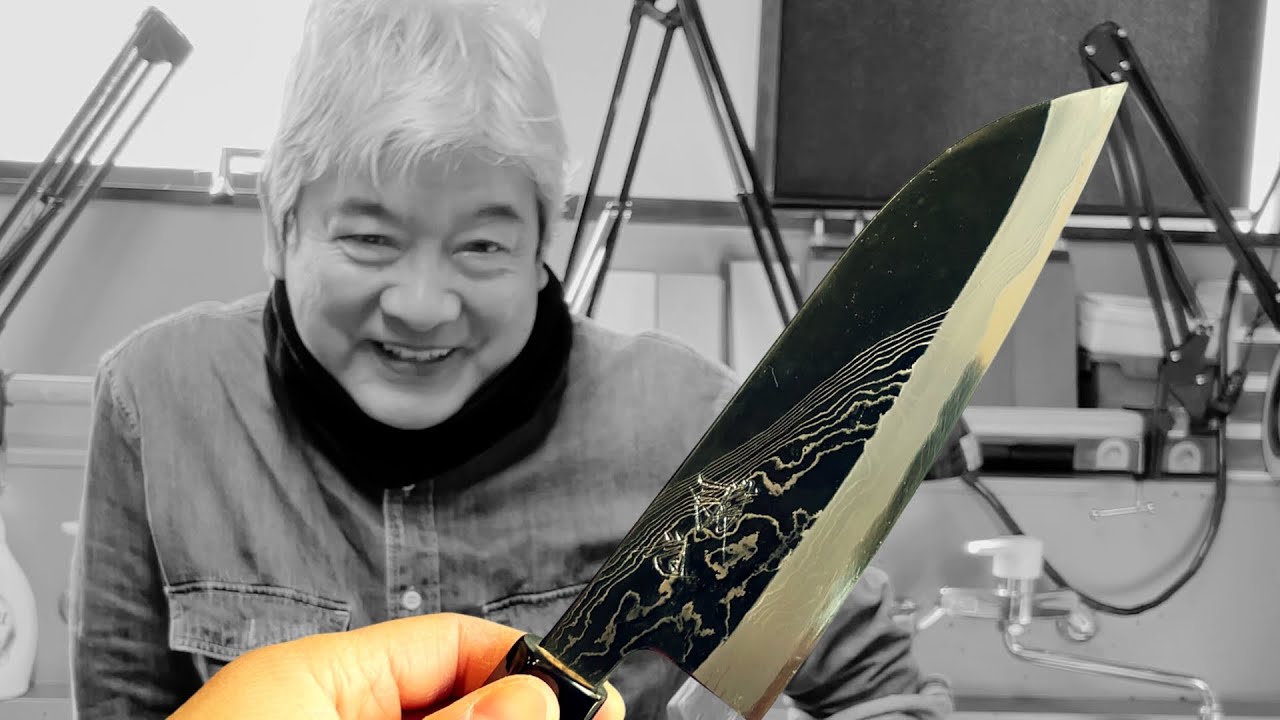
Mutsumi has the coolest graying hair I've ever seen, and his father, Tsukasa, showed us two Damascus knives (12:28). The first is one of the most beautiful knives you'll ever see, with cladding that doesn't match from side to side, and it's hefty (13:11). You can buy that one: around $2,500 to $2,600, with a waiting list of two to three years (15:19).
The second is made with tamahagane, and you can't buy it (13:54). As I understood it, a tamahagane dealer supplies the steel to a smith, the smith has to make knives that account for essentially every ounce, and the dealer has the right to buy the finished knife and resell it (14:16). I politely asked whether there was any price at which he'd sell it; he said it would be about $5,000, but he can't sell it because he has to account for it (15:43). Even the maker can't sell a knife he made.
Tsukasa is one of only three metallurgy experts who consult for Japanese universities, and the only one who's a knife maker rather than a PhD scientist (16:06). The raw block he used was three or four pounds of dense steel (16:51). (For more on tamahagane, see my togishi article.)
Music, microscopes and a year-long wait
The music in the background isn't mine: the first thing Tsukasa does in the studio is switch on his tube amp (17:21). Given the choice, I think he might have been a musician. He showed me a hunting knife from his Sakura series made 30 years ago, still with the same handle as today's Sakura knives, and you could see the love in his eyes (18:02), plus the microscopes he uses to analyze steel and raw ore (19:07). One knife was a solid piece of Damascus that he made himself (20:10). When I asked how long he'll keep making knives, he chuckled: until he's gone (20:31). That knife has a one-year waiting list (21:20). His knife-and-fork set is what made his name (22:08).
His whetstone shelf looks a lot like mine: a row of Suehiro Cerax stones, Shaptons, the Kitayama 8000 (my top pick at 8000), natural stones and Naniwas (22:29). Afterward we went to a local sushi place, where most bites cost the equivalent of 50 or 60 cents (25:37).
Bottom line
Hinoura is the kind of maker that makes Japanese knives special: a father and son with deep metallurgical knowledge, rustic but immaculate work, and waiting lists measured in years. Their knives are at the Burrfection Store's Hinoura collection, including Mutsumi's Sentsuchi Hyakuren gyuto with a charred chestnut handle. For more visits, see inside Nigara Hamono and how Japanese knives are made.
First access
Private drops, new knives and sales
Get them from Burrfection and our retail partners before anyone else. No spam; unsubscribe anytime.
Emails from Burrfection Inc. See privacy.