How Japanese Knives Are Made: From Artisan Workshops to Mega Factories
After visiting about two dozen knife makers in Japan, I sort them into five sizes, from four-person workshops to Global's automated plant. Every one of them works with pride.
By Ryky TranAugust 15, 2020Updated November 25, 20264 min read
This article contains affiliate links: I may earn a commission if you buy through them, at no extra cost to you. How this works

The short version
- Japanese knives come from five sizes of maker: artisan teams, mini factories, small factories, medium and large factories, and one mega factory.
- Smaller doesn't automatically mean better: large factories like Yaxell have more consistent quality control than many small shops.
- Handwork never disappears: even big factories assemble handles, sand and sharpen by hand, with machines assisting.
Mini factories and artisan teams
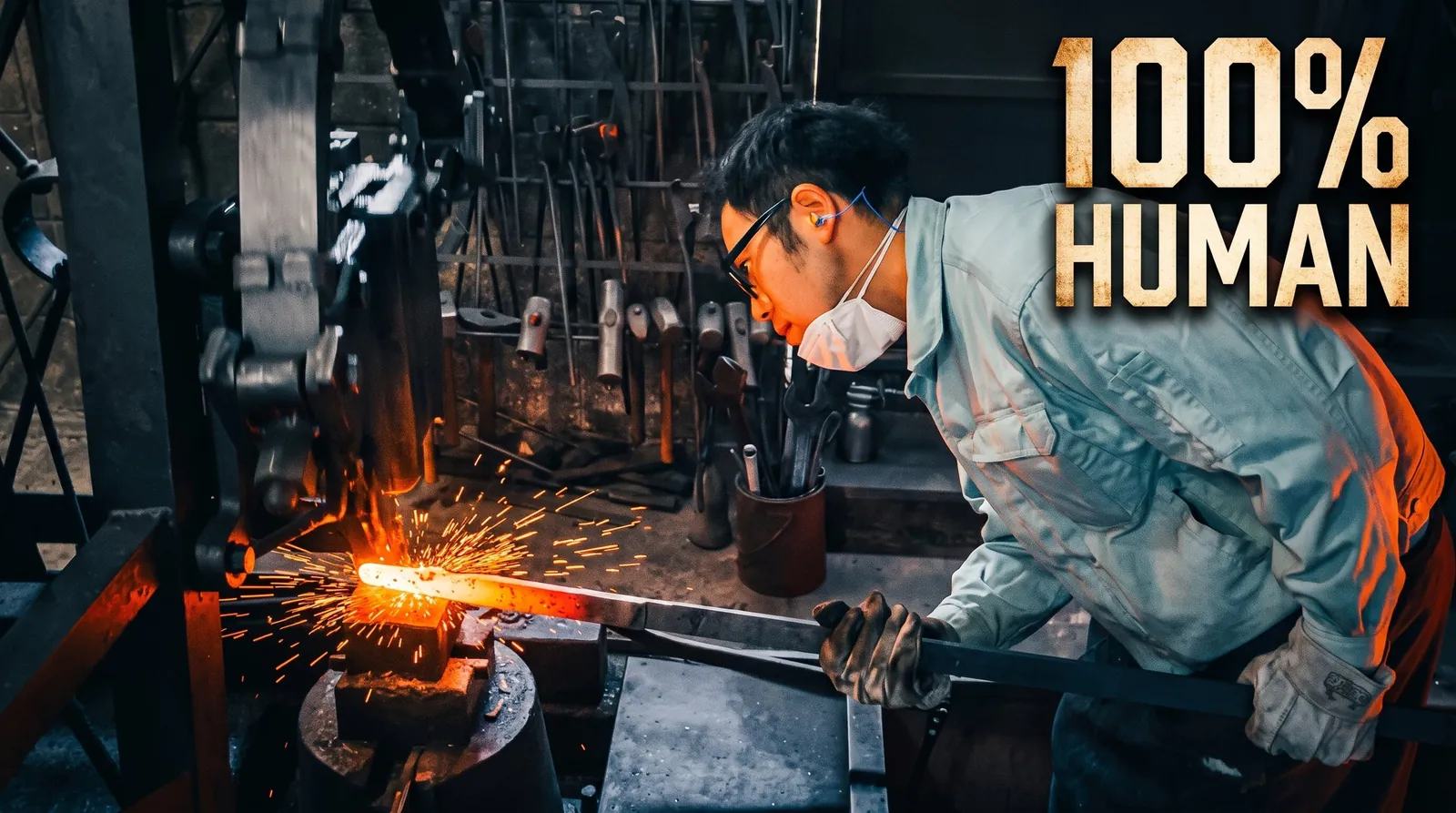
Over two trips to Japan, about a month in total, I've visited roughly two dozen knife makers, and I sort them into five sizes (0:00). The smallest is what I call the mini factory, which is close to an artisan team (0:20). The difference is the name: artisan teams work under one maker's name, like Yu Kurosaki, Tanaka or Saji, while mini factories work under a cutlery name (0:41). Moritaka, Nigara, Tsujimoto, Sukenari and Yoshikane fall into this group, with four or five people in the workshop.
But everyone in those workshops is an artisan in their own right (1:02). Nigara has two craftsmen and two apprentices, and if you've ever held a Nigara, you know its Damascus is some of the best-crafted I've seen (1:24). Moritaka has made blades and swords for 700 years and only recently shifted its focus to kitchen knives; its kurouchi finish is one of the most attractive I've seen, and it's on every knife they make (1:45). These makers don't chase lots of steels or finishes; they do a few things extremely well (2:26). In a mini factory, you could swap any two people and each could do the other's job (2:47). And while artisan knives are usually the most expensive because so few are made, some mini factories make even fewer at even higher prices (3:07).
Small factories
Small factories run more than one team, say one for Western knives and one for traditional Japanese knives (3:07). I'd put Masamoto, Misono, Sakai Takayuki and Ryusen here (3:27). Sakai Takayuki is fascinating for the sheer variety it makes. The workshop I visited was Doi-san's, their master craftsman, the face on their posters (3:48). About four people work there: Doi-san does all the forging, one person grinds, one sharpens, and there's an apprentice (4:10). They don't make huge volumes of any one line, but they make an impressive range. Ryusen also works in teams of four or five, and whatever you call their knives, artisan or factory, they're some of the best-finished knives you'll ever hold (4:30).
Medium and large factories
Medium factories are where you start seeing assembly-line production, more automation and computerized quality checks, with output of about 10,000 to 20,000 knives a year (4:51). They're still small enough to experiment: Mcusta's Zanmai line has really interesting handles and great fit and finish (5:11).
Large factories have 50 to 150 employees. When I toured Yaxell, they had four grinding machines; at a minute or two per knife, running around the clock, you can do the math (5:32). I'd estimate 50,000 to 100,000 knives a year, with 8 to 12 people sanding blades and handles at once, plus sandblasting, welding and several computerized straightness checks (5:53). Because each person can be trained for one job, hiring and production go faster (6:13).
It looks like machines do everything, but handle construction, welding, sanding and sharpening are still done by hand, assisted by machines (6:35). People assume quality suffers at that volume, but their quality assurance is far more involved than at small shops: machines check grinds, measure bend to the micron, scan surface smoothness and even measure the sharpened angle (6:57). I'd say the quality is more consistent at large factories.
The mega factory
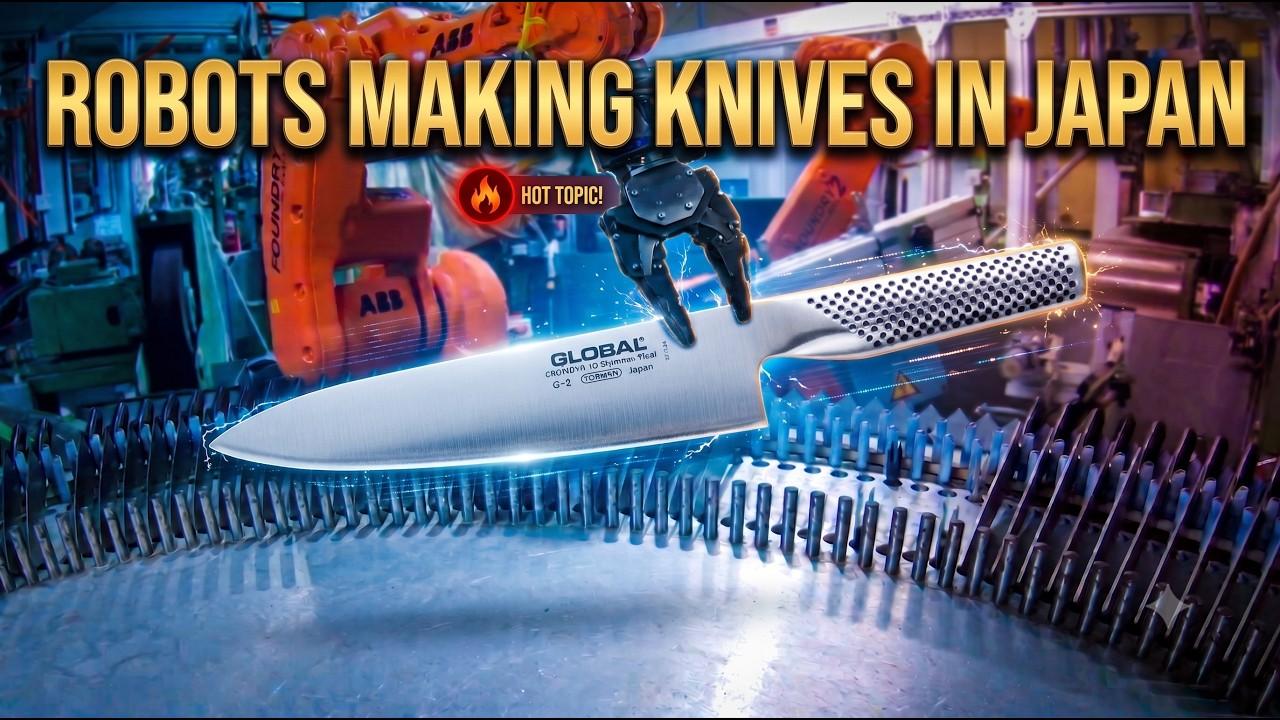
Finally, the mega factory (7:18). Before anyone knocks on Global, from a production and business standpoint it's the perfect factory. Global is the largest knife manufacturer in Japan, and I toured its entire process (7:38). Apart from people loading machines, a final cutting inspection and hand packaging, nearly everything is automated (7:59).
| Artisan team / mini factory | Small factory | Large factory | Mega factory | |
|---|---|---|---|---|
| People | About 4–5 | Two or more teams of 3–5 | 50–150 | Mostly automated |
| Examples | Yu Kurosaki, Moritaka, Nigara | Masamoto, Sakai Takayuki, Ryusen | Yaxell | Global |
| Strength | Character, hand finishing | Variety and fit and finish | Consistency, QA | Price and volume |
| Where to buy | Nigara (Burrfection Store) | Masamoto KS (Burrfection Store) | Yaxell (Amazon) | Global (Amazon) |
Bottom line
Japanese knife making runs from four-person workshops to almost fully automated plants, and there's good work at every level. Small makers give you character and hand finishing; big factories give you consistency. What struck me everywhere, from artisan workshops to the largest factory, was that people greeted me with a smile and worked with pride, and that's what I love most about Japanese knives (8:19). To go deeper, read inside Nigara Hamono's forge and why AI won't replace Japanese knife making, or browse the gyutos at Gyuto.com.
First access
Private drops, new knives and sales
Get them from Burrfection and our retail partners before anyone else. No spam; unsubscribe anytime.
Emails from Burrfection Inc. See privacy.