How to Sharpen Cheap, Worn-Out Knives: Reviving a Friend's Old Wüsthofs
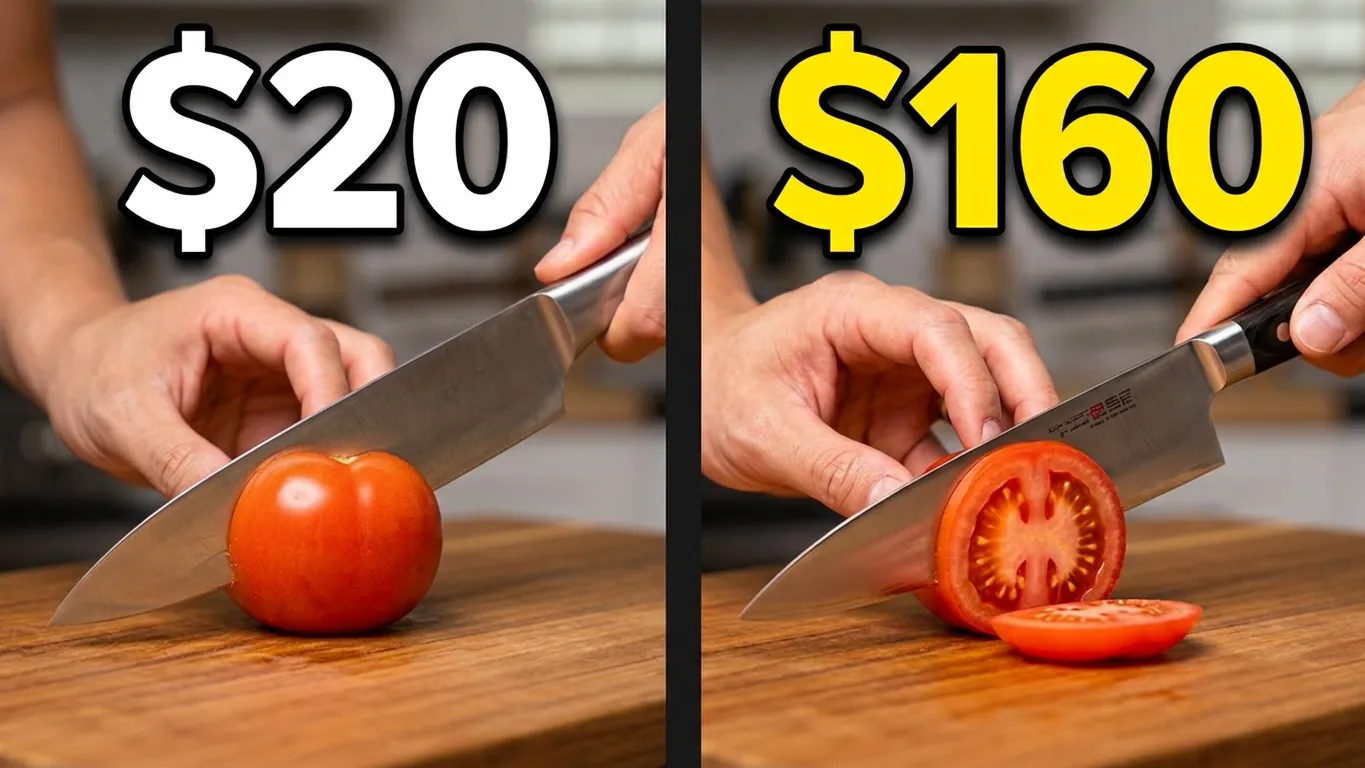
A friend's dull, chipped, decades-old German knives, brought back with a new bevel. Once on three good stones, once on a $20 Sharp Pebble.
By Burrfection EditorialFebruary 7, 2017Updated November 24, 20265 min read
This article contains affiliate links: I may earn a commission if you buy through them, at no extra cost to you. How this works

The short version
- A knife that has never seen a whetstone has usually lost its bevel. The edge is a blunt, shallow V, so the first job is grinding a new bevel on a coarse stone, which takes most of the time.
- For soft German steel, stop at 3000 grit. Around 54 or 55 HRC, going finer doesn't buy you anything.
- A $20 combination stone does the job. On a Sharp Pebble 400/1000, a rusty, chipped old Wüsthof utility knife came out genuinely sharp.
A box of crappy knives
Some friends came over for dinner and, as thanks, brought me six completely dull knives (0:00). They're old Wüsthofs, I have no idea how old, and very cheap ones; good knives have a nice ping to them, and these don't. They're the worst knives I've ever had in my kitchen, and one even has a broken tip; I fixed that one separately in rebuilding a broken tip by hand. My friends don't want to get rid of their knives or buy new ones, so the question is simply how sharp I can get them.
Three stones for a German knife
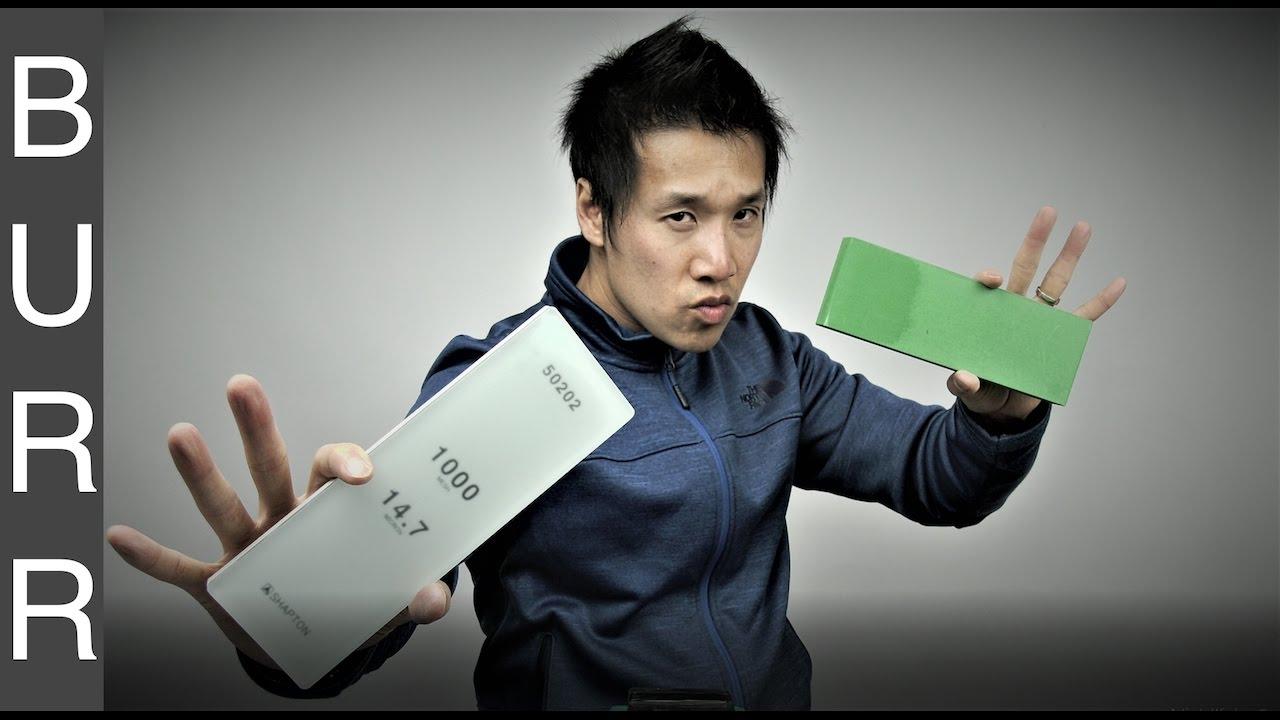
For the 8-inch chef's knife I used a Shapton Glass 320, then the Shapton Glass 1000, then my Chosera 3000 (3:07). I stop at 3000 because with German knives, in my opinion, you don't see much benefit beyond it. This one is probably 55 HRC, maybe even 54, so it's quite soft (34:20). Going finer isn't a waste of time exactly, but you won't get the effect you would on a Japanese knife at 60 to 62 HRC and above.
Rebuilding a lost bevel
After years of use, the profile is no longer consistent: a round belly, a straight center and something odd near the heel. I couldn't go tip to heel in one smooth stroke, so I sharpened it in parts: the belly, then the center and bottom half, then back to the belly (4:32). The angle the knife told me to use was high, 20 degrees or more, and that's fine; it's the angle that worked for this knife (5:42). If you want to know how I find an angle, my A-to-Z sharpening guide explains it.
The real work was the bevel. This knife had completely lost its original one; the edge was essentially a really shallow V (10:48). On the 320 I was grinding a proper bevel back in, and the bottom half took longest because there was so much metal to remove. A slightly coarser stone would have been faster. Once a real bevel is there, the knife should hold a sharper edge longer and be easier to sharpen next time. One annoyance: Wüsthof put a plastic bolster on the handle, which kept grinding against the edge of my stone (12:25). That's what you get with poorly designed knives; just work around it.
The burr on this knife was massive, so for once I took the quick route and drew the edge through a piece of wood to pull the big burr off, then cleaned it up on the stone (16:05). Watch the lines the edge leaves on the stone: sharp, dark lines mean there's still a lot of metal coming off. When they turn blurry and cloudy, you're close (19:33). On the 1000, it was my first time using that stone, and it felt really good. I stropped there, counting down from 12 strokes, until the lines were very light and the edge got quieter (23:15).
On the 3000, I only stropped. With a rounder profile like this one I go edge-leading; on longer, straighter edges I'd go edge-trailing (28:16). A countdown from 12 per side down to single strokes, with no pressure at the end, and the knife cut paper cleanly, probably better than it ever has (33:38).
The $20 stone version
For the last of my friend's knives, a stamped Wüsthof Gourmet utility knife, I used a budget stone: the Sharp Pebble 400/1000, about $15 to $20 on Amazon (0:00). For a utility knife you don't need to go past 1000; you can polish a little at 2000 or 3000, but knives of this grade aren't meant for high-grit stones.
First, the rust. I ran a medium rust eraser vertically along the blade, following the grain, in sections (1:46). I use it far more to clean load-up off my stones, from 200 to 3000 grit, than to remove rust, and for $7 or $8 there's no better tool for either. The edge itself had zero sharpness and lots of microchips, so the goal was to grind past the chips first.
Most of this blade is straight, so I used push-and-pull strokes (3:54). Stamped knives like this are very flexible, so keep the blade level with the stone and don't press down on the tip, or you'll never get a consistent belly. If you're new, take your time. Three or four passes is fine; rushing makes you press too hard, which grooves your stone and wears your knife faster. Feel for a micro-burr, a tiny lip of metal, and switch sides. The soft steel raised a burr quickly, if a little unevenly. And the stone surprised me: both sides felt very consistent and true to their grit, really good for a budget stone (9:28).
To finish, I stropped on the stone with very light pressure, counting down from 12 strokes per side to single strokes (11:57). You can deburr on wood instead, but this way takes only two or three more minutes and gives a cleaner edge. The result was fairly sharp from a budget 1000-grit finish on a 10- or 15-year-old knife (16:40). It won't win any sharpness awards, but it's very acceptable for any kitchen.
Bottom line
Cheap, worn-out knives can come back. Rebuild the lost bevel on a coarse stone, sharpen the profile in sections, watch the lines on the stone, and don't bother going past 3000 on soft German steel. If you're just getting into hand sharpening, you don't need to spend much: a $20 stone like the Sharp Pebble is a great way to learn, and I compared it with far more expensive stones in $20 Sharp Pebble vs. Shapton Glass. When you're ready for a better setup, see the sharpening kits at the Burrfection Store.
First access
Private drops, new knives and sales
Get them from Burrfection and our retail partners before anyone else. No spam; unsubscribe anytime.
Emails from Burrfection Inc. See privacy.