Shun Classic vs. Shun Kanso Chef Knife: Hands-On First Impressions
Two Shun chef knives with very different personalities: the polished Damascus Classic in VG-MAX, and the rustic, full-tang Kanso that bridges Western and Japanese styles.
By Burrfection EditorialOctober 5, 2016Updated November 21, 20265 min read
This article contains affiliate links: I may earn a commission if you buy through them, at no extra cost to you. How this works

The short version
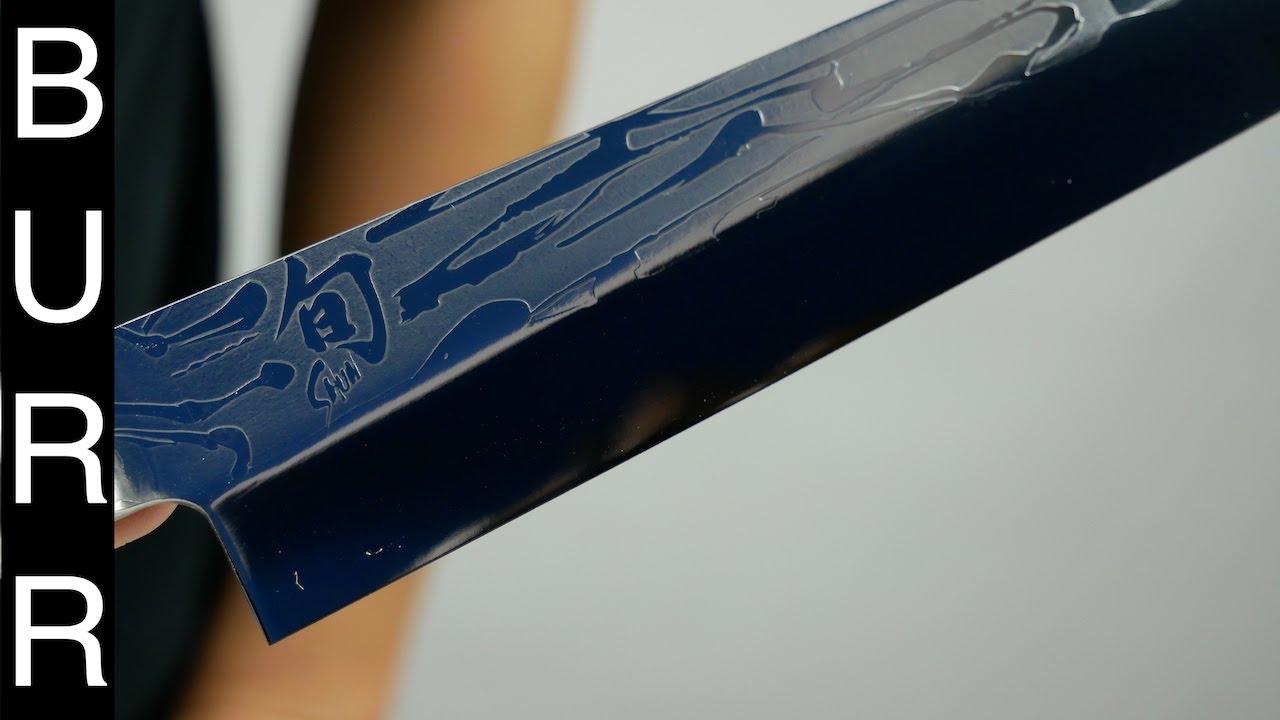
- The Shun Classic chef knife is one of the best-finished knives I've handled at its price. Damascus cladding over a VG-MAX core at 60 to 61 HRC, a polished ebony pakkawood D-handle, and no sharp edges anywhere except the one that should be sharp.
- The Shun Kanso chef knife is the rustic one. High-carbon vanadium stainless at 60 HRC, a sweeping belly with no flat spot, a full tang that's still perfectly balanced, and a rugged finish you won't find on other Japanese knives.
- Pick by feel. The Classic is the refined, right-hand-leaning Japanese knife; the Kanso is a great first Japanese knife for someone coming from Western knives.
Shun Classic: fit and finish that punches above its price
Shun's packaging is beautifully made, and it's designed to be opened from one end only, because a compartment inside holds the handle in place and a clip holds the blade protector (1:01). The knife inside lives up to the box. The Damascus finish runs down both sides, the ebony pakkawood handle is very highly polished, and the spine and choil are polished and rounded. There are no sharp edges anywhere. I've held $300 knives that aren't put together as well as this one.
What is pakkawood? A durable, engineered composite made by bonding thin layers of hardwood veneer with resin under intense heat and pressure. More terms in my Japanese knife glossary.
Even with the metal end cap, it doesn't feel heavy (2:04). It feels light and nimble, and the balance point sits right where the handle meets the blade, almost exactly 50/50.
VG-MAX steel, not VG-10
According to Shun's website, the Classic has 32 layers of soft stainless steel on each side over a core of VG-MAX, not the VG-10 you'll see listed on Amazon and a few other sites (2:25). I'm going with Shun's description. As I understand it, VG-MAX is a little harder than VG-10, with more vanadium and more chromium, which should give it slightly better edge retention. It's rated at 60 to 61 on the Rockwell scale, and out of the box it sliced cleanly through my crumpled test paper. For context, my Wüsthof Classic Ikon sits around 57, the Masamoto VG at 59 and the Masamoto KS at 62 (4:56).
A note for lefties
The Classic's handle is a wide D-shape, which I actually like, but the D is clearly designed for a right-handed cook (3:53). In my left hand it isn't uncomfortable; it just doesn't feel as natural. Here's the good news: with a pinch grip, the D-handle barely affects your grip at all, and in my left hand it actually feels quite nice. I'm mostly ambidextrous, so if you're a lefty looking at this knife, don't be afraid of it.
Shun Kanso: the rustic one
The Kanso caught my eye while I was browsing, and it just spoke to me. The first thing that stands out on the 8-inch chef knife is the edge: a long, sweeping belly from heel to tip with virtually no flat spot (0:44). I think it's well suited to people getting into Japanese knives for the first time.
The steel is a high-carbon vanadium stainless treated to 60 HRC, which is high for an everyday kitchen knife; most sit between 57 and 59 (1:04). The logos are heat-stamped rather than engraved, which is fine at this price. The choil is nicely rounded all the way back to the end of the tang.
A full tang that's still balanced
Full-tang knives tend to be heavy in the handle, but not this one: with my finger where the tang meets the handle, the Kanso balances perfectly, which is rare for a full-tang knife (1:47). The handle wood, which Shun calls tagayasan, also known as wenge, is so dense and hard that if you didn't tell me it was wood, I'd have guessed plastic or resin. I'd prefer slightly more rounded edges on the bottom of the handle, and because the handle is shaped around them, the rivets sit a little below its surface. You can feel the corners if you go looking for them, but in normal use you don't notice them at all (4:16).
Because of the handle's shape, your pinch grip sits about a quarter of an inch further back than usual, so you can't bring your guiding finger as far up the blade (3:34). It takes a little getting used to, but it's not a bad thing. Out of the box I'd rate the edge about a 7 out of 10: not ultra sharp, but sharp enough for anyone to use right away.
Which one is for you?
These are two very different knives from the same company. The Shun Classic is the refined one: Damascus, a mirror-polished handle, VG-MAX at 60 to 61, and a finish that rivals far more expensive knives. The Shun Kanso is the most rustic Japanese knife I've seen, with a heritage finish and a one-of-a-kind handle that crosses the line between Western and Japanese knives (5:19). I'd point someone stepping up from Western knives to the Kanso, and someone who wants a polished showpiece to the Classic. If you're comparing shapes as well as brands, my gyuto vs. Western chef knife guide covers the differences.
| Shun Classic chef knife | Shun Kanso 8" chef knife | |
|---|---|---|
| Steel | VG-MAX core, 32 layers of Damascus per side | High-carbon vanadium stainless |
| Hardness | 60–61 HRC | 60 HRC |
| Handle | Polished ebony pakkawood D-handle | Tagayasan (wenge) wood, full tang, rivets |
| Balance | Where handle meets blade | Where tang meets handle |
| Finish | Polished Damascus, no sharp edges | Rustic heritage finish, heat-stamped logo |
| Where to buy | Amazon | Amazon |
Bottom line
The Shun Classic is a beautifully put-together knife with a harder-than-average VG-MAX core, and lefties shouldn't let the D-handle scare them off. The Kanso trades polish for character and balance, and it's a friendly first step into Japanese knives. If you'd like to see what a Japanese gyuto looks like beyond these two, browse the gyutos at the Burrfection Store or on Gyuto.com.
First access
Private drops, new knives and sales
Get them from Burrfection and our retail partners before anyone else. No spam; unsubscribe anytime.
Emails from Burrfection Inc. See privacy.