Knife Sharpening for BBQ: Lessons With Champion Pitmaster Harry Soo
Harry Soo could get his knives to slice but not push-cut. Two sessions later, his brisket slicer, chef's knife and boning knives were sharper than he'd ever had them, on two Chosera stones.
By Burrfection EditorialMay 6, 2017Updated November 24, 20265 min read
This article contains affiliate links: I may earn a commission if you buy through them, at no extra cost to you. How this works

The short version
- Three small fixes took Harry from slicing to push-cutting: a higher angle, a grip that starts with the middle finger on the spine, and more thumb pressure at the heel.
- A brisket slicer must be surgically sharp. A dull knife leaves ridges and tears the flat, and in competition, judges score appearance first.
- Keep it simple: Harry standardized on a Chosera 1000 and 3000, and boning knives for trimming can stop at 1000.
Slice-cut sharp, but not push-cut
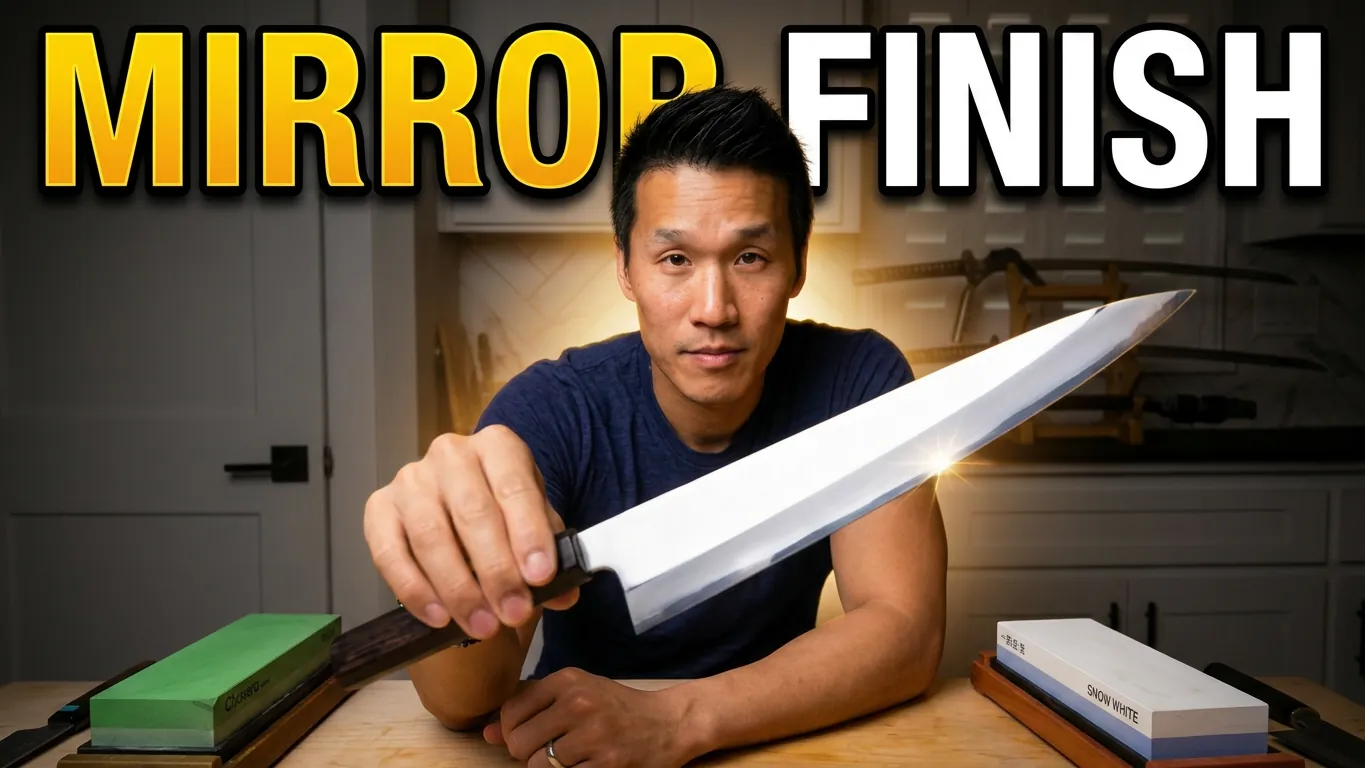
National champion pitmaster Harry Soo came to my studio with a problem a lot of you share: he could get his knives sharp enough to slice, but never sharp enough to push-cut (1:47). He brought a Shun chef's knife, two yanagibas for slicing brisket, a MAC chef's knife with a Granton edge and big chips, and a Victorinox Fibrox boning knife. While I ground the chips out of the MAC on my Shapton Pro 120, my stone for removing chips or setting a bevel, Harry started on the chef's knife (10:25). On a plate that aggressive, use full strokes and lock the angle with one wrist while the other hand only pushes and pulls.
Angle, grip and pressure
The first fix was the grip: middle finger down on the spine first, index finger on top, thumb on the heel (6:43). A pinch grip gives you less control. To find the angle, start shallow at the top of the stone, drag, and raise the spine until the edge grabs (7:04). I'd guess Harry ended up around 17 to 18 degrees, roughly twice the angle he'd been using. Put the pressure on the edge-trailing stroke, enough to feel the stone biting; some people quote three or four pounds, but I go by feel (8:28). For a pointy tip, tilt the knife toward you a little.
He started on a Naniwa Super Stone 400, which is softer than the Chosera and leaves a smoother finish, soft enough that Harry couldn't feel a burr on it (12:13). On a Chosera 400, you'd normally feel a burr in three or four passes. I also showed him the crescent stroke: sweep from heel to tip at one angle with pressure both ways, pushing with the right thumb at the heel, where a lot of people miss (16:48). On the Chosera 3000, it's only edge-trailing stropping strokes, for example 12 per side, dropping by two each round (25:06).
After the Chosera 400, 1000 and 3000 and a leather strop, the chef's knife push-cut paper. "Sharper than I've ever gotten it," Harry said (34:16). His three takeaways: a higher angle, the middle-finger grip, and more thumb pressure at the heel.
Sharpening a brisket yanagiba
For brisket, Harry's point is simple: the slicer must be surgically sharp (49:57). A dull knife leaves ridges and tears the flat. Competition judges score appearance first, on a 1-to-9 scale, and Harry thinks a weak appearance score drags down taste and tenderness too.
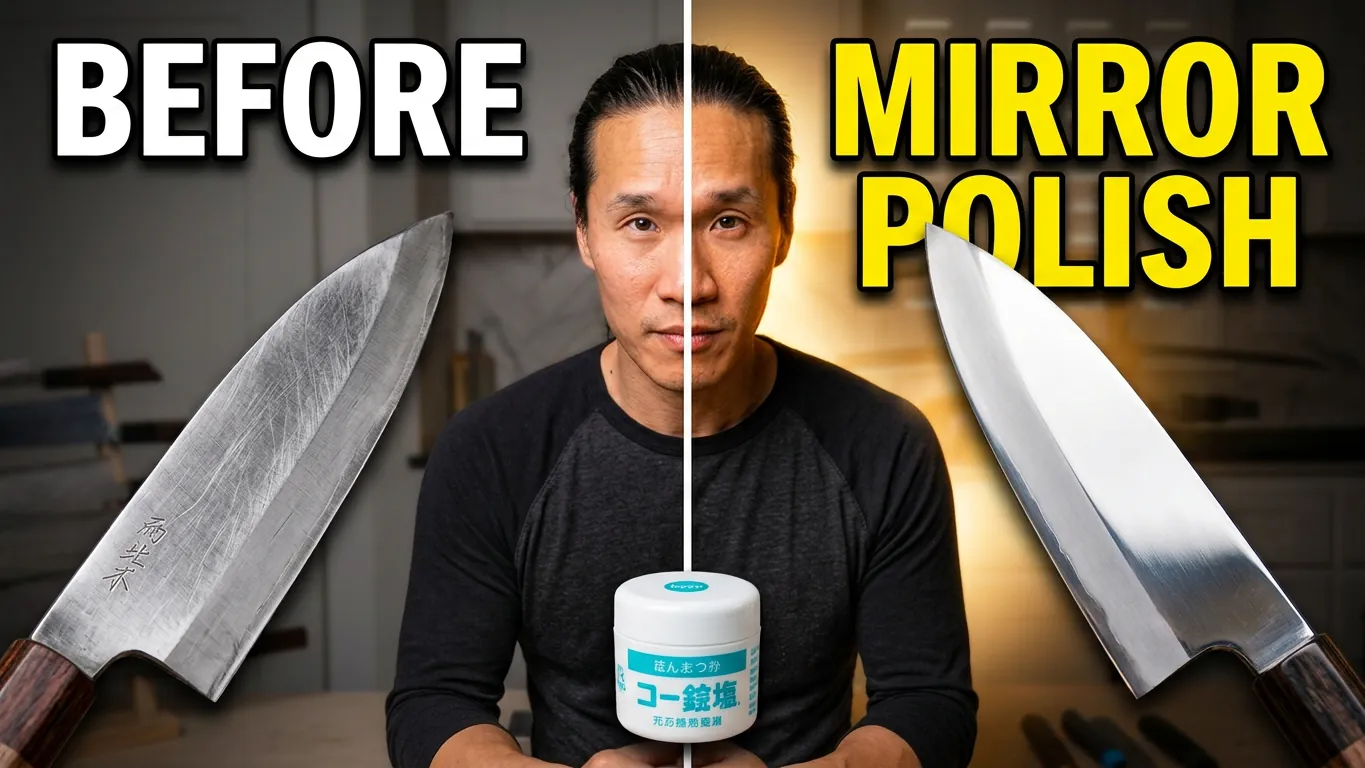
For a single-bevel knife, flatten the stone first; I used my Atoma with pencil marks on the stone to check (36:48). On the bevel side, keep your fingers over the stone, work in sections of five to seven strokes, and keep the counts consistent. If you don't sharpen the bevel flat on the stone, the blade slowly wears from an arrowhead shape into a wedge. Even the Chosera 400 felt a little fine, so we moved to the Shapton Pro 320 (46:04). Shun puts a factory micro-bevel on its yanagibas, which slows down the burr. To finish, one light backward draw per section on the flat back, then long, full-length strokes, then a very light micro-bevel (71:46). The cut was much cleaner. For a yanagiba, a 1000 and a Chosera 3000 are really all you need; go to a 5000 or higher only if you want a mirror (68:57). The cheap eBay yanagiba he also brought was another story: its steel was so soft it folded into huge burrs, and I gave up on it. That's the same lesson as my $12 yanagiba test.
Boning knives for trimming
For European knives like the Victorinox, at around 55 HRC, I don't go above 1000; the steel isn't hard enough to hold a finer edge (79:11). On its curved blade I used edge-leading strokes, since it's easier to follow the curve by bending the wrist. A 1000 edge is fine for trimming, and too fine an edge gets brittle when it hits chicken bone. Harry calls the boning knife absolutely indispensable, for trimming chicken and for taking the silver skin off a brisket flat so the seasoning reaches the meat (83:38).
Round two: two stones and a dozen knives
A month later, Harry came back with about a dozen dull knives, and some of his brisket and chicken (0:00). He had standardized on two stones, the green Chosera 1000 and the Chosera 3000, for his whole set (8:06), and he uses plastic angle guides to hold about 15 degrees. One warning: don't soak Choseras; people who soaked them have had them crack (10:16).
His favorite value knives were two Kuma chef's knives at about $18 each; he ground off the bolsters so they'd stop scraping his stones (3:11). Next to his roughly $250 to $280 Miyabi, he found the difference hard to feel. His Victorinox boning knives are NSF-certified, which commercial kitchens expect at catering events; at home it doesn't matter (12:43).
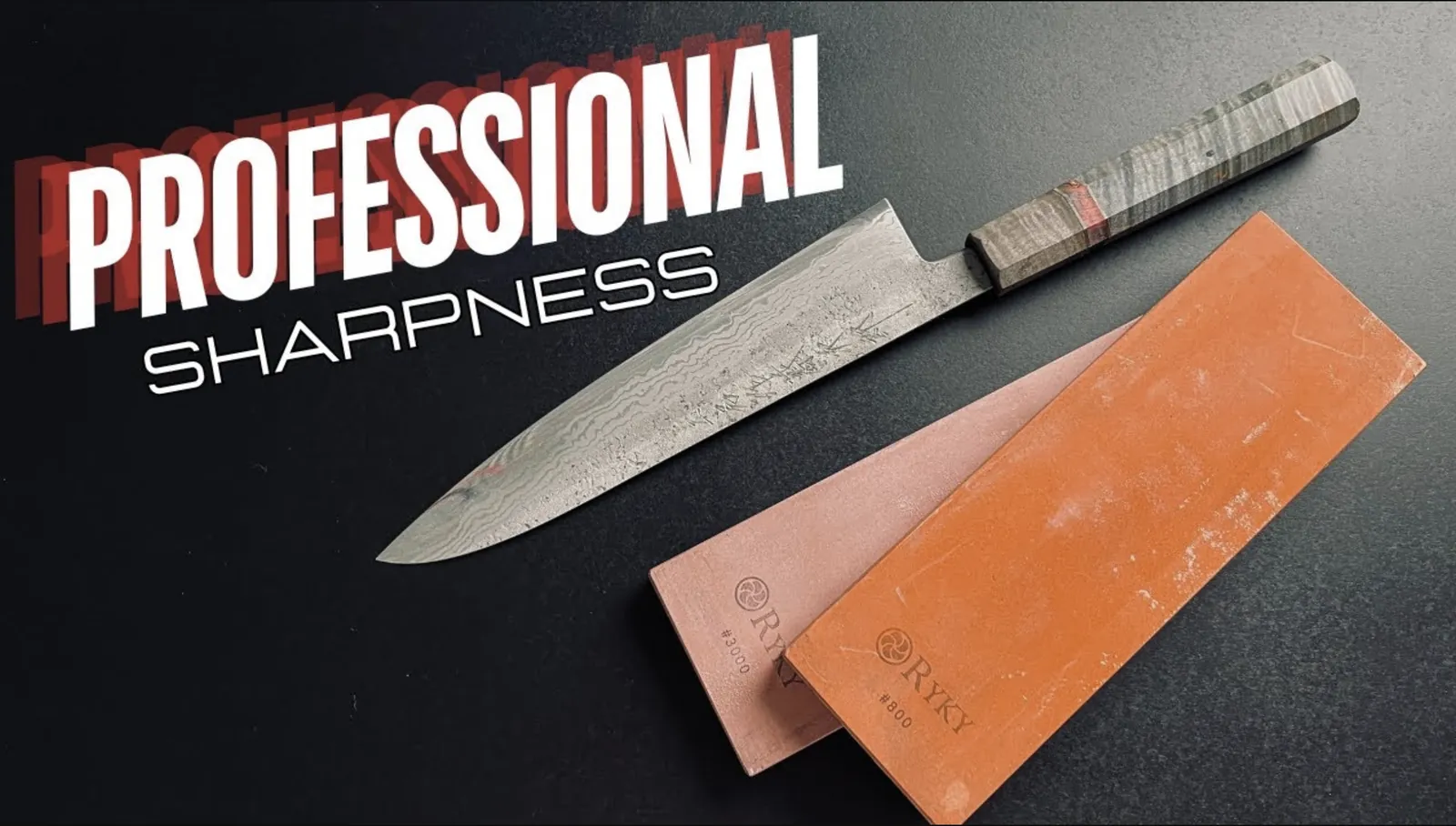
I reprofiled a thick "scimitar" TV knife on my Chosera 800, which cuts a bit faster than the 1000: in sections from the tip, following the arc, then treating the straight part like a regular knife (11:42). Check for a burr every 20 to 30 strokes, and finish one side completely before flipping (14:05). Before moving up a grit, remove the burr with light alternating passes. Knives for slicing and chopping meat can stop at 1000; they don't need a razor edge (24:14). And Harry's rule for the pit: the right tool for the job, a thick clunker for chopping through chicken bones and a thin knife for precise trimming (70:41).
Bottom line
You don't need a lot of stones to keep BBQ knives sharp. Get the angle and grip right, keep a brisket slicer surgically sharp on a 1000 and 3000, and stop at 1000 for boning and trimming knives. The Naniwa Pro 1000 and Naniwa Pro 3000, formerly the Chosera, are the same two stones Harry chose, and the sharpening kits at the Burrfection Store bundle stones like these. For slicing knives, see the yanagibas at the Burrfection Store.
First access
Private drops, new knives and sales
Get them from Burrfection and our retail partners before anyone else. No spam; unsubscribe anytime.
Emails from Burrfection Inc. See privacy.