How to Clean Whetstones: Rust Eraser vs. Nagura vs. Dressing Stone
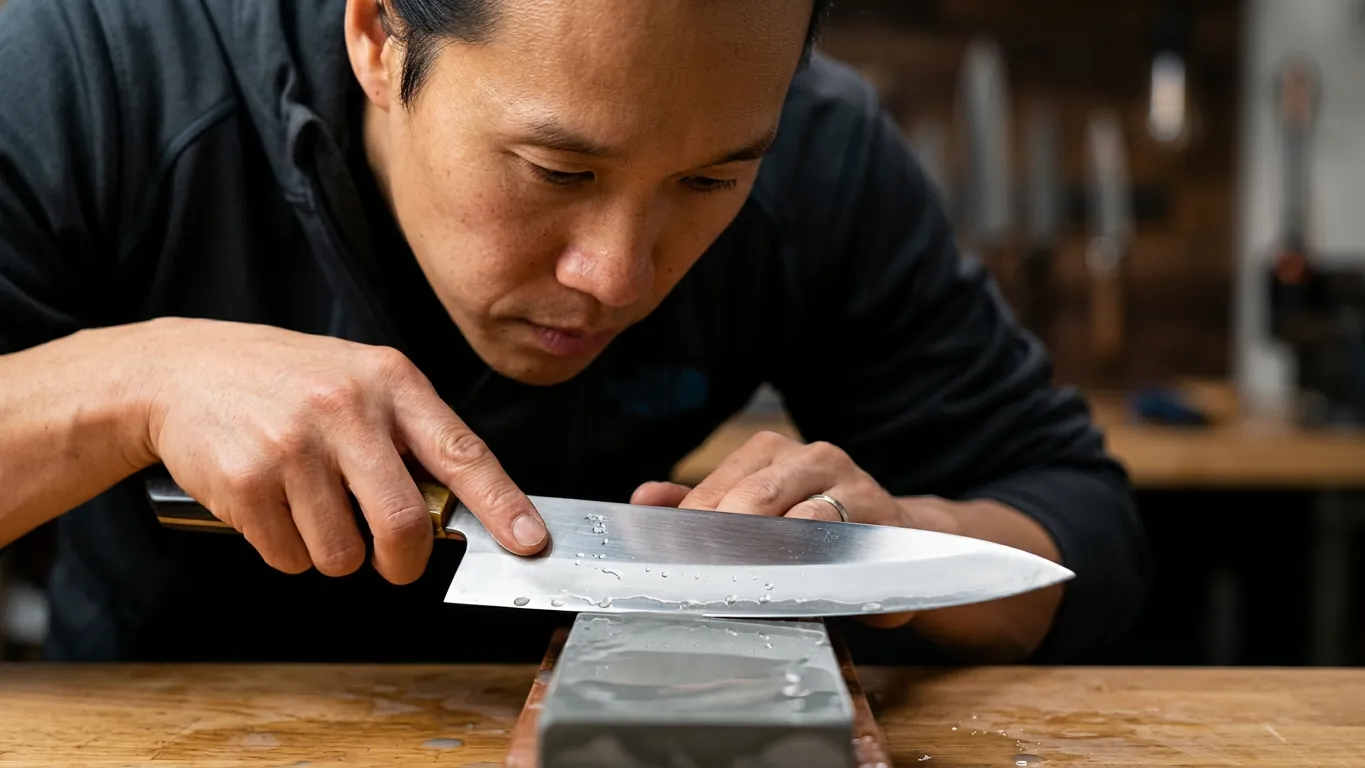
I cleaned a dozen stones from 120 to 10,000 grit with four kinds of cleaners. One cheap rubber block beat them all, and the cleaning stones that come with budget kits can do real damage.
By Burrfection EditorialDecember 30, 2017Updated November 24, 20264 min read
This article contains affiliate links: I may earn a commission if you buy through them, at no extra cost to you. How this works
The short version
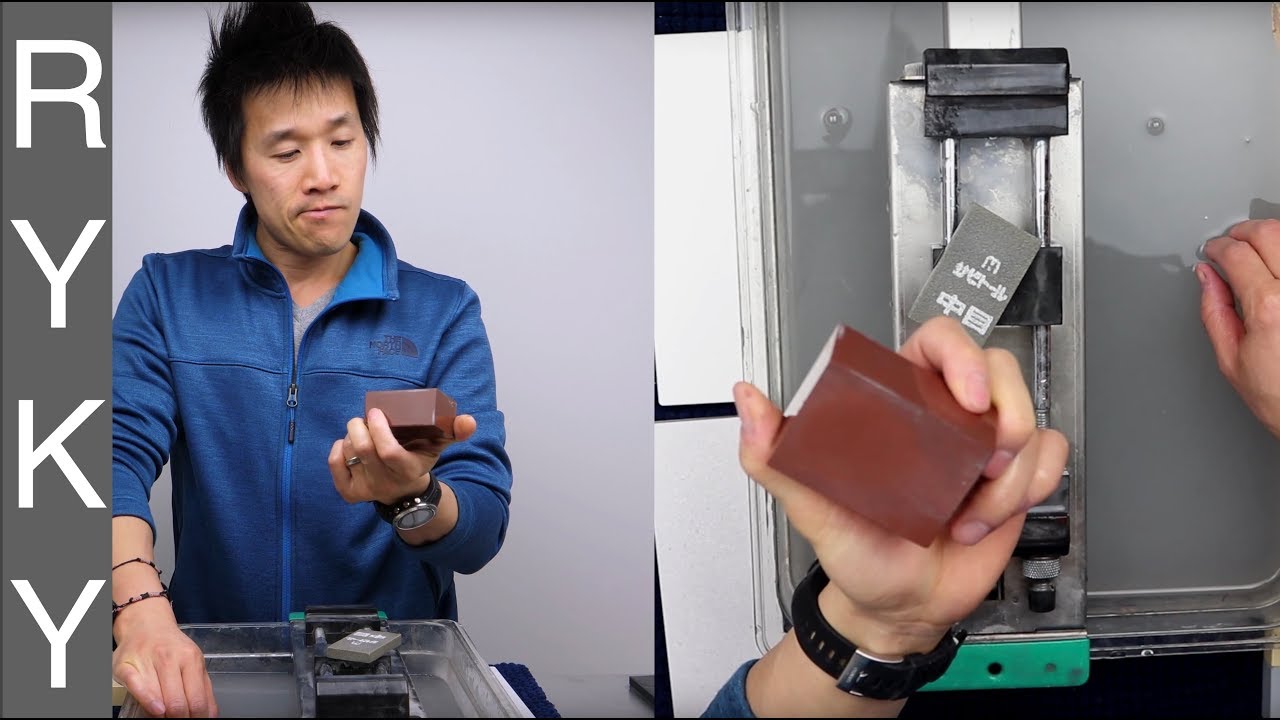
- The best cleaner is a medium Sabitoru rust eraser. No soaking, it works on everything from 120 to 10,000 grit, and mine looked nearly new after a year and a half.
- Nagura are polishing aids, not cleaners. They build slurry, but they wear away fast. If you buy Suehiro nagura, get the 1000 and 5000.
- Skip the cleaning stones that come with budget whetstones. They're coarse enough to damage your stone more than they clean it.
Why clean a stone at all?
People always ask me how I clean my stones and whether they need a nagura (0:21). The thing you're cleaning off is load-up: metal and binder packed into the surface. Here's the rule I go by: below about 3000 to 4000 grit, you don't really have to worry about it; it's the polishing stones where it matters (14:01). Coarse stones under 400 or 500 grit wear fast enough that sharpening itself removes the load-up, so it doesn't slow them down (12:59).
The exception is the Naniwa Super Stone line. They load up a ton at every grit, especially the 1000, and the load-up really slows them down, so clean them with a nagura or an eraser (14:42). My Super Stone 400 review shows what that looks like.
The rust eraser: what I actually use
I keep a fine and a medium rust eraser. The fine one isn't for stones; I use it to remove rust and fine scratches from knives (2:29). It also gets sticky when wet, while the medium one glides over the stone (10:04). There's no soaking: put some water on the stone and rub (3:34). It pulls load-up off the face and the sides (4:18), and on a Shapton Glass 8000 it left the surface like a brand-new stone (15:25).
It barely wears, even on a very aggressive stone like the Shapton Pro 120 (10:48). On a stone that coarse and porous it won't get every bit of load-up out, and that's fine (12:39). It also lightly chamfers the edges and corners of your stones so they don't damage your knife (28:06). From 120 all the way up to a Shapton Glass 10,000, it works on everything, and no nagura has that range (29:17).
Mine was about a year and a half to two years old, used full-time for months, and still looked nearly new (39:45). After four or five sets of stones it was only about half a millimeter thinner than a new one (40:49). It even removes rust from knives and from my Atoma diamond plates (41:10). It's probably the best sharpening accessory I can recommend (40:27).
Nagura: polishing aids, not cleaners
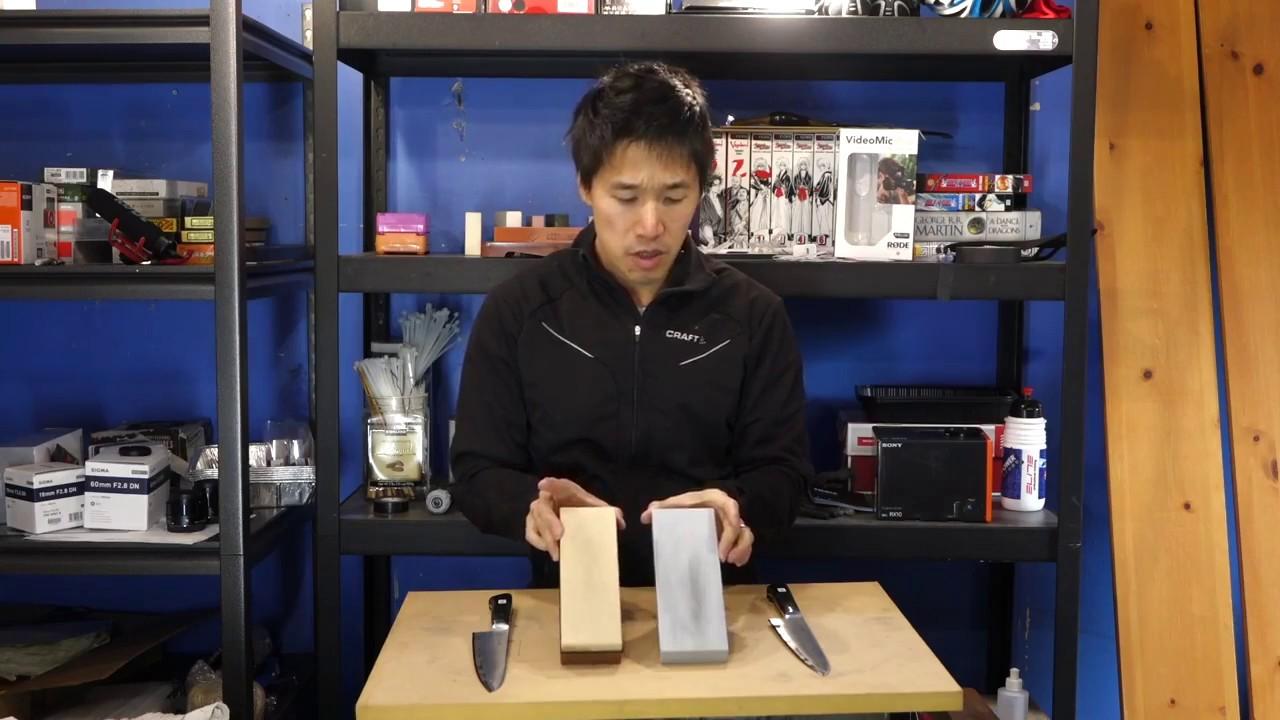
I tested Suehiro's nagura in 1000, 3000 and 5000 (0:42). They're good quality with a nice feel, but they wear really fast (1:03). On a coarse stone like the Shapton Pro 120, a nagura gets destroyed; after a few rubs the corner was rounded off (11:49). On a 4000-grit stone the 3000 nagura shed immediately. Their real job is to build a thicker slurry when you polish, not to clean (16:12). The 3000 even hydroplanes over the surface (24:18).
The 5000 was the best of the three: it works well on a 6000-grit stone (22:08), and it feels similar to the Suehiro Rika 5000, a little softer (23:10). If you buy any, get the 1000 and 5000, not the 3000 (37:40). The 5000 works on stones from 3000 to 10,000 (38:21), and the 1000 is OK on 1000-grit stones. Don't put a nagura on very coarse stones at all (27:16). At $15 to $20 each, they're too expensive to use up as cleaning stones (16:33).
The Naniwa dressing stone
The Naniwa dressing stone is a really fantastic stone, just coarse enough (30:30). It wears slower than the Suehiro nagura (31:11), and it's by far the best cleaning stone of the bunch (38:42). It needs a 15 to 20 minute soak and feels like a high-end natural stone (39:03). Don't use it on a stone that's still soaking up water (31:34). It digs deeper than the eraser but wears faster, so I rarely reach for it (32:16).
Budget cleaning stones: skip them
Many cheap whetstones come with a "cleaning stone." The one from a $25 to $30 kit I tried felt really coarse and will damage your stone more than it cleans it (1:46). The one with my Sharp Pebble 400/1000 works, but it takes off a lot of stone (6:30), which can create grooves over time; I'd guess it's about 200 grit (6:50). Don't use these on anything over 1000 grit, and definitely not over 3000; 320 to 400-grit dry sandpaper is a better tool (36:58).
After cleaning
Dry your stones and towel them off when you're done, and don't leave splash-and-go stones sitting in water for long, let alone overnight (36:15).
| Cleaner | Works on | Wear | My take |
|---|---|---|---|
| Sabitoru rust eraser (medium) | 120 to 10,000 | Very slow | The best; use this |
| Naniwa dressing stone | Most stones; soak first | Faster than the eraser | Best cleaning stone |
| Suehiro nagura 1000 / 5000 | 1000; 3000–10,000 | Fast | Polishing aid, not a cleaner |
| Budget-kit cleaning stone (Sharp Pebble) | Coarse stones only | Removes a lot of stone | Skip it |
Bottom line
Buy a medium Sabitoru rust eraser and use it on every stone you own; it's cheap, needs no soaking and lasts for years. Keep nagura for building slurry on polishing stones, and leave the cleaning stones from budget kits in the box. For flattening, which is a different job, see how often to flatten your whetstones, and for the eraser on rusty knives, how to remove rust and patina. All my stone picks are in the whetstone benchmark.
First access
Private drops, new knives and sales
Get them from Burrfection and our retail partners before anyone else. No spam; unsubscribe anytime.
Emails from Burrfection Inc. See privacy.