Naniwa Pro 400 (Chosera 400) Review: The Famous Green Brick
The coarse stone of the Chosera line, renamed Naniwa Professional: dense, hard, splash-and-go, and the stone I reach for to thin and reprofile knives.
By Burrfection EditorialOctober 28, 2016Updated November 21, 20263 min read
This article contains affiliate links: I may earn a commission if you buy through them, at no extra cost to you. How this works

The short version
- The Naniwa Professional 400 is the Chosera 400 under a new name. Same stone outside Japan, new branding, and no base.
- It's thinner than the old Chosera: 20mm. I'd have liked the extra millimeters, but it's an extremely hard, dense stone that dishes slowly.
- This is a thinning and reprofiling stone. It's what you use when a knife's edge has become too thick to cut well, even right after sharpening.
Chosera is now Naniwa Professional
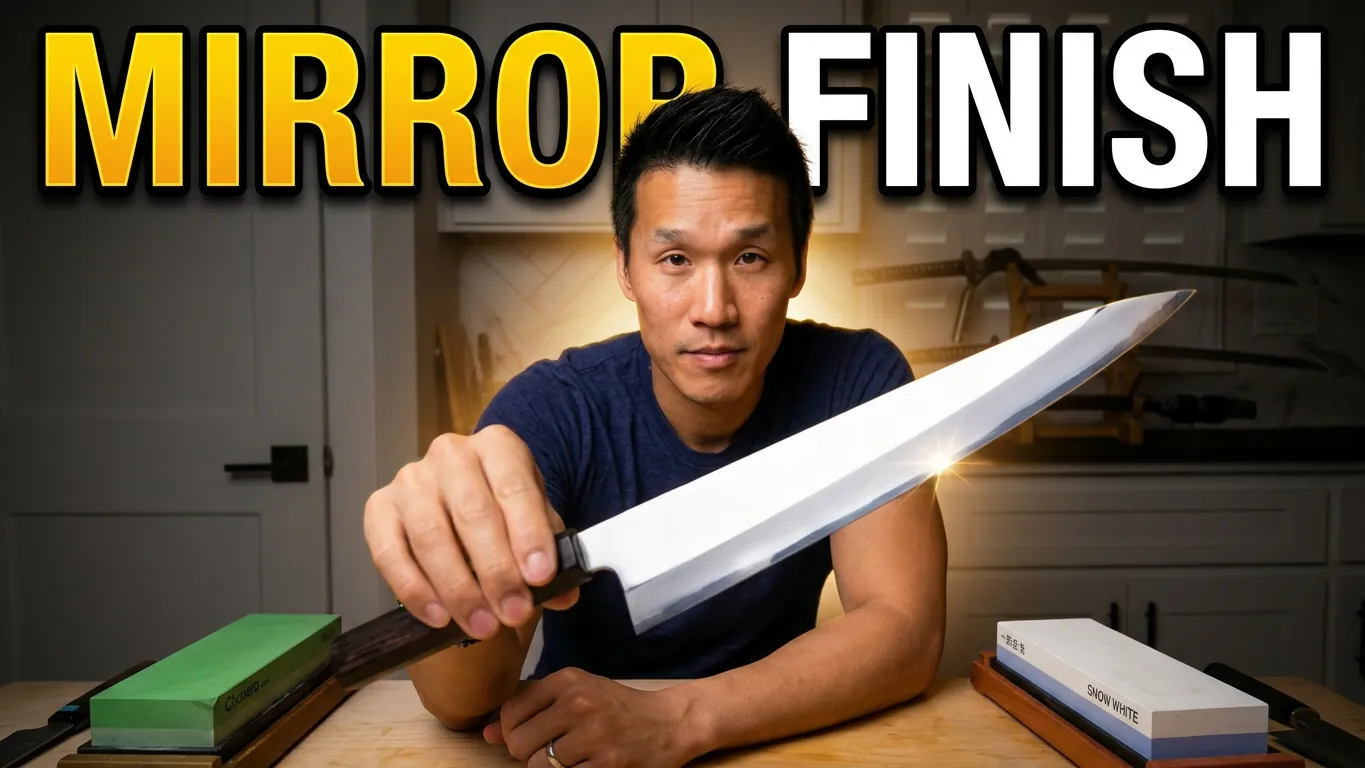
This stone marks the end of the Naniwa Chosera legacy: outside Japan, the stones once called Chosera are now called Naniwa Professional (0:00). They're really the same stones with a different name and branding, and they no longer come with a base. I've always been a huge fan of the Choseras, and the missing base actually gives me a reason to pick these up, because base-less stones are more useful in the shop. If you've researched Choseras, you'll recognize the famous green color everyone talks about: the green brick.
A solid, heavy stone
One side is smoother than the other, which is normal for every stone that gets shipped to me (1:02). What surprised me is how solid and heavy it is. I'd always used Choseras on their bases, and a base hides how much the stone itself weighs. When I put this one on the scale, it was a beast: an extremely dense stone.
20mm, thinner than before
The new stone is 20mm thick; I believe the old Choseras were 23 or 25mm (1:22). That doesn't sound like much, but those extra millimeters would give you an extra two or three years of sharpening. These stones are still very hard and don't dish quickly, but with the amount of sharpening I do, I'd have liked Naniwa to keep the original thickness. I understand it costs more money.
What a 400-grit stone is for
After a few years of use, most knives become too thick at the cutting edge (2:03). That's when you see a knife that, even after a sharpening, loses its cutting performance after three or four uses. It isn't dull. It's simply too thick behind the edge, and the fix is to reprofile and thin the knife on a coarse stone. The 400 is one of the most popular stones for that job, and it's the one I'll be using to demonstrate thinning a knife. For the full process, see my knife restoration blueprint.
Splash-and-go, with a little absorption
Even though the Naniwa Professionals are splash-and-go stones, this one absorbs a little water as you use it (2:46). That's not a big deal. A stone that takes on some water after 10 or 15 minutes isn't a soaking stone; it just means the surface absorbs a little. Splash it and start sharpening.
I'll be putting it up against the other coarse stones I have: the Shapton Pro 320, the Shapton Glass 320 and the Naniwa Super Stone 400 (2:03). For how the lineup compares across every grit, see my whetstone benchmark from coarse to 10,000 grit.
Bottom line
The Naniwa Professional 400 is the same green Chosera brick under a new name: hard, dense, slow to dish and splash-and-go. It's a little thinner than it used to be, but it's the stone to reach for when a knife needs thinning or a new profile. Its siblings, the Naniwa Pro 800 and Pro 3000, are at the Burrfection Store along with other coarse stones.
First access
Private drops, new knives and sales
Get them from Burrfection and our retail partners before anyone else. No spam; unsubscribe anytime.
Emails from Burrfection Inc. See privacy.