The World's Worst Knife? Why a $1 Knife Won't Take an Edge
Two cheap MSE-branded knives, four whetstones and a diamond plate, and the hardest-won edges I've ever gotten. What bad steel and bad design do to sharpening.
By Burrfection EditorialFebruary 12, 2017Updated November 24, 20264 min read
This article contains affiliate links: I may earn a commission if you buy through them, at no extra cost to you. How this works

The short version
- Some knives can't be saved by sharpening. The steel on these was so poor that it shed metal endlessly, and the swarf clung to the edge as if the blade were magnetized.
- Bad design makes it worse. A thick wedge from heel to tip and a "drop" in front of the handle that acts like a bolster make it hard to sharpen the whole edge.
- It's the knife, not your stones. If a cheap knife won't take an edge on good stones, stop fighting it and spend the money on a decent knife.
A $1 paring knife
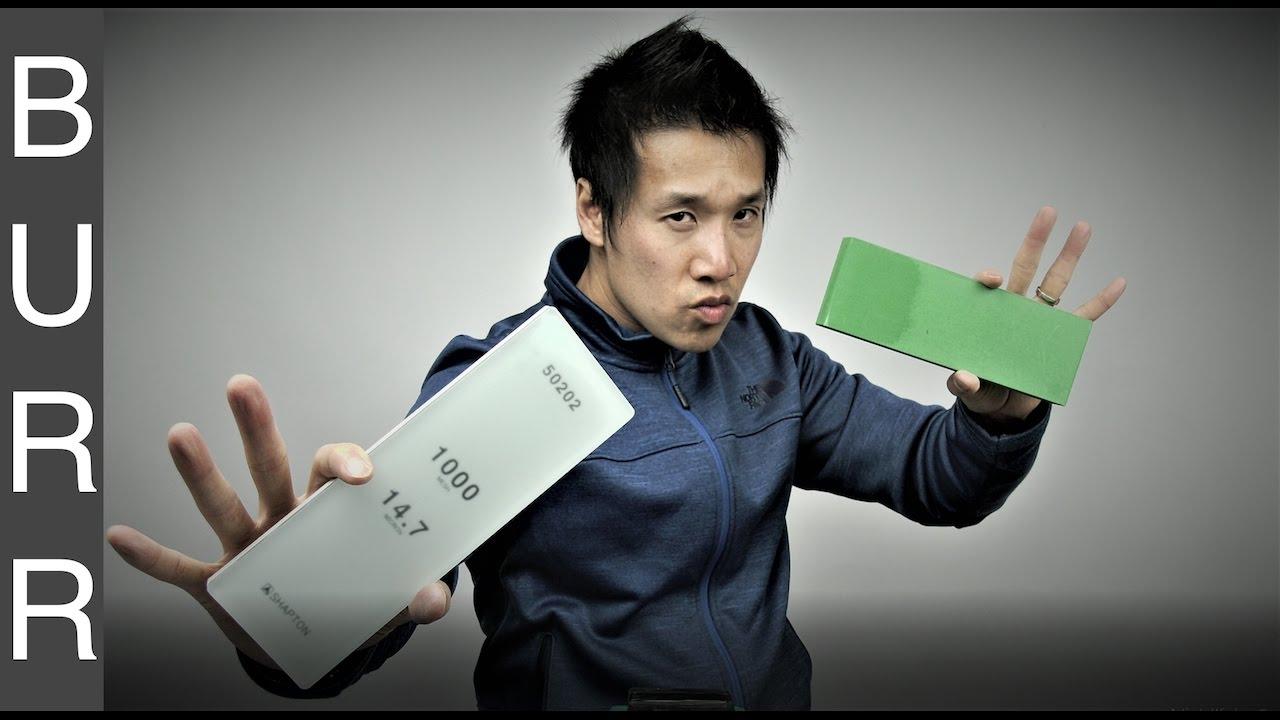
These came from the same friends whose old Wüsthofs I revived. The first was a paring knife with an "MSE" logo; I don't know what it stands for, but this is truly a $1 knife, and I wouldn't pay a buck more (0:00). It had massive chips all along the edge, especially at the tip. A lot of you had asked whether the Shapton Pro 320 can reprofile a knife, so I planned to start there and finish on the Shapton Pro 1000.
One chip was bigger than I thought, so I moved to my Atoma 140 (1:44). I didn't grind straight into the plate; going in at about 45 degrees removes enough material while keeping control. The 140 made quick work of the chip, and then I had to give the knife a bevel, because it didn't have a primary cutting bevel at all.
Swarf that won't let go
Then something I'd never seen. A mass of metallic flakes built up on the tip, and they wouldn't wash or wipe off (5:57). Even pulling at them with my fingers didn't work; only a towel did. On the Shapton Pro 1000, I watched the slurry run toward the knife, like it was magnetized (13:30). I'm not a chemist or a materials scientist, so I can't tell you why, but it makes it really hard to see what you're doing, and it told me right away this knife wasn't going to get very sharp.
The design fights you too. There's no real bolster, but a "drop" in the blade in front of the handle means the cutting edge stops about half to three-quarters of an inch before the handle (12:38). After a countdown of strops, the edge was barely cutting, so I moved to my trusty Chosera 3000. The stone pulled off huge amounts of metal, especially on the right side, because the blade is extremely thick from heel to tip (20:25). I even sharpened it on the Chosera from start to finish, and metal just kept coming off. In the end it would cut, eventually, but no knife should be that hard to get an edge on. That was a first for me: this knife got the best of me (29:08).
Round two: the chef's knife
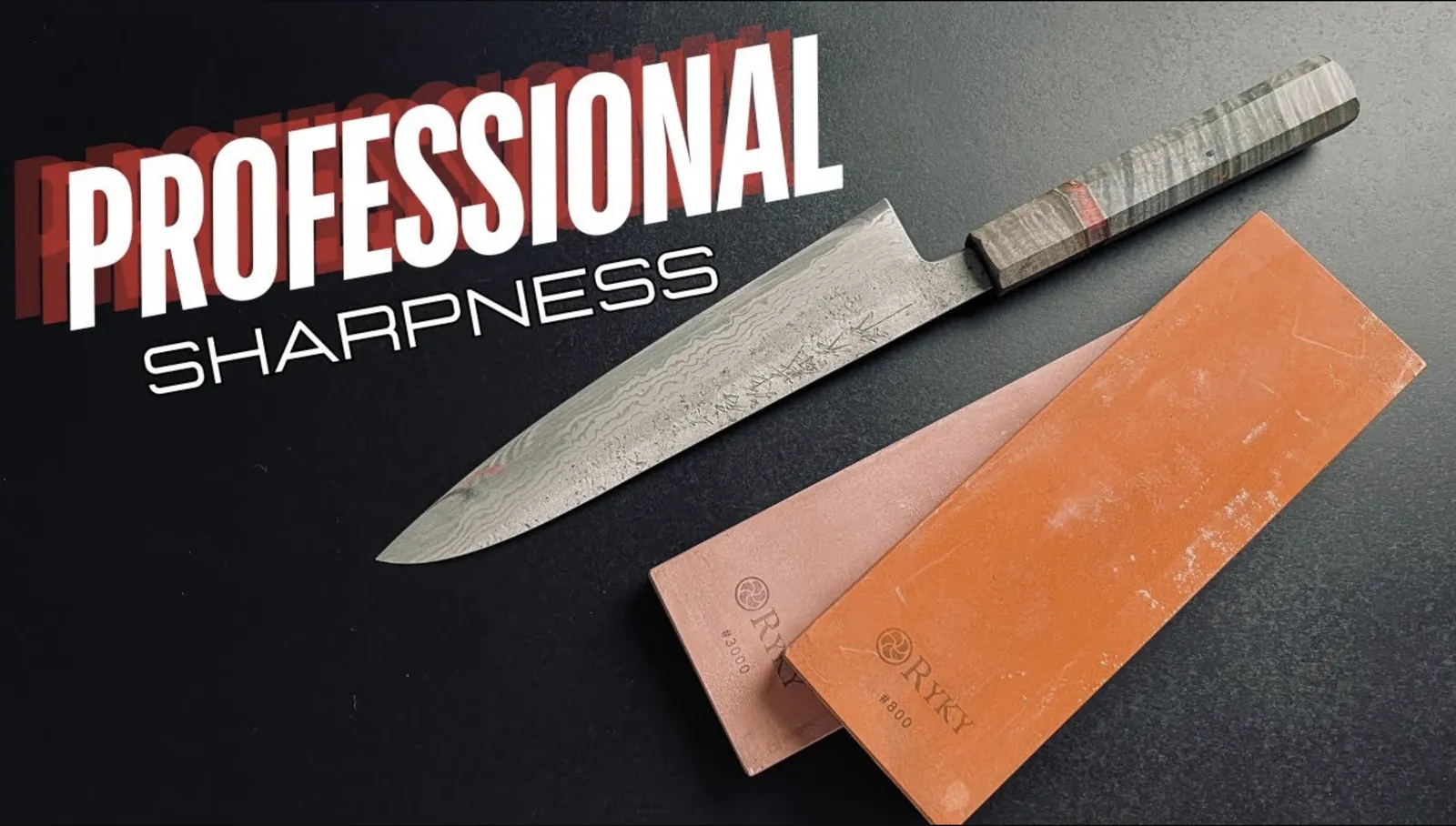
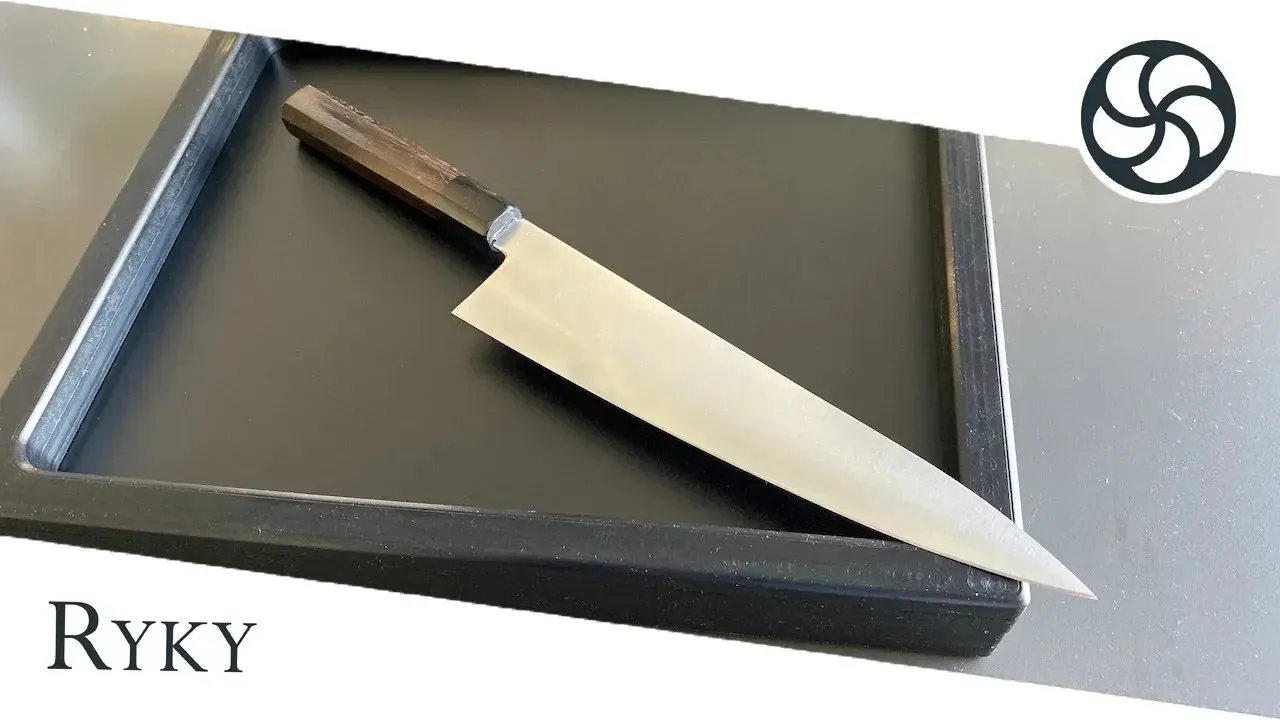
The chef's knife version has the exact same profile, handle and, I'm sure, steel, but a longer edge gave me more room to work (0:00). Years of abuse had left it with a short belly, a long straight section and a rounded heel, plus nicks and chips everywhere. The same built-in drop runs from about 1.5 to 2mm thick and tapers into the edge, and grinding it away would mean taking off so much metal it would kill your stone, so I left it (1:42).
The same swarf, and no slurry
On the Atoma 140, the same "magnetic" effect appeared immediately (3:53). For once I drew the edge through a piece of wood mid-sharpening, because the burr itself was the problem: there was so much of it. And there was virtually no slurry on the plate; everything was sticking to the steel, which makes it impossible to judge your progress (7:45). Then I sharpened on the fast-cutting Chosera 800, stropped backward from 10 strokes down to single strokes because the profile and fake bolster made forward strokes awkward, and finished with single strokes on the Chosera 3000 until the dark lines on the stone faded (12:49). Even then, I could see a row of tiny feathers pop up along the edge as I pulled it, material that should have been gone, reappearing.
The result
On damp magazine paper it cut a little better, but the paper's fibers loaded onto the edge right away (19:15). On newspaper it cut more easily. Newspaper is a good test, and good for stropping, because it pulls excess material off the edge instead of loading it. Considering the steel, the edge was fair, not crisp, and I don't think this knife can get any sharper. The Chosera 3000 gives me about the sharpest edge I can get from any of my stones, so this was the knife's limit, not the stone's.
Bottom line
That's the cheapest knife I've ever sharpened, and I'll refuse to sharpen it again. If a knife sheds metal like this, clogs its own edge and fights you with a thick wedge and a fake bolster, no stone will save it. Put the money toward a real knife instead: my best Japanese knives under $100 and best chef knives I've tested, from $15 to $350 have plenty of options, and 5 kitchen knives you should never buy explains what to avoid.
First access
Private drops, new knives and sales
Get them from Burrfection and our retail partners before anyone else. No spam; unsubscribe anytime.
Emails from Burrfection Inc. See privacy.